
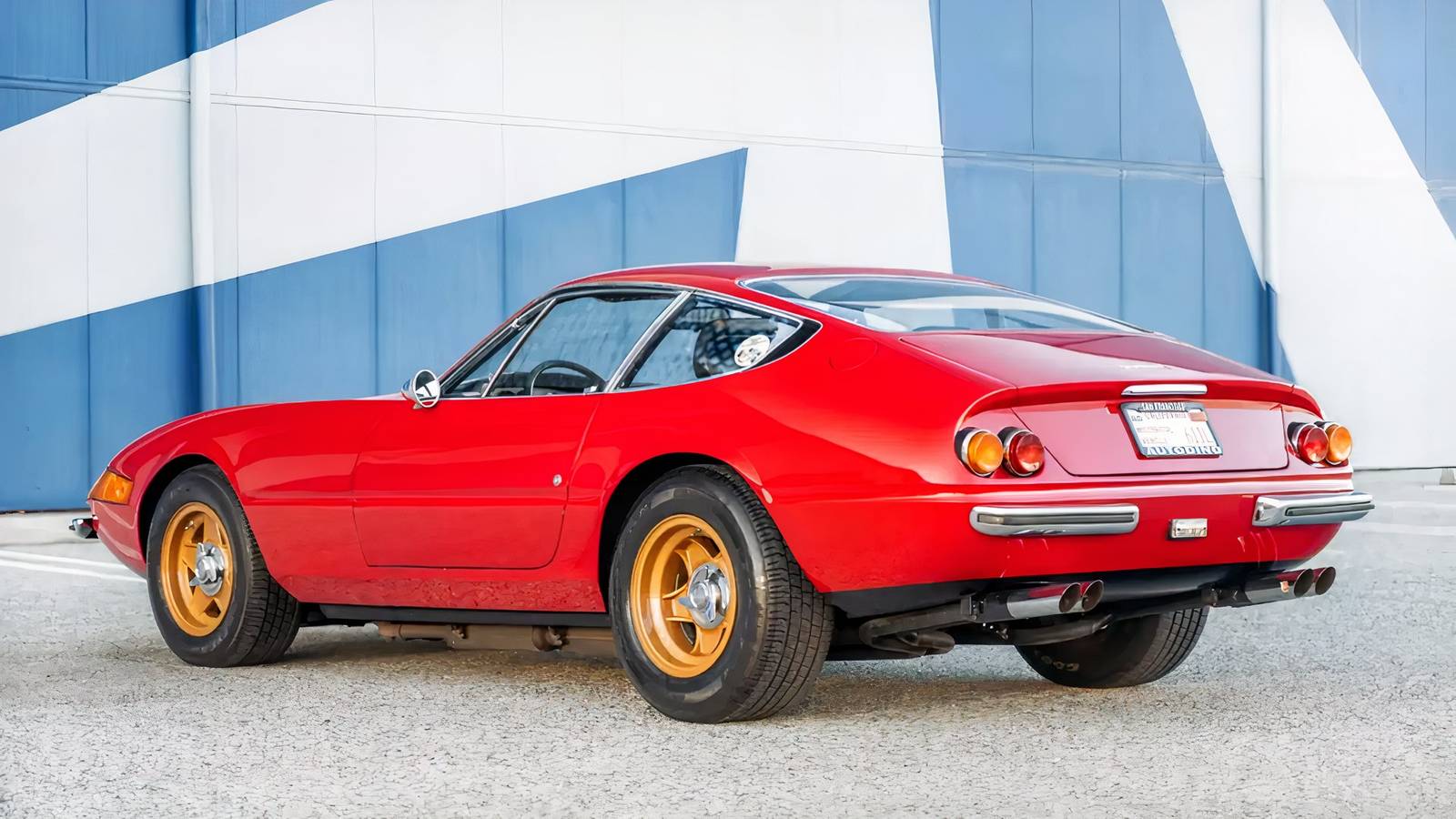
There are rare cars, and then there are Ferraris that sit in a completely different league of desirability. The Ferrari 365 GTB/4 Daytona is one of those cars that certainly lives up to those words. After many decades, this sweet V12 symphony remains a topic of discussion among collectors, auction headlines, and sports car debates. It’s simply one of those cars that’s not admired but rather pursued. The timing of the Daytona’s debut is a major selling point. As the high-performance market began to shift, Ferrari unveiled the vehicle. Style trends were changing, expectations were growing, and mid-engine machines were all the news.
Maranello introduced a front-engined V12 grand tourer that was distinctly modern yet retained a strong sense of tradition. Now, after all these years, the Daytona is still seen as much more than simply another vintage Ferrari. It was the pinnacle of the brand’s front-engine V12 GTs, combining iconic good looks with an opulent interior and an engine that has stood the test of time, according to many fans. Importantly, its reputation has only strengthened over the years, making it a rare masterpiece.
Why The Ferrari 365 GTB/4 Daytona Still Matters
Ferrari’s Big GT Moment In The Early 1970s

The Daytona was a watershed moment in Ferrari’s history, serving as both a high point and a turning point. It subtly hinted at Ferrari’s future while perfecting a formula the company had been developing for years. Ferrari was already feeling the heat from rivals pursuing more experimental designs and unconventional layouts when the Daytona came out. Already, the Miura by Lamborghini had rethought the role of the mid-engine arrangement in supercars. Ferrari’s reaction wasn’t mimicry, but rather improvement.

While remaining faithful to the front-engine design, the 365 GTB/4 took it to new heights. A 4.4-liter Colombo V12, the mechanical embodiment of Ferrari, resided beneath its lengthy hood. It was often said that the layout provided a sense of balance, practical grand-touring characteristics, and stability at high speeds, making the car incredibly capable on real roads.
The Genius Behind Its Design

Engineering was always an important part of the Daytona. It gave off an air of command. Its distinctive features—a low nose, slender build, and clean lines—made it easy to spot. Instead of flaunting itself to attract attention, it simply stood there and demanded it. The vehicle appeared swift even while parked.

Ferrari also provided something as crucial for grand tourers on the inside: real practicality for long-distance commutes. With its low seating position, this exotic vehicle’s cockpit offered outstanding visibility, plush leather seats, and a driver-focused instrument cluster. Ferrari prioritized practicality and mechanical clarity over ostentatious excess in its switchgear, gauges, and materials. Before mid-engine road cars took over Ferrari’s performance narrative, the Daytona was essentially the last great front-engined V12 GT.

These 10 Classic Coupes Define Automotive Passion
Whether it’s because of staying power, an iconic look or industry changing features, these 10 Coupes define what we love about cars.
Why The 1971–1972 Cars Are So Sought After
Low Numbers And A Short Production Window

All Daytonas are valuable in the collector world, but early 1970s models are usually the most sought after by buyers. The mystique surrounding the Daytona is greatly influenced by its exclusivity. There was a production cap, and expert collectors have become fixated on the minute differences between years. Autos made between 1971 and 1972 benefit from an interesting sweet spot. By this stage, the Daytona had fully established its reputation, while remaining largely untouched by later regulatory constraints that were beginning to influence lighting, trim, and safety elements on many performance cars of the era.
For Collectors, Originality Is Everything

Finding a Daytona that retains its factory finishes, correct components, and matching-numbers drivetrain is increasingly difficult. Many cars led spirited lives—driven hard, modified, or restored multiple times. Well-preserved early ’70s examples, therefore, command a premium simply because of scarcity within scarcity. There’s also the psychological factor: buyers are not just chasing a Daytona, but a specific version of a Daytona — one that reflects the car at its most authentic and least compromised.

The V12 That Made The Daytona Famous
Speed And Power In A Pre-Supercar Era

No discussion of the 365 GTB/4 can avoid the engine. It is the centerpiece of the entire experience and arguably the defining element of the car’s legacy. The Daytona’s 4.4-liter naturally aspirated V12 engine was incredibly powerful for its time, producing about 352 horsepower and 318 pound-feet of torque. Yes, in modern times, those figures are not impressive at all, but back then, I’m sure you were the bees’ knees rolling around in a V12 Ferrari. According to performance metrics, the automobile may reach top speeds of more than 170 mph, putting it in the company of the world’s fastest production vehicles.

In reviews, it’s often said that power was delivered with the gradual, increasing urgency that only a high-revving V12 can produce. Just linear acceleration and the music that marked the analogue performance era—no forced induction drama, no artificial augmentation. The powerplant molded the Daytona’s personality. At high speeds, it was fast, stable, and quite effective on long straights. As a large-displacement exotic, it was surprisingly tractable, nevertheless.



How The 365 GTB/4 Distinguished Itself

The Daytona faced some formidable competition during its production. Maserati and Aston Martin produced high-performance vehicles, and the Lamborghini Miura competed with them through its visually extravagant, theatrical mid-engine design. The Ferrari stood out from the crowd thanks to its mechanical expertise, top-tier performance, and reliability, even if every contender brought their own brand of speed. The Daytona didn’t merely participate in the performance wars — it anchored Ferrari’s reputation during a period of intense competition.

10 Underappreciated Supercars You Need To Know About
These are the oddball exotics that usually get left out.
Styling That Has Aged Exceptionally Well
Pininfarina’s Long-Nose Grand Tourer

Design longevity is one of Daytona’s greatest strengths. While many exotics of the period now feel stylistically tied to their decade, the Daytona retains a striking modernity. Pininfarina’s work on the Daytona is a masterclass in proportion. The elongated hood, set-back cabin, and muscular rear haunches create a sense of motion even at rest. It looks powerful without appearing bulky, elegant without becoming delicate. Details play a crucial role.

The sharp nose treatment, the clean beltline, and the restrained use of ornamentation give the car a timeless quality. Unlike many contemporaries, the Daytona avoided exaggerated design trends that later became dated. Instead, it leaned on balance and clarity. The design also perfectly communicates the car’s mechanical layout. You can see the engine in the shape. The long front end is not decorative — it’s purposeful. The stance reflects performance rather than styling theatrics. That authenticity is a major reason enthusiasts continue to admire the car’s appearance decades later.

This Iconic Italian Supercar Had A V-12, And Could Barely Hit 180 MPH
There’s much more going on with this important Ferrari than its top speed – it was actually an engineering work of art and a TV icon.
Why Collectors Keep Chasing The Daytona
Racing Links, Image, And Rising Values

There aren’t many classic cars that can combine strong emotional appeal with real long-term investment strength, but the Daytona has always been one of them. Competition versions did well, which made the car seem more real and connected it more closely to Ferrari’s racing DNA. But the Daytona’s good name wasn’t just based on racing. Over time, it became a cultural symbol, and its long-nosed design became one of the most famous shapes in car history. The market has reflected that reputation. Daytona prices have risen significantly over the past 10 years. Even well-used models can easily sell for between $600,000 and $800,000.

Strong, well-documented automobiles usually cost between $900,000 and $1.3 million. However, at major auctions, cars with very low mileage or exceptional originality have sold for more than $2 million. The best automobiles, especially those with interesting histories or unique features, are appreciated, especially as collectors place greater emphasis on originality and matching numbers. People who collect know what makes those numbers go up. The Daytona is much more than a rare car; it represents a key time in Ferrari’s engineering and design history. There aren’t many automobiles that combine visual drama, a compelling V12, and historical significance.
The Daytona’s Lasting Appeal

Consistency, rather than sentimentality, is the secret to the Ferrari 365 GTB/4 Daytona’s longevity. There appears to be a single overarching goal for the vehicle in its design, interior, engine, and performance. There is just the right amount of drama. Effortless and quick. Indulgent without watering it down. The mechanical honesty of the Daytona is a welcome change in this age of digital interfaces and technical abstraction. Sound, responsiveness, and presence, not software, are what give it its sensational punch. Collectors continue to pursue it for that reason. This is why it is relevant even today. For that reason, the Daytona is still considered a classic among Ferrari’s grand tourers.
Sources: Hagerty, Ferrari, Classic.com