
The 1970s were a pivotal time for Porsche, with several different models that proved how much of a dominant force they were. With the Porsche 917 coming in at the start of the decade, and expanding our minds to how fast a car could be through its dominance at Le Mans, the company started the 70s as a carmaker that had moved from underdog to giant. Then the 930 proved that supercars could appeal to a broader range of people, and at the end of the decade, the 928 gave the world a glimpse of the future. From Le Mans Winner to accessible supercar to sci-fi supercar, this was an essential decade where they proved how they were different from any other brand.
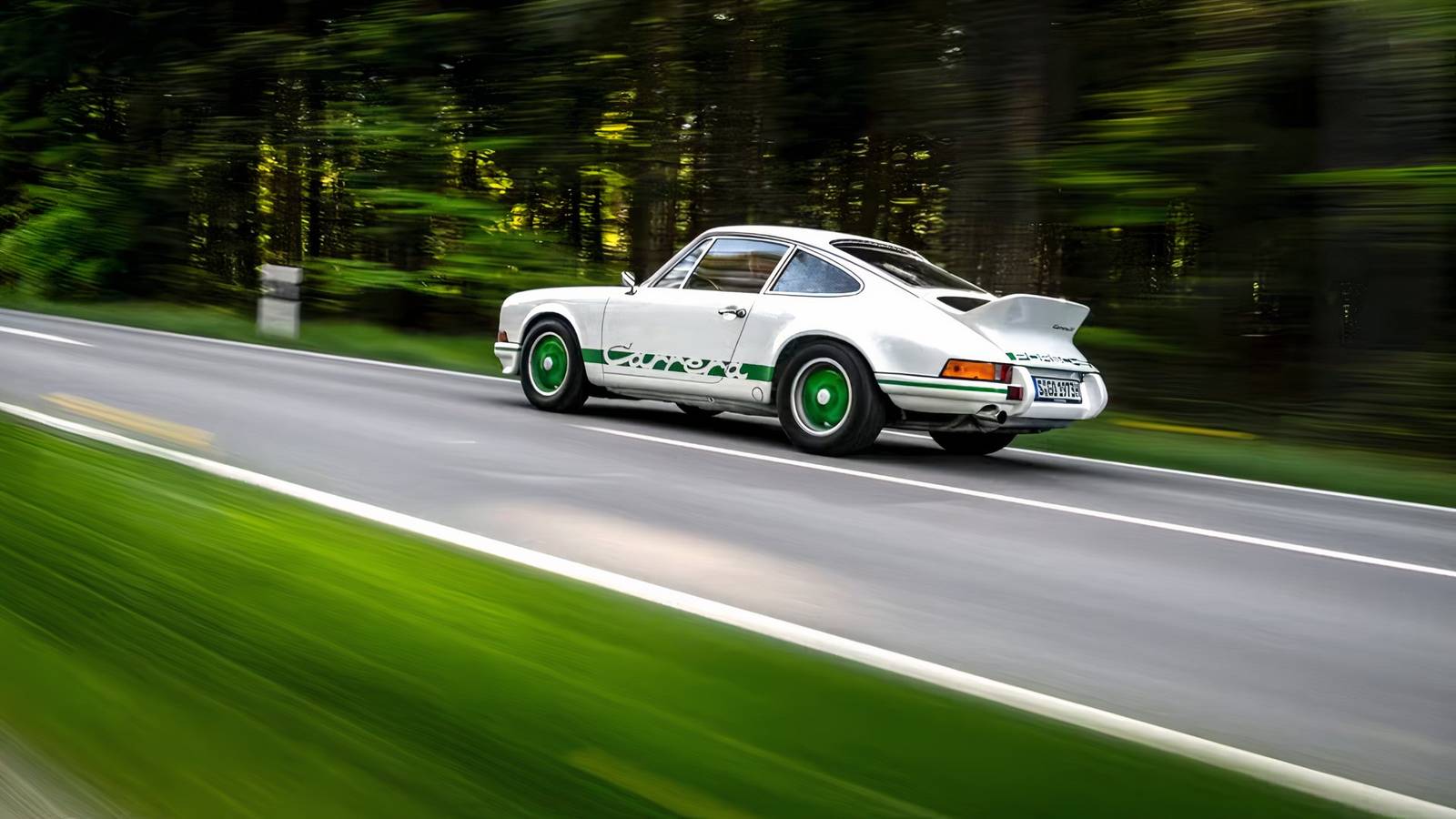
And then there is the subject of this article, the hardcore yet utterly gorgeous 1973 Carrera RS 2.7. A car that, in 2026, is one of the most sought-after Porsches of them all. And for good reason. It has all the various components that create the visceral reaction that a collector’s criteria craves. Scarcity, beauty, performance, and an insight into a bygone era.
The History Of The 1973 Carrera RS 2.7

This Carrera RS was born out of Porsche’s hunger to have the best possible car in Group 4 racing. Despite the company’s success at Le Mans, in Group 4, they were suffering against titans like the Ferrari Daytona, which housed a more capable, larger-displacement engine. Hungry to be at the top, they started work on a vehicle with a larger engine. However, it wasn’t quite as simple as that; Porsche needed to produce 500 road-going units for them to be eligible.
What They Did To Make It Road Legal
- Unique ducktail spoiler added for aerodynamics
- Emissions only just scraped by in Europe, and not in the US
- Addition of standard safety equipment
- Street muffler for quieter operation
After selling out 500 units within a week of the 1972 Paris Motorshow, Porsche built roughly another 1,000 afterward, despite their sales team initially thinking the RS was a bit too insane and raw for people to enjoy on the open roads. Because it was a homologation special, it really was viciously raw. With the lightest edition weighing in at only 2,116 pounds, it was clear that this vehicle, paired with the larger 2.7-liter engine, was an absolute beast.



The Blueprint For Modern-Day Porsche GT3 RS Models

These days, Porsche isn’t scared of deep-rooted race cars for the road. The GT3 RS relies on being the ultimate track weapon, which focuses its attention on raw, mechanical grip combined with Porsche’s modern-day technological wizardry. Though the futuristic and computerized elements of Porsche’s existence come from modern advancements and more cutting-edge models, like the influence of the 928, the 1973 Carrera certainly feels like the start of the DNA that led them to the 21st-century GT3 RS formula. Low weight, huge grip, and a priority on cornering over comfort.
1973 Porsche Carrera RS “Lightweight” Specs
|
Horsepower |
210 |
|
Torque |
188 Ib-ft |
|
Transmission |
5-speed manual |
|
0 – 60 mph |
5.3 seconds |
|
Top Speed |
152 mph |
|
Weight |
2,116 pounds |

One Of The Last Fast Cars That Still Feels Analog
A rare breed of performance car that demands your full attention and rewards skill, not just speed.
Why Collectors Love Them

Collectors are obsessed with these 1973 Carrera RS’s, and the rising value of these cars proves that. In 2004, you could get one for $100,000. In 2015, around $500,000, and now, in 2026, the RSR 2.8’s are going for between $2 million and $5 million. This car truly is the holy grail of air-cooled Porsches; one of their most legendary eras, perfected and contained in one, definitive model. In a modern landscape where Porsche is chasing incremental upgrades through technological witchcraft, the beautiful nature of one of the purest representations of a 911 is a dreamlike notion for those seeking an experience, and the value of this car reflects that.

It is also seen as a safe investment. Each chassis and engine number is documented by Porsche experts, giving them the feel of a seriously prized possession, as if they were destined to be a collectible. And then there is just the simple fact that people love the classic look of this era of the Carrera. From the iconic long bonnet to the ducktail silhouette, it’s a completely timeless shape that transcends generations and oozes an undefinable mix of art and engineering. These cars represent a middle ground between a vehicle for the road and one originally for the purpose of a racing track. Unfiltered and raw in a package of gleaming heritage, and due to that, the RS is becoming priceless.
Different Editions Of The 1973 Carrera RS

There are a lot of choices to be made for collectors who want a piece of the Porsche pie. Though they all come under the bracket of the 1973 Carrera RS, there are several different editions to choose from, each with its own unique quirks and purposes. The most well-known edition was the M472 Touring, a more common sight out of an extremely rare bunch. This was a softened, more marketable version of the homologation, with carpets, rear seats, and steel bumpers as found in a more traditional car. Whilst it doesn’t quite have the mystique of other editions, it’s the most usable daily. The M471 Lightweight edition focused on the purity of driving. No luxuries, and no care for comfort; just a true, analog driving experience.
Editions Broken Down By Numbers Produced
- The M472 Touring: 1,308 units
- The M471 Lightweight: 200 units
- The M491 RSR 2.8: 55 units
- The RSH: 17 units
The RSH Homologation variants were all within the initial 500 sales. These were the most untouched of the bunch, not even having underseal or anti-roll bars, and acted as the lowest possible weight benchmark. Then there is the M491 RSR edition: the racing car Porsche dreamed of making to compete with the Daytona. With huge rear tires and an enormous power uplift, the RSR managed to win the 24 hours of Daytona, 12 hours of Sebring, and the Targa Florio in Sicily in 1973 alone, proving its outright speed and agile grip alike.

How the Porsche 959 Became The Supercar That Time Can’t Touch
There were many features of this 1980s supercar that made it radical and ahead of its time—a car where Porsche’s design was at its most innovative.
The Conclusion On The Mythical Carerra

The 1973 Porsche Carrera RS in all its different editions proves that we crave what we don’t have anymore, and that some cars have a timeless elegance. Whilst the DNA of this era of Carrera lives on in the form of GT3 RS’s, there is no doubt that they are enormously different cars, even if they are equivalents of their respective eras.

With severe rarity, especially in some models, a ducktailed sweeping silhouette that has been nestled into the mind of any Porsche fan for eternity, and being the fully-fledged expression of what an analog Porsche should be, there are no question marks as to why collectors love them so much. Despite these cars existing through the company’s desire to compete with Ferrari, they also prove that Porsche truly only ever competed with itself: rear-engined, rear-wheel drive, air-cooled monsters on track that combined art and science with a unique flavor unlike any other manufacturer.
Sources: Porsche, Classic.com, Bring a Trailer