
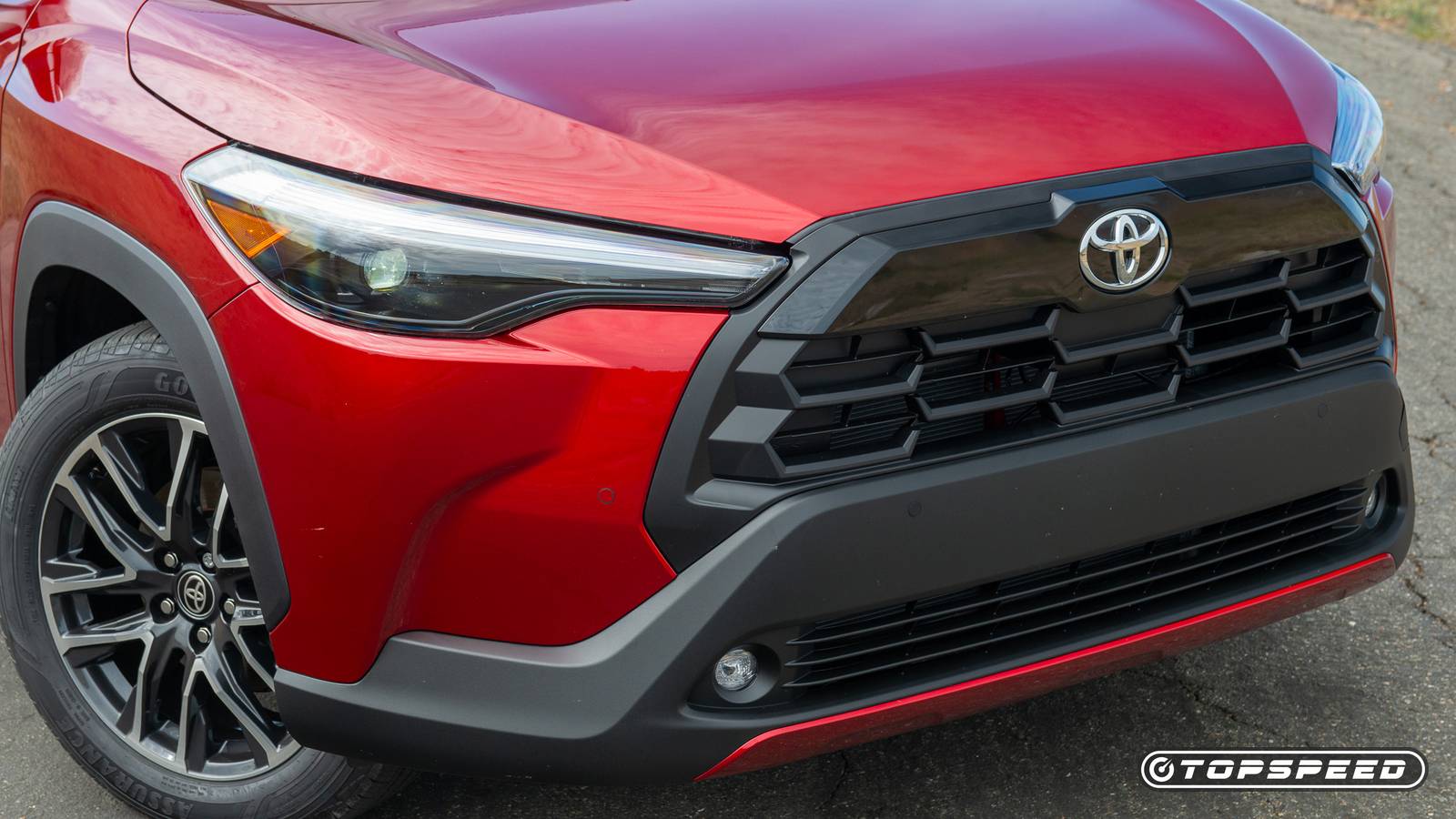
Affordable, useful, and bulletproof, when the Toyota RAV4 was released in the U.S. in 1996, it didn’t take long for it to prove that bigger SUVs don’t always mean better SUVs. The RAV4 has succeeded where a lot of other crossover SUVs have faltered; it is now in its sixth generation, and it still doesn’t look to be slowing down.
Toyota is not a brand that sits on its success, though, and while the RAV4 is a go-to for so many, it doesn’t mean they don’t continue to roll out other appealing vehicles. Toyota’s small cars are champions in more than one ring, and one small, affordable, and useful Toyota SUV model has become one of the best crossovers on the U.S. market.
Toyota Corolla Cross: Turning A Compact Car Into A Smart, Affordable SUV

Toyota introduced the Toyota Corolla Cross to the U.S. market for the 2022 model year to answer a simple question: What if one of the world’s best-selling nameplates became a small SUV? Introduced to capitalize on the growing demand for practical-sized SUVs, the Corolla Cross sits below the RAV4 in Toyota’s small model lineup with a blend of low starting prices, lots of usability, Toyota-grade reliability, low running costs, and Corolla-like versatility.

Built on a small platform, the Corolla Cross is designed to keep compact-car efficiency while still offering a tough stance and useful proportions to suit easy driving. Prices have been affordable since its debut, and you can do a lot with it; we aren’t too surprised that the Toyota Corolla Cross has gone from a new entry-level model to a bona fide affordable SUV champion in such a short time.
Built On Trusted Corolla DNA With Crossover Practicality

The Toyota Corolla Cross is built on the TNGA-C platform, the same one that the current-generation Toyota Corolla sedan and hatchback are built on. This lightweight modular platform allows Toyota to adapt rather than rebuild (as we have seen them do for decades with other models), and has resulted in a versatile crossover without any overcomplication. The Corolla Cross has car-like road manners, responsive steering, and controlled ride quality, while still benefiting from a wider track, higher ground clearance, and a slightly more commanding road position for you behind the wheel.

Models like the 2026 Toyota Corolla Hatchback boast 17.1 cubic feet of storage space in the trunk, which is impressive for such a small and affordable car, but thanks to the slightly beefier build on the same small footprint, the 2026 Toyota Corolla Cross can muster a maximum of 52 cubic feet with the 60/40-split rear seats folded away. You get more on-road visibility, more cargo space, it looks harder, and it is small enough to drive like a car.
Perfectly Sized For City Streets And Everyday Use

When the first Corolla Cross model hit the market in 2022, it measured in at 175.6 inches in length by 71.9 inches wide. Today, there has been the tiniest bit of bloating, but with dimensions of 176.1 inches by 71.9 inches, even in the age of SUVs getting bigger, the Corolla Cross still nails its most basic principle: to be an everyday usable model. To put that into perspective, even the new Corolla sedan is longer (182.5 inches) and carries less (13.1 cubic feet in the trunk). While there may be some gripes from long-legged rear-seat passengers, the 2026 Corolla Cross is relatively spacious for its tiny platform and city-friendly credentials.
|
Headroom |
Shoulder Room |
Hip Room |
Legroom |
|
|---|---|---|---|---|
|
Front/Rear |
38.6 Inches/39 Inches |
52.6 Inches/43.8 Inches |
52.6 Inches/43.8 Inches |
42.9 Inches/32 Inches |
Alongside being a useful everyday car for you urbanites, the new Corolla Cross also gets a maximum ground clearance of 8.1 inches. So, while it is not made to be an off-roading menace, there is a bit of give underneath if you live somewhere that requires you to do a minimal bit of rock dodging.

Every Small Toyota SUV You Need To Know About
Explore Toyota’s lineup of small SUVs, blending efficiency, practicality, and reliability. Discover which model fits your lifestyle best!
Why The Corolla Cross Is A Budget SUV Standout
The first thing you’re going to notice if you are looking at buying a Corolla Cross is its price; it is very well-priced. When the 2022 Corolla Cross was released, it cost just over $23,600. Today, the new Toyota Corolla Cross has an MSRP of just $25,035. Prices haven’t jumped too high in the last few years, and you still get a lot for your money.
Low Starting Price That Doesn’t Sacrifice Features

There are two flavors of the 2026 Toyota Corolla Cross: a gas engine-powered model and a hybrid model. There are three grades available for the respective ICE and hybrid Corolla Cross lineups, with starting prices only topping out at $33,430.
2026 Toyota Corolla Cross Trims And Prices
|
2026 Toyota Corolla Cross L |
$25,035 |
|
2026 Toyota Corolla Cross LE |
$27,365 |
|
2026 Toyota Corolla Cross XLE |
$29,960 |
|
2026 Toyota Corolla Cross Hybrid S |
$29,395 |
|
2026 Toyota Corolla Cross Hybrid SE. |
$30,715 |
|
2026 Toyota Corolla Cross Hybrid XSE |
$33,430 |
The low prices are one thing, but what makes the Corolla Cross stand out is the fact that it, and always has, offered a good smattering of features inside and out. Don’t expect the lofty levels of Lexus SUVs, but for the low prices, there is little to complain about.


Find 2026 Toyota Corolla Cross and more cars for sale on our Marketplace
More Standard Features Than The Low Price Would Suggest

Toyota has a lot of strings to its bow, but up there with one of their best accolades is that they put what you need in a vehicle. Following the same ethos of the Corolla sedan and hatchback models, the Corolla Cross is nicely equipped for its price point. The base gas trim (the L) is the most basic, but it isn’t basic-basic. You get a standard-fit eight-inch touchscreen running Toyota Multimedia, wireless Apple CarPlay and Android Auto, rear HVAC vents, and LED headlights with automatic high beam.

The LE is a slight step-up, and you benefit from rear USB-C ports, Qi wireless charging, roof rails, and Smart Key with push-button start. It is the gas-engine-powered XLE that starts to feel a bit more grown-up. Inside, the touchscreen is swapped out for a 10.5-inch unit, a large 12.3-inch digital gauge cluster is very noticeable, and SoftTex-trimmed seats take the budget crossover SUV in a more plush direction. You also get dual-zone climate control, and a power moonroof is available, while 18-inch alloys on all four corners make it look a bit more upscale than the two lower trims. For under $30,000, we think it is good going.

The Toyota Corolla Cross Hybrid is a little more expensive from the off, but you do get a slightly techier and sportier ride. The Corolla Cross Hybrid S is equipped as standard with all-wheel drive, a seven-inch digital gauge cluster, and a deep sporty grille. The Hybrid SE gets a charging pad, roof rails, and the familiar Toyota mid-tier tech rig, while the top-tier Hybrid XSE almost feels luxurious for its market position.

18-inch black-finished wheels sit on all four corners; there are plenty of body paint options and two-tone styles to choose from, and premium SoftTex mixed-media seating, ambient lighting, dual-zone climate control, and rear armrests with cupholders make the interior feel classier than its price would suggest.

Toyota Is “Trying” To Build A Small Truck For America
The Ford Maverick could be getting a new rival very soon.
Low Running Costs That May Help The Toyota Corolla Cross Save You Money

For a budget SUV to be a budget SUV, it can’t just be cheap to buy; it has to be cheap to run as well. This is where the Corolla Cross comes into its own; considering that you get a lot for your money, and it is very well-equipped to use every day, it is also a cheap SUV to own. Models wearing the Corolla Cross badge come equipped with a naturally aspirated 2.0-liter inline-four, and models wearing the Corolla Cross Hybrid badge get a 2.0-liter inline-four mated with the fifth-generation Toyota Hybrid Electric Vehicle system.
2026 Toyota Corolla Cross Performance Specs
|
Spec |
2026 Toyota Corolla Cross |
2026 Toyota Corolla Cross Hybrid |
|
Engine |
2.0-Liter Dynamic Force Inline-Four |
2.0-Liter Dynamic Force Inline-Four Hybrid |
|
Transmission |
CVT |
eCVT |
|
Horsepower |
169 Horsepower |
196 Horsepower |
|
Torque |
151 LB-FT |
152 LB-FT |
Neither the Corolla Cross nor the Corolla Cross Hybrid is what you would call the most powerful (though the hybrid flavor does offer a bit more oomph). They are made to be frugal instead of speedy machines. In typical Toyota fashion, the engines utilized in both are great for saving money on gas.
Class-Leading Fuel Efficiency For Budget-Conscious Drivers

According to FuelEconomy.gov, the least fuel-efficient variant of the 2026 Corolla Cross lineup is the AWD ICE variant. Even this model can achieve a combined mpg rating of 30 mpg (29 mpg in the city and 30 mpg on the highway). It will cost you, on average, $1,450 a year for gas; it will only cost you $39 to fill the 13.2-gallon tank each time, and you can get an average range of 396 miles from it.

The FWD Corolla Cross does a little better and can achieve 32 combined mpg (31 mpg in the city and 33 mpg on the highway). According to FuelEconomy.gov, it will cost you $1,400 to fill up each year, the same amount to fill the tank, and you can get similar mileage out of it. Then there is the hybrid Corolla Cross, the most fuel-efficient by far.
2026 Toyota Corolla Cross Hybrid Fuel Economy
|
Average Annual Fuel Cost |
$1,050 |
|
Combined MPG |
42 |
|
City MPG |
46 |
|
Highway MPG |
39 |
|
Cost To Fill Tank (10.6 Gallons) |
$31 |
|
Estimated Range |
445 Miles |
To put this into perspective, the market average combined mpg rating is 28 mpg. So, all models of the 2026 Corolla Cross are estimated to be more fuel-efficient. All variants are also predicted to cost you less over five years for gas. The AWD Corolla Cross is estimated to save you $750; the FWD Corolla Cross, $1,000; and the Corolla Cross Hybrid: a whopping $2,750 over five years.
Legendary Toyota Reliability Keeps Long-Term Ownership Affordable

Toyota is effectively a byword for reliability, and the Corolla Cross has, since its inception, joined the ranks of some of the most reliable models on the market. The 2022 MY is rated 86 out of 100 for reliability by J.D. Power; the 2023 took a bit of a dip at 77 out of 100; the 2025 MY gets 82 out of 100, and the new 2026 model has already been rated 82 out of 100 for reliability. There is no data on J.D. Power for the 2024 MY, but it has received a reliability rating of 4.4 out of 5 from owner ratings on Kelley Blue Book.

According to CarEdge, the Toyota Corolla Cross will cost $5,831 for maintenance over 10 years. This makes it cheaper by $2,335 than other popular SUVs. CarEdge also says that there is a 16.1% chance that a Corolla Cross will need a major repair within 10 years; this is 7.98% better than similarly-sized vehicles. The Corolla is one of Toyota’s most reliable models, and now that we have the budget crossover champion that is the Corolla Cross, we have a more versatile option that is still very reliable.
Better Resale Value Than Most Compact SUVs

CarEdge gives the Toyota Corolla Cross an “A” value rating. A big reason why their rating is so high is that, alongside reasonable five-year average insurance costs of $13,000, five-year fuel costs of $7,200, and low maintenance costs, the Corolla Cross is estimated to hold its value very well. CarEdge estimates that it will lose 30 percent of its original value in five years. The Corolla lineup is predicted to lose around 33 percent of its value in the same time, so even against its mothership market stalwart, the Cross does better. If you were to buy a 2026 Corolla Cross for its MSRP of $25,035, after five years, it will depreciate by roughly $7,510. This means you could be able to sell it for around $17,500. Up against its rivals, the Corolla Cross retains its value better than the following crossovers and compact SUVs:
- Chevrolet Trax. Depreciation after five years: 52%
- Mazda CX-5. Depreciation after five years: 39%
- Mazda CX-50. Depreciation after five years: 37%
- Mazda CX-30. Depreciation after five years: 36%
The RAV4 still holds its value ever so slightly better than the Corolla Cross, at 28 percent depreciation after five years, while the Honda CR-V also beats it at 29 percent. For a model line that has only been on the market since 2022, though, it is already very trusted, which certainly helps, alongside the high reliability ratings, in terms of value retention.

10 Affordable Japanese Hybrids That Refuse To Break Down
These Japanese HEV options are perfect for long-term ownership.
Why Budget Buyers Keep Choosing The Toyota Corolla Cross

All models of the Toyota Corolla Cross are rated 4 out of 5 overall on Kelley Blue Book, and iSeeCars ranks the Corolla Cross as the second-best small SUV to buy for gas mileage and resale value. Because of everything we have talked about, we can see why more people are starting to buy them. According to the 2024–2025 Toyota sales report, a total of 99,798 Corolla Cross models were sold in the U.S.A. in 2025. While this may be some way behind the RAV4, which sold 479,288 units, it does mark a 7.6 percent increase in sales year-on-year (up from 93,021). In comparison, the RAV4 only saw a 1.2 percent increase in sales.
Small, efficient, and uncomplicated, the Corolla Cross Hybrid makes a strong case that simplicity trounces complexity. Given this vehicle’s affordable price, it should be no surprise that this Toyota lacks a few of the amenities you get on larger and/or pricier products.
– Craig Cole for TopSpeed
The Toyota Corolla Cross behaves like a car; you can fit a good amount of stuff inside it; Toyota Safety Sense 3.0 is equipped across the board, and it is easy to drive around a city. A hybrid engine is available; it is reliable, cheap to run and buy, and it offers a lot in an increasingly competitive crossover SUV market. It may not be the flashiest model on the market, but it is basic and very good. There may be some features missing for hardcore SUV fans, but it is very efficient, and it is tipped to last a long time. Everything you want from a budget vehicle, really.
Sources: Toyota, iSeeCars, J.D. Power, Kelley Blue Book, CarEdge, and FuelEconomy.gov.