
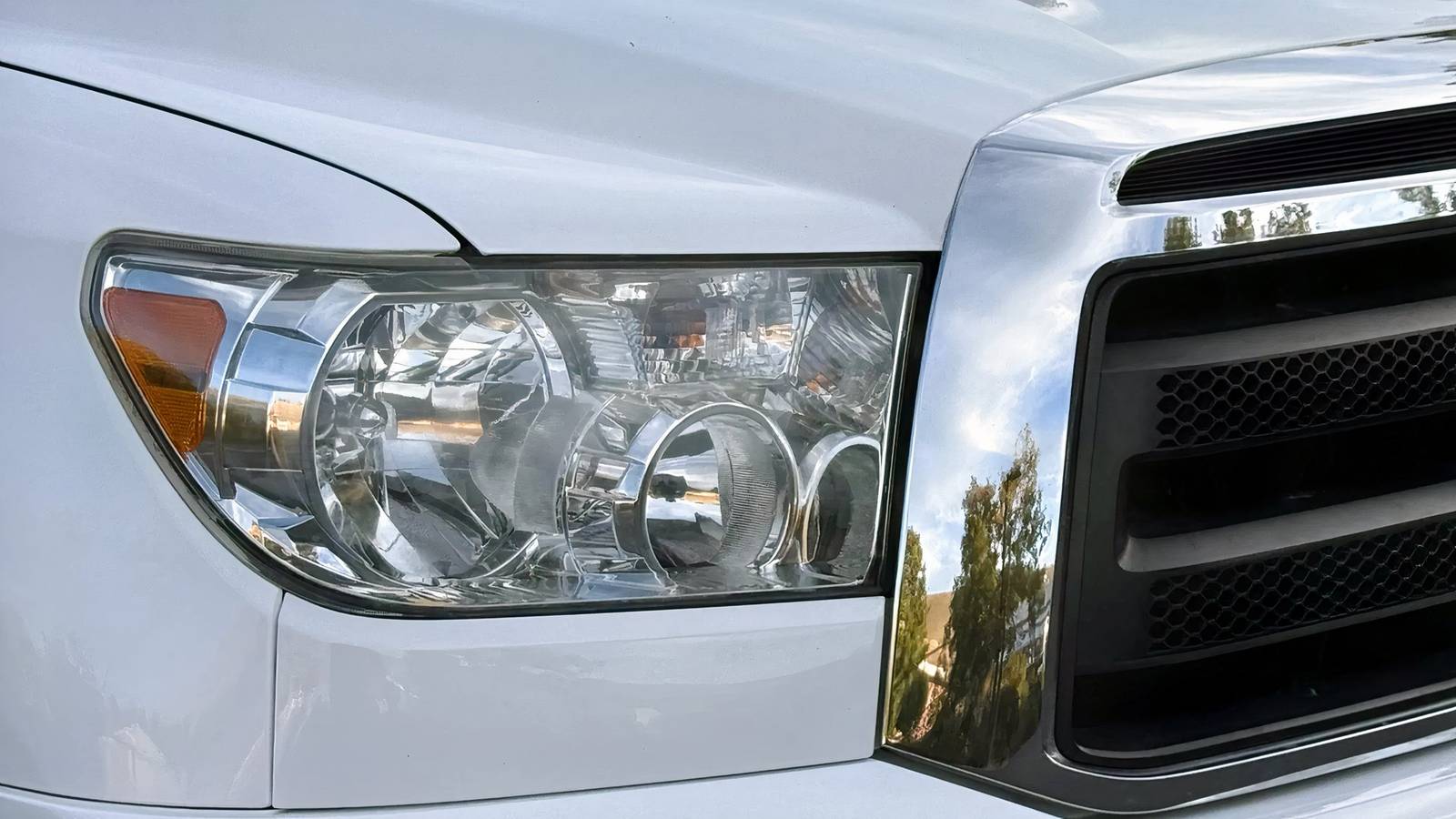
Full-size pickups have a special place in the US automotive space, with a continuous battle for more power, greater towing ability, and more features to make them more suited for work or play. The Toyota Tundra marches to a different beat. It is not the most powerful, nor can it tow the greatest load. But the Tundra has built a reputation over the past decades as possibly the most durable truck in the US, the most likely truck to pass 300,000 and even 400,000 miles without a full drivetrain rebuild.
The Tundra’s reputation is not the result of marketing. This reputation is the result of fleet data, owner records, and teardown inspections going back decades. The Tundra’s longevity is the result of an engineering choice with a focus on long-lasting operation instead of headline numbers.
Overengineering And Over Optimization: Toyota’s Old-School Philosophy

Since the launch of the Tundra in 1999 as the first full-size Japanese truck in the US, Toyota has resisted chasing peak output figures for it. The focus was on thermal stability, mechanical margin, and repeatability under load. These qualities are more important when the truck goes past 300,000 miles than when new. Conservative back then is exceptional decades later.
Built With Headroom, Not Just Targets

In the quest to have the truck with the performance edge over the competition, engineers design components close to their stress limits. Toyota has always built the Tundra engines and drivetrains with significant operating headroom. Everything from the oil capacity to cooling systems, bearings, and rotating assemblies is designed to operate at continuous high load without fatigue. This approach is often cited as a key reason for the Tundra’s extreme mileage.
Body-On-Frame, Done The Conservative Way

All full-size trucks have body-on-frame construction, but these are not all the same. The Tundra has thicker frame rails, a simpler structure, and proven metallurgy. Toyota has evolved this platform carefully over time, allowing issues to manifest and then correcting problems over long production runs.

2026 Toyota Tundra Interior And Exterior Picture Gallery
With upgraded interiors, powerful engines, and enhanced off-road capabilities, the 2026 Tundra is the perfect truck for comfort and capability.
The Engines That Made The Tundra Legendary

In 2022, Toyota launched the third-generation Tundra and replaced the venerable V8 with the twin-turbo 3.5-liter iForce and iForce Max hybrid. Not enough time has passed for many of these trucks to reach extreme mileage. The naturally aspirated V8s that powered the first two generations of the Tundra are often cited as examples of its durability.
4.7-Liter 2UZ-FE: The Original Marathon Runner

The original Tundra came with a V6 and the exceptional 4.7L V8 (2UZ-FE). The latter is widely seen as one of the most durable truck engines ever produced. Toyota is a global brand, and this V8 had to be able to operate in areas with dodgy fuel quality, rough terrain, and extreme duty cycles. The way to achieve this was a focus on low stress, thick castings, and simple valvetrain geometry.


Find 2020 Toyota Tundra and more cars for sale on our Marketplace
5.7-Liter 3UR-FE: The Gold Standard Of Modern Truck V8s

The 4.7-liter V8 was replaced by the 5.7-liter V8 (3UR-FE), and this mill carried the Tundra for the next 15 years. While later trims made 381 horsepower, the engine still used port fuel injection, a forged crankshaft, and conservative cam profiles. This allowed Toyota to avoid the complexity that often plagues other trucks as they get older.

Toyota Tundra Hybrid Towing Capacity: Here’s What You Need To Know
The towing capacity of this hybrid Japanese pickup truck is quite decent and should be on your shopping list if towing is an important criterion.
Drivetrain Simplicity And Stress Management

It is not only the design of the engine internals that determines the lifespan of that engine. The way the transmission is set up is critical, as is the cooling system. Thankfully, Toyota designed the entirety of its heavy-duty models with this very ideology in mind, ensuring that the vehicle as a whole would go the distance while still being able to put in hard work day in and day out.
Transmissions Tuned For Longevity

The five and six-speed automatic transmissions used in the second-generation Tundras (2007–2021) had a bias toward smooth torque delivery, rather than aggressive shift logic. This resulted in less clutch wear, heat buildup, and, of course, long-term internal stress. This is particularly important during towing. Tundra transmissions can and do fail with high mileage, but in the Tundra, it is notably lower when maintenance schedules are adhered to.
Cooling System Designed To Handle Abuse

Thermal cycling kills engines over time as the engine gets really hot and then cools down, and this is particularly important in hot climates and during towing. The Tundra manages this issue with an oversized cooling system. A large radiator, loads of oil capacity, and its conservative thermostat calibration help keep the temperature even, removing the stresses that break engines over time. This pattern is upheld even in Toyota’s modern, non-V8 engines, as it becomes a more prevalent concern as the engine racks up the miles.

10 Legendary Toyota Engines That Refuse To Die
These are the engines that built Toyota’s legacy of reliability.
Maintenance Culture: The Human Factor

Any vehicle, including the Toyota Tundra, will fail if it is neglected and does not receive its regular services, consistent maintenance, and timely repair or replacement when a component does eventually start to break down. And when you own a Toyota, the maintenance bill is often lower than what you may experience in competing models, though it’s always important, no matter the make, that owners be proactive in maintaining their vehicles, especially those with six-figure mileage.
Oil Changes And Fluids

High-mileage Tundras all have records that show conservative service intervals, with frequent oil changes and factory-spec fluids. This is especially critical in helping low-revving truck engines that are designed to last forever. But we need to look ahead as well as the Tundra’s record in the past. What about the twin-turbo V6s that replaced the V8 in 2022?
iForce And iForce Max Hybrid Engines Aim To Uphold The Tundra’s Reliable Reputation

Toyota has replaced the V8 with the 3.5-liter twin-turbo iForce and the same engine with a hybrid drive called the iForce Max. The latter is a hybrid designed for more power, not necessarily fuel efficiency. While four years of running the V6 engines have not produced enough high-mileage data to reach firm conclusions, early reports mention the iForce Max hybrid favorably. And despite its early reliability and recall concerns, it has consistently improved, with reliability scores indicating a growing level of quality as early issues are being ironed out.

It produces more power and torque than the gas iForce — 437 horsepower and 583 pound-feet of torque vs. 389 horses and 479 pound-feet, which means that there is more power to carry out any task, causing less stress on the engine. The hybrid components also carry much of the workload, which means less work for the gas components. That said, Toyota has an excellent reputation for reliability and durability, and it would be surprising if the third-generation Tundra, gas and hybrid, does not carry on the high mileage results achieved by previous generations.