
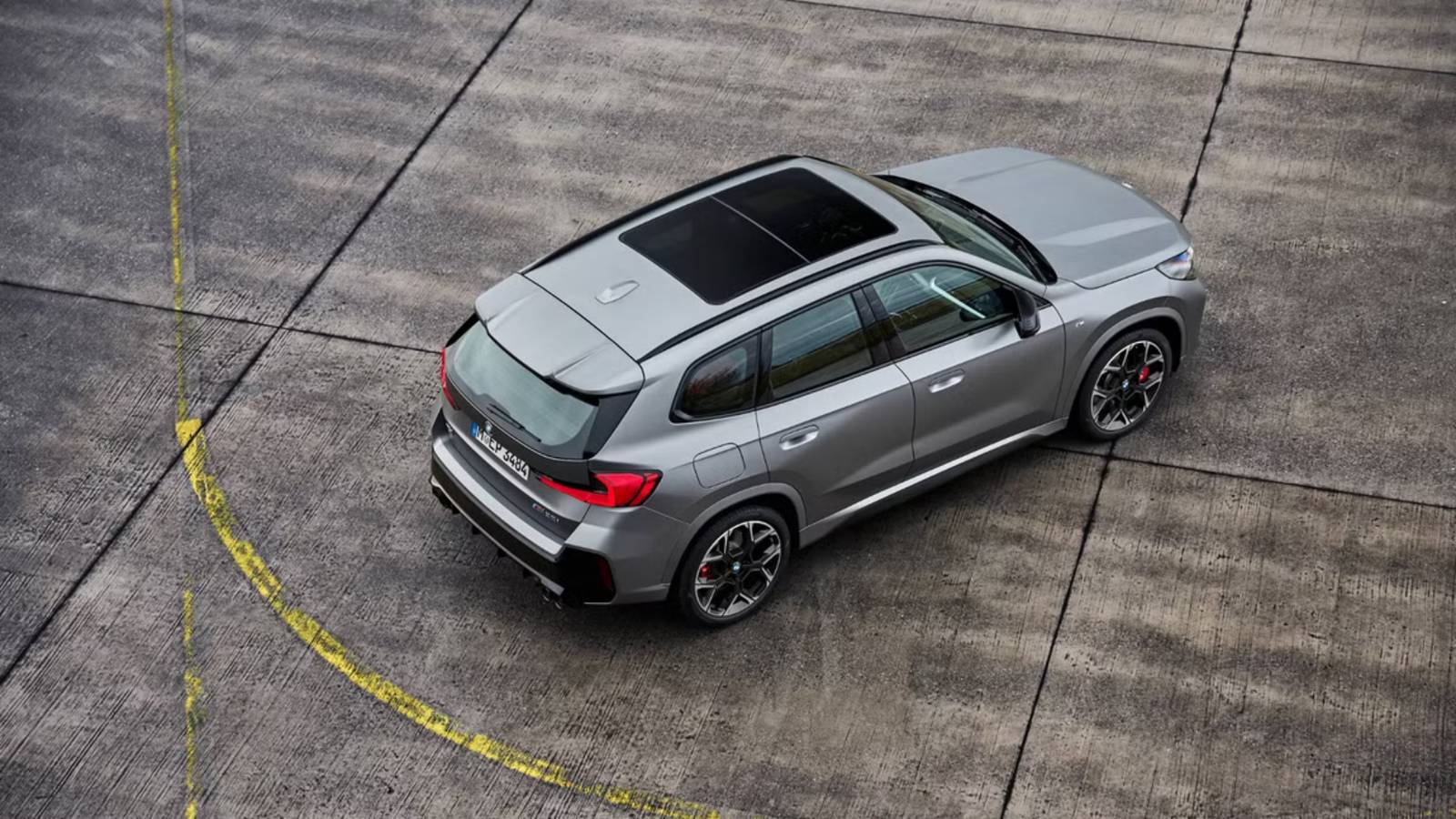
BMW’s SUV lineup in 2026 is a sprawling family: from the compact X1 to the flagship X7, plus the electric iX and the XM. Depending on where you sit in the product stack, reliability can feel like a tiebreaker or a dealbreaker. In a segment where prestige often means complexity, J.D. Power reliability scores help cut through dealer gloss to show the machines that spend more time on the road and less time in the shop.

The Small BMW SUV Most Buyers Don’t Consider
The BMW X1 may not have the fame of its bigger siblings, but it embodies much of what makes the brand desirable.
2026 BMW X6
Reliability Score: 89/100 (J.D. Power)

The BMW X6 is the SUV equivalent of a thriller novel: stylish, head-turning, and above all, surprisingly dependable when the storytelling could easily go sideways. Topping this list with an 89/100 reliability score — among the highest in the entire premium SUV class — the X6 proves that Munich can deliver both drama and durability in one sleek package. J.D. Power owner data suggests this generation has fewer defects and malfunctions compared with many of its siblings.

Underneath its coupe-sloped roofline is the familiar BMW SUV architecture — strong turbocharged inline-six engines or potent V8 powertrains, a balanced chassis, and xDrive all-wheel drive as standard or available depending on trim. In a lineup stuffed with tech and luxury bits, the X6 seems to marry mechanical robustness with driver-engaging dynamics. Ride quality leans toward taut and composed, which fits the model’s sporty ethos without sacrificing too much daily comfort.
What makes the 2026 BMW X6 special isn’t just the badge; it’s the way it holds up under scrutiny. With reliability that punches above typical German SUV expectations, it’s an SUV that feels like it’ll keep its composure long after most trend-chasing crossovers have been recycled into lease returns. If you’re buying one of Munich’s quirkier entries, having the confidence that it won’t demand constant dealer babysitting is a genuine advantage.
- Average Yearly Maintenance Cost: $1,300 (RepairPal)
- Est. Maintenance Cost During The First 10 Years: $19,624(CarEdge)
- Total Recalls: 3 (2025)
- Worst Year To Buy Used: 2011


Find 2026 BMW X6 and more cars for sale on our Marketplace
2026 BMW X5
Reliability Score: 81/100 (J.D. Power)

The 2026 BMW X5 sits at the heart of BMW’s SUV lineup — a sweet spot for many buyers who want performance, luxury, and utility without the bulk of the seven-seat class. In J.D. Power’s 2026 ratings, it scores a solid 81/100 for reliability, reflecting strong owner sentiment backed by a relatively low incidence of defects and malfunctions.

Down on the spec sheet, the BMW X5 range spans from efficient turbo six-cylinder engines to powerful plug-in hybrid variants and even M Performance derivatives. Ride comfort, interior refinement, and cargo flexibility place it squarely in the “family SUV that feels special” category. Fed by BMW’s latest tech suite — including adaptive suspensions and advanced safety systems — there’s a lot going on beneath the skin, but owners seem to report fewer headaches than you might expect from a feature-rich machine.
What’s noteworthy here isn’t just the score itself, but the context: the X5’s blend of capability and reliability makes it one of the few luxury SUVs that can be daily driven without the steady fear of a lit-up dash. It’s not above reproach — BMW tech complexity still matters — but it’s comforting to see this performance midsize SUV hold its own in the reliability rankings.
- Average Yearly Maintenance Cost: $1,166(RepairPal)
- Est. Maintenance Cost During The First 10 Years: $19,460 (CarEdge)
- Total Recalls: 4
- Worst Year To Buy Used: 2014
Find 2026 BMW X5 and more cars for sale on our Marketplace
2026 BMW X7
Reliability Score: 81/100 (J.D. Power)

BMW’s biggest SUV — the three-row X7 — mirrors the X5’s reliability score at 81/100, suggesting that size and complexity don’t necessarily equate to fragility when owner care and engineering tolerance are dialed in. Think of the X7 as the big-brother luxury cruiser: it’s monumental in both ambitions and demands, but it doesn’t ask for disproportionate intervals at the shop relative to what it delivers.

Under the hood, the 2026 BMW X7 pairs robust turbocharged engines with adaptive air suspension systems that smooth out boulevard cruising and cross-country runs alike. It’s an SUV that tries to feel like a luxury lounge on wheels, that can also boogie down when that need should arise, and for the most part, it succeeds.
Where the X7 earns points — and keeps them — is in its build quality across high-stress areas: drivetrain durability, body rigidity, and thermal management. Sure, tech gremlins can still creep into infotainment or electrical options, but those are minor blips compared with genuine mechanical failures. For buyers who want a three-row SUV that plays well with long drives and loaded cargo situations, this reliability score inspires more confidence than cynicism.
- Average Yearly Maintenance Cost: $1,100 (RepairPal)
- Est. Maintenance Cost During The First 10 Years: $20,422 (CarEdge)
- Total Recalls: 3
- Worst Year To Buy Used: 2019

10 Used BMW M Models That Are Affordable In 2025
The used market offers plenty of opportunities for enthusiasts to experience BMW’s Motorsport engineering without breaking the bank.
Find 2026 BMW X7 and more cars for sale on our Marketplace
2026 BMW iX
Reliability Score: 78/100 (J.D. Power)

Moving into electrified territory, the 2026 BMW iX is the brand’s flagship EV SUV — a bold statement of technology, luxury, and electrified ambition. Its 78/100 reliability score from J.D. Power reflects a slightly higher incidence of owner-reported issues than some of the gas-powered brethren, but still places it ahead of many competitors in the burgeoning luxury EV space.

The iX isn’t just another crossover with batteries; it’s BMW’s answer to EVs from Tesla, Audi, and Mercedes — featuring a robust battery pack, dual motors, and a mix of performance levels depending on trim. Its interior tech and connect-centric features are state-of-the-brand, and its electric powertrain offers both brisk acceleration and usable range that make it relevant in a rapidly evolving EV market.
What stands out about the iX’s reliability profile is that most reported issues tend to stem from tech integration and software quirks rather than fundamental drive unit failures. In an EV world where charging electronics, touchscreens, and autonomous aids can trip up owner satisfaction, a nearly 78/100 reliability score is no small feat. It suggests that BMW’s electrification efforts are maturing at a healthy clip, even if there’s still room for improvement.
- Average Yearly Maintenance Cost: $700 (RepairPal)
- Est. Maintenance Cost During The First 10 Years: $11,010 (CarEdge)
- Total Recalls: 1
- Worst Year To Buy Used: 2023
Find 2026 BMW iX and more cars for sale on our Marketplace
2026 BMW X1
Reliability Score: 76/100 (J.D. Power)

The baby of BMW’s SUV roster, the X1 is compact, nimble, and priced to be the entry point for many luxury SUV shoppers. Its 76/100 reliability score from J.D. Power indicates a reasonable balance of build quality and owner satisfaction, even though it sits below some of its larger siblings.

Powering the 2026 BMW X1 are efficient four-cylinder turbocharged engines that pair adequately with an eight-speed automatic and optional all-wheel drive. Its ride quality is composed for city and highway use alike, and the compact footprint makes it an appealing choice for urban buyers who want premium cachet without bulk.
The X1’s score suggests that while it isn’t bulletproof, it delivers dependable performance in most key categories. Most owner complaints are minor and tend to relate to infotainment nuances or dealership familiarity rather than catastrophic mechanical failures. If your day-to-day feels like a mix of urban parking and highway miles, the X1’s reliability profile is solid enough to make it a credible entry point into the BMW SUV pantheon.
- Average Yearly Maintenance Cost: $1,080 (RepairPal)
- Est. Maintenance Cost During The First 10 Years: $18,807 (CarEdge)
- Total Recalls: 3
- Worst Years To Buy Used: 2012-2016
2026 BMW X3
Reliability Score: 74/100 (J.D. Power)

The BMW X3 is arguably the brand’s most recognizable SUV: compact enough for daily life but substantial enough for road trips and family duties. In 2026, it posts a 74/100 J.D. Power reliability score, showing it’s slightly more real-world fussy than pricier siblings, but still fundamentally serviceable.

Underneath the 2026 BMW X3’s sporty-looking bodywork is BMW’s tried-and-true turbo four or inline-six options, a chassis that rewards engagement, and all-wheel drive systems that give it confidence in varied weather. Its dynamics are often cited as the reason buyers choose it in the first place — balanced handling with enough comfort for everyday use.
However, that dynamic edge doesn’t translate perfectly into reliability numbers. Owner feedback suggests more frequent minor electronics or infotainment service events compared with the X5 or X6. The mechanical side — engine, transmission, suspension — generally behaves as intended when routinely maintained, but the accumulated complexity of features weighs on its score. In short, the X3 is fun and polished, but the price of sophistication shows up statistically in reliability.
- Average Yearly Maintenance Cost: $1,034 (RepairPal)
- Est. Maintenance Cost During The First 10 Years: $19,052 (CarEdge)
- Total Recalls: 8
- Worst Year To Buy Used: 2013
2026 BMW X2
Reliability Score: 70/100 (J.D. Power)

Rounding out this list is the 2026 BMW X2, the brand’s compact sport-activity coupe that trades a bit of practicality for sharper styling and a cheekier personality. Its 70/100 J.D. Power score places it at the rear of the reliability pack in 2026 — a reminder that sporty packaging doesn’t always add up to stout dependability.

Shared underpinnings with the X1 mean the X2 inherits similar drivetrain and chassis tech, but in a body that prioritizes looks and handling over utility. Engines are peppy, and the interior feels premium, but owner reports point to more electronic gremlins and occasional nuisance issues than you see higher up the lineup.
What makes the X2 special isn’t its reliability ranking — it’s its character. If you buy one because you want something a bit edgier than a straightforward compact SUV, you might happily live with the quirks. But if your reliability radar is tuned finely, this is the BMW SUV that most frequently prompts a raised eyebrow or an extra dealer trip.
- Average Yearly Maintenance Cost: $1,120 (RepairPal)
- Est. Maintenance Cost During The First 10 Years: $18,882 (CarEdge)
- Total Recalls: 2
- Worst Years To Buy Used: 2018, 2019

10 Luxury SUVs That Are Just As Reliable As Economy Cars
Are luxury SUVs just as reliable as some of the most popular economy cars? Here are ten models that answer with a “yes.”
Unranked Honorable Mentions
- 2026 BMW XM
- 2026 X5 M
- 2026 X6 M
For whatever reason, these models have yet to be, or haven’t ever been, ranked for reliability by J.D. Power. But in an effort to include the entire BMW SUV lineup, we thought we’d at least list them here.

2026 BMW iX First Drive: You Can’t Always Judge A Book By Its Cover
Regardless of how you think it looks, the updated iX remains one heckuva great crossover BEV.
TopSpeed’s Take
BMW’s SUV baton doesn’t transfer evenly from model to model. The X6 surprises at the top of the heap with an 89/100 score, while stalwarts like the X5 and X7 deliver dependable performance and luxury without excessive fuss. The iX shows that electrification and reliability can co-exist — even if tech systems add noise to the data. Down at the bottom, the X2 reminds us that niche design choices can have ownership implications.
Across the board, these J.D. Power scores are snapshots of real-owner experiences. They don’t promise perfection, but they do help separate models that will likely live quietly in your driveway from those that might turn service bays into second homes. Rankings like these also remind us that luxury isn’t just about how a vehicle feels in a test drive — it’s about how it behaves six months and six ten-thousand-mile services in.