
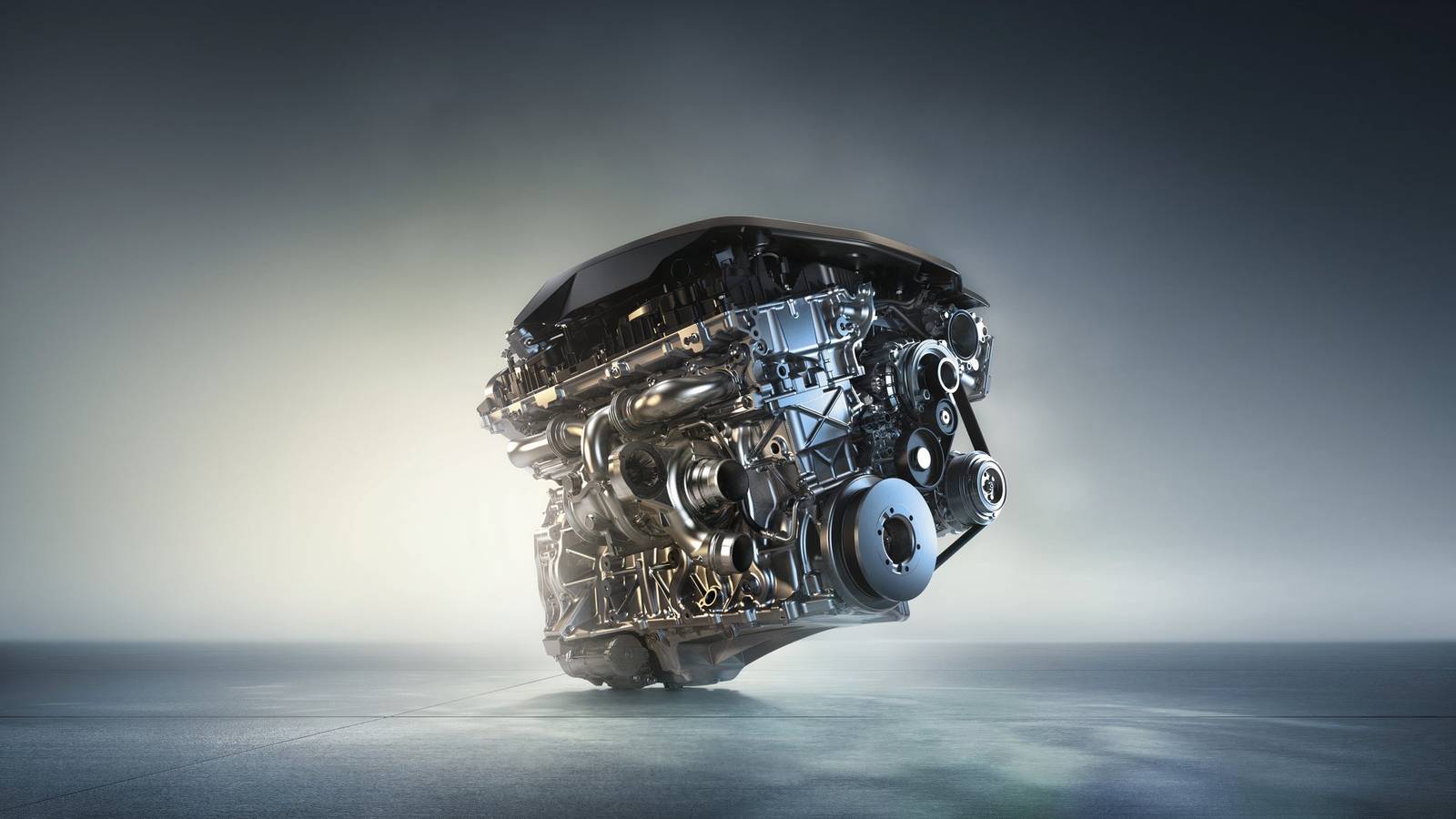
Have a lust for power, but also want a strong platform that can handle abuse? Not too many engines on the market can offer this exact capability, but there is one specific engine that fits the bill: the BMW B58. The 3.0-liter turbocharged B58 inline-six has dominated the performance segment since its debut in 2015 as the go-to platform for tunability and modification.
With a beefy closed-deck construction and near-unlimited power potential, the BMW B58 inline-six provides just about everything you could want from a modern performance engine. Want to know about construction quality, modification capability, and other pertinent details of this coveted BMW engine? Stick around as we break down everything you’d want to know about the BMW B58, the engine that perfectly blends power with durability.
The BMW B58 Is Built Like A Tank

If you want an engine with the highest levels of reliability achievable, it will most likely be a Toyota engine. Toyota, the leading automaker in the world, has long been known for having the highest quality standards of any manufacturer. This is why, when Toyota collaborated with BMW for the revival of the Toyota Supra, many uninformed individuals were left shocked at the curiousness of the partnership. BMW has always been known for its powerful inline-six engines, but the reliability and upkeep costs of these engines have been dubious at best.

That was until the B58 inline-six came along in 2015 and reshaped the narrative. After a period of half a decade of tests and feasibility studies, Toyota gave the green light for the use of the BMW B58 as the flagship engine of the Toyota GR Supra in 2020. Safe to say, if it’s good enough for Toyota, it’s good enough for anybody. Let’s explain why Toyota opted for the BMW B58 in the first place and why they made the right decision by partnering with BMW.



The Design And Construction Of The BMW B58

BMW, for decades, has shaped the inline-six engine to be the very cornerstone of its brand. Yet, turbocharged engines are still a relatively new addition to BMW’s legacy, with their first mass-produced turbocharged inline-six, the N54, being introduced in 2006. The BMW B58, introduced in 2015, is the latest development in the brand’s epic history.

Compared to its predecessor, the N55 inline-six, introduced in 2009, the B58 was an engine for a new era of performance. The BMW B58 improved upon all the strengths that made its predecessor great while strategically targeting and redesigning the previous platform’s weaknesses. The result was nothing short of producing one of the most relevant performance engines of the last decade. Toyota saw BMW’s success with the B58 from afar and was further convinced under closer inspection. Here are a couple of reasons that Toyota’s industry-leading quality standards were met with the B58 engine:
- Modular engine design
- Closed-deck aluminum block
- Forged crankshaft and connecting rods
- Robust mechanical fuel pump and water pump design
The BMW B58 Is The Perfect Size And Shape

While the 2.0-liter turbocharged inline-four is the most ubiquitous performance engine available nowadays, the majority of these compact engines lack high-stress durability once you start pushing the power levels past stock. Making a 300-horsepower turbo-four reliable is hard enough, but 400 or 500 horsepower in OEM applications is mostly unheard of. In the aftermarket, you’ll have to spend a pretty penny to make a turbo-four reliable and achieve those numbers. That is where the increased displacement, cylinder count, and inherent balance of a 3.0-liter turbocharged inline-six come in.

Just add two cylinders to an inline-four and, voilà, you have an inline-six engine. In our current age of modular engine design, the inline-six is the obvious natural progression of an inline-four, whereas a V-6 engine is something entirely different. Yet, what about displacement size? Why 3.0-liters? If there is anything both BMW and Toyota understand, it is that a 3.0-liter is just about the perfect displacement for performance applications.

If you look across the entire market of available inline-six engines today, nearly all of them are about 3.0-liters. The fact is that with this amount of displacement, figures of about 500 horsepower can be produced reliably in stock form, which is still more than enough for the majority of performance applications. Since the BMW B58 has been so successful and well-received since its introduction, it has served as a catalyst for many automakers to ditch the once-trusty V-6 and take up the inline-six platform.

10 Most Powerful BMW Engines Ever Made
Discover the history of the royalty of German performance engines throughout the decades.
The BMW B58 Offers Unreal Power Potential

So, how much power can a BMW B58 inline-six make and still be reliable? Well, let’s first take a look at the highest-horsepower B58-powered production car available on the market, the 2025 Toyota GR Supra A90 Final Edition. This unique Supra model had a limited run of only 300 units and was available exclusively in Europe and Japan. The A90 Final Edition produces 434 horsepower and 421 pound-feet of torque through a series of performance modifications. The list includes an improved intake system, a high-performance catalyst, and Akrapovic Titanium exhaust, and most importantly, an updated engine tune, which means more boost. As you can see, the recipe for more horsepower is not that complicated. Yet, what if you took your B58 engine a couple of steps further than what is offered by any stock application? Let’s break it down.
What To Expect From A FBO B58 Build

Once we start looking at aftermarket options, it is easily possible to modify even a Gen 1 B58 (pre-2018) to achieve serious power levels. An average Stage 2+ Gen 1 B58 running E30 fuel, which is possibly without major fueling upgrades, can easily reach the 450 wheel horsepower range. These gains are attributed mostly to the upgraded downpipe, intercooler, engine tune, and the E30 fuel.

Other modifications can provide additional increases, but mostly function as supporting mods. With the addition of port injection, high-pressure and low-pressure fuel pump upgrades, power levels can exceed 500 wheel horsepower, but at that point, you are pushing the limits of what is possible with the stock turbo. So let’s talk about what you should expect when pushing past this level if you are one of the select few pondering a turbo upgrade.
Going Beyond FBO, Upgraded Turbo And Beyond

If you are even considering going “big single” on a B58, you are now officially within the one percent of B58 owners. FBO power is more than enough to get you arrested and then some, so upgrading the turbo means you are okay with pure reckless abandon. Another consideration is how much money you are going to have to spend to do it right. An upgraded turbo job can be a five-figure endeavor if you add up all the supporting mods, even if you opt for the most economical routes. Yet, believe it or not, there are more economical routes than others if considering an upgraded turbo on a B58 platform.

You have two real options in this situation: a stock manifold direct-fit turbo upgrade (more affordable) or a full aftermarket manifold and turbo kit (more potential, but more expensive). If you don’t want to deal with custom tuning, then a direct-fit turbo upgrade can get you about 550 to 600 wheel horsepower with off-the-shelf maps. Anything above 600 wheel horsepower requires a custom tune, which means complexity and costs go way up. While figures of 650 to 800 wheel horsepower and even greater are certainly possible, it’s known that the 650 to 700 wheel horsepower range is the max you can push before reaching the limit of power versus reliability.

The 10 Most Groundbreaking Turbo Systems Of The Past 20 Years
These are the key vehicles that ushered in the latest in turbocharged innovation.
Average Ownership Costs Of A Modified BMW B58

Let’s say you have a Gen 1 B58 and you want to get the best bang-for-buck value out of your upgrades. The final stage for most B58 owners is a Stage 2+ FBO build or the 450 to 500 wheel horsepower range, as after that point, costs start to increase exponentially. So let’s map out what the average cost of building and maintaining a Stage 2+ FBO B58 build would be.
The Average Cost Of A Stage 2+ FBO B58

Let’s start with a baseline. According to RepairPal, the average annual maintenance cost of an unmodified Toyota GR Supra is about $561. If you choose to modify your B58-powered car significantly, this number will surely increase, as service intervals will be shorter and consumable costs will increase. A diligent FBO B58 owner would set aside at least double or triple that figure a year for standard upkeep items, as well as for unexpected issues or failures. This price average operates on the assumption that the car has a spotless maintenance history and is in optimal condition without any pending service items.

Depending on whether you opt for a DIY or pay a specialized shop for installation and your brand/parts selection, the build costs for Stage 2+ can vary significantly between about $2,000 to $5,000 for the parts alone. Stage 2+ consists of an engine tune, downpipe, intake, and intercooler. Gen 1 B58 engines will also require a B58TU (Gen 2) or other upgraded high-pressure fuel pump to run E40 fuel. With this upgrade, it is possible to achieve about 550 wheel horsepower on E40 fuel without any modification to the factory low-pressure fuel pump.

If you don’t have near-unlimited free time and the tools, space, and experience to DIY, add another $2,000 to $4,000 in labor costs at a specialized speed shop. If you add it all up, the build cost of a Stage 2+ FBO setup will be about $5,000 to $8,000. Then add the routine yearly maintenance and consumable costs, rounding up to about $2,000 to $3,000 a year, depending on track usage, tire selection, and other factors. Is the B58 durable and powerful? Yes. Is the modified B58 cheap to build or maintain? Not at all.
Sources: BMW, Toyota, RepairPal, ETS, MHD, BMS, Precision Raceworks, Doc Race, ECSTuning, Pure Turbos, VRSF