
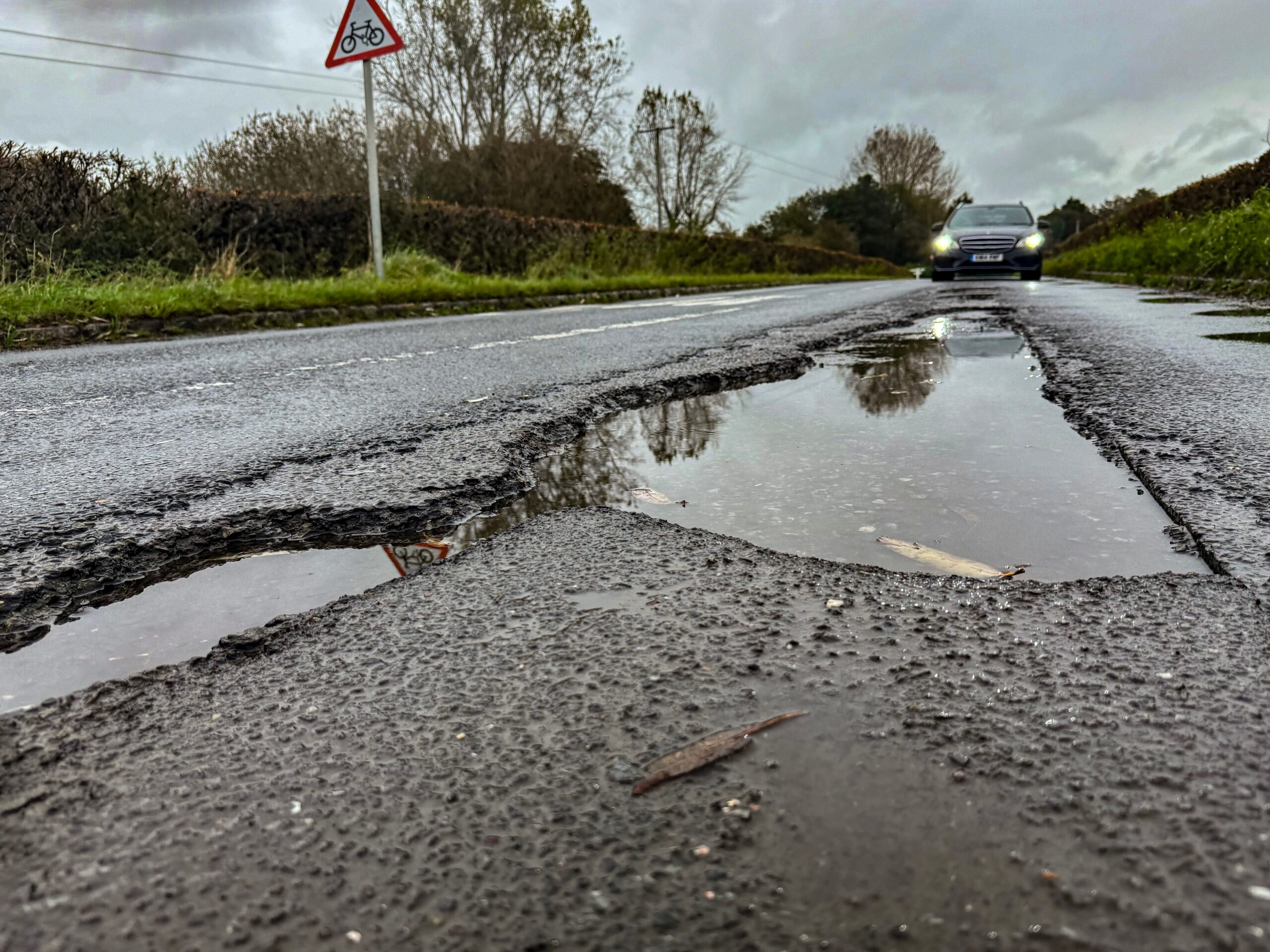
But Mike Hansford, who leads the Road Surface Treatments Association, said Britain’s pothole problems cannot be explained by thin layer surfacing materials alone.
He added: “It was almost like a perfect storm, because we introduced these thin surface course systems and at the same time stopped doing all the surface dressing on the scale we had been doing.”
Hansford said experienced engineers also left the industry at the same time, creating gaps in knowledge around surface treatments.
According to Hansford, thin surface course systems depend far more heavily on preventative treatments such as asphalt preservation or rejuvenation, surface dressing or microsurfacing, to protect and seal the road surface. But surface dressing, where roads are sealed using bitumen and stone chippings, has become less common.
He said: “It has been reduced from over 90 million square metres in 2008 to 35 million square metres in 2023 at its lowest. That has been a significant contributory factor to why we are where we are.”
Why do roads abroad seem better?
The Netherlands took a slightly different approach. Professor Bert van Wee from the Delft University of Technology said Dutch authorities began introducing quieter road surfaces in the 1980s despite knowing they would wear out more quickly than traditional materials.
“We still do it, because the benefits for road safety, visibility and noise are more important,” he explained.
“It’s a deliberate choice. It’s not that they forgot that they needed to replace those asphalt layers sooner than the traditional types of asphalt.”
Back in the UK, Malcolm Simms of the Asphalt Industry Alliance said preventative maintenance still has an important role to play, but he added that roads already in poor condition may first need more extensive work.
“In a lot of cases, the surface layer is only as good as what it is laid on,” he said.
“If you have a weak foundation and you put something relatively thin on top of it, you still don’t have the strength underneath.”