
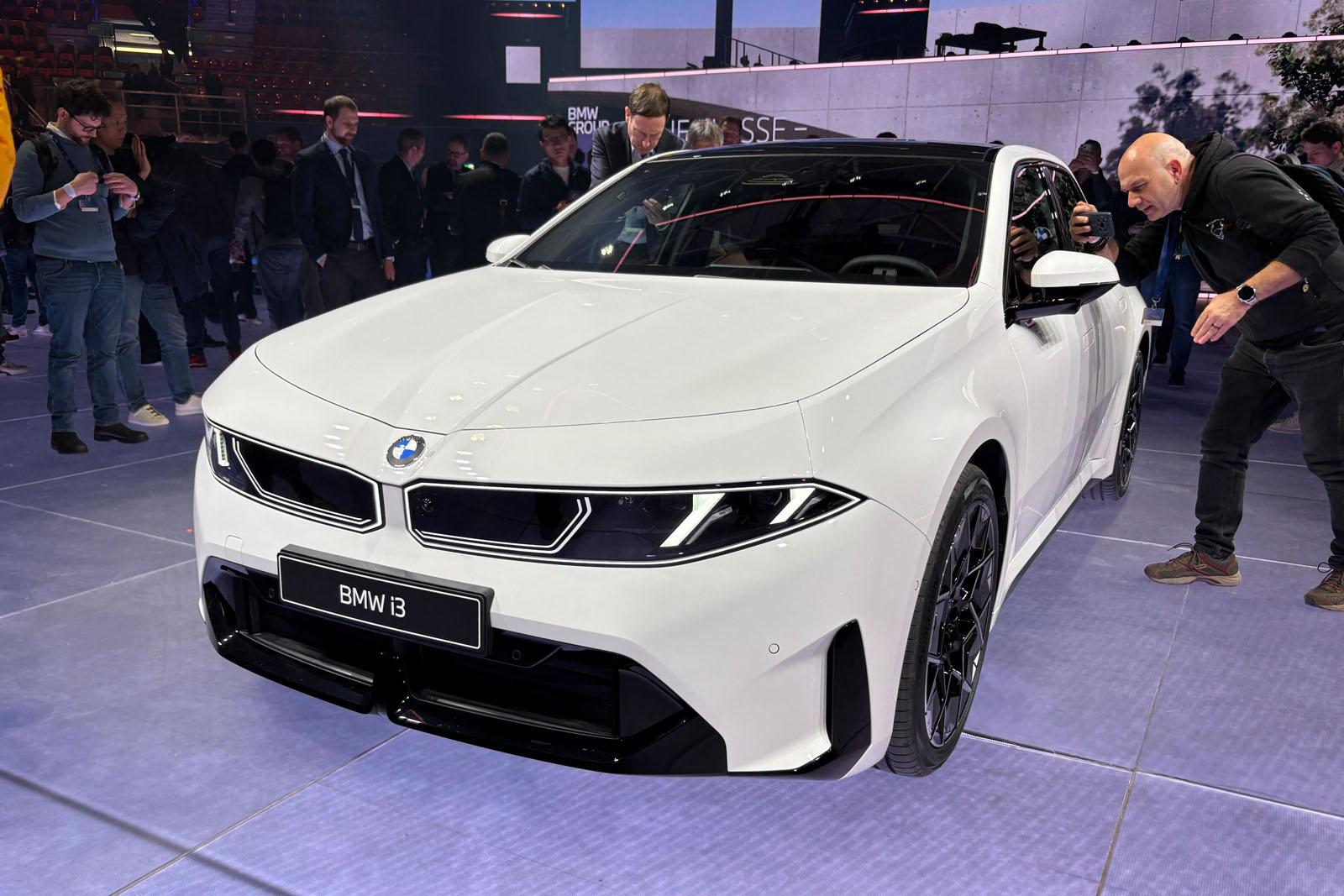
New i3 saloon is among the UK’s longest-range EVs – and cheaper than its Mercedes-Benz rival
Order books for the new BMW i3 – the first electric 3 Series available globally – have opened, with prices for the saloon starting from £53,005.
Although it is considerably costlier than its outgoing petrol and plug-in-hybrid counterparts (from £41,945 and £47,210 respectively), it undercuts the rival Mercedes-Benz C-Class Electric, which starts at £57,995.
The second model of the Neue Klasse era, the i3 was revealed six months after the larger iX3 SUV with which it shares most of its technical make-up, including the EV-first 800V Gen6 platform. It inherits its name from the seminal electric hatchback that went out of production in 2022.
Despite offering the similarly sized and shaped i4 since 2021, BMW delayed introducing an electric 3 Series until technology could match the performance of its combustion-engined equivalent.
Alongside the i3, BMW will continue to sell the current CLAR-based ICE 3 Series. It will soon be heavily updated to bring it in line with the eighth-generation car both in terms of design and technologies, meaning it “is basically a new car”, BMW engineers told Autocar.
Although it will initially be sold in saloon form, the i3 will also spawn a Touring estate variant.
A hot M3 EV, previewed by the M HP BEV test mule, is due in 2028 and promised to “set new standards” for electric performance.
The i3 will be offered exclusively in 50 xDrive form at launch, but other variants are planned.
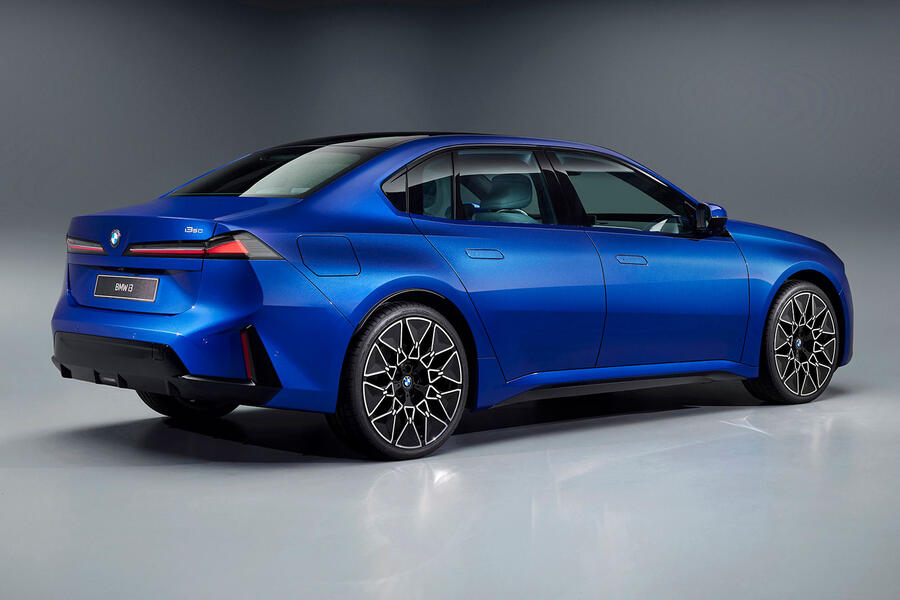
At its centre is a 108kWh nickel-manganese-cobalt (NMC) battery that helps achieve a range of 567 miles – almost the most offered by any EV in the UK, outdone only by the incoming update for the Mercedes-Benz EQS, which cracks 575 miles.
Despite using the same battery as the iX3, the i3’s range is 67 miles longer. Engineers said this jump in performance is primarily down to the more rakish profile of a saloon.
The Gen6 platform allows for a car’s front seats to be bolted directly onto the battery pack, meaning the roofline can be kept as low as possible, improving aerodynamics. Another key attribute of the saloon is that it has a completely closed, smooth underbody that aids airflow.
When that range is depleted, the i3 can complete a 249 mile top-up in just 10 minutes when charging at its 400kW maximum DC speed. AC charging is rated at a maximum of 22kW.
Grunt comes from two sources: a 322bhp electrically excited synchronous motor at the rear and a 165bhp asynchronous motor at the front. These combine for 463bhp and 476 lb ft of torque.
BMW hasn’t yet disclosed a 0-62mph sprint time, but it’s expected to be around 4.0sec, despite the car weighing 2.3 tonnes.
While the i3 shares its platform with the iX3, there are significant technical differences. For example, the i3’s springs are softer, the stiffness of the top mount bushings have been reduced and it’s fitted with different anti-roll bars, resulting in less yaw and roll inertia.
“It’s easier to get good rolling behaviour and comfort” from the i3 than the iX3, engineers told Autocar, adding that a quicker steering ratio and a focus on improved aerodynamics at higher speeds creates a “distinctive character of the new 3 Series”.
The i3 also achieves the same 50:50 front-to-rear weight distribution as the SUV.
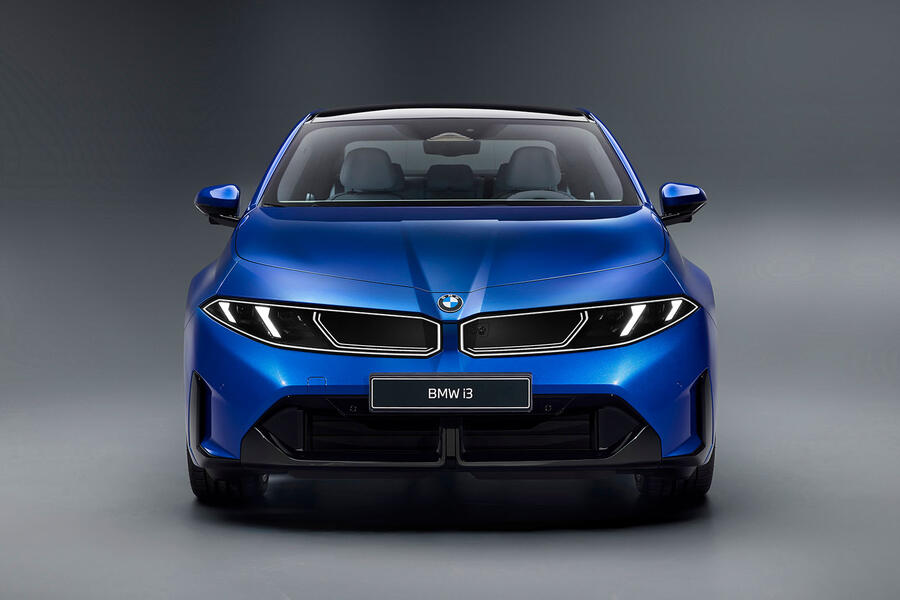
At 4.76m long, 1.87m wide and 1.48m tall, the i3 is an all-round bigger car than the current ICE 3 Series, but it still offers “typical BMW sedan proportions”, with a long body and short overhangs, BMW’s compact car design chief, Oliver Heilmer, told Autocar.
Its key addition is the new nose design, which is a “fresh interpretation of 3 Series face”, said Heilmer. Drastically differing from the current car, the design follows the same Neue Klasse philosophy as the iX3, combining the headlights and kidney grilles into one element. Yet whereas the SUV’s grilles are tall and narrow to showcase the car’s height, the i3’s are set wider to emphasise its width.
Designer Felix Staudacher told Autocar that the i3 brings “a whole new design language” to the 3 Series for its eighth generation, because the team “are allowed to play with our icons”. Despite its drastic new look, BMW said it’s still “immediately recognisable as a 3 Series”. Staudacher added that it sets “the standard for a whole new generation of BMWs”, because the 3 Series is the “original measure of what defines BMW”.
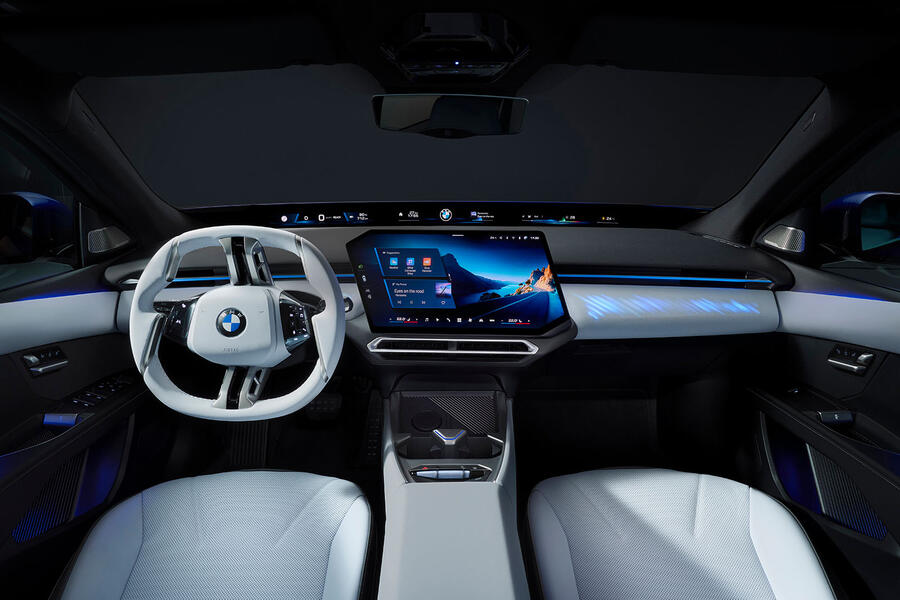
The interior too has been overhauled and mirrors that of the iX3. It’s centred around a slanted 17.9in infotainment touchscreen that houses the controls for most of the car’s functions and runs BMW’s latest iDrive software.
There is no instrument cluster, with a 43.3in-long ‘Panoramic iDrive’ display being fitted in its place. As in the iX3, this runs across the length of the dashboard just under the driver’s eyeline and displays key details such as vehicle speed and state of charge.
The loss of the instrument panel “gives us the possibility to rethink steering architecture”, so the wheel offers “the best ergonomics” of any BMW has offered, said Staudacher. Indeed, it’s much thicker than before and, for the first time, adopts haptic controls.
The updated ICE 3 Series will mirror these changes.
The i3 will be built at BMW’s main Munich plant.