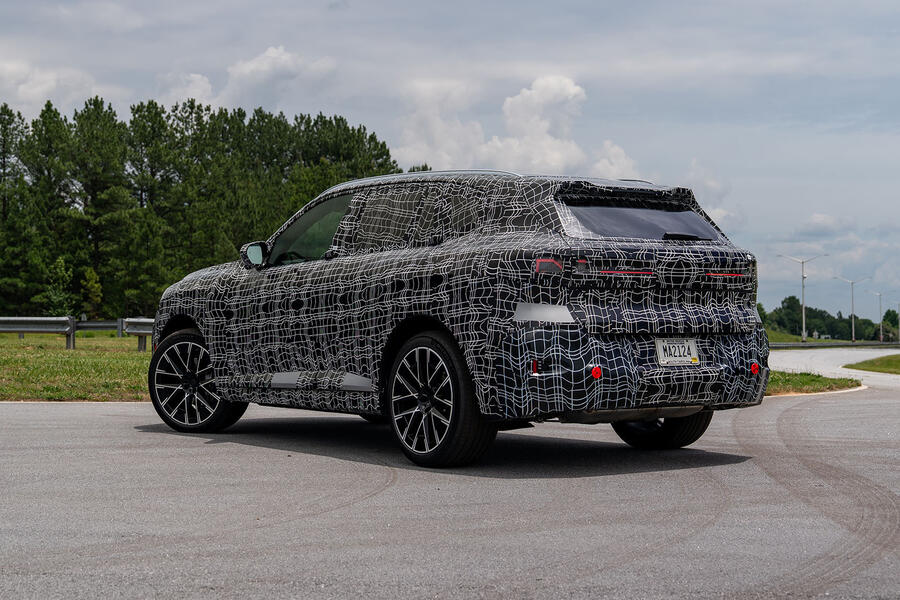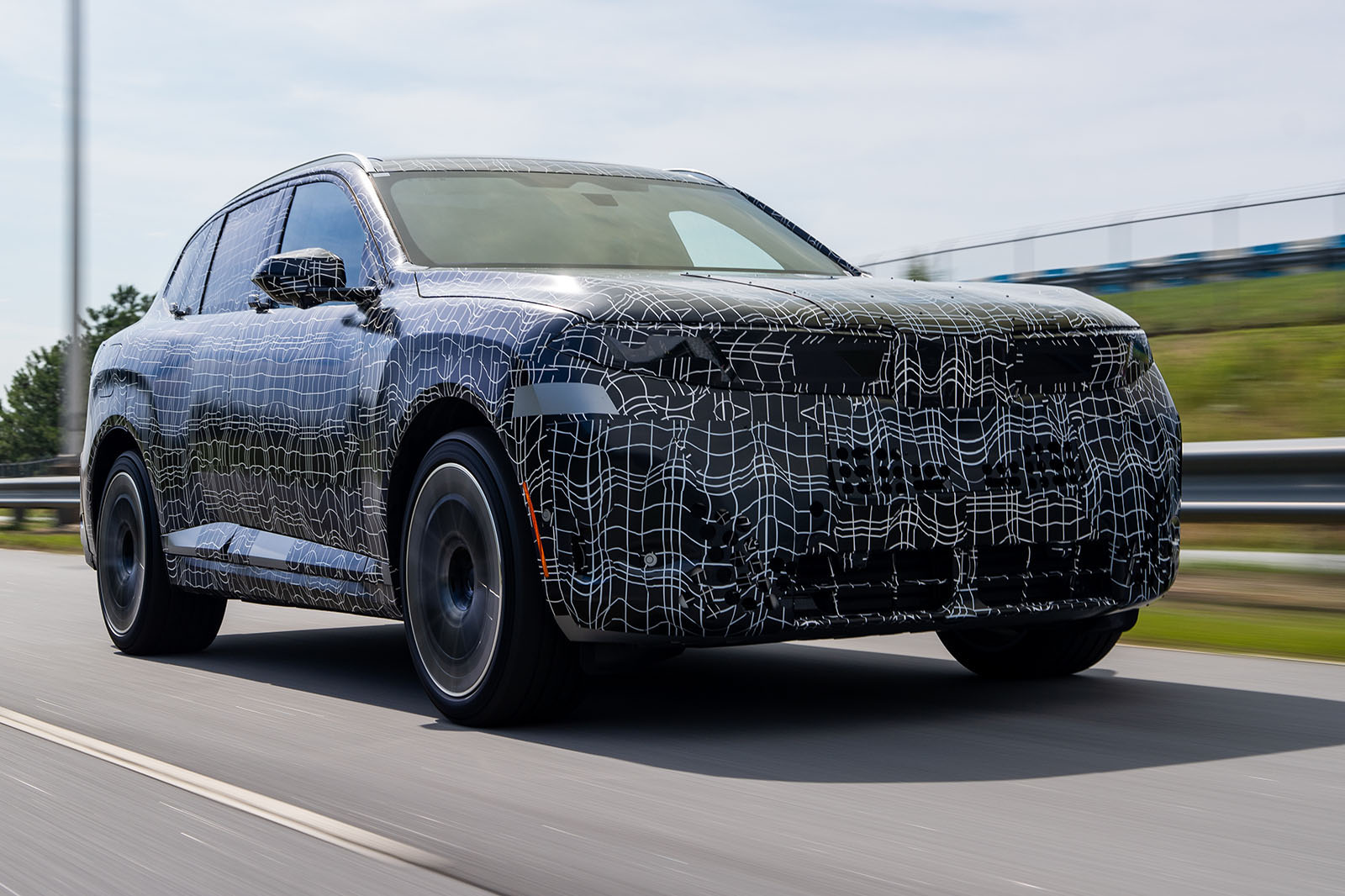

New-era styling and cabin but familiar mechanicals for the new ICE SUV
A new generation of BMW’s seminal large SUV is coming, and the big news is that there will be an electric BMW iX5 with a 141kWh battery, but have no fear: there will be a fulsome range of other powertrains as well.
The exact model line-up has yet to be announced, but the core will remain a set of 3.0-litre straight-six powertrains: a mild-hybrid petrol, a mild-hybrid diesel and a plug-in hybrid petrol. We expect a more powerful M60 PHEV to join the range, as well as a hot X5 M with the same powertrain as the M5. For now, things are nice and simple.
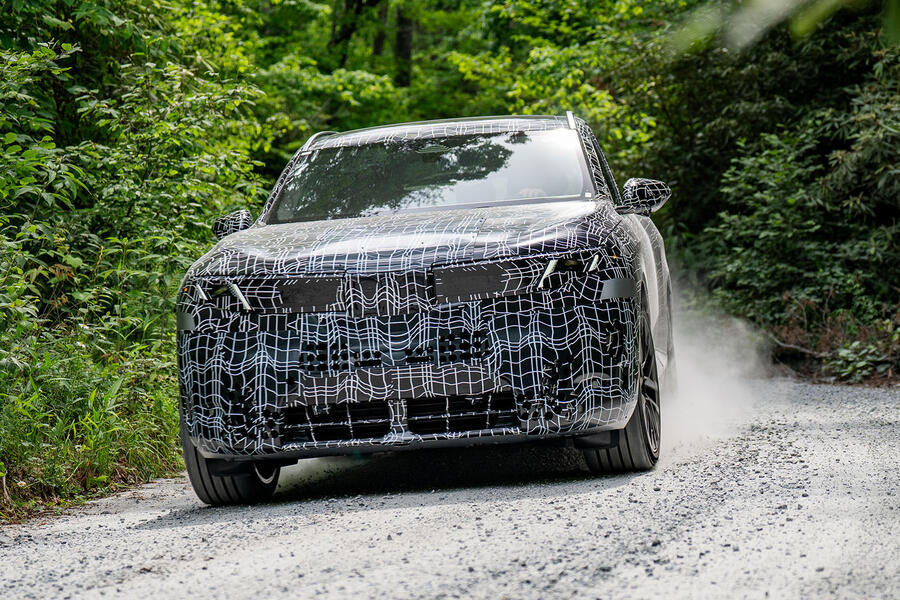
The ICE X5 adopts the same smooth Neue Klasse styling as the iX5, and will also get all the same structural and suspension upgrades. It sticks with the outgoing generation‘s CLAR platform, but grows a bit in all directions. For all the details, have a look at the full review of the iX5. Here, I’ll just go over the differences for the petrol and plug-in hybrid models.
We don’t have any details about the diesel yet, but it won’t be too different from the current xDrive30d and xDrive40d.
The petrol 40 xDrive (yes, they’ve turned the naming formula around between generations just to confuse you) uses the latest evolution of the ‘B58’ engine with a bit more grunt than before, going from 375bhp to 394bhp. Torque remains at 398lb ft.
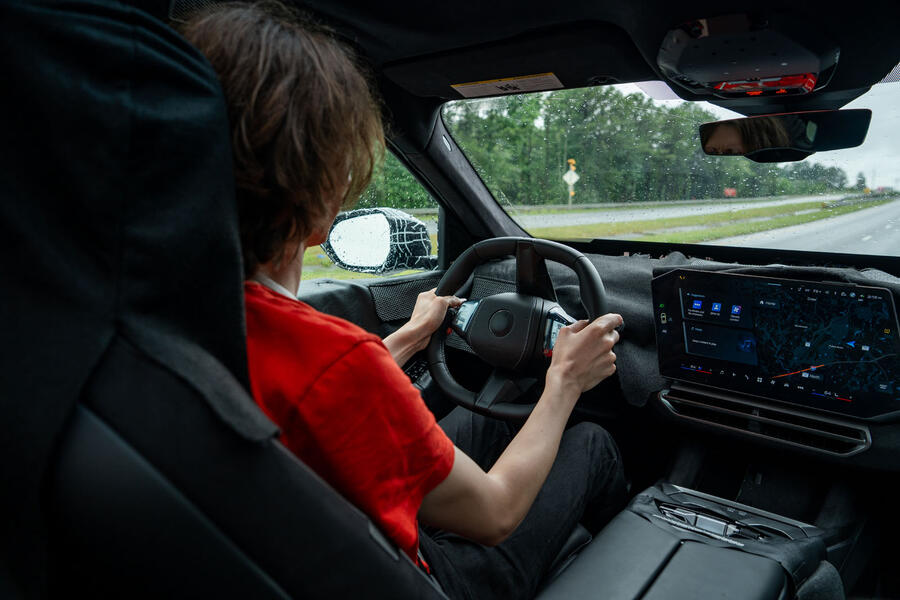 It’s still a brilliant engine: torquey, happy to rev and with a natural straight-six sound (even if it is augmented by the speakers).
In the hard-working development car that I sampled, there was a bit of vibration and the start/stop system was a little jerky. Once on the move, though, the eight-speed automatic gearbox was smooth and responsive on the paddles.
On the normal air suspension, it feels similar to the current X5, which is to say broadly comfortable but slightly more wooden and connected than some of the more magic-carpet options in the class.
On the surface, the 50e xDrive’s PHEV drivetrain hasn’t changed from the previous generation. The vital specs are the same: 308bhp from the engine, 194bhp from the electric motor, 18.7kWh battery for around 60 miles of electric range.
The engineers say the cells are different internally and the motor is slightly more efficient, there’s more armour on the bottom of the battery to protect it from being punctured, and the handover between electric and engine-on running is smoother than before, but I can’t help being disappointed that they haven’t managed to take it to the next level.
While BMW says that its customers are happy with the current PHEV’s electric performance, it’s beginning to look a bit last-generation, given the way some of the Chinese players are starting to offer EV power and range in their PHEVs.
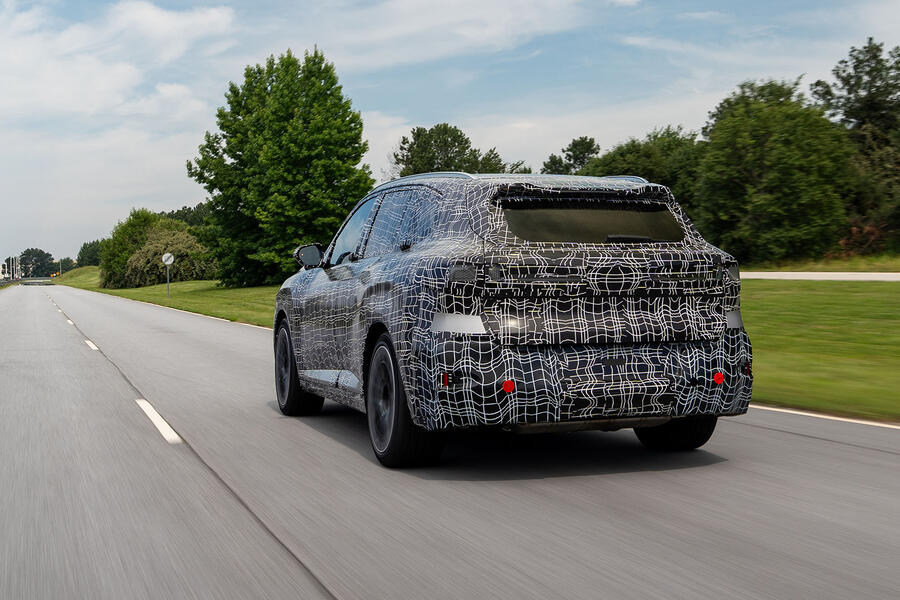
On electric power alone, it’s possible to accelerate to motorway speeds and up to 87mph, just not very quickly. It’s only when the six-cylinder engine fires up that you’re getting the power and soundscape that’s worth paying for.
My test car had the active anti-roll bars and four-wheel steering, and they do enhance the experience. The point of the active anti-roll bars seems less to improve the handling and more to benefit comfort, because when you’re just driving in a more or less straight line they can be disconnected to give the suspension freedom to move. The result is a noticeably smoother ride than on the mild hybrid and iX5 EV that lacked them. The rear-steering adds some agility and low-speed manoeuvrability without making the handling nervous or distant, as it can do on some cars.
Having said all that, my favourite of the three X5 variants to drive was the EV. Although there is a lot of weight, it’s positioned low down, making the iX5 feel a bit more planted than the others.
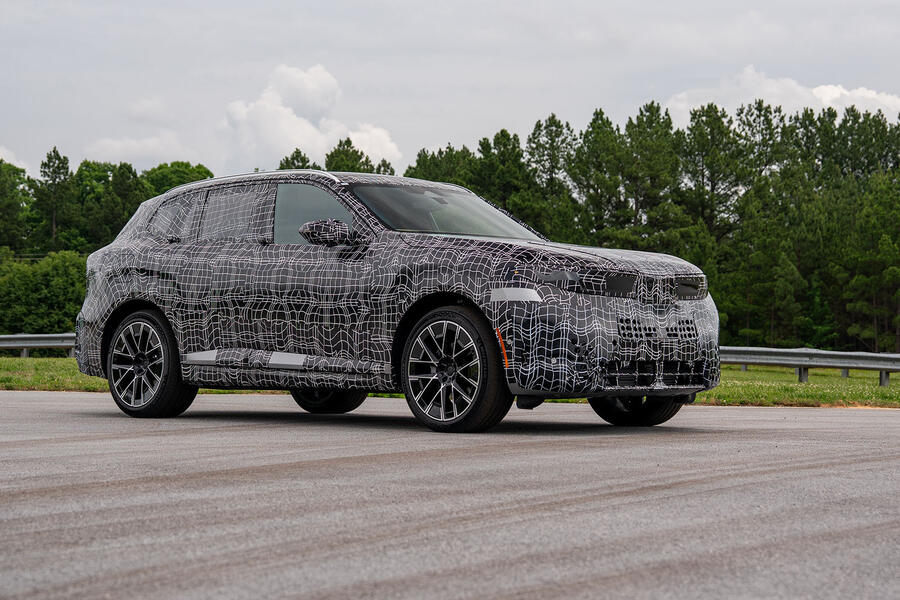
Apart from the design and infotainment, which are the same as on the iX5 and still largely secret, things look like business as usual for the X5. There isn’t a whole lot wrong with the current X5, so in a way that’s quite comforting. The diesel and the EV will arrive first in March, with the other versions following later. Assuming prices remain more or less the same, the X5 should continue to do well.
BMW X5 40 xDrive
Big visual changes, smaller mechanical ones. The X5 continues to possess a wide range of talents, centred on great engines
Price £85,000 (est)Engine 6 cyls in line, 2998cc, turbocharged, petrol, plus ISGPower 394bhp at 5500rpmTorque 398lb ft at 1950-4800rpmGearbox 8-spd automatic, 4WDKerb weight 2300kg (est)0-62mph 5.3secTop speed 155mphEconomy 30mpg (est)CO2, tax band 210g/km (est), 37%Rivals Audi Q7, Mercedes-Benz GLE, Porsche Cayenne