
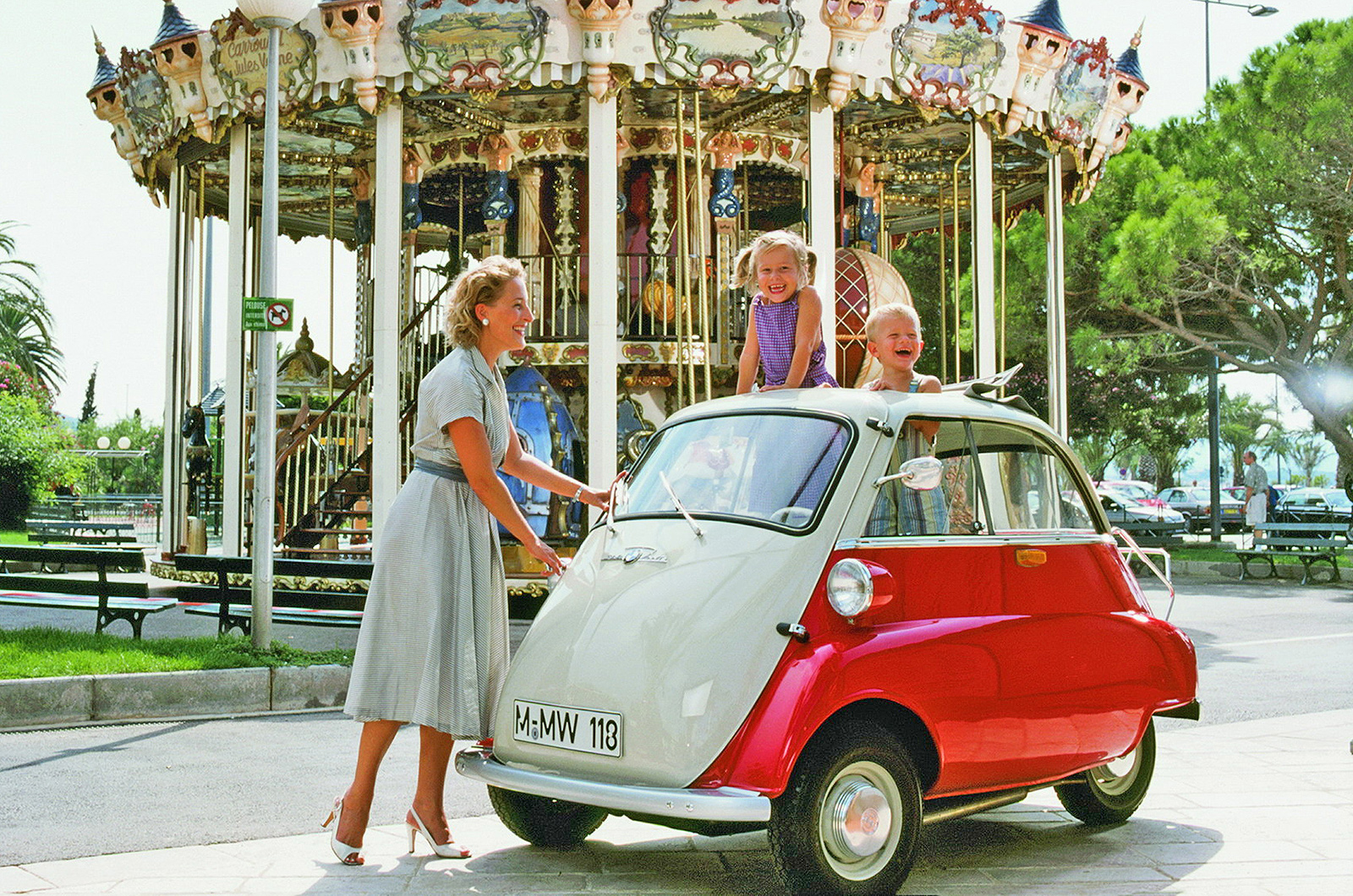
In the 1950s a huge industry sprang up across Europe, building microcars.
Everyone wanted mobility but many couldn’t afford a ‘proper’ car, while used cars were in short supply. The answer was a glut of tiny vehicles, usually powered by two-cylinder engines and clothed in glassfibre – the new wonder material of the age. Glassfibre made small-scale production viable, although some microcars featured steel bodyshells.
Throughout the fifties many of these companies flourished, but when the Mini appeared in 1959 it killed off many microcar makers at a stroke, although some continued into the 1960s. Some microcars were ingenious while many were shockingly bad – we’ll leave you to work out which is which:
Peel P50 (1962)
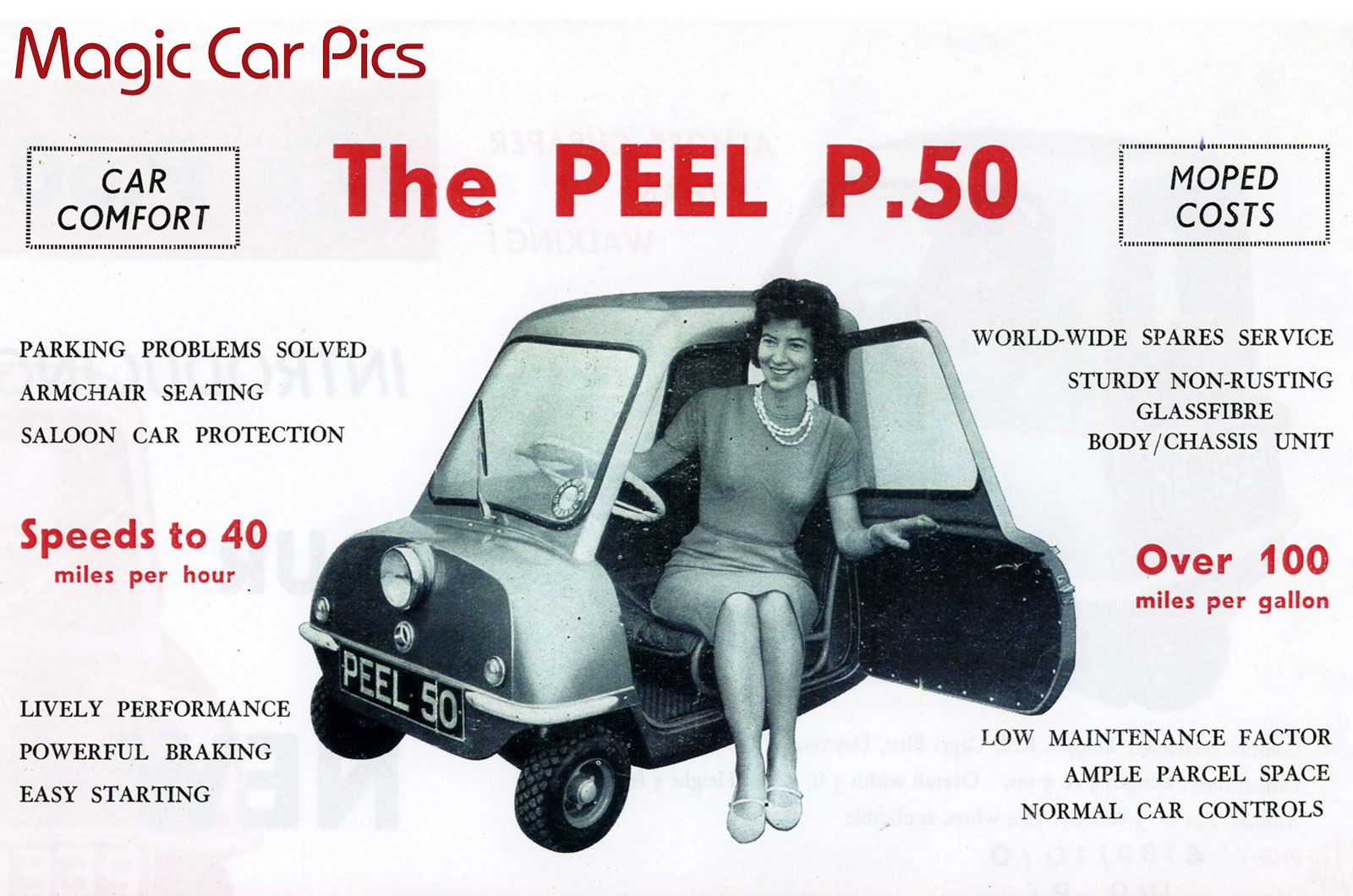
We might as well start with the smallest production car ever made – at least according to the Guinness Book of Records. Made by the Peel Engineering Company on the Isle of Man, the three-wheeled P50 came in red, white or blue. Originally built between 1962 and 1965 (50 were made), the P50 is now back in production in both petrol and electric forms, and we’ve just driven it. Our verdict? “A 4.8bhp happiness generator.”
Biscuter (1953)
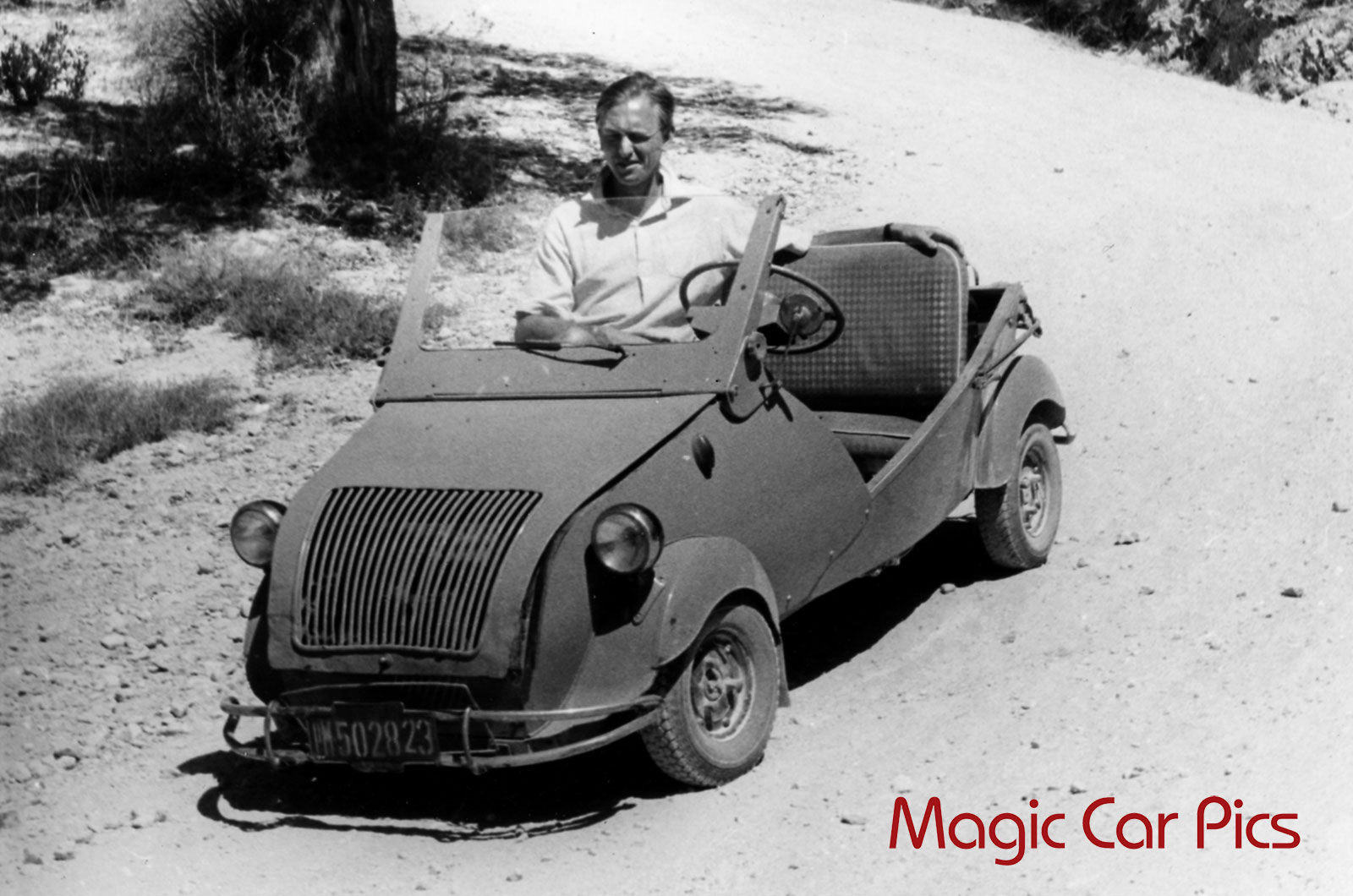
Incredibly, around 10,000 of these Spanish-built torture devices were made, between 1953 and 1960. Even more incredibly, the Biscuter’s origins lay in the Biscooter, an economy car created by Gabriel Voisin, who built some of the most luxurious and expensive cars of the 1930s.
Brutsch Mopetta (1956)
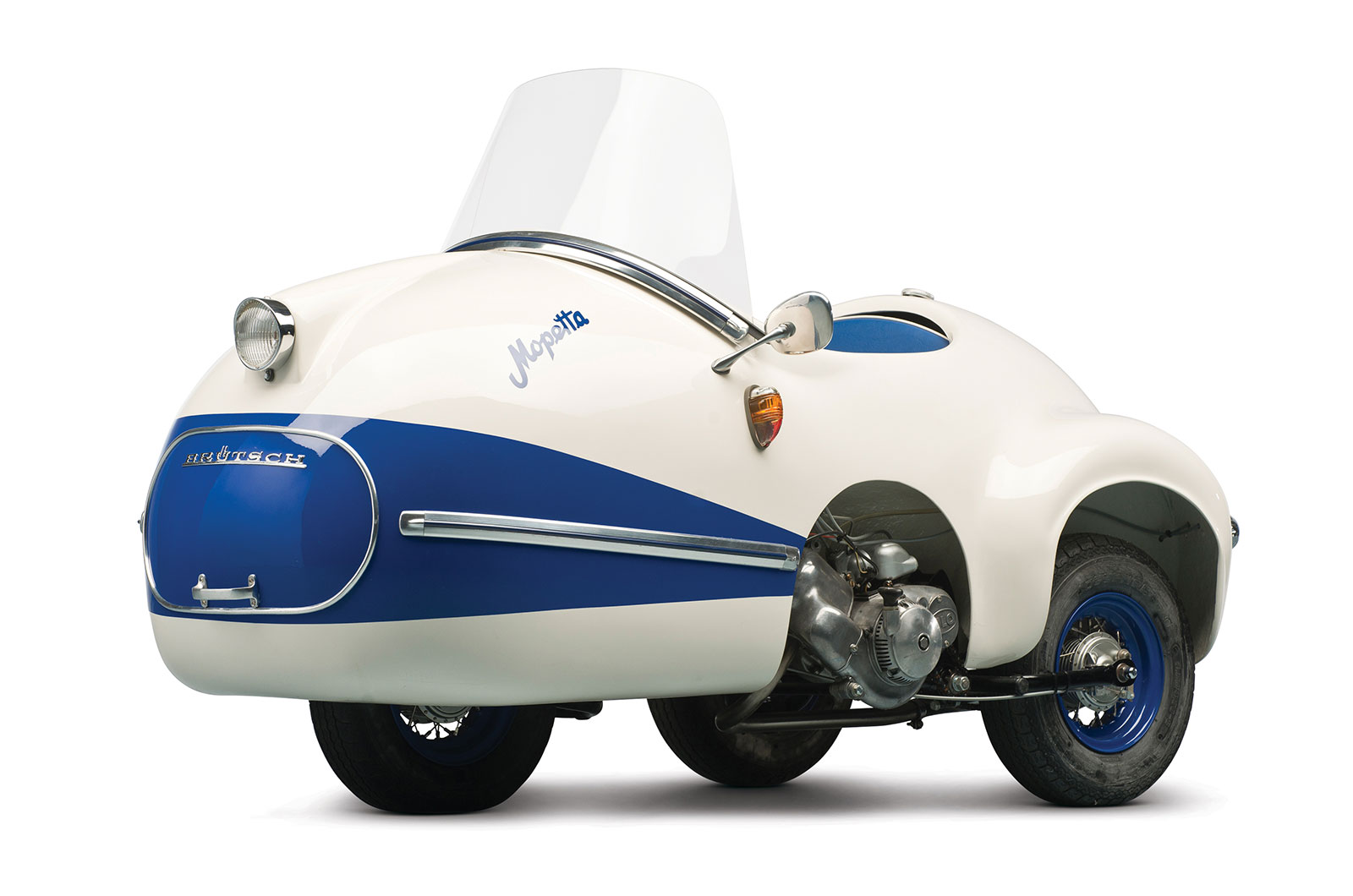
Making the Peel P50 look luxurious (at least it had a roof), the Brutsch Mopetta took minimalism to extremes. Capable of seating just one, and with a pull-start 50cc engine, just 14 examples were made between 1956 and 1958.
Brutsch V2 (1956)
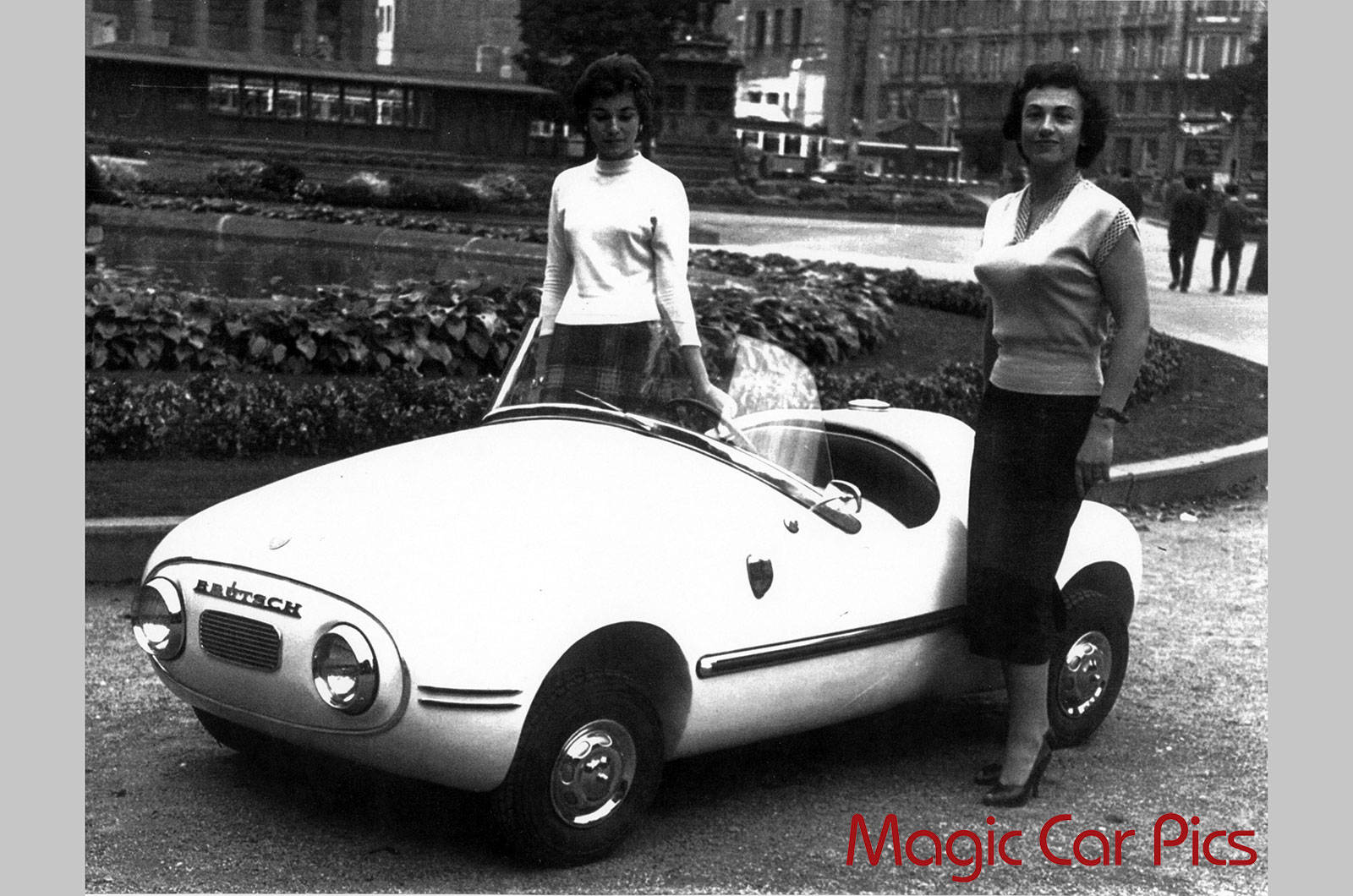
Even rarer than the Mopetta was the V2, of which just a dozen were made. This time there was a full complement of wheels and seating for two, while power came from a 98cc engine – enough to give a 40mph top speed.
Dornier Delta (1956)
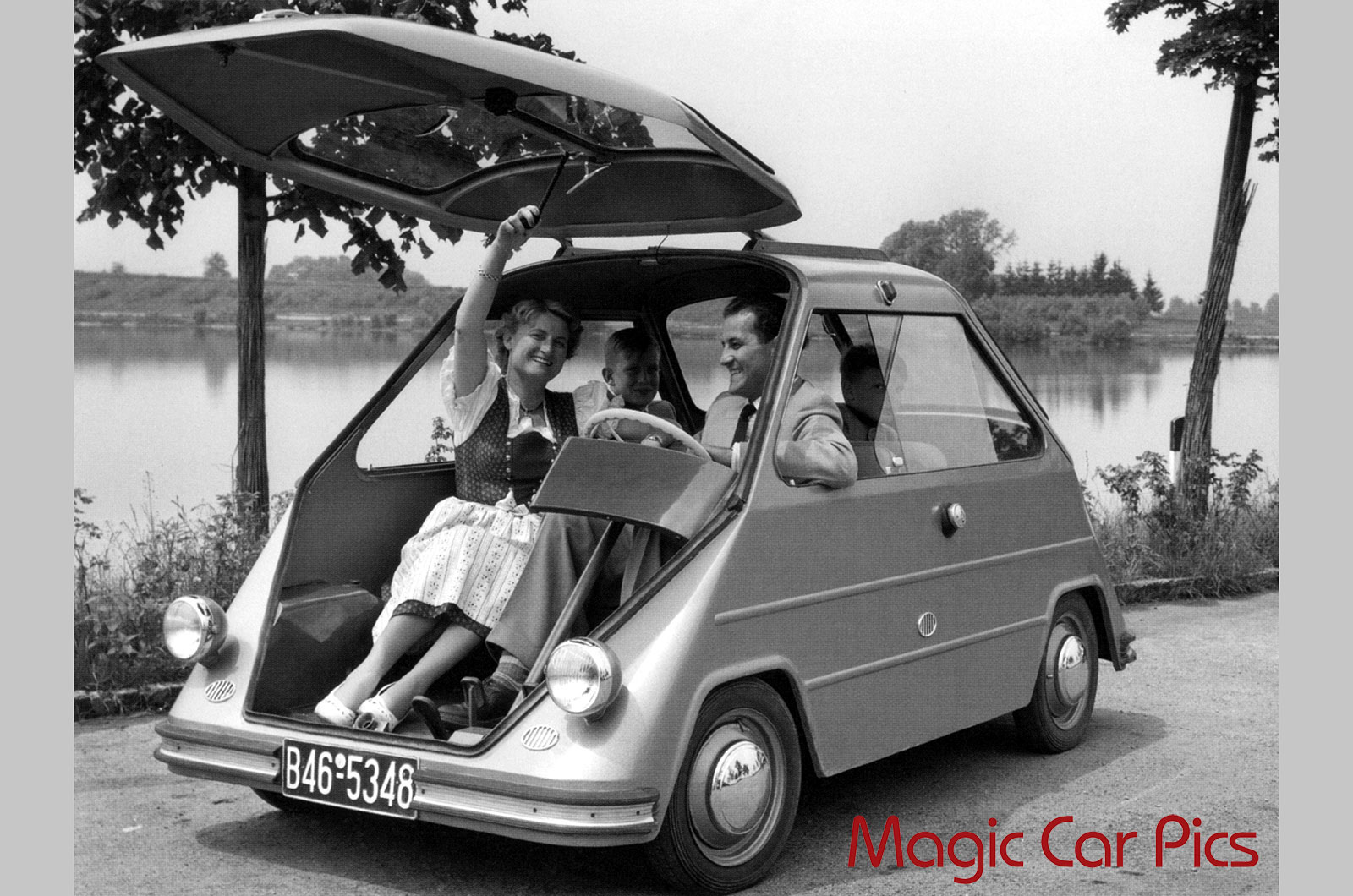
Dornier was best known for building aircraft, but in the post-war era times were tough so the company tried its hand at building cars instead. The Delta was the result, but even before the car had gone into production it was clear that the sums didn’t add up, so the project was sold on. Interestingly, today the firm focuses on medical devices and still makes a product under the Dornier Delta name, though it is a ‘semi-integrated lithotripter’, a device to treat kidney stones.
Zundapp Janus (1957)
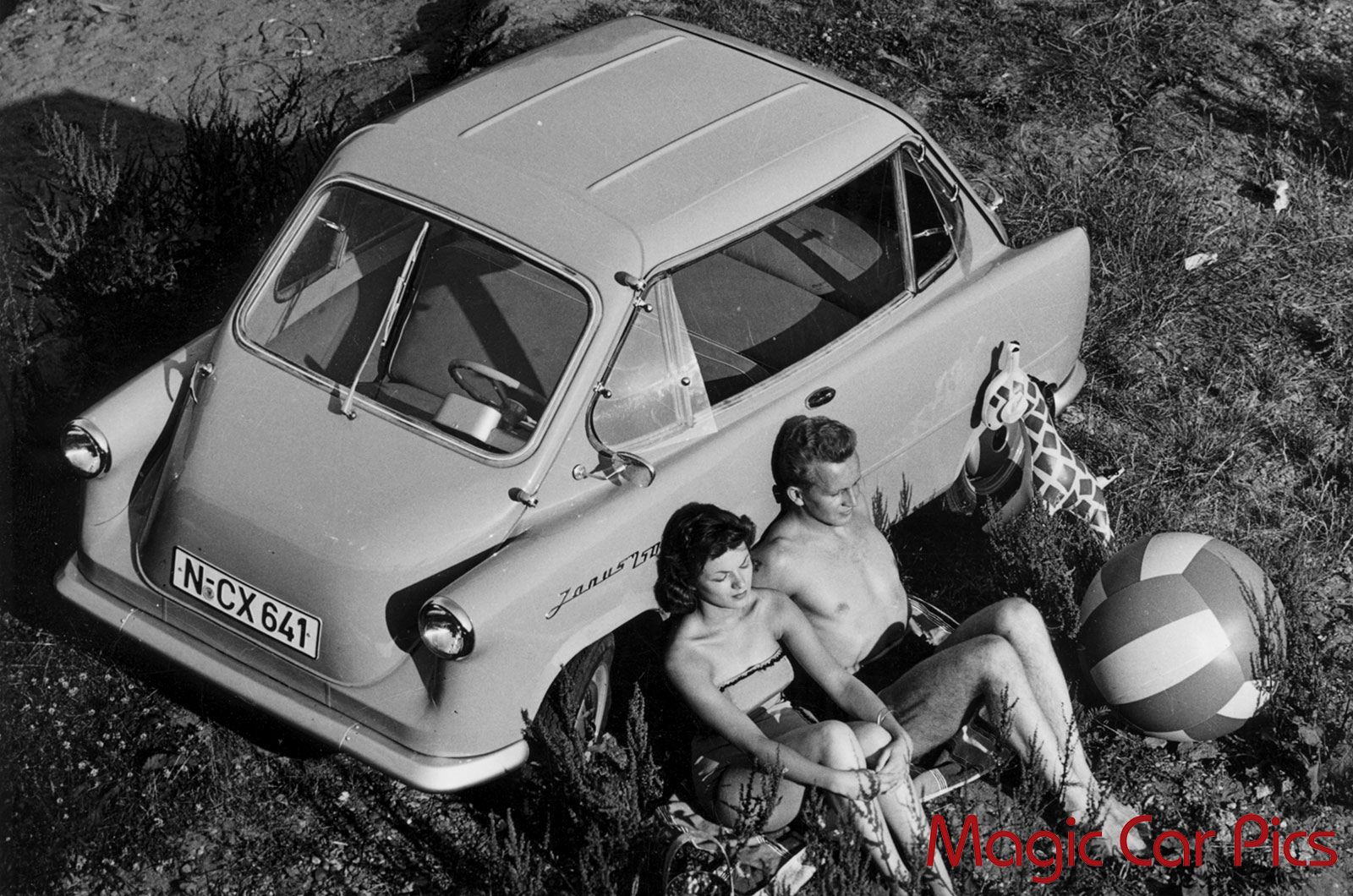
Dornier sold the Delta microcar project to German motorcycle builder Zundapp, as it was keen to expand its operations. Renamed the Janus, this four-seater microcar was powered by a mid-mounted two-stroke 245cc single-cylinder engine. Almost 7,000 cars were made in a year.
Vespa 400 (1957)
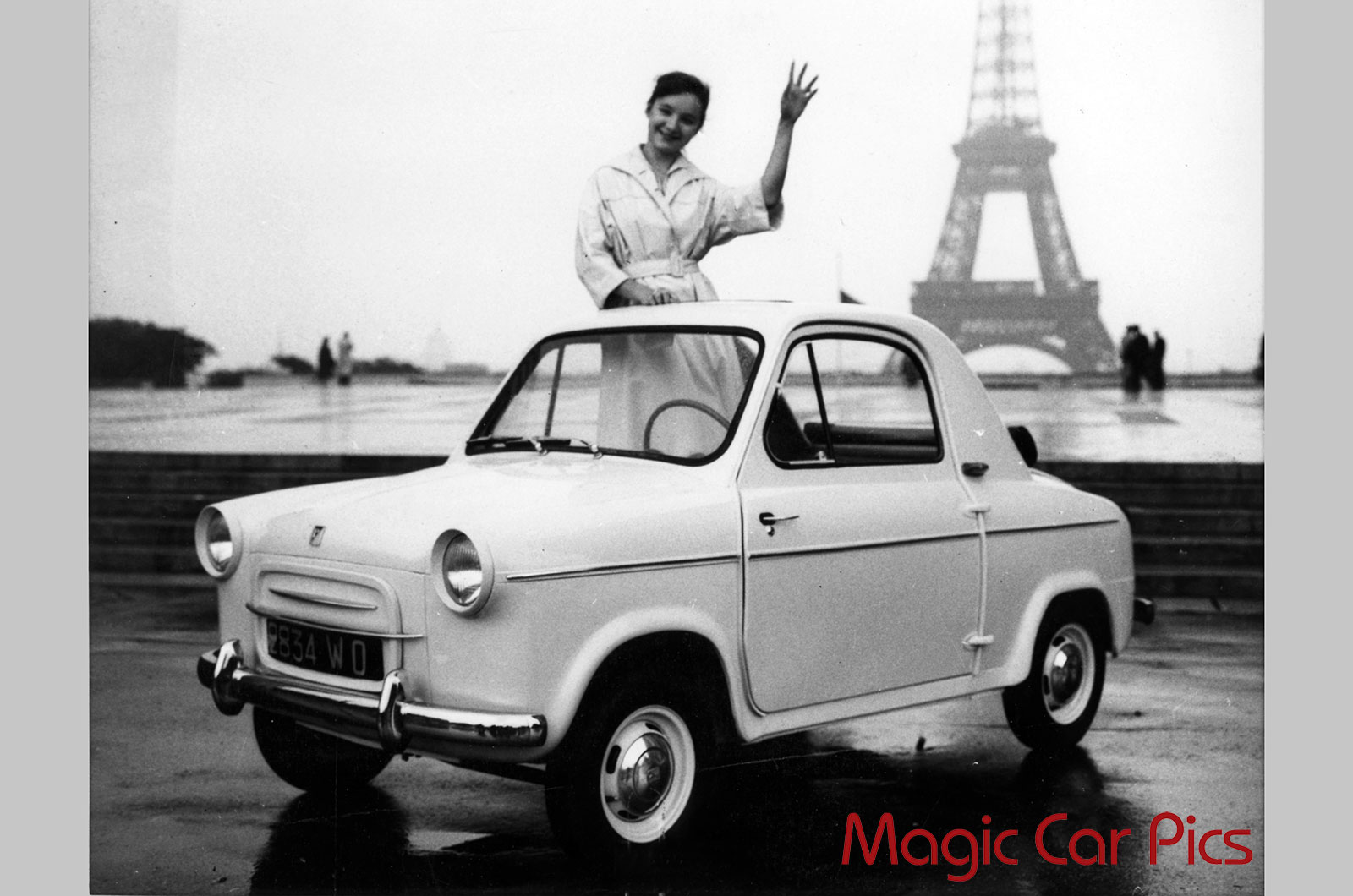
Zundapp wasn’t the only motorbike maker keen to get into building cars; Vespa did the same thing. Production ran from 1957 until 1961, with all cars powered by a 393cc two-cylinder air-cooled engine.