
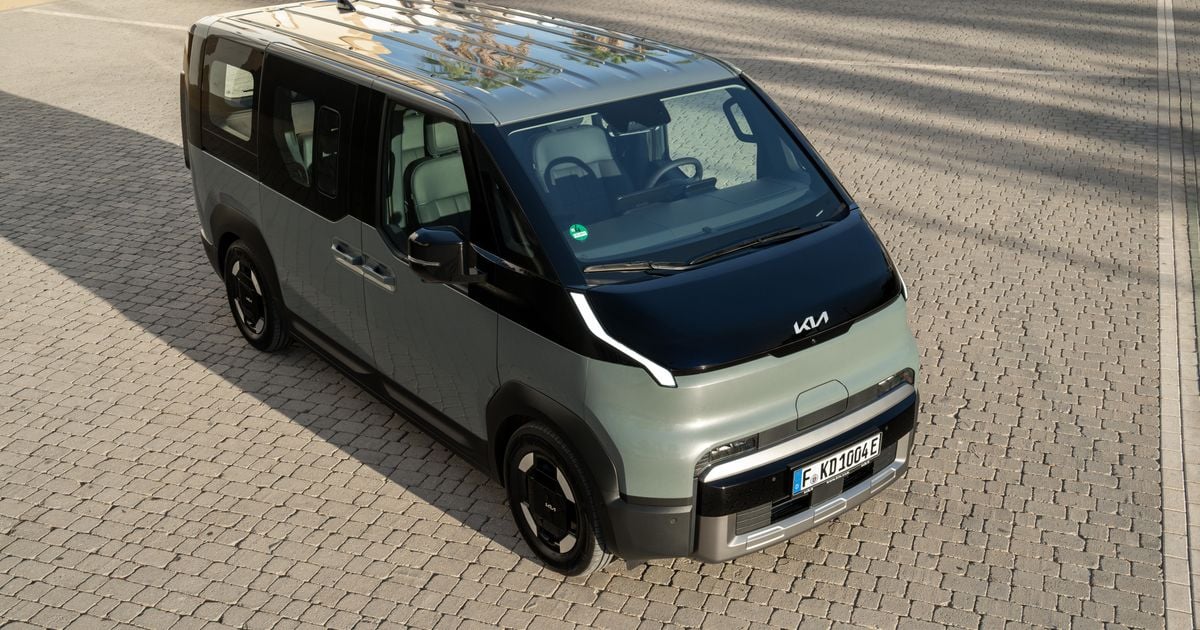
Kia Australia has confirmed it will introduce an electric people mover to the local market, with the PV5 Passenger locked in for an Australian launch in late 2026.
Based on the newly launched PV5 Cargo electric van, the Passenger will be a three-row, seven-seat people mover that will sit alongside the eight-seat, diesel or hybrid Carnival – a model that has long dominated Australia’s people mover segment.
The PV5 Passenger will be Kia’s first electric people mover in Australia, though the Cargo and Passenger are just two in a multitude of PV5 body styles available overseas, including a cab/chassis variant. No other body styles have been confirmed for Australia, apart from a high-roof Cargo version.
Pricing and specifications for the PV5 Passenger will be confirmed closer to its fourth-quarter (October to December) launch, but if the Cargo is anything to go by, Kia may have some tricks up its sleeve.
Looking for your next car? We’ll help you research and compare so you choose with confidence.
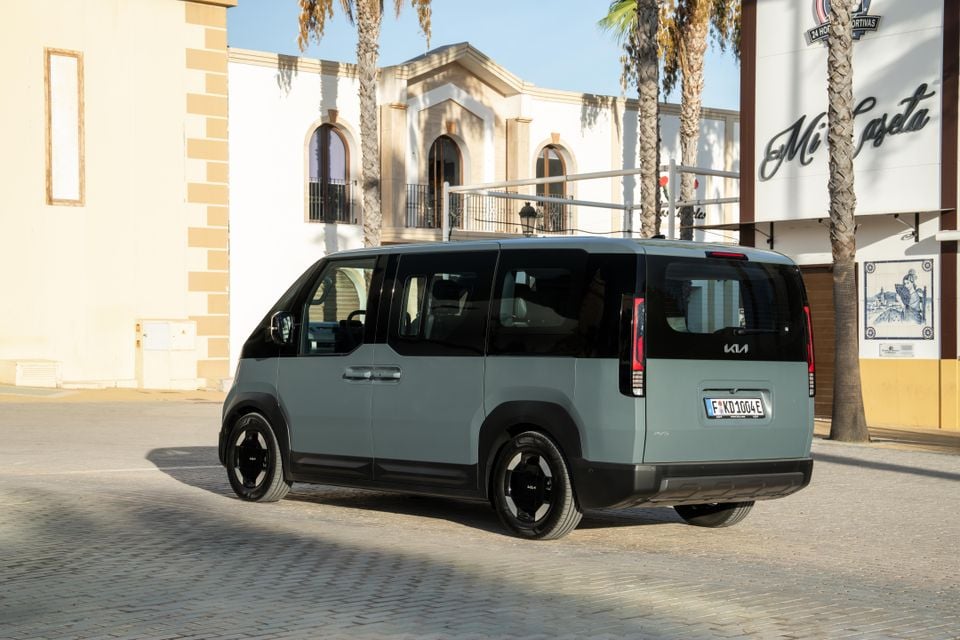
When it was announced, the PV5 Cargo was the cheapest electric van on sale at $55,990 before on-roads. It has since been undercut by other electric vans like the Farizon V7E and LDV eDeliver 5, but it’s still significantly cheaper than rivals such as the Peugeot e-Partner and Volkswagen ID. Buzz Cargo.
With that in mind, it’s fair to expect similarly competitive pricing from the PV5 Passenger. The $14,000 difference between the PV5 Cargo and ID. Buzz Cargo could point to a similar gap between the PV5 Passenger and the regular ID. Buzz, which starts at $75,990 before on-roads.
That would place the PV5 Passenger at roughly $60,000, a small increase over the Cargo. For further context, the Korean-market PV5 Passenger is priced from 45.4 million won (~A$42,400), while the PV5 Cargo is priced from 42 million won (~A$39,200).
We can also look to the people mover’s Korean specification for an idea of how it will shape up in Australia. In South Korea, the PV5 Passenger has a claimed electric driving range of 358km on an unspecified test cycle, down from the Cargo’s 377km.
In Australia, Kia quotes a WLTP driving range of 416km for the PV5 Cargo, so expect roughly 390km for the Passenger. It’ll almost certainly be fitted with a 71.2kWh nickel manganese cobalt (NMC) battery sourced from Chinese manufacturer CATL, consistent with the Cargo.
All PV5s are also offered exclusively in a single-motor, front-wheel drive configuration, with outputs quoted at 120kW of power and 250Nm of torque.
As for dimensions, the PV5 Passenger measures 4695mm long, 1895mm wide, 1905mm tall, and rides a 2995mm wheelbase. That makes it nearly 400mm shorter than a Carnival, though overall height is up by roughly 150mm.
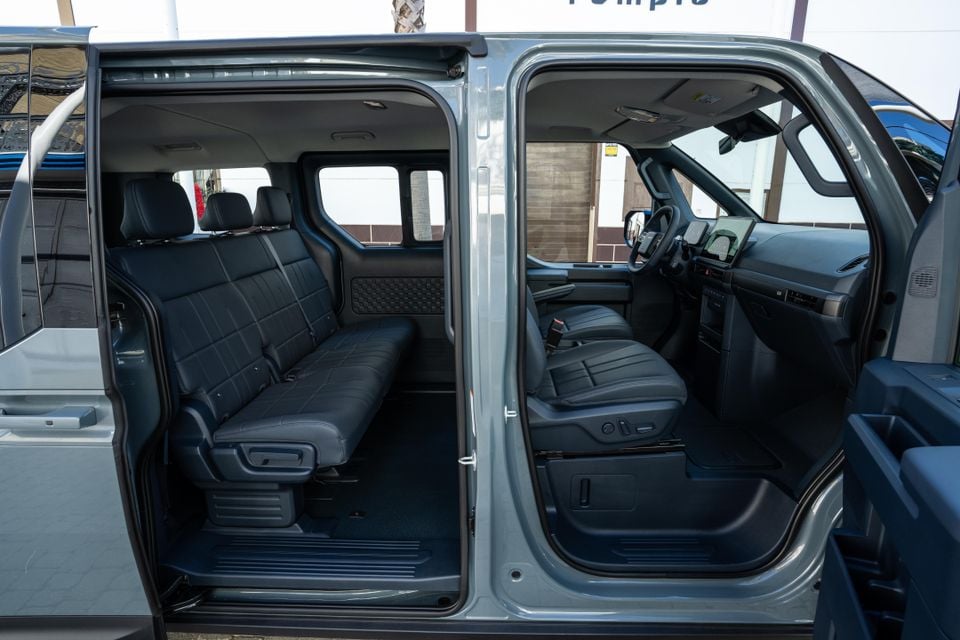
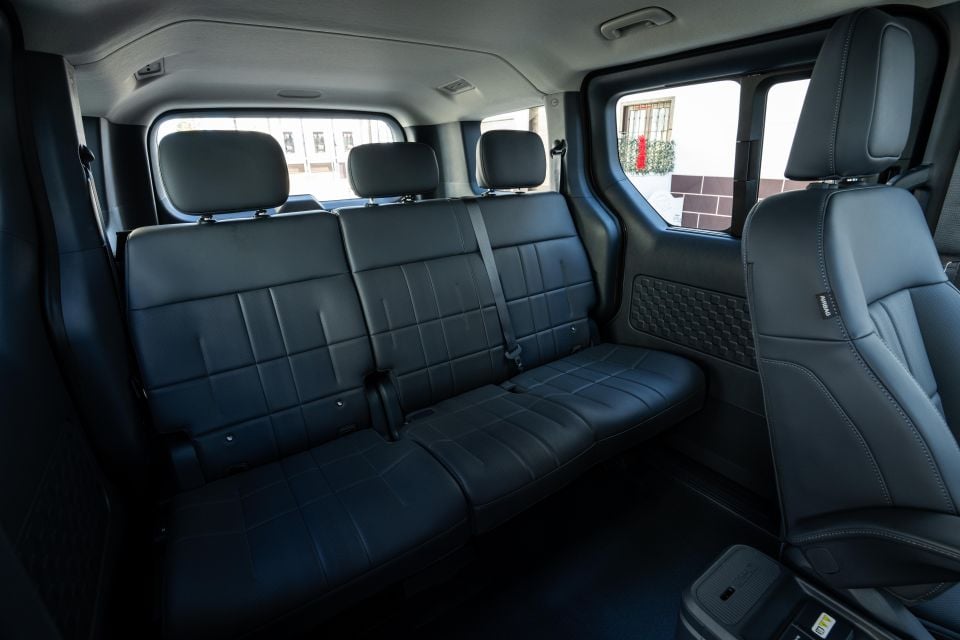
Its seven seats will be arranged in a 2+2+3 configuration, with the two second-row seats offset to the right-hand side of the vehicle. This places the walkway next to the left-hand sliding door rather than in the middle of the cabin, which Kia says improves kerbside access to the third row.
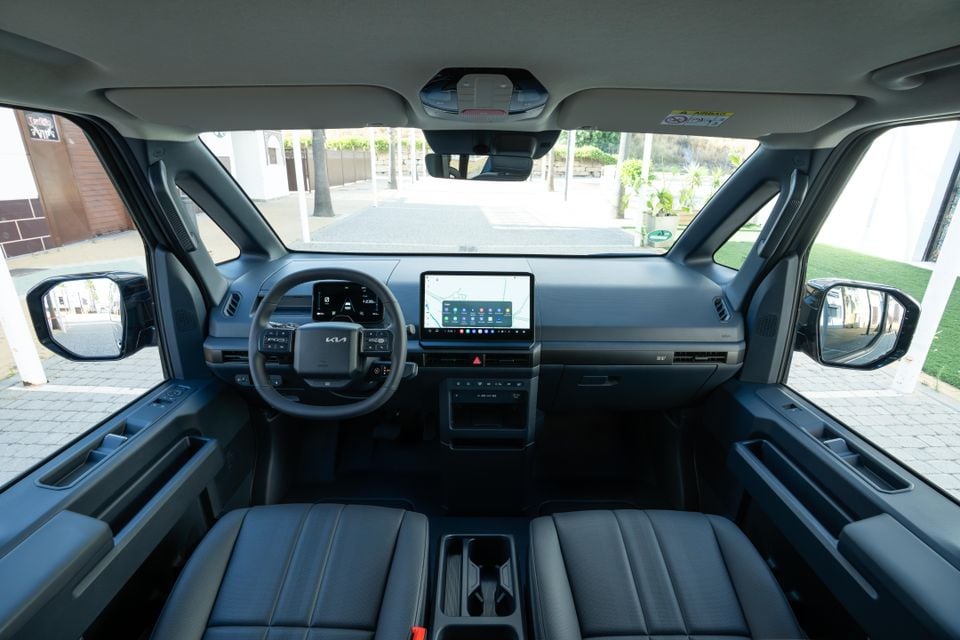
Inside, it’s fitted with a 7.5-inch digital instrument display and a 12.9-inch touchscreen infotainment system, the latter offering Apple CarPlay and Android Auto as standard. It’ll also support Kia Connected Services with over-the-air updates, real-time traffic and charging data, and remote vehicle functions.
The PV5 is built on the Hyundai Motor Group’s Electric Global Modular Platform for Service (E-GMP.S), which will also underpin the minuscule PV1 and large PV7 electric commercial vehicles in Kia’s Platform Beyond Vehicle (PBV) range. All such vehicles are built at a dedicated factory in Hwaseong, South Korea.
Like all new Australian-delivered Kia models, the PV5 range has undergone a lengthy local tuning program to adapt the model to Australian roads and conditions.
Overseas model shown throughout.