
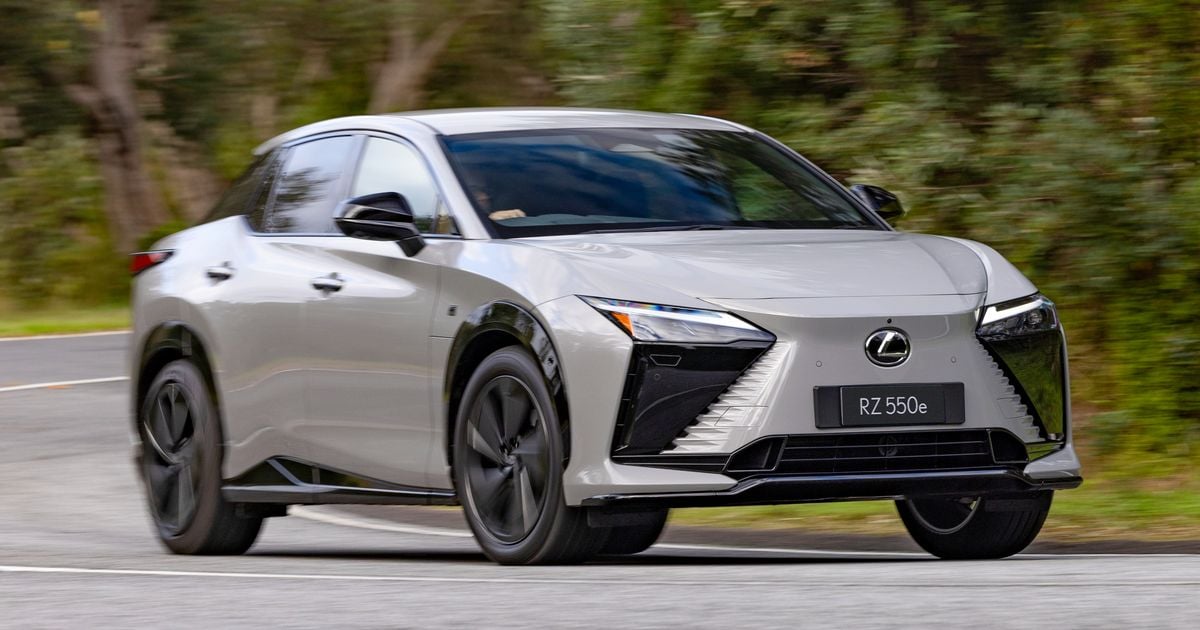
Australia’s electric vehicle (EV) market is a fast-moving beast, and the updated Lexus RZ is symbolic of that.
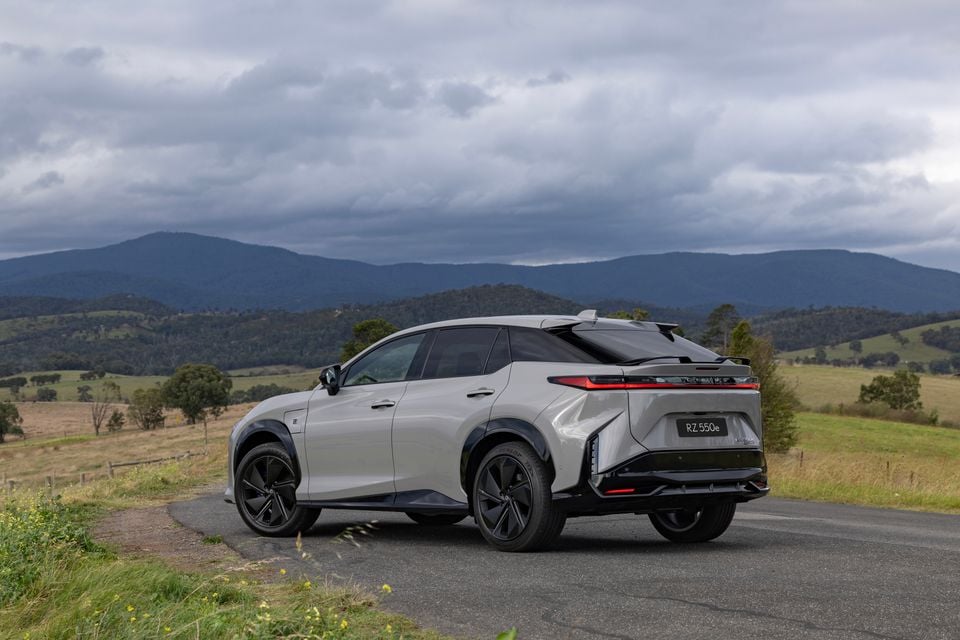
First introduced Down Under in 2023 as an upmarket sibling to the Toyota bZ4X and Subaru Solterra, the RZ was initially somewhat competitive in the premium electric SUV segment, generating 480 local sales by the end of 2024.
However, just 41 were delivered last year, with prospective buyers instead pivoting to compelling newcomers from China, as well as discounted European alternatives.
As such, Lexus, and by extension the Japanese luxury brand’s local arm, has gone to dramatic lengths to restore interest in its struggling EV.
At a global level, the entry-level RZ has been treated to a comprehensive set of upgrades, including but not limited to a bigger battery, more power, faster AC charging capability, additional chassis bracing, retuned dampers and springs front and rear, and refinement measures aimed at reducing noise, vibration and harshness (NVH).
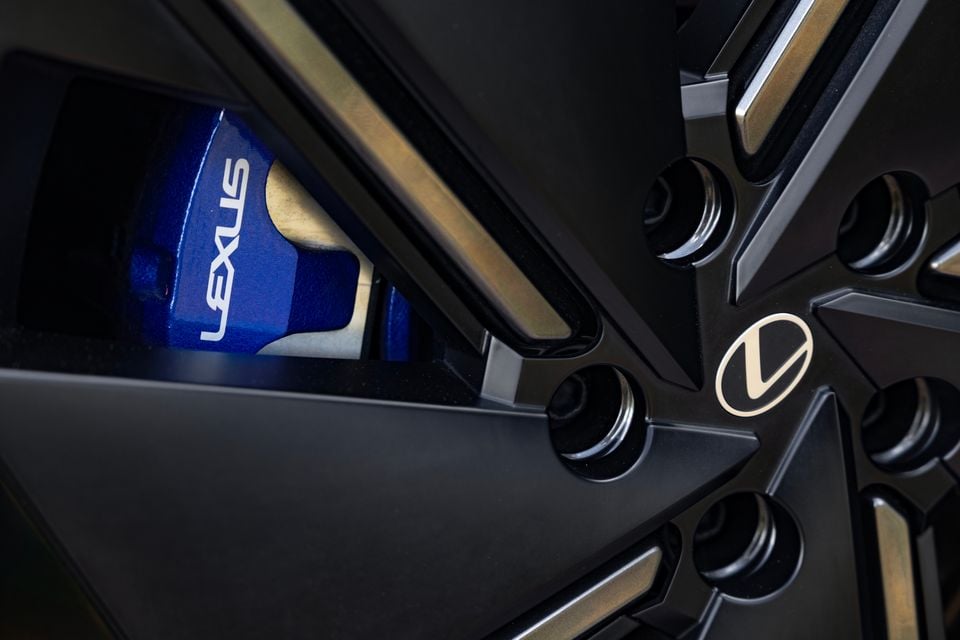
Improvements to existing RZ variants have been supplemented by the introduction of a new, range-topping RZ550e F Sport flagship with an even bigger battery, even more power, a steer-by-wire system with a steering yoke, and Interactive Manual Drive, which allows drivers to use the paddles on the yoke to shift between eight simulated gears.
A harder-edged flagship is due later in 2026 in the shape of the RZ600e F Sport Performance, which is being referred to as a limited edition with “strictly limited local availability”.
To top it all off, RZ prices have been slashed by more than 30 per cent – a knife in the back of early-adopters, but a big win for those who don’t want to spend six figures on a luxury EV.
So, it’s safe to say Lexus has thrown everything at the updated RZ. Yet, as competition continues to intensify, the question is whether it has done enough.
How much does the Lexus RZ cost?
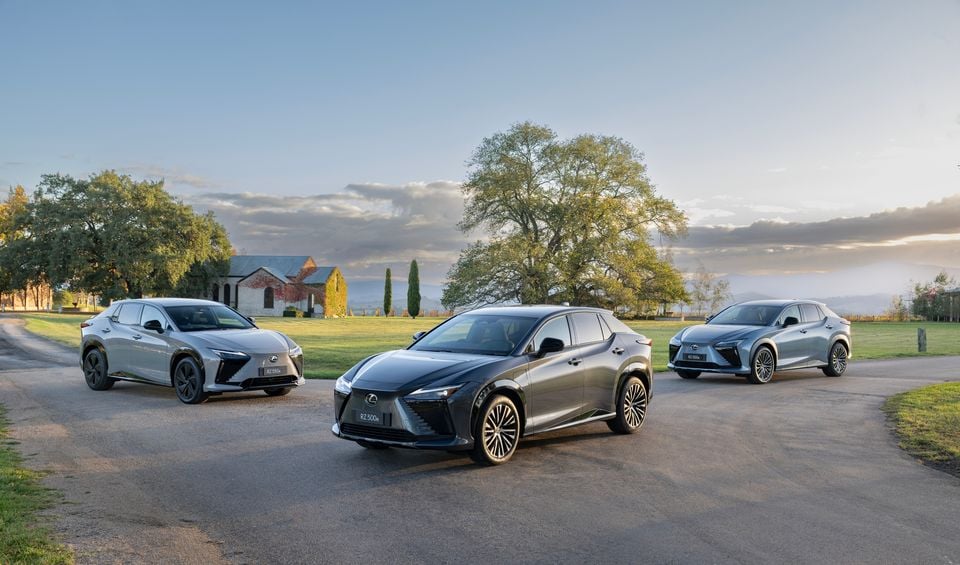
Prices are down across the board. The revised RZ500e Luxury is priced from $84,500 before on-road costs, a reduction of $36,559 on the RZ450e Luxury it replaces, while the RZ500e Sports Luxury comes in at $91,000 plus on-roads – a markdown of $42,059.
|
Model |
Price before on-road costs |
|---|---|
|
2026 Lexus RZ500e Luxury |
$84,500 |
|
2026 Lexus RZ500e Sports Luxury |
$91,000 |
|
2026 Lexus RZ550e F Sport |
$105,000 |
Those reductions follow similar – but far less substantial – cuts made to the prices of the RZ’s platform-mates with their latest updates.
Find your perfect new car with CarExpert
The new RZ550e F Sport slots in atop the range, priced at $105,000 before on-road costs. It’s the only RZ to not undercut the Luxury Car Tax threshold for fuel-efficient vehicles, with the Luxury and Sports Luxury now eligible for Fringe Benefits Tax (FBT) exemptions.
Obvious alternatives to the RZ include the Audi Q6 e-tron, Porsche Macan Electric, Genesis Electrified GV70, Polestar 4, Cadillac Optiq, and incoming BMW iX3. If performance and driving dynamics are a priority, as they’re likely to be for prospective F Sport buyers, then the Kia EV6 GT and Ford Mustang Mach-E GT may enter the conversation.
The above competitors are priced between approximately $80,000 and $185,000, depending on the variant.
To see how the Lexus RZ lines up against the competition, check out our comparison tool
What is the Lexus RZ like on the inside?
Although the RZ shares its underpinnings with models from Toyota and Subaru, its cabin is distinctly Lexus.
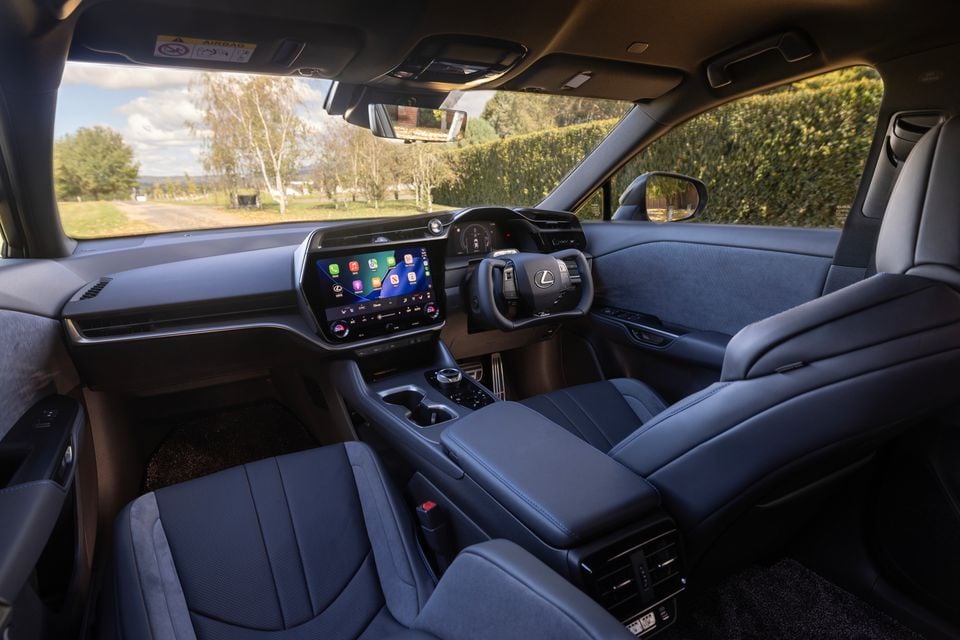
I found the dashboards in the bZ4X and Solterra too layered and busy, whereas the Lexus layout integrates each element far more naturally. That’s especially true of the screens, which don’t stick out like a pair of sore thumbs.
The materials in the sporty variant on test here also elevate the RZ above mainstream electric SUVs. Soft suede adorns the door cards and seat bolsters, and you’d be hard pressed to tell the ‘leather’ on the steering wheel, centre armrest and door cards isn’t real leather at all, such is its quality.
You needn’t worry about overall build quality either, as it’s clear the RZ is built to last.
It’s not necessarily built for everyone, though. The F Sport seats are quite narrow and tightly bolstered, particularly around the rib area, while a shortage of headroom becomes problematic for drivers topping six-three – a compromise not typically associated with luxury SUVs.
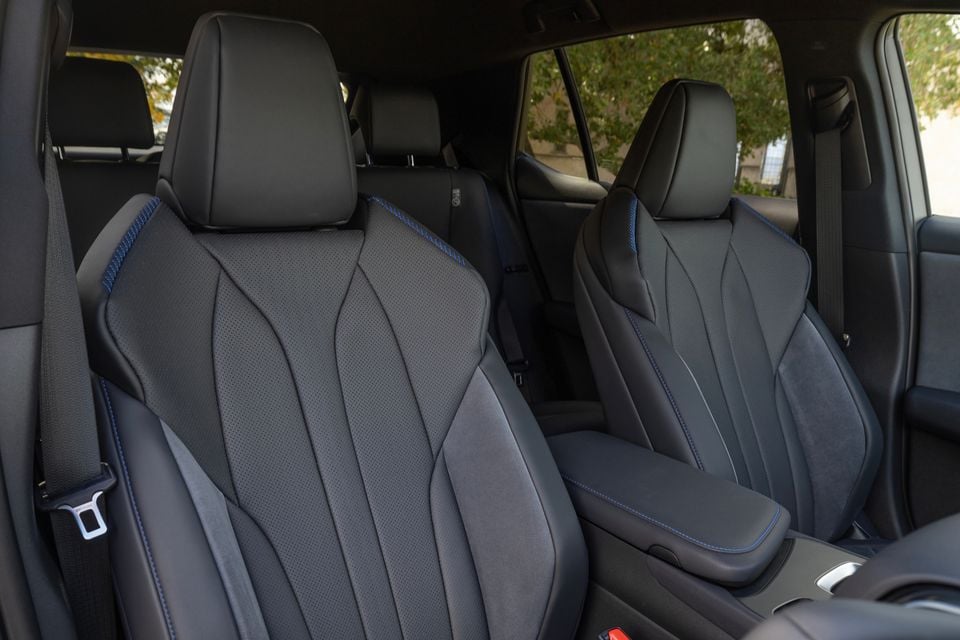
With that said, the front chairs are brimming with desirable comfort features including automated heating and ventilation, eight-way power adjustment, driver’s seat memory, and lumbar support. Just don’t expect a massage from the backrest.
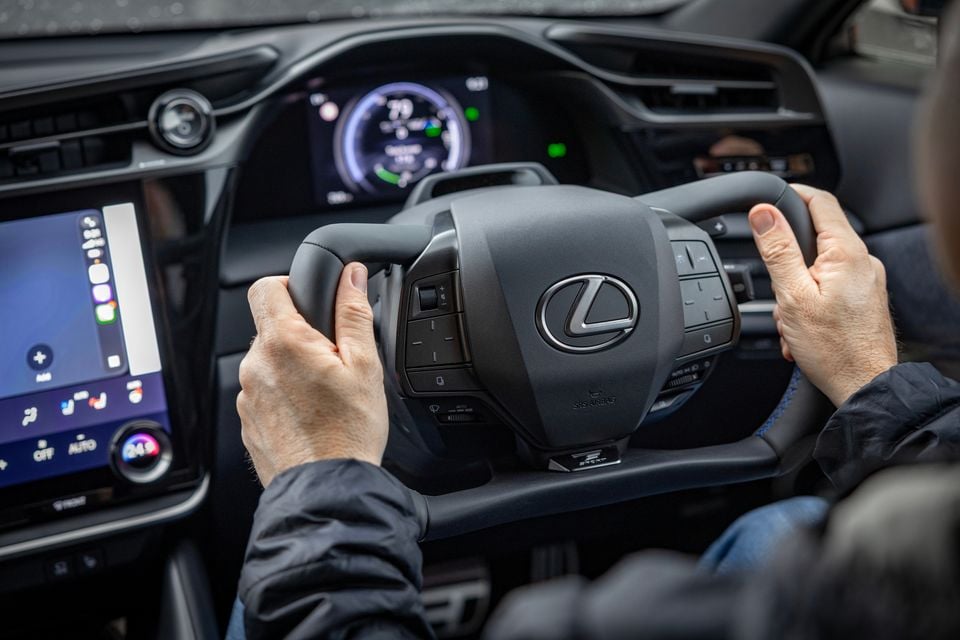
On another positive note, legroom is unlikely to ever pose an issue, as the yoke in the RZ550e F Sport sits higher and further back than a standard steering wheel.
Lexus says the yoke also improves visibility of the digital instrument display, which is mostly true, although the steering column-mounted driver monitoring camera can obscure its lower section.
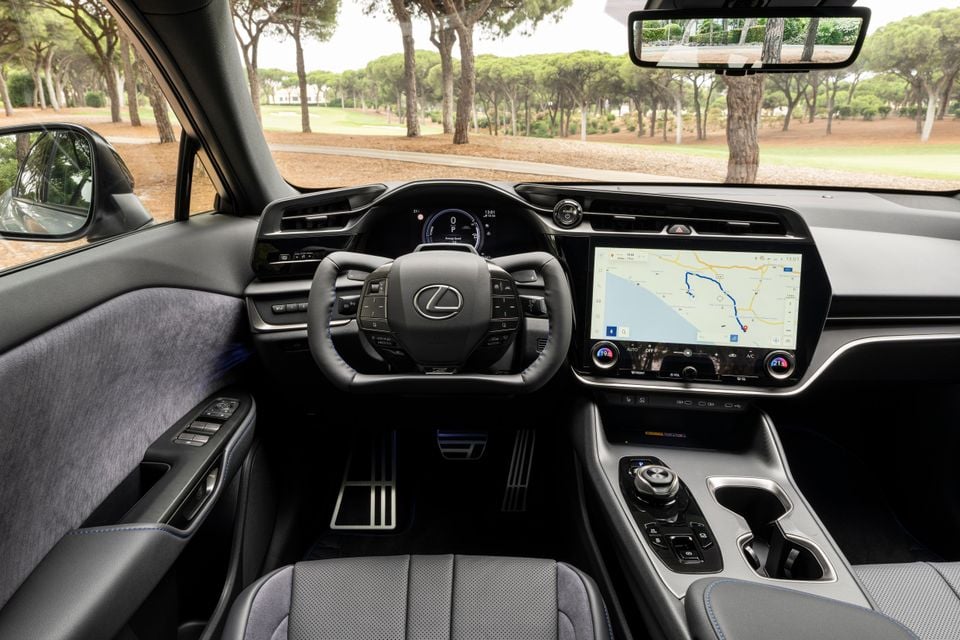
Regardless, I wouldn’t recommend looking too closely at the instrument display, a carryover part that has seemingly been plucked straight out of the Toyota Yaris. It’s small, blurry and sits within a large binnacle with lots of unused space. Instead, you’re better off glancing up at the head-up display above for speed, safety and cruise information.
Moving across, the central infotainment screen makes a better first impression. The 14-inch display sits perfectly flush with the dash, and presents with graphics more befitting of a 2026 luxury car.
Having said that, functionality is limited. There’s no Google integration, nor an extensive selection of native apps. Sat-nav is standard, but it’s not the most advanced system going around.
The upgraded Mark Levinson sound system does a good job, though we weren’t able to test it in depth.
While the infotainment may be basic, it’s still not particularly intuitive. Many automakers have transitioned to a user-friendly grid layout, yet Toyota and Lexus persist with a vertical shortcut bar and unnecessarily layered menus.
As such, most owners will default to Apple CarPlay or Android Auto. I suppose there’s no harm in that.
And the hesitance of Lexus to follow trends in technology actually works in its favour in some regards. For example, the RZ features convenient physical temperature dials, whereas the BMW iX3, Audi Q6 e-tron and Polestar 4 all force additional screen interactions that can be difficult to execute when you’re on the move. The other alternative is voice control, which can be hit-and-miss depending on the vehicle.
Physical controls for the demisters, volume and mirror adjustment also ensure key everyday functions remain exactly where you expect them to be, rather than buried out of sight. Well, except for the drive mode selector, which is indeed buried out of sight – a moot point for the standard RZ, but certainly relevant in this discussion of the F Sport.
While we’re on the subject of burying things, the RZ is far from class-leading when it comes to cabin storage. Beyond there being ample space for phones – plus USB-C and wireless charging options – and drinks (kept separate from the phones, of course) atop the centre console, the lower tray and door bins are a bit pokey, and the RZ goes without a glovebox.
More broadly, the combination of tight sport seats, dark materials, limited headroom and no sunroof also makes the front row feel a little cramped for a ‘large SUV’, as the RZ is officially categorised as.
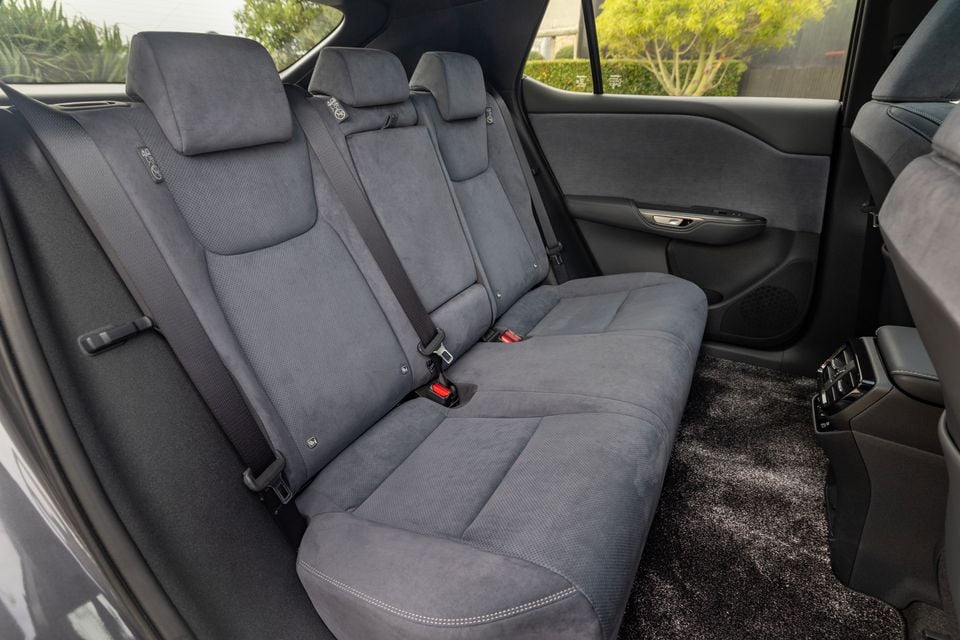
The second row is far more accommodating. I’m on the taller side at six-one, yet I still found there to be plenty of kneeroom behind my driving position, and enough headroom to sit upright without grazing the ceiling.
The rear bench offers commendable levels of comfort, too, courtesy of a thick base cushion, plush suede upholstery, and outboard seat heating. But as is the case in many EVs, under-thigh support is in short supply.
Amenities include two USB-C outlets, a pair of central air vents, map pockets, door storage, and a fold-down armrest with integrated cupholders.
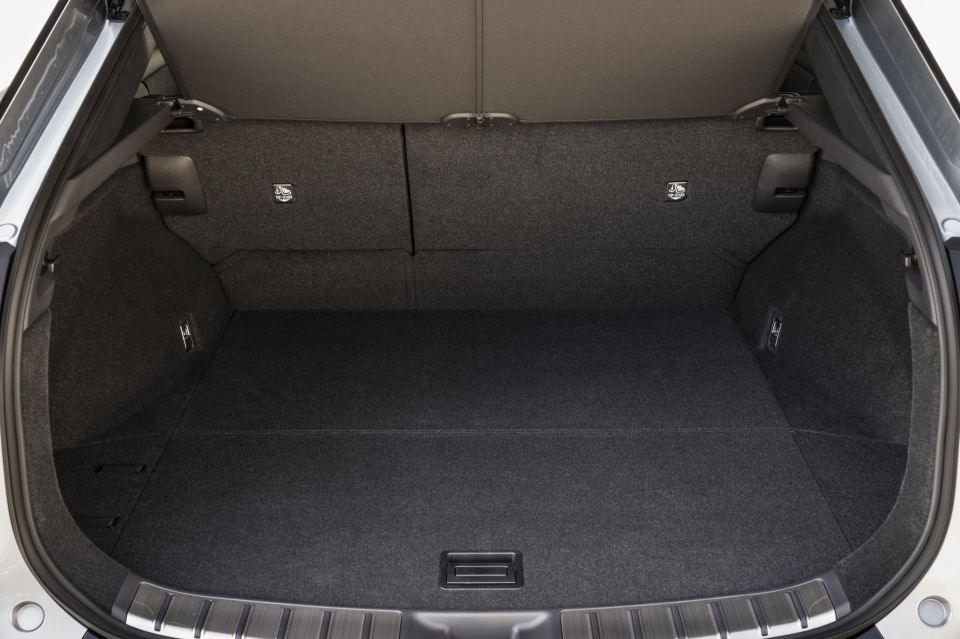
Further back you’ll find 522 litres of boot space, rising to 1451L with the rear seatbacks folded down – not dissimilar to the cargo capacity of most segment rivals, although the RZ doesn’t have a ‘frunk’.
However, the numbers only tell part of the story, as the space is broad, tall and very practical, with a completely flat floor and a vast aperture that extends forward towards the front of the car.
There’s also under-floor storage, tie-down points, bag hooks and a 12V power outlet. Boot lighting, on the other hand, is lacking.
As is becoming all too common, a tyre repair kit takes the place of a traditional spare.
|
Dimensions |
Lexus RZ |
|---|---|
|
Length |
4805mm |
|
Width |
1895mm |
|
Height |
1635mm |
|
Wheelbase |
2850mm |
|
Cargo capacity |
522L (rear seats up) 1451L (rear seats folded) |
To see how the Lexus RZ lines up against the competition, check out our comparison tool
What’s under the bonnet?
The dual-motor, all-wheel drive 500e arrives to replace the old 450e, while the 550e is an all-new, higher-performance derivative of the RZ.
| Specifications |
Lexus RZ500e |
Lexus RZ550e |
|---|---|---|
| Drivetrain |
Dual-motor electric |
Dual-motor electric |
| Battery |
74.7kWh lithium-ion |
77kWh lithium-ion |
| Power |
280kW |
300kW |
| Torque |
537Nm |
537Nm |
| Drive type |
All-wheel drive |
All-wheel drive |
| Weight |
2095-2105kg |
2155kg |
| 0-100km/h (claimed) |
4.6 seconds |
4.4 seconds |
| Energy consumption (claimed) |
18kWh/100km |
18.8kWh/100km |
| Energy consumption (as tested) |
N/A |
18.4kWh/100km |
| Claimed range |
460km |
437km |
| Max AC charge rate |
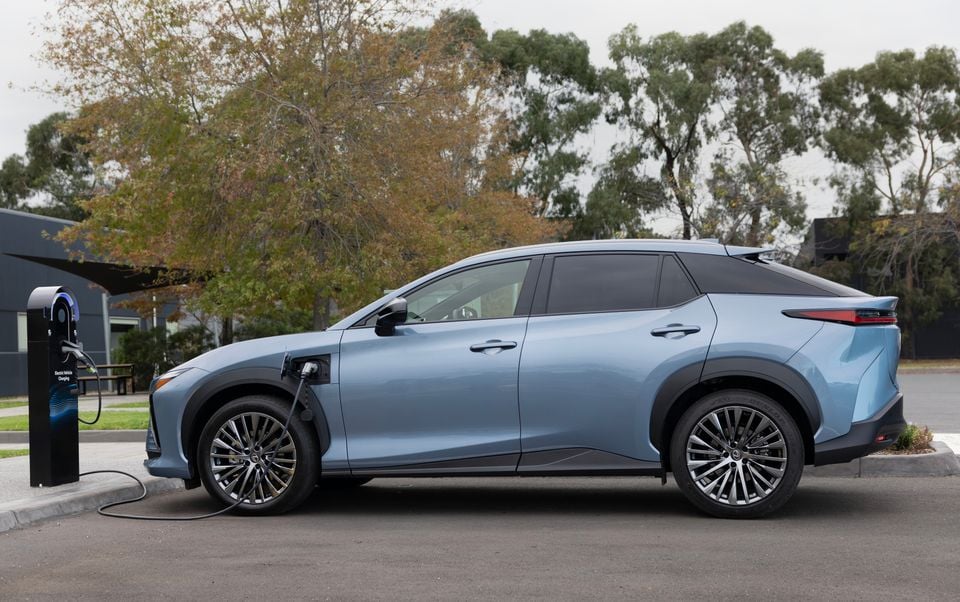
22kW |
22kW |
| Max DC charge rate |
150kW |
150kW |
The RZ500e produces 50kW more than the outgoing RZ450e thanks to revised electric motors, bumping total power to 280kW. Peak torque is unchanged at 537Nm.
There’s also a larger-capacity 74.7kWh battery, up from 71.4kWh, yielding a 16 per cent increase in WLTP range to 460km. The AC charge rate has been doubled to 22kW.
The new RZ550e F Sport gains a slightly bigger 77kWh battery and an extra 20kW of power, although range dips slightly to 437km.
An even sportier flagship producing 313kW is due to arrive later in 2026, but the RZ600e F Sport Performance is being referred to as a limited edition.
To see how the Lexus RZ lines up against the competition, check out our comparison tool
How does the Lexus RZ drive?
For one very obvious reason, the RZ550e F Sport delivers a driving experience far more memorable than the average electric SUV.
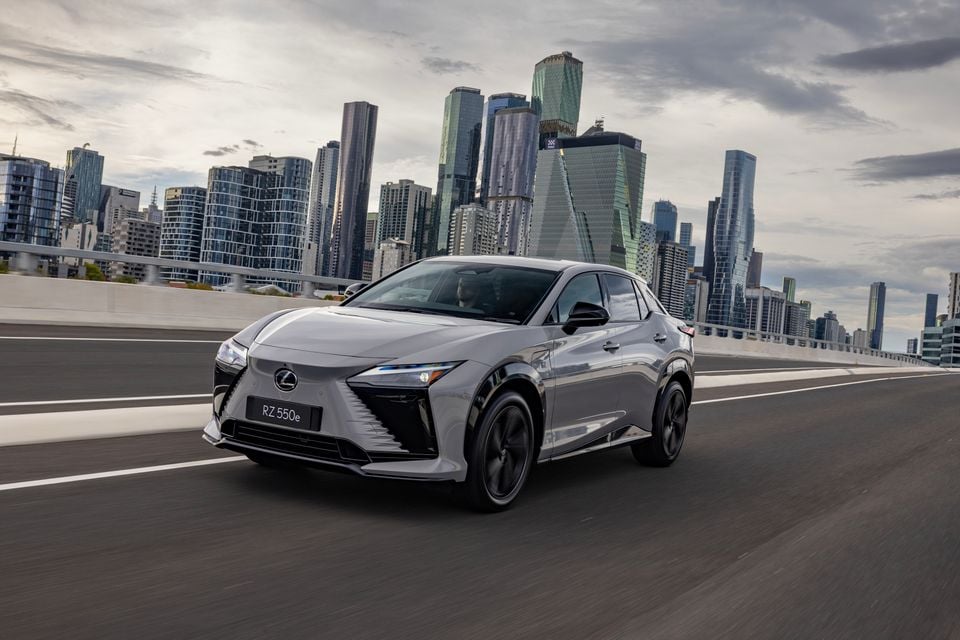
Tesla might’ve paved the way for yokes in production cars with its Model S and Model X, but Lexus is the first manufacturer to offer the alternative steering solution in Australia.
And Toyota’s premium brand takes the concept one step further by incorporating steer-by-wire, a system that relies on electronic signals rather than a mechanical connection between the steering wheel and the front wheels.
In the real world, this translates to a truly unique – and initially jarring – steering experience.
For starters, you’re forced to grip the squared-off yoke at nine and three o’clock, as there’s simply no other way to hold it.
Once you get rolling, the F Sport’s variable steering ratio then immediately shocks you with its heightened sensitivity at low speeds – small steering inputs change the course of the car dramatically, so much so that I expect a few bingles on delivery day.
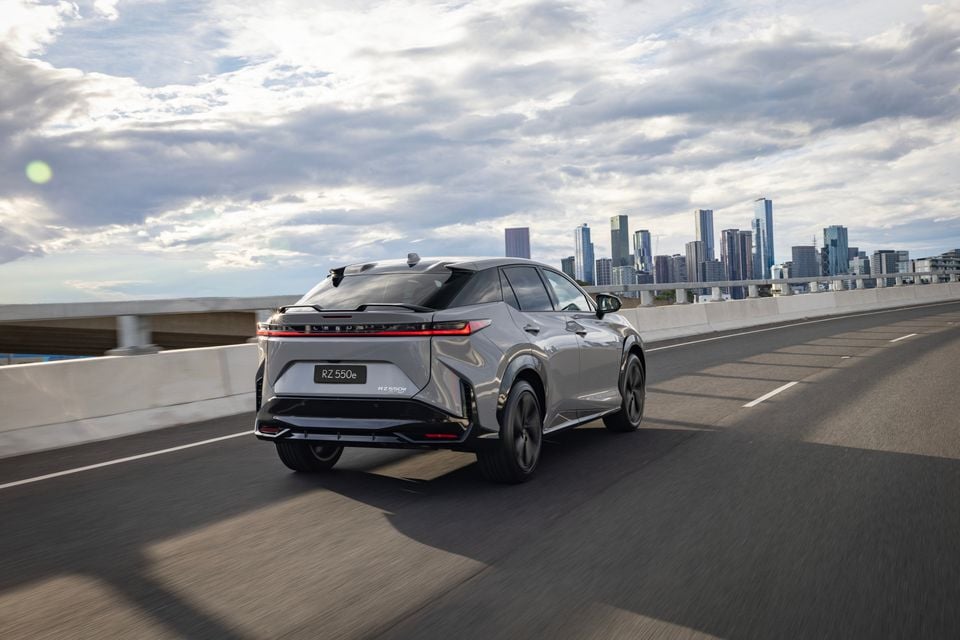
But if you can avoid hitting a kerb or a parked car while exiting the dealership, the immediacy of the RZ’s steering quickly becomes your friend. It takes the hard work out of intersections and parking, reducing laborious hand-over-hand steering efforts down to a simple tug of the yoke.
Then, at highway speeds, the sensitivity dissipates, giving the RZ a more stable feel.
However, extended cruising also exposes a flaw in the yoke – there’s nowhere comfortable to rest your hands. You can’t flop a hand over the top of it – not that I could possibly advocate for this unsafe practice – nor take up any variation of a relaxed steering position, which adds to fatigue over longer journeys.
That additional effort is somewhat offset by the RZ’s highly competent semi-autonomous driving system.
I also take issue with the controls attached to the yoke – the regenerative braking/shift paddles present like popsicle sticks, while the shortened indicator and wiper stalks aren’t as satisfying to operate as conventional items.
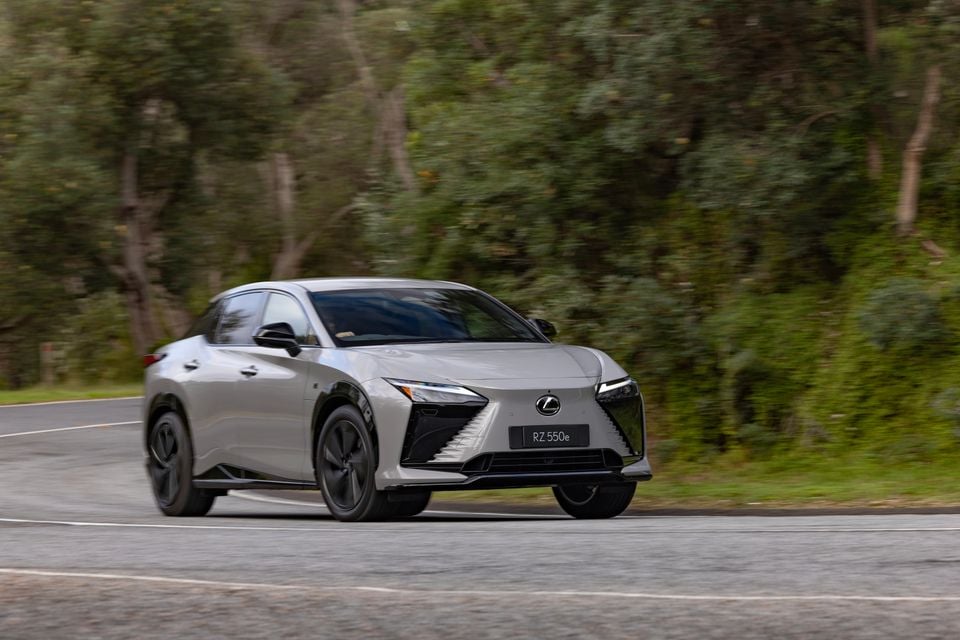
From expert reviews to the right deal
CarExpert brings together reviews, research tools and trusted buying support, guiding you from research to delivery with confidence.
Ultimately, the F Sport is therefore a ‘try before you buy’ proposition. It shouldn’t be dismissed solely for its yoke, but the aviation-inspired arrangement won’t be for everyone.
The same can be said of this variant’s Interactive Manual Drive.
Simulated transmissions in EVs are all the rage at the moment, and the top-spec RZ features eight virtual gears with paddle control, activated via an inconspicuous black ‘M Mode’ button on the centre console.
From a calibration perspective, there’s a lot to like. The system incorporates an artificial redline, authentic power fluctuations, and realistic gear changes, which is no mean feat.
But, unfortunately, the corresponding soundtrack is quite off-putting. Lexus has seemingly crafted a synthetic drivetrain from old tapes of assorted aircraft noises, and the result is more grating than engaging. As such, I found myself turning down the volume or disabling Active Sound Control (ASC) entirely, rendering it a missed opportunity.
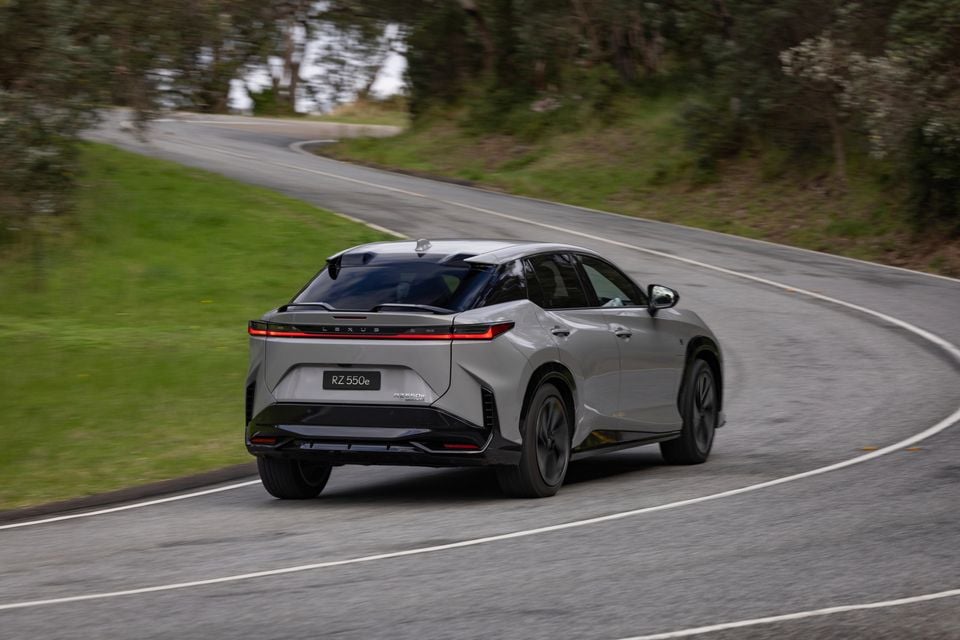
That’s especially true considering the F Sport lives up to its billing from a performance and handling standpoint.
All versions of the RZ are properly rapid once you get past their tardy throttle response in Normal mode, with a claimed 0-100km/h sprint time of just 4.4 seconds for the current flagship. Many electric SUVs promise as much, but few feel quite as planted as this Lexus.
Similarly, the F Sport tackles twisty sections of tarmac with utter confidence. Despite falling into the ‘Large SUV’ bracket, it behaves more like a mid-sizer, with its variable-ratio steering system, variable torque split and relatively low kerb weight contributing to razor-sharp turn-in feel.
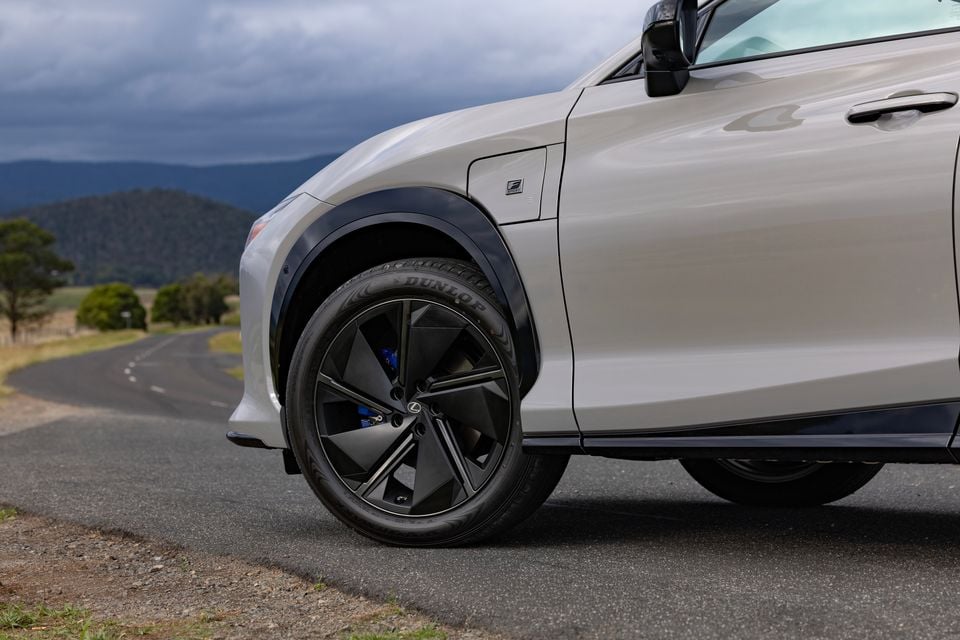
You can carry plenty of speed through corners, too, as there’s little body roll and ample mechanical grip from the Dunlop Sport Maxx tyres.
More impressively, Lexus has managed to make the F Sport handle well without compromising ride comfort.
It feels more rigid than the base models, but remains compliant and forgiving over Australia’s broken country roads. The Luxury and Sports Luxury sit at the softer end of the spectrum without losing the F Sport’s excellent body control. And all variants achieve this without adaptive dampers or air suspension.
Overall refinement suffers, however, from high levels of road noise and a brake pedal that sends too much road texture through your right foot.
Range is another major drawback. With a claimed figure of around 450km, the RZ falls well short of several electric SUVs set to launch with claims topping 800km.
The best way to eke out a few extra kays is by taking advantage of the RZ’s regenerative braking system, which gets a tick despite the absence of single-pedal driving capability. Four distinct levels of regen allow for a personalised experience, and you can trust that the car will begin to slow as soon as you lift off the throttle.
You can also trust that the safety tech in the RZ won’t drive you insane. Admittedly, the driver monitoring camera is slightly too sensitive, but none of the other systems gave me grief during the launch drive.
To see how the Lexus RZ lines up against the competition, check out our comparison tool
What do you get?
There are now three Lexus RZ variants, up from two, with the limited-edition RZ600e F Sport Performance to follow later in the year.
2026 Lexus RZ500e Luxury equipment highlights:
- 20-inch dark alloy wheels
- LED headlights
- Power tailgate
- 7.0-inch instrument cluster screen
- 14-inch touchscreen infotainment system
- Satellite navigation
- Wireless Apple CarPlay and Android Auto
- Wireless phone charger
- 10-speaker Panasonic sound system
- NuLux leatherette upholstery in Hazel or Greyscale
- Heated front seats
- 8-way power-adjustable front seats
- Power tilt and telescopic steering wheel adjustment
- Dual-zone climate control
The RZ500e Sports Luxury adds:
- 20-inch two-tone alloy wheels
- LED headlights with adaptive high-beam and dynamic auto-levelling
- Dimming panoramic roof
- Semi-autonomous parking assist
- Ultrasuede upholstery in Hazel, Greyscale or Storm
- Ventilated front seats
- Driver’s seat memory
- Heated outboard rear seats
- Heated steering wheel
- Head-up display
- ‘High-grade multi-information display’
- 13-speaker Mark Levinson sound system
- Digital rear-view mirror
- Tsuyasumi ornamentation
- ‘Dynamic multi-colour illumination’
The RZ550e F Sport adds:
- Gloss-black alloy wheels
- Unique bumpers
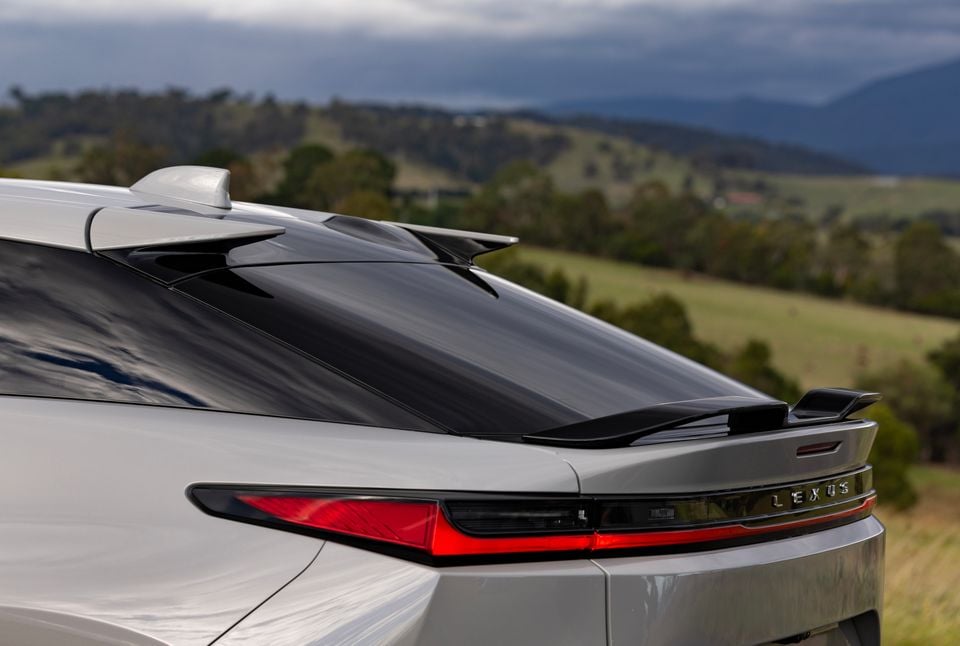
- Rear spoiler
- Steering yoke
- Interactive Manual Drive
- Front sports seats in black and dark grey Ultrasuede
- Aluminium pedals
- ‘Micro-geometric pattern film ornamentation’
To see how the Lexus RZ lines up against the competition, check out our comparison tool
Is the Lexus RZ safe?
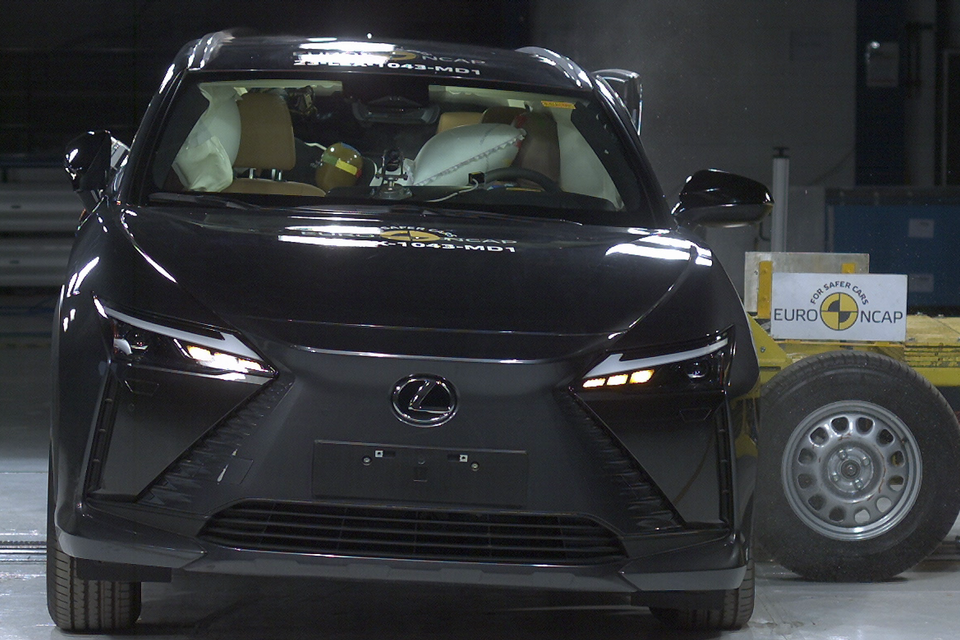
The Lexus RZ was assessed by safety authority ANCAP in 2023, and received a five-star rating.
| Category |
Lexus RZ |
|---|---|
| Adult occupant protection |
87 per cent |
| Child occupant protection |
89 per cent |
| Vulnerable road user protection |
84 per cent |
| Safety assist |
84 per cent |
Standard safety equipment includes:
- 10 airbags
- Lexus Safety Sense+
- Pre Collision System with autonomous emergency braking
- Dynamic radar cruise control
- Lane trace assist
- Automatic high-beam
- Road sign assist
- E-Latch system with safe exit assist
- Blind-spot monitoring
- Rear cross-traffic alert
- Front and rear parking support brake including parking sensors
- Driver monitor camera
- Hill start assist
- Downhill assist control
- Reversing camera with guidelines and rear camera washer
- Panoramic view monitor
- Vehicle stability control
- Trailer sway control
- Active cornering assist
- Vehicle approach notice
- Tyre pressure warning system
RZ550e adds:
- Vehicle dynamic integrated management
To see how the Lexus RZ lines up against the competition, check out our comparison tool
How much does the Lexus RZ cost to run?
Lexus Australia backs its vehicles with a five-year, unlimited-kilometre vehicle warranty and an eight-year, 160,000km battery warranty.
| Servicing and Warranty | Lexus RZ |
|---|---|
| Warranty |
5 years, unlimited kilometres |
| Roadside assistance |
5 years |
| Service intervals |
12 months or 15,000km |
| Capped-price servicing |
5 years, $395 each |
| Total capped-price service cost |
$1975 |
RZ buyers are also entitled to a complimentary Lexus Encore membership, which offers benefits including access to exclusive events, service loan vehicles, paid airport lounge access, and an Ampol fuel discount. There’s also the option to pay for Encore Platinum, the highest level available, which adds on-demand vehicle sharing, valet parking, and free lounge access.
Lexus Australia has pledged to continue to improve the ownership experience it offers its customers, as it looks to fend off new premium challenger brands from China.
To see how the Lexus RZ lines up against the competition, check out our comparison tool
CarExpert’s Take on the Lexus RZ
The 2026 model is a huge upgrade over its predecessor, but it’s still not a class leader.
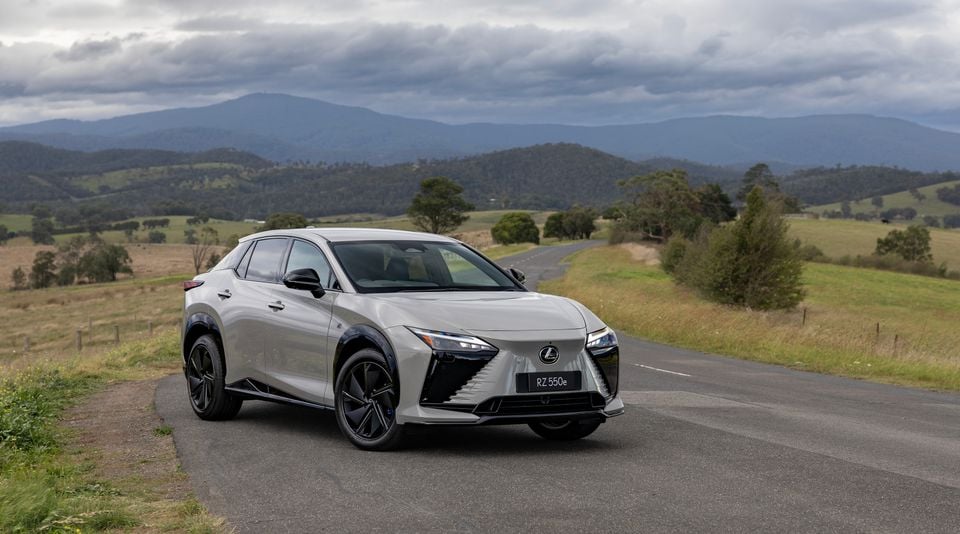
Because while the RZ is quick, safe and stylish, it’s let down by road roar, uninspiring tech, and limited driving range (437-460km).
The latter is most damning, given BMW and Volvo are both gearing up to launch competitor models with 800km of range, and the upcoming Mercedes-Benz GLC EV promises 713km from a single charge.
And not even Lexus’ superb ownership offering, plus the introduction of a futuristic steering yoke and steer-by-wire, can distract from that stark deficiency. The yoke does serve as a strong USP for the F Sport, though, at least in my experience.
Still, the cheaper Sports Luxury is better suited to the typical Lexus buyer who values familiarity and a more relaxed cabin setup.
But for those able to exercise a little patience, the BMW iX3 and Volvo EX60 could be worth waiting for, with both premium mid-size electric SUVs set to offer more car for less money when they arrive in Australia late this year.
Can’t wait? Take a look at the Kia EV6, which hits more of the RZ’s high notes than its badge would suggest.
Interested in buying a Lexus RZ? Let CarExpert find you the best deal here
Click the images for the full gallery