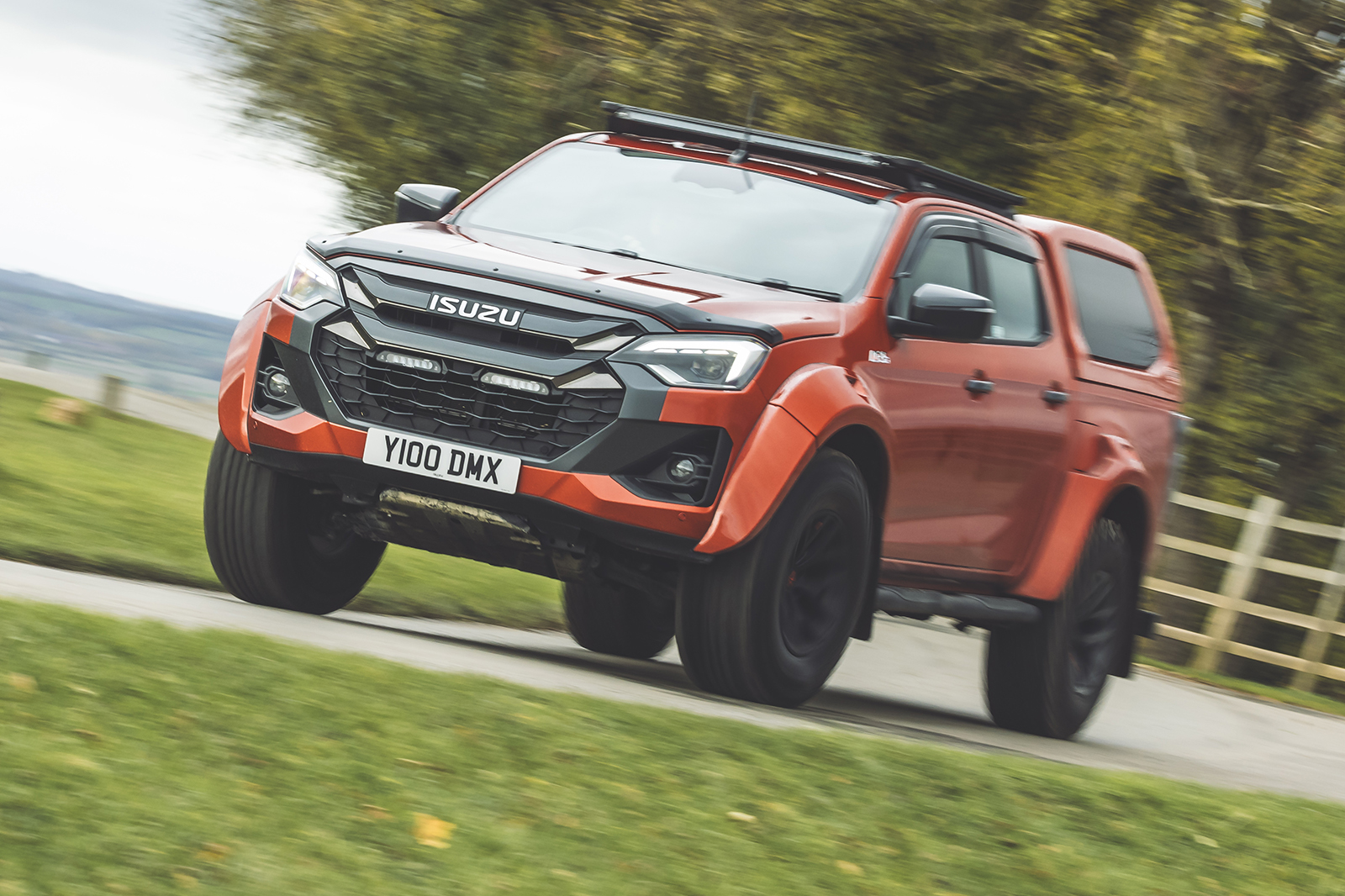
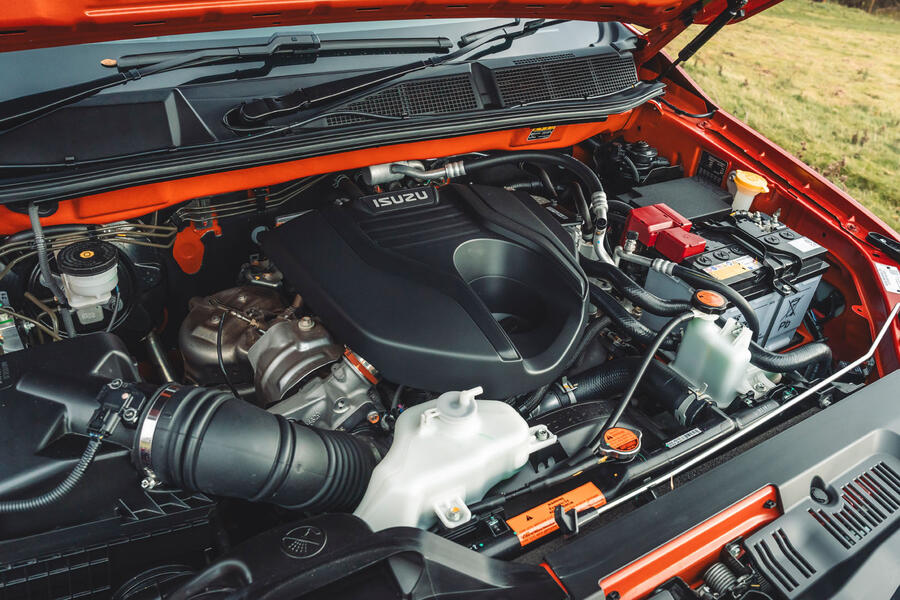
The D-Max’s 1.9-litre turbo diesel/six-speed automatic powertrain is quite a specialised prospect that’s particularly good at grunt work. Its 266lb ft of torque might not sound like much, when rivals offer more than 400lb ft . But the torque converter is tuned to multiply those reserves at every chance – and while that might not make it especially engaging to control or interact with on the road, it certainly allows it to crawl, climb and scrabble around offroad very effectively.
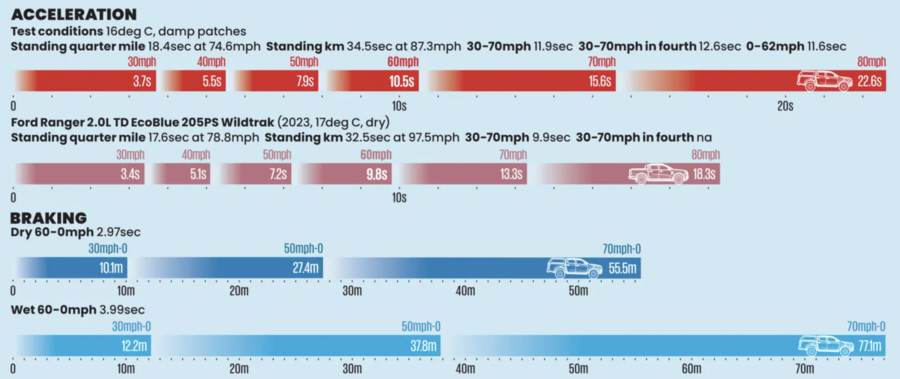
In outright performance terms, it isn’t fast. Our test day was a quite windy one, but very few powertrains in what we might think of a vehicle at least adjacent to a performance derivative would have made the impact of that wind resistance more apparent.
The last car we tested that failed to average 90mph over a standing kilometre in both directions on Horiba MIRA’s mile straights was the Citroën e-C3 back in April (probably only because it’s limited to a top speed of 84mph). The 99bhp Peugeot 208 Style we tested last month managed it, as did the 111bhp BYD Dolphin Surf in August.
A recorded 0-60mph time of 10.5sec doesn’t make the D-Max AT35 sound like a desperately slow-accelerating car, however. That’s because what hamstrings it is partly its size, weight and shape – but also its gearing. Just as the wind resistance really begins to build against the car’s high, bluff front end and whistle around its ‘wind deflector’ roof rack, it shifts into particularly long fourth and fifth gears – and thereafter seriously struggles to put on speed.
That might be considered fine, given that there are few forest tracks, mountain ascents or polar trails on which you would need much more than 50mph. But it certainly takes a toll on the AT35’s everyday motorway drivability, the ease with which it can overtake generally, and any sense – on the road, at least – that this is a car of particularly special potency.
The 1.9-litre diesel is quite uncouth, too, emitting whistles and resonances from inside the engine bay when you use plenty of power from cold. It gets predictably crotchety and coarse beyond 3000rpm, and there really isn’t much point extending it beyond 3500rpm. So, even by pick-up class standards, it’s quite inflexible.
The gearbox, meanwhile, has a manual mode of sorts but even when you use this, it still has a mind of its own, preferring not to lock up, for example, when you select a higher gear but instead letting the torque converter slip to a constant 2500rpm, and simply ‘slushing’ the power through to the wheels.
This isn’t a pick-up we would choose to do particularly heavy towing work with – not at anything close to the national speed limit, that is. Its standard-fit all-terrain tyres delivered respectable dry-surface stopping distances but didn’t make for great retardation on MIRA’s wet surfaces. Here, even allowing for the impact of anti-lock brakes, a 70mph-0 stopping distance of close to 80 metres is a little concerning.