
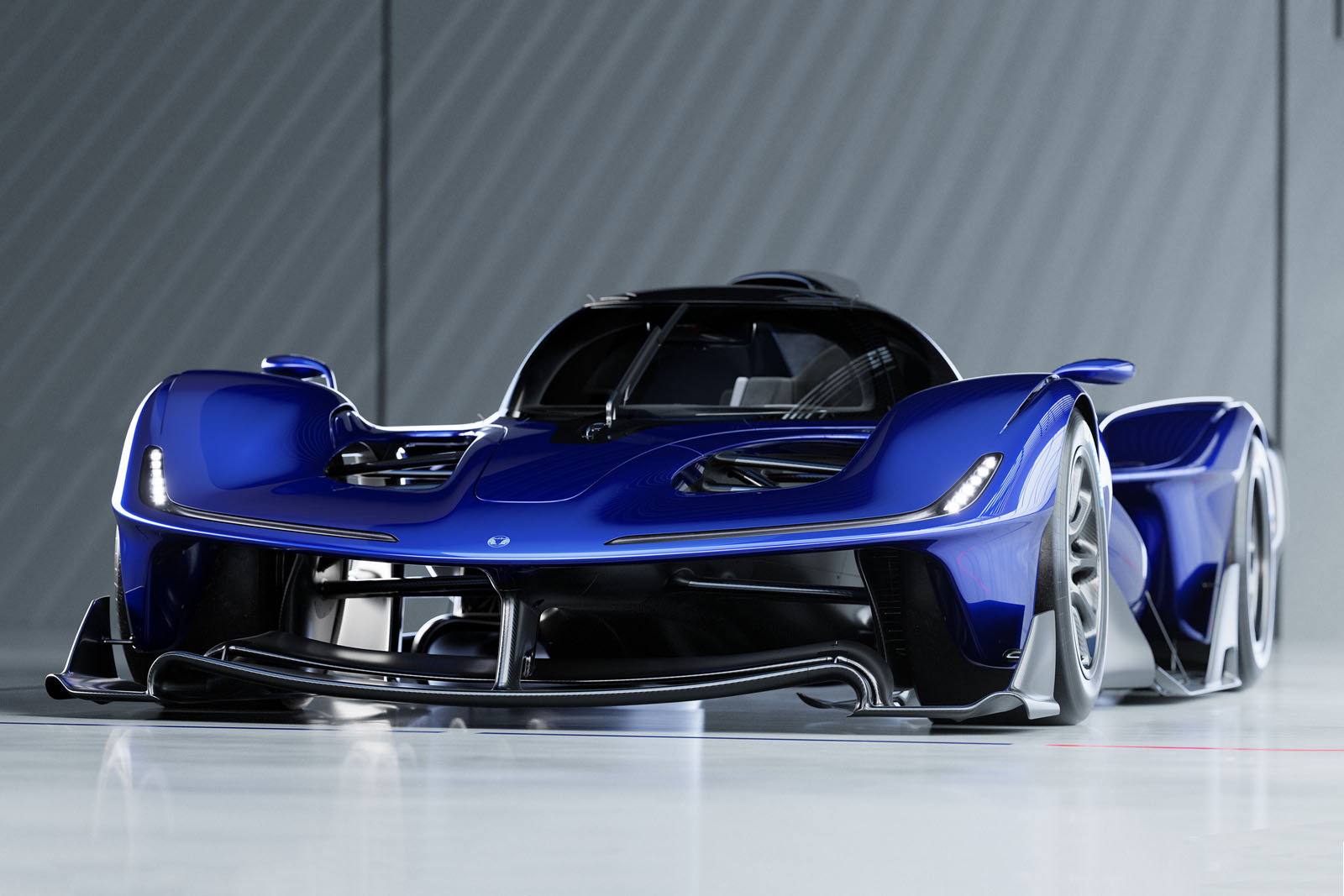
Red Bull Advanced Technologies has begun final assembly of the first of the 50 Adrian Newey-designed, £5 million RB17 hypercars that it plans to launch next spring and deliver to clients over the following two years.
Circuit testing and development sessions are due to begin “within a few weeks”.
In an exclusive meeting with programme chief Rob Gray, the highly experienced Red Bull Formula 1 designer turned RB17 technical director, Autocar viewed the first car’s near-complete passenger cell and tail section, plus the Cosworth-designed V10 engine and Xtrac hybrid gearbox that will power it to a 220mph top speed via F1 levels of acceleration.
The new all-carbonfibre hypercar is being built in a gigantic former warehouse on the Red Bull estate in Milton Keynes, which now houses both the purpose-built RB17 facility at one end and Red Bull Racing’s new F1 wind tunnel at the other.
A track-only two-seater weighing just 900kg, the RB17 packs 1200bhp in total: 1000bhp from the V10 and 200bhp from an electric drive motor.
It is engineered to be faster around a track than a current F1 car, and recent virtual estimates have proved the matter “on a variety of circuits”. Its notional lap time at Spa, for instance, is a second or so quicker than a current F1 car, at around 1min 38sec.
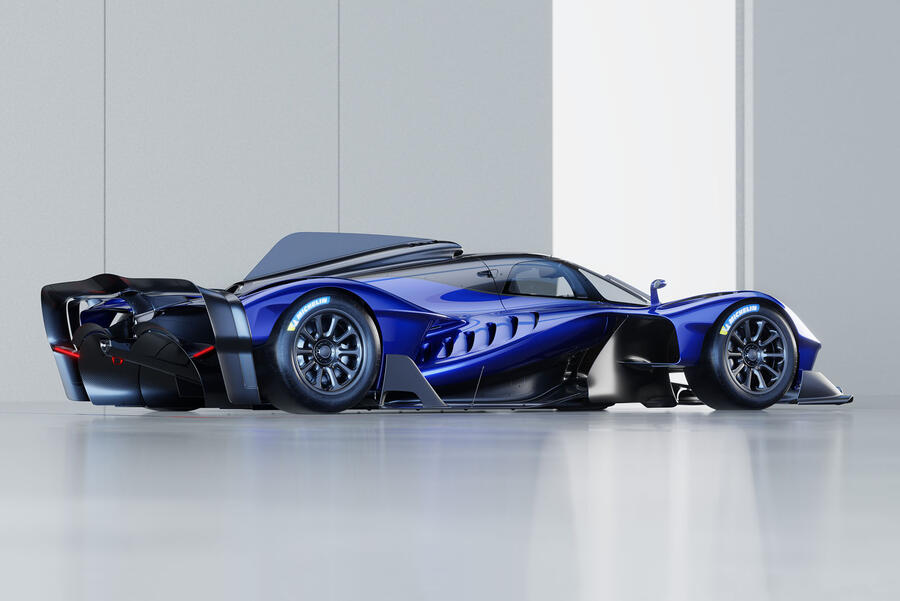
As our new pictures show, the RB17 has changed considerably from the model first shown at the Goodwood Festival of Speed in 2024, but its dimensions, proportions and major design elements are unaltered.
Speaking exclusively to Autocar at Red Bull headquarters ahead of a Siemens industry event, Gray wryly described the car as “something Adrian drew when he was bored one year over Christmas”.
Very similar in overall dimensions to a current F1 car, the RB17’s exterior was mostly decided by the end of 2023, then frozen before Newey left Red Bull to join Aston Martin early in 2025. Among the changes made since its unveiling are slim headlights that add extra definition to its overall shape and refinements to its air scoops and aero surfaces (which include active elements, like on the latest F1 cars), shaped by the all-important findings of aerodynamic testing.
Notably, said Gray, there is now a long spine running down the engine cover, from which the V10’s exhaust outlet now sprouts, directing gas to “blow” the underside of the rear wing and increase downforce.
Gray called the feature “Adrian Newey’s parting gift, because it was a relatively late addition, which he asked for shortly before leaving, and required much development to cope with the thermal challenges that it presented.