
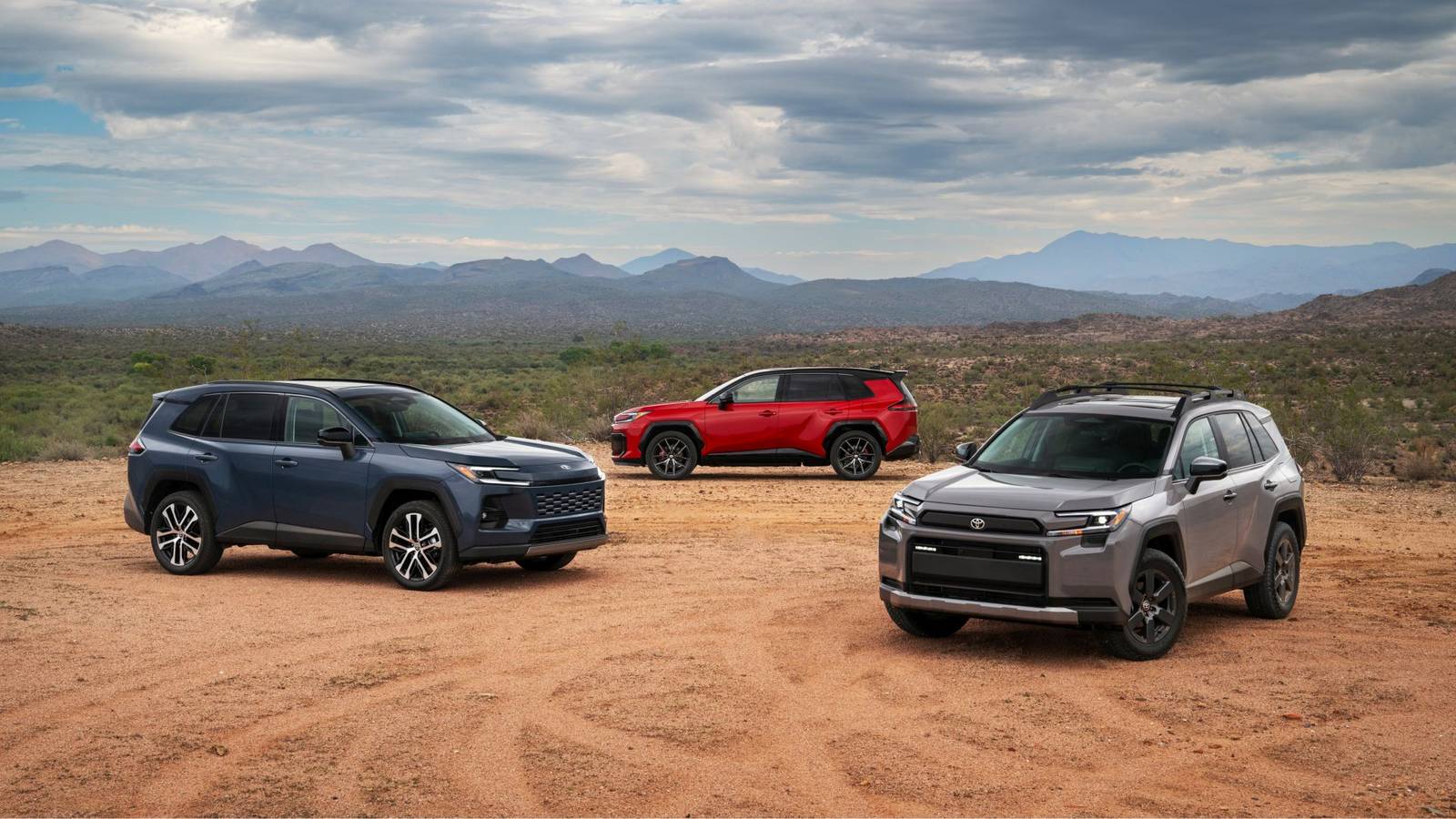
In a segment where incremental updates often pass for progress, the 2026 Toyota RAV4 stands out by evolving in ways that actually matter. Rather than reinventing the compact SUV, Toyota has refined it with sharper engineering, smarter packaging, and a decisive shift toward electrification.
This latest iteration builds on Toyota’s proven TNGA-K platform, maintaining familiar proportions while integrating more advanced hybrid systems, improved chassis tuning, and a noticeably more cohesive tech experience. Output figures have climbed, efficiency has improved, and usability has been enhanced without adding unnecessary complexity.
What makes the 2026 RAV4 particularly compelling is how seamlessly it blends these upgrades into everyday driving. With up to 236 horsepower in hybrid all-wheel-drive form, nearly 47 mpg in optimal conditions, and over 37 cubic feet of cargo space, it delivers measurable gains where they count. It’s not a radical departure; it’s a smarter, more complete version of a formula buyers already trust.
Hybrid Power Now The Default Choice

The biggest technical shift for 2026 is also the most significant: the Toyota RAV4 is now fully electrified. Traditional gasoline-only variants have effectively been phased out in favor of hybrid and plug-in hybrid powertrains across the lineup. This marks a turning point not just for the model but for the segment as a whole.
At the core of the standard hybrid model is a 2.5-liter Atkinson-cycle four-cylinder engine paired with Toyota’s latest-generation hybrid system. In front-wheel-drive form, this setup produces 226 horsepower, while all-wheel-drive variants benefit from an additional rear-mounted electric motor, increasing total system output to 236 horsepower. The integration of this system is key: Power delivery is smoother than before, transitions between electric and gasoline power are nearly imperceptible, and the updated hybrid transaxle reduces the lag that once defined earlier systems.

Performance has improved alongside efficiency. All-wheel-drive hybrid models now achieve 0 to 60 mph in just over seven seconds, making them feel noticeably more responsive in everyday driving situations. The electric motors provide immediate torque off the line, which is particularly beneficial in urban environments. For those seeking more performance, the plug-in hybrid variant significantly raises the bar. With a combined output of 324 horsepower, it transforms the RAV4 into one of the quickest vehicles in its class. At the same time, it offers an estimated 50 miles of electric-only driving, allowing many owners to complete daily commutes without using any fuel at all.
What makes this electrified approach so compelling is how effortless it feels. There’s no need to adapt driving habits or rethink how the vehicle is used. The technology simply enhances the experience, making the hybrid RAV4 feel like the natural, default choice rather than an alternative. But impressive hybrid technology means nothing if the everyday experience falls short—which is where Toyota’s real engineering focus becomes clear.

The Most Practical And Balanced Hybrid SUV For 2026
It’s the best-selling SUV in the U.S. for a reason!
Everyday Usability Perfected

Practicality has always been a defining strength of the RAV4, and the 2026 model refines that reputation with measurable improvements. This is a vehicle engineered around real-world needs rather than abstract design goals, and it shows in nearly every aspect of its packaging.
Cargo capacity remains a standout feature, with approximately 37.8 cubic feet of space behind the rear seats and up to 69.8 cubic feet when they are folded flat. The shape of the cargo area is square and usable, avoiding the compromises seen in more style-focused competitors. A low load floor and wide tailgate opening make it easier to load heavier or bulkier items, reinforcing the RAV4’s everyday practicality.

Passenger space is equally well considered. With nearly 99 cubic feet of interior volume, the RAV4 provides ample legroom and headroom for both front and rear occupants. The seating position offers excellent outward visibility, which contributes to driver confidence in both urban and highway settings. Rear passengers benefit from a relatively flat floor, improving comfort for middle-seat occupants.
Towing capability has also been enhanced. Properly equipped all-wheel-drive models can tow up to 3,500 pounds, making the RAV4 suitable for small trailers, recreational equipment, or weekend getaways. This added versatility expands its appeal beyond traditional commuting duties.
Small but meaningful details further improve usability. Generous oddment storage space is provided, multiple USB-C ports are distributed throughout the cabin, wireless charging is available, and higher trims offer a 1500-watt household-style power outlet in the cargo area. These features may seem minor individually, but together they create a vehicle that feels purpose-built for busy modern family life.
Smarter Tech, Less Friction: A Cabin That Feels Intuitive

Technology in the 2026 RAV4 has been upgraded with a clear focus on usability rather than novelty. The result is a cabin that feels modern and connected without becoming overwhelming or distracting. The infotainment system now features larger displays, typically ranging from 10.5 to 12.9 inches depending on trim level. The updated interface is faster, cleaner, and more logically organized, reducing the time required to access key functions. Wireless Apple CarPlay and Android Auto are standard, eliminating the need for cables and ensuring seamless smartphone integration.
A fully digital 12.3-inch instrument cluster provides customizable layouts, allowing drivers to prioritize the information most relevant to them. The graphics are crisp and easy to read, contributing to a more refined driving experience.

Importantly, Toyota has retained physical controls for essential functions such as climate settings. This decision significantly improves usability, as drivers can make quick adjustments without navigating through menus or taking their eyes off the road.
An updated electronic architecture underpins these features, supporting over-the-air updates and improved connectivity. This ensures the system remains current over time, adding long-term value to the ownership experience.
Driver assistance technology has also evolved. The latest Toyota Safety Sense suite delivers smoother adaptive cruise control, more natural lane-keeping assistance, and enhanced detection of vehicles, pedestrians, and cyclists. These systems work more intuitively than before, reducing driver fatigue without feeling intrusive. The overall effect is a cabin that feels cohesive and thoughtfully engineered, where technology enhances the driving experience rather than complicating it. The question that remains is whether this refined tech experience translates to measurable advantages on the road.

How A Small SUV Became A Giant In America
This is the story of how a modest crossover quietly rose to become one of America’s most iconic and influential vehicles.
Real-World MPG Meets Real-World Performance

Efficiency has always been a key selling point for the RAV4, but the 2026 model takes this to a new level by delivering figures that hold up in real-world driving conditions. Hybrid models achieve up to 48 mpg in city driving and 42 mpg on the highway, with combined figures of 44 mpg for FWD models and 42 mpg for AWD models, depending on configuration. With a fuel tank capacity of approximately 14.5 gallons, this translates to a potential driving range of more than 600 miles under mixed conditions. This kind of range is particularly valuable for buyers who prioritize convenience and want to minimize fuel stops during long journeys.

Despite its efficiency focus, the RAV4 does not feel underpowered. The electric motors provide immediate torque, improving responsiveness in stop-and-go traffic and making acceleration feel more effortless. The hybrid system also contributes to a smoother and quieter driving experience, particularly at lower speeds where electric power can dominate.
The chassis has been further refined to improve overall driving dynamics. A MacPherson strut front suspension and multi-link rear setup provide a balanced combination of comfort and control. Steering response is more precise than before, and body roll is well managed for a vehicle in this class. The electronically controlled all-wheel-drive system enhances traction by delivering power to the rear wheels only when needed. This approach maintains efficiency while improving stability in challenging conditions such as rain or gravel roads.

The Hybrid SUV Toyota Just Redesigned To Beat Every Rival At Once
Toyota’s 2026 RAV4 redesign isn’t just continuing its surge; it’s increasing its lead against the competition even further.
The Mainstream Sweet Spot: Why The 2026 RAV4 Now Fits More Buyers Than Ever

What ultimately defines the 2026 Toyota RAV4 is how effectively it brings together all of its improvements into a single, cohesive package. Rather than excelling in one area at the expense of others, it delivers a well-rounded experience that aligns closely with the needs of modern SUV buyers. Its hybrid powertrain lineup reflects the direction of the industry while remaining approachable and easy to live with. Its practicality continues to set a benchmark in the segment, offering space and versatility without unnecessary complexity. Its technology feels modern but intuitive, avoiding the pitfalls of overcomplication that affect many competitors.

The performance figures reinforce this balance. With 226 horsepower in standard FWD hybrid form and 320 horsepower in plug-in hybrid configuration, it offers sufficient performance for a wide range of driving scenarios. Fuel economy figures of up to 48 mpg and a driving range of more than 600 miles make it highly efficient without compromising usability. A towing capacity of up to 3,500 pounds and nearly 70 cubic feet of maximum cargo space further enhance its versatility.
These are not extreme numbers designed to impress in isolation. Instead, they represent a carefully considered balance that reflects real-world priorities. For families, the RAV4 provides space, safety, and reliability. For commuters, it offers efficiency and comfort. For buyers seeking modern technology, it delivers connectivity without complexity. And for those simply looking for a dependable, well-rounded SUV, it remains one of the most compelling options available.
In a segment defined by fierce competition, the 2026 RAV4 succeeds not by trying to be everything to everyone, but by being exactly what most buyers need.
Sources: Toyota U.S.