
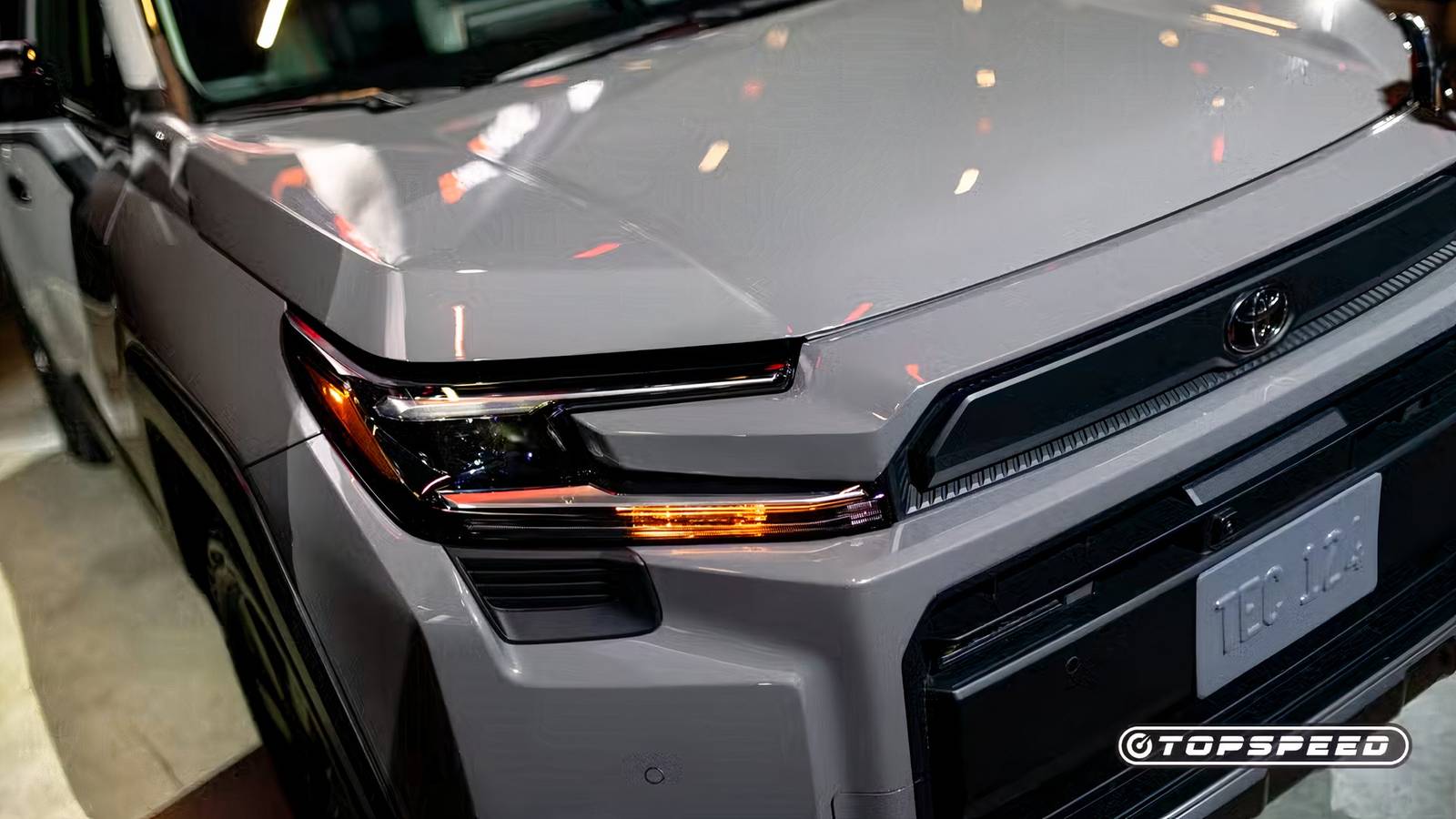
SUVs have never been particularly efficient, even given the decades of engineering progress. It’s just about the way they’re built; their height, weight, and all the four-wheel-drive mechanicals just work against fuel economy in ways that cars naturally avoid it by being … well … cars. It’s just the way it is. The biggest improvement came with the development of hybrids, which were solely meant to reduce vehicular emissions and fuel usage, but soon became apparent that they could also enhance power, which is particularly attractive to SUVs.
The basic premise is that reducing fuel consumption means you can go longer before pulling over to insert your card into a fuel pump, which is very much appreciated in today’s economic climate. Today, you have hybrid SUVs that are sometimes more efficient than comparably sized sedans, and hybridization has become the overwhelming solution to address both SUV inefficiencies and fuel costs. Honda and Toyota got the hybrid ball rolling at the turn of the century, and today have a hand in nearly all Japanese hybrid SUVs.
Why Driving Range Matters, Especially To An SUV

Self-charging hybrids started the ball rolling with the 2000 Honda Insight. The main reason for the development of the hybrid system was to radically reduce fuel consumption, recapturing energy a vehicle wasted during braking and coasting, and turning it into electric boost it could use during acceleration to enhance the traditional gasoline internal combustion engine (ICE). The result was a vehicle that went radically farther before it needed more fuel in the tank. And you could just use the vehicle as you always had—just put gas in it; the technology took care of spreading it thinly.

About five years after Prius set the pace, Toyota decided to try the system in a segment where it was really needed — SUVs — but before it launched the first Highlander Hybrid (2006), Toyota shared its hybrid technology with Ford (for the 2005 Escape Hybrid). The results were improvements of 38–42 percent in MPG and driving range. That meant you could go 100–150 miles farther on a tank of gas, and if you used your SUV strictly where it guzzles liquid sustenance like a sailor on shore leave (driving around cities and suburbs), you could go an extra 140–200 miles, without filling up.
The Hybrid Landscape In 2026 Doesn’t Require Compromises

Today’s hybrid technology has become so precise that different companies can tune their hybrid SUVs to toe the company line, whether that prioritizes all-around comfort and refinement (such as with many Lexus hybrids), on pavement performance (BMW), or off-road confidence (Subaru). The neat part is that even with performance-oriented hybrids, sensible driving techniques will still improve range dramatically by taking full advantage of inherent hybrid traits, like prolonged coasting or effective braking.

Today’s SUV buyers don’t have to compromise power for efficiency, or vice versa, when considering a hybrid powertrain. Nor do they have to resort to drastically reduced efficiency by choosing AWD or 4WD, since some hybrids create the all-wheel system using electric motors. The Corvette E-Ray, for example, adds 300 pounds of hybrid componentry, and though it holds the line on efficiency, it does improve acceleration and handling, and adds the ability to add three to five miles of range driving on electric power alone at low speeds (lower than 45 mph).

The Sub-$40,000 Toyota SUV That Redefines Hybrid Driving Range
It delivers more than 550 miles on a single tank of fuel while costing just $3,000 more than its ICE sibling.
The 2026 Toyota RAV4 Is The Japanese Hybrid SUV With The Longest Range
Rated By The EPA At 624 Miles

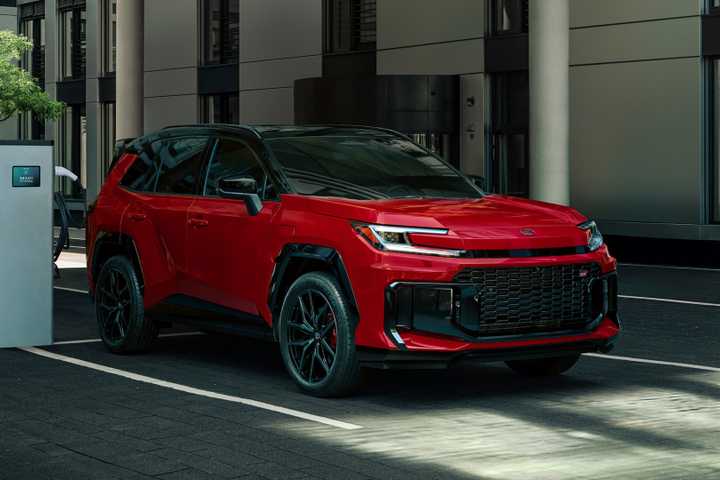
Starting in 2026, the Toyota RAV4 is a fully electrified model (although it retains a non-hybrid variant in China) available as a PHEV as well as a full hybrid that delivers around 625 miles of range, depending on driving style. That’s the longest among any of its hybrid compatriots, and trailing only the front-drive Kia Sorento and Hyundai Santa Fe in the figure that has come to tie hybrid efficiency more closely to real-world experiences.

- Base Trim Engine
-
2.5L Inline 4 Hybrid
- Base Trim Transmission
-
CVT
- Base Trim Drivetrain
-
Front-Wheel Drive
- Base Trim Horsepower
-
183 HP @6000 RPM
- Base Trim Torque
-
163 lb.-ft. @ 3600 RPM
- Make
-
Toyota
- Model
-
RAV4
- Segment
-
Compact SUV
Making the 2026 Toyota RAV4 only a hybrid, Toyota reduces complexity and variability in the buying process, and ensures that efficiency is not an option, which reportedly ties in to buyers’ wishes—consumers reportedly now expect efficiency to be standard in a vehicle, and prefer not to “upgrade” to get it. With efficiency as standard, the 2026 RAV4 requires no special routines from its owners. You treat it as you have past RAV4s—just fill it up and go.
2026 Toyota RAV4 Numbers Are Tough To Match

As with other EPA ratings, the 2026 Toyota RAV4’s specifications are straightforward, arrived at through bench testing to ensure all models are tested under nearly identical conditions. Range is arrived at by multiplying the rated MPG by the number of gallons in the gas tank. It’s still not “real world,” but it’s a suitable combination. The RAV4’s range in combined conditions (tested at 55 percent city driving and 45 percent highway) can further be speculated to reach 682 miles, if all your driving is at city speeds, or 580 miles on a highway run where you fill up before ramping on.
|
2026 Toyota RAV4 |
2026 Ford Escape Hybrid |
|
|---|---|---|
|
Powertrain |
2.5-liter inline-4 + 2 motors |
2.5-liter inline-4 + 2 motors |
|
Transmission |
Continuously variable |
Continuously variable |
|
Power |
226 hp |
192 hp |
|
Torque |
163 lb-ft |
155 lb-ft |
|
Driveline |
Front-wheel drive |
Front-wheel drive |
|
Fuel Tank Capacity |
14.5 gallons |
14.3 gallons |
|
Range |
624 miles |
558 miles |
|
Efficiency City |
47 mpg |
42 mpg |
|
Efficiency Highway |
40 mpg |
36 mpg |
|
Efficiency Combined |
43 mpg |
39 mpg |
The 2026 Toyota RAV4 numbers are difficult to match within the segment because some competitors offer similar MPG ratings but have smaller fuel tanks, while others have larger fuel tanks but reduced fuel economy. Generally, though, vehicles with larger fuel tanks tend to go farther if the MPG ratings are relatively equal. We’ve chosen to compare it to the 2026 Ford Escape Hybrid, which has a similar hybrid configuration.
What Range Means In Real-World Applications

The 2026 Toyota RAV4’s story is only partially told in its specs and technology. Those are really just the backstory or the character development. The meat of the story is how those two elements translate into everyday use. The rated range is really just a hypothetical until it gets applied to the real world, and drivers see a financial return related to how much farther the vehicle can go, compared to its competitors. In the end, the predictability makes it easier to work fuel stops into everyday driving.

The RAV4’s long range translates directly into fewer stops for fuel, which has various implications. First, you can expect to get over 600 miles to a tank of fuel if your driving is an average mix of city and highway. If most of your driving is urban or suburban, you can reasonably expect to get better than the rated 624 miles, which probably means filling up once a week or less; if your driving is mostly on the highway, like for a holiday trip to visit family in another city, you can reasonably expect to get less than 600 miles before needing to fill up.

How A Small SUV Became A Giant In America
This is the story of how a modest crossover quietly rose to become one of America’s most iconic and influential vehicles.
Engineering The 2026 Toyota RAV4 To Go Farther

The 2026 Toyota RAV4’s range advantage revolves around the latest version of the vaunted Toyota Hybrid system that continues to set the standard for efficiency and integration. The combination of a 2.5-liter Atkinson-cycle engine and electric motors is not new, having debuted in the 2012 Camry Hybrid, but it has been continuously refined in subsequent vehicles, and today forms the base for many hybrids in the Toyota and Lexus stables, as well as helping the development of hybrids for competing companies such as Mazda and Subaru.

As it has since its roots in the 2001 Toyota Prius (there, using a 1.5-liter Atkinson cycle “four”), the system prioritizes thermal efficiency over outright performance, but unlike the original Prius, it doesn’t shirk performance outright. Today, it still extracts maximum energy out of every drop of fuel, but it also uses its electric assist to extract every ounce of power, doing its best work at low speeds and acing stop-and-go driving.
Battery, Regeneration, And Energy Management

Battery management is a key component of hybrid efficiency, even if it isn’t as essential as with the larger batteries in plug-in hybrids (where the energy generated by exterior charging also has to be managed). In a hybrid system, energy is constantly captured through the braking system and redistributed to where it benefits overall performance best.
|
2026 Toyota |
RAV4 |
RAV4 PHEV |
|---|---|---|
|
Powertrain |
2.5-liter inline-4 + 2 motors |
2.5-liter inline-4 + 2 motors |
|
Transmission |
Continuously variable |
Continuously variable |
|
Power |
236 hp |
324 hp |
|
Torque |
163 lb-ft |
172 lb-ft |
|
Driveline |
All-wheel drive |
All-wheel drive |
|
Fuel Tank Capacity |
14.5 gallons |
14.5 gallons |
|
Battery Capacity |
1.6 kWh |
22.7 kWh |
|
Combined Range |
594 miles |
Est. 839 miles |
|
Efficiency City |
45 mpg |
Est. 44 mpg |
|
Efficiency Highway |
38 mpg |
Est. 38 mpg |
|
Efficiency Combined |
41 mpg |
Est. 41 mpg |
Unlike the PHEV, where battery capacity is the core to providing longer range, the self-charging RAV4 has to rely on the storage/usage balance more because once the battery is depleted, there’s no way to top it back up without driving. As such, the electric motors become an integral part of efficiency in various driving conditions, and power usage is more stable and predictable.
Packaging, Weight, And Aerodynamics

The 2026 Toyota RAV4’s compact footprint continues to play a significant role in its range advantage. Larger, heavier vehicles inherently require more energy to move, and even small weight increases have a measurable impact on efficiency. The RAV4 has consistently grown larger since its introduction in 1996, but Toyota has kept its size and weight in check and added larger models (like the Highlander, and then the Grand Highlander) to satisfy growing consumer demands.

Similarly, its design has evolved from “cute,” as was often the description of the first RAV4, through rugged, and now into futuristic. The 2026 Toyota RAV4 is aerodynamically sound (0.31 Cd, down from the previous generation’s 0.32), while creating differentiations based on consumer tastes—Core, Sport, and Rugged—falling in line with modern presentation, but without losing the family look.

Why The RAV4 Hybrid Quietly Became Toyota’s Smartest SUV
The 2026 RAV4 Hybrid debuts smart features and TSS 4.0 safety tech, elevating Toyota’s tech reputation.
How The 2026 Toyota RAV4 Stacks Up Against Its Rivals

The 2026 Toyota RAV4 achieves its position as the Japanese hybrid SUV with the longest range not through innovation alone (though there’s no denying that’s a huge part of it), but through an unwavering adherence to efficiency, integration, and usability. It matters because it plays into what most drivers value (outside of individual desires for higher performance, increased space, or lower fuel consumption)—consistency, convenience, and predictability.

As the industry evolves with a growing need for electrification, self-charging hybrids are probably the most effective way to balance natural resources with manufactured solutions, and the 2026 RAV4 stands as one of the more effective and usable presentations of that mission. And as a leader in the compact hybrid SUV field, it also serves as a kind of mentor for other hybrid SUVs, both established ones and up-and-comers.
|
Lexus RX 350h |
Subaru Crosstrek Hybrid |
|
|---|---|---|
|
Powertrain |
2.5-liter inline-4 + 2 motors |
2.5-liter boxer-4 + 2 motors |
|
Transmission |
Continuously variable |
Continuously variable |
|
Power |
246 hp |
194 hp |
|
Torque |
233 lb-ft |
154 lb-ft |
|
Driveline |
All-wheel drive |
All-wheel drive |
|
Fuel Tank Capacity |
17.2 gallons |
16.6 gallons |
|
Range |
619 miles |
598 miles |
|
Efficiency City |
37 mpg |
36 mpg |
|
Efficiency Highway |
34 mpg |
36 mpg |
|
Efficiency Combined |
36 mpg |
36 mpg |
The 2026 Lexus RX 350h Gives Up A Few Miles Of Range For A Larger Cabin

As a larger, more refined SUV, the 2026 Lexus RX 350h demonstrates how different priorities affect range. Using the same efficient powertrain as the 2026 RAV4, the trade-off comes in its larger footprint and overall materials and components, hence the slight drop in overall range (five miles less than the 2026 RAV4). It’s a trade-off that buyers who prioritize comfort are willing to make.
The 2026 Subaru Crosstrek Hybrid Gives Up Range To Preserve Its Core Values

Depending on Toyota’s hybrid expertise, the 2026 Subaru Crosstrek Hybrid travels a different path, sacrificing a few miles of range to preserve its capabilities, particularly in challenging off-pavement endeavors. Standard all-wheel drive, increased ground clearance, and a rugged design make it well-suited to its perceived use, but they also compromise overall efficiency. Its smaller size offsets some of the efficiency losses, but it still falls shy of the 600-mile threshold.
Sources: Toyota, the EPA, Edmunds