
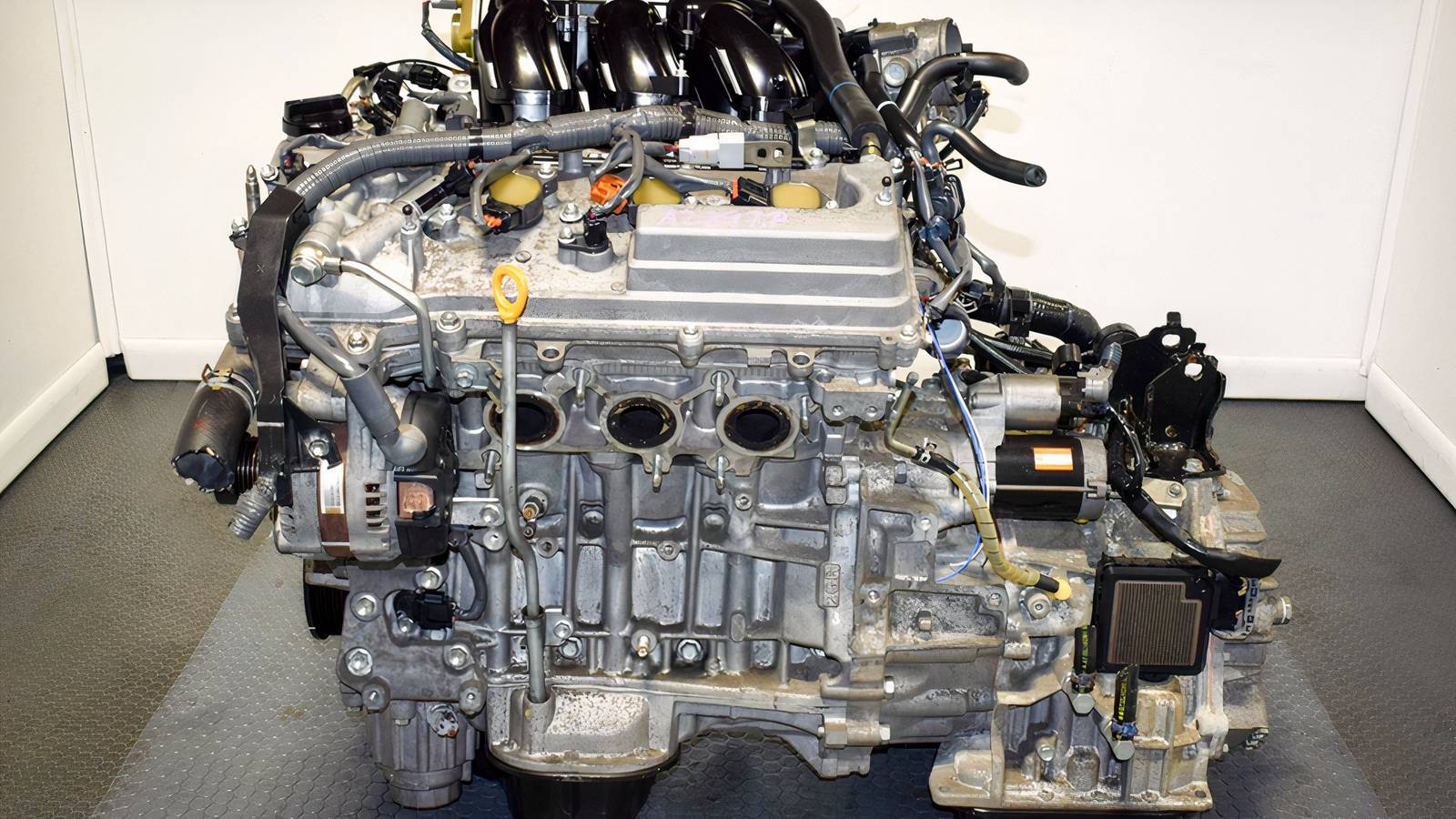
Whether a small coupe or a large SUV, car engines should last a long time. Unless the engine is put under serious, undue stress, it is usually designed to last much longer than any other component of a vehicle. That’s a good thing, too, because engines are also among the most expensive and labor-intensive parts of a vehicle to replace. It’s not unheard of for owners to spend between $5,000 and $10,000 to replace the engine when something causes it to fail.
No matter how well your engine is cared for, it will eventually fail. Typically, vehicles driven longer and harder experience engine failure much sooner than those driven less. Still, some engines are made to withstand the torture of daily abuse, responding well to regular maintenance and daily driving.
Simpler Design Equals Fewer Failure Points
Fewer Moving Parts Equals Longevity

Naturally aspirated engines are admired for the raw, honest, and pure power offered, but they also do something that turbocharged engines can’t do. They are made to last longer simply because of the fewer moving parts compared to turbo engines. Many automakers add turbochargers and the supporting systems, including intercoolers and high-pressure boost systems, to increase power and fuel efficiency. That’s fine in the short term, but over time, these additional parts can fail, leading to replacement and maintenance issues for owners. This creates an inherent reliability edge for a naturally aspirated V6 over any turbocharged four-cylinder.
Naturally Aspirated Engines Are More Forgiving
The same argument that can be used to prove that naturally aspirated engines are more durable and reliable than turbocharged engines is also used for EVs over gas-powered vehicles. Fewer moving parts means fewer parts that require maintenance and fewer parts that can wear out over time. This is the case for every vehicle. A vehicle with a sunroof has extra parts that cars without sunroofs don’t have, meaning the first vehicle requires more care and maintenance.

Turbocharged engines require stricter adherence to the required maintenance schedule. This is due to the added heat, boosted pressure, and additional moving parts. Because of this, a turbocharged four-cylinder engine is much more maintenance-sensitive than a V6 engine, especially the Toyota GR-Series engines, which seemed almost bulletproof when used.

Toyota’s Most Reliable Truck That Regularly Hits 400,000 Miles
Toyota’s unconventional approach to truck engineering has created a vehicle that lasts for decades.
Proven To Exceed Extreme Mileage Thresholds
Toyota GR-Series 3.5-Liter V6 (2GR-FE/2GR-FKS)

Toyota vehicles have a longstanding history of reliability, and much of this can be attributed to one engine used across many Toyota and Lexus models. First seen in the 2005 Toyota Avalon, this engine can easily be called the heartbeat of the brand for over a decade, finding its way under the hood of more than a dozen cars and SUVs. Another automaker saw the benefits of this incredible V6 engine and got in on the party. That’s right, the Lotus Evora was powered by the 2GR-FE engine in 2009. Lotus used this engine in two other sports cars: the Exige and Emira.

This incredible Toyota engine has been documented to easily reach 300,000 to 500,000 miles in many vehicles. In each case, proper maintenance was completed, underscoring the importance of regular maintenance, especially in vehicles driven every day.
The Toyota V6 Is A Cool Customer

Turbocharged engines recirculate exhaust gases through a turbine fan mounted near the engine. The turbine forces more compressed fresh air into the engine cylinders to create a bigger explosion of power. This process is extremely effective at increasing power without the need for more cylinders, but it causes the engine to run much hotter than naturally aspirated engines.

The Toyota V6 doesn’t use turbochargers, which allows it to run cooler. The added high pressure and heat can accelerate wear and tear on the internal components of a turbocharged four-cylinder engine. The added heat and air pressure entering the engine block of a turbocharged engine can lead to engine failure much sooner than in a naturally aspirated V6, especially the Toyota V6.

How Much It Costs To Replace A Toyota Corolla Hybrid Battery In 2026
Having a new battery installed to your Corolla Hybrid will be an expensive repair.
Consistent Power Delivery Reduces Strain
Turbo Lag Is A Drag

Turbochargers are mechanically driven using exhaust gases. The term “Turbo Lag” refers to the delayed response of the turbochargers during acceleration. The engine needs to produce enough exhaust gas pressure to spin the turbine and force compressed air into the engine to generate additional power from the turbochargers. For this reason, turbochargers are active at specifically tuned RPM ranges.

One of the most enjoyable aspects of the Toyota GR-Series engine is the consistent acceleration. This V6 engine delivers smooth and continuous power, making it more predictable and natural than turbocharged four-cylinder engines. This natural power delivers reduced vibration and mechanical fatigue over time, ensuring the engine lasts much longer.
Built For Durability Across Multiple Platforms

Another key component proving the GR-Series’s extreme reliability is Toyota’s use of the engine across multiple platforms. This engine appeared in everything from midsize pickup trucks to sedans, making it a widely used engine series over its time. During its time on the market, this engine powered the Toyota Camry, Tacoma, Highlander, Avalon, Venza, RAV4, and a few other Toyota models that didn’t make it to America. It was also the foundational engine powering the Lexus RX, IS, and GS, demonstrating its versatility in the luxury car world. Toss in the Lotus sports cars, and the GR-Series engine proved its ability to handle various workloads from pulling trailers to carrying families and even pumping out fast laps at the track.

10 Legendary Toyota Engines That Refuse To Die
These are the engines that built Toyota’s legacy of reliability.
Strong Internal Construction
Durable Materials Proved Longevity

The Toyota V6 engine family uses durable materials, including forged crankshafts and rigid engine blocks. These items have proven themselves over decades and across various automakers to be durable and withstand daily abuse. The 2GR-FE was made into several specialized models, many of which were for transverse mounting. This made it an ideal engine for cars, trucks, and SUVs. To save weight, the engine was constructed entirely of aluminum, allowing the supporting components to last longer.

Toyota had so much confidence in the GR-Series engines that they were developed and upgraded for special applications. The Lotus sports cars used them with superchargers, and a special variant called the 2GR-FSE arrived in North America with direct injection. It was used in high-end Lexus models. That durable foundational construction made these changes possible.
Toyota Continued To Improve Engine Reliability

Toyota’s market longevity has allowed engine development and refinement. Toyota has gone through several generations of V6 engines, from the VZ to the MZ to the GR engines. Every time a new engine generation began, improved reliability has been a top priority. Although Toyota now uses mostly turbocharged and hybrid powertrains in modern vehicles, the foundation of its reliability began with V6 engines.

By contrast, turbocharged four-cylinder engines are a much more recent industry-wide shift. Nearly every automaker uses a small four-cylinder engine as a foundation and adds turbocharging as needed. These engines became popular due to changes in industry emissions and fuel-economy standards.

The Japanese Six-Cylinder Engine Is So Reliable It’s Still In Production After Almost 25 Years
Toyota’s venerable turbodiesel remains a cornerstone for one of its most iconic vehicles.
Better Long-Term Ownership Reliability
Higher Temps Are Engine Killers

Naturally aspirated engines operate at lower temperatures and pressures than turbocharged engines. This allows components to last longer. Collected data shows that most engines reaching 200,000 miles or more with minimal issues are naturally aspirated, not turbocharged. These old-school engines also have fewer electronic components, reducing the risks of electrical failures.
Forget Premium Gas

The Toyota GR-Series engine runs perfectly on regular 87-octane gasoline, which makes it much more affordable to operate. Sure, a turbocharged four-cylinder engine might get better fuel mileage, but is that offset by the cost difference between regular and premium gasoline? It should be noted that many modern turbo engines are designed to run fine on regular fuel, though not all can.

10 Six-Cylinder Engines That Outshine Most V8s In Power And Efficiency
These engines can keep up, and in some cases, beat a V-8.
Real-World Reputation Backs The Data
The V6 Cements Its Place In History

Toyota’s longstanding reputation for reliability and durability is cemented in the V6 engine and its continued improvement over several generations. The GR-Series engines are well-known for their toughness, durability, and dependability. These engines are theoretically reliable, as proven by decades of data. Toyota has built millions of vehicles and shown that its V6 engine, which was widely used for nearly twenty years, is easily more reliable than any turbocharged four-cylinder engine.
The Bottom Line

The Toyota GR-Series 3.5-liter V6 engine is much more reliable than any turbocharged four-cylinder engine because of its mechanical simplicity, proven longevity, lower stress operation, and decades of refinement. It’s the result of dedication to creating engines that last longer than most and continue to operate well, even under extreme stress.
Sources: Autoweb, Toyota, Consumer Reports, AAA