
In a compact sedan market dominated for decades by the Honda Civic and Toyota Corolla, this South Korean competitor has steadily rewritten expectations without making much noise about it. Once viewed as the budget alternative, it has matured into one of the most rational long-term ownership choices you can make in 2026. What makes it stand out is not just its purchase price, but the way it consistently minimizes stress over time, with fewer unexpected repairs, lower routine maintenance costs, and a surprisingly robust mechanical reputation in recent model years.
Modern vehicles from this brand focus on refining its core engineering rather than overcomplicating it. That approach has paid off in real-world durability, with many owners reporting well over 200,000 miles with little more than consumables and scheduled servicing. At the same time, its aggressive warranty coverage and simplified powertrain choices have helped reduce long-term financial risk. When compared directly with the Honda Civic, this compact sedan often delivers similar reliability scores while undercutting it on ownership complexity and cost predictability. For buyers prioritizing low stress, low repair frequency, and long-term affordability, this sedan deserves far more attention than it typically receives.
Built To Outlast Expectations In A Budget-Friendly Package

This modern South Korean compact sedan is built around a clear philosophy: durability through restraint. Instead of chasing complex performance engineering or premium-brand excess, Hyundai has focused on refining a compact sedan that simply works day after day without drama. Under the hood, most recent examples use a naturally aspirated 2.0-liter four-cylinder engine paired with either a CVT or a straightforward hybrid system in efficiency-focused trims. This engine avoids the high-stress characteristics of turbocharged competitors, which often introduce long-term heat and wear concerns. The result is a drivetrain designed for longevity rather than headline performance.
Real-World Ownership Data Supports This Approach

Many high-mileage examples surpass 160,000 – 200,000 miles with minimal unscheduled repairs beyond routine wear items like brakes, tires, and fluids. The car’s systems are also intentionally conventional, which makes diagnostics easier and repair costs lower when something does eventually go wrong. What stands out most is how predictable the Elantra becomes over time. It doesn’t surprise owners with expensive failures, and that predictability is one of the strongest indicators of long-term value in the compact sedan segment.

The Budget-Friendly Hybrid Car That Doesn’t Feel Cheap
This car comes with loads of great equipment, offers unique styling, and frugally sips fuel.
Why The Hyundai Elantra Has Become A Reliability Standout

Reliability is no longer a weak point for Hyundai; it is one of its strongest selling arguments. In recent independent evaluations, the Elantra consistently scores in the “good to excellent” range for dependability, often matching or slightly exceeding the Honda Civic, depending on model year and methodology. Recent JD Power reliability scoring shows the 2026 Elantra edging out the 2026 Civic with a score of 86/100 versus 84/100, reflecting slightly fewer complaints and a strong mid-cycle platform maturity advantage in newer generations.
Minimal Mechanical Failure Puts Money Back In Your Pocket

What matters more than raw scores, however, is the nature of the issues reported. In modern Elantras, mechanical failures are relatively rare. Most reported concerns tend to be minor electronic glitches or infotainment updates rather than engine or transmission breakdowns. That distinction is critical because it keeps repair costs low and downtime minimal.

Hyundai’s reliability gains are also reinforced by extensive warranty coverage, which reduces out-of-pocket expenses during the ownership period. When combined with a stable powertrain and improved build consistency, the Elantra has moved from “value pick” to legitimate long-term contender in the compact sedan hierarchy.

10 Reliable Cars That Make Great Daily Drivers For 2025
Are there any good cars left? These ten reliable cars can be great daily drivers and are part of the 2025 model year lineup.
Lower Ownership Costs That Undercut The Honda Civic

One of the Hyundai Elantra’s strongest advantages is not just reliability, but the total cost of ownership. Even when repair frequency is similar to rivals’, the cost per service event is often lower, and that difference adds up over time. Annual maintenance for the Elantra typically sits around the low-to-mid $400 range, which is below the average compact sedan benchmark. This includes routine servicing such as oil changes, brake service, inspections, and fluid replacements.

When compared directly with the Honda Civic, the difference becomes more nuanced. The Civic may have slightly lower annual repair costs in some datasets, but the gap is small enough that it is often offset by the Elantra’s lower entry price and warranty coverage. More importantly, the Elantra’s predictable servicing schedule reduces the likelihood of surprise repair spikes.
Long-Term Financial Confidence Across The Board

Insurance and parts pricing also tend to be competitive for the Hyundai, especially in non-performance trims. Combined with strong fuel economy, particularly in hybrid variants, the Elantra frequently delivers a lower total cost per mile driven over a five-to-ten-year ownership cycle. For buyers focused on long-term budgeting rather than brand perception, the Elantra often quietly wins the financial comparison.

The Hybrid Sedan That Returns The Best MPG
Japanese automakers are considered to be the hybrid masters, but when it comes to frugal sipping, this Korean hybrid takes the cake.
Simple Engineering, Proven Components, And Fewer Things To Go Wrong
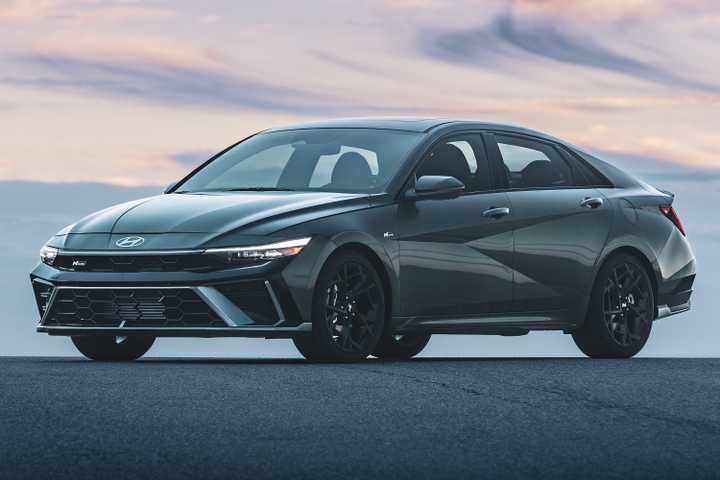

- Base Trim Engine
-
1.6L KAPPA I4 Hybrid
- Base Trim Transmission
-
6-speed EcoShift DCT auto-shift manual
- Base Trim Drivetrain
-
Front-Wheel Drive
- Base Trim Horsepower
-
104 HP @5700 RPM
- Base Trim Torque
-
109 lb.-ft. @ 4000 RPM
- Base Trim Fuel Economy (city/highway/combined)
-
51/58/54 MPG
- Base Trim Battery Type
-
Lithium polymer (LiPo)
- Make
-
Hyundai
- Model
-
Elantra
One of the most overlooked reasons behind the Elantra’s durability is its engineering simplicity. Hyundai has deliberately avoided overcomplicating the core mechanical package in most trims, which reduces the number of potential failure points. The naturally aspirated 2.0-liter engine used in many Elantra models relies on a timing chain rather than a belt, eliminating scheduled replacement costs. Maintenance intervals are also generous, with oil changes typically recommended between 7,500 and 10,000 miles under normal conditions.

The CVT transmission, while often debated in enthusiast circles, is tuned for efficiency and longevity. With proper fluid servicing, it has proven capable of high-mileage durability in everyday driving conditions. This simplicity extends beyond the drivetrain. Suspension systems are conventional and inexpensive to service, brakes are straightforward, and electrical systems avoid unnecessary complexity in base and mid-trims. In short, the Elantra succeeds because it is engineered to reduce friction in ownership. Fewer exotic materials, fewer experimental systems, and fewer over-engineered components all contribute to a car that simply requires less intervention over time.
Modern Features And Efficiency Without The Long-Term Headaches
Where the Elantra has made its biggest leap forward is in how it blends modern technology with long-term usability. Earlier generations of budget sedans often sacrificed refinement for cost savings, but the current Elantra manages to deliver advanced features without significantly increasing ownership risk. Inside, the cabin offers large infotainment displays, digital instrument clusters on higher trims, and a suite of driver assistance features that rival more expensive competitors. Crucially, these systems have been refined to avoid unnecessary complexity that could lead to expensive long-term failures.

Efficiency is another strong point. The standard 2.0-liter engine delivers impressive fuel economy for its class, while hybrid variants push efficiency even further into Corolla Hybrid territory. Importantly, these gains do not come with the same level of mechanical complexity found in some turbocharged or performance-oriented rivals.

The Elantra’s warranty also plays a key role here. Hyundai’s long powertrain coverage gives buyers added confidence that even if issues do arise, they are unlikely to become financial burdens during the early or mid-life of the vehicle. Taken together, the Elantra manages a rare balance. It feels modern enough to satisfy today’s tech expectations while remaining mechanically conservative enough to support long-term ownership peace of mind.
Sources: Hyundai U.S., JD Power, RepairPal, The EPA