
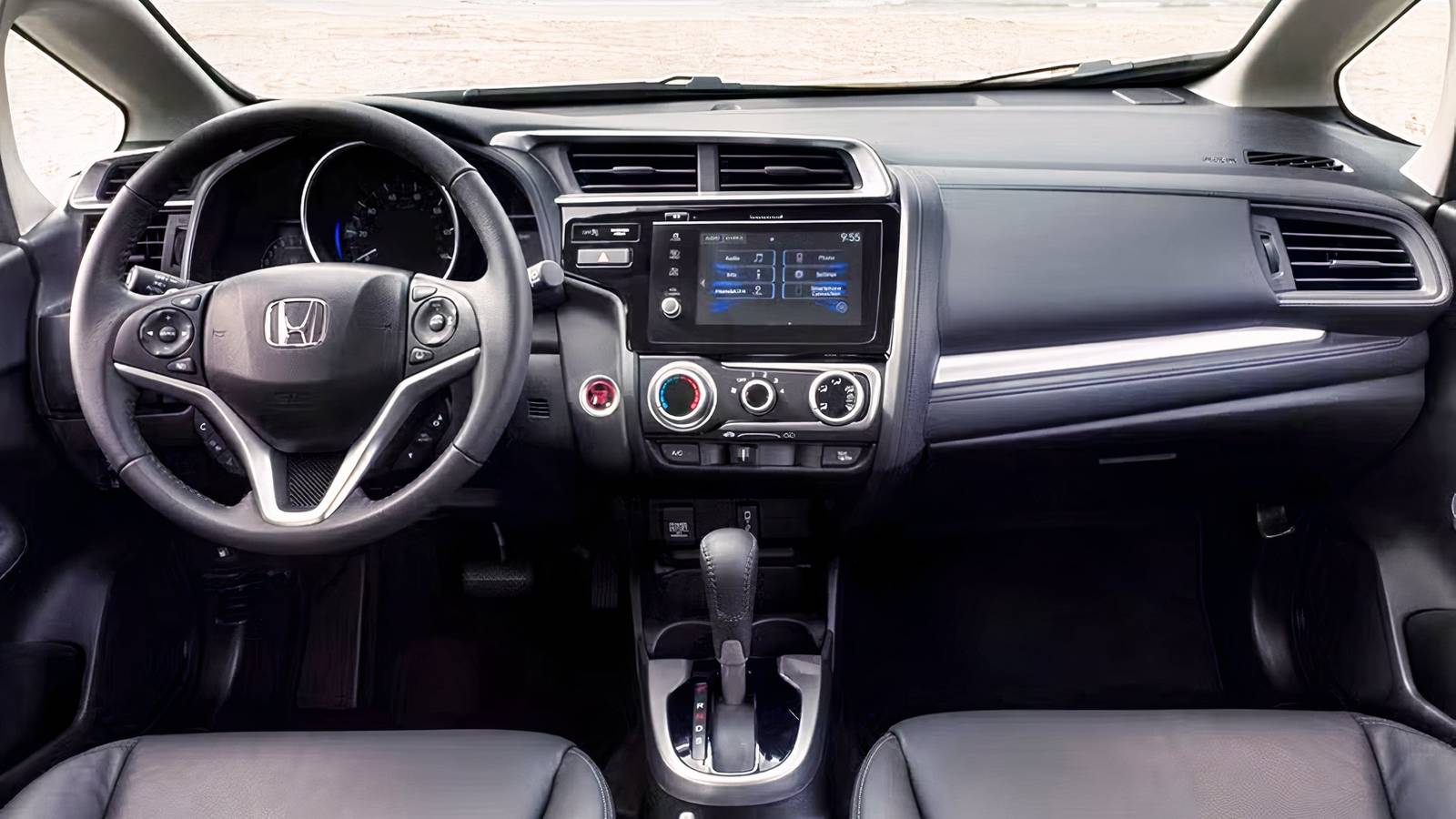
In a market long dominated by size, power, and presence, it’s easy to overlook the brilliance of cars designed with entirely different priorities in mind. While American buyers have historically gravitated toward larger vehicles like SUVs and trucks built for highways and long-distance comfort, much of the world, particularly Japan, has taken a more space-conscious approach to mobility. There, tight streets, dense cities, and limited parking demand vehicles that are compact, efficient, and intelligently packaged.
This contrast in design philosophy has occasionally produced cars that feel out of place at first glance in the United States. They seem too small, too simple, or just too different from what buyers expect. But as American cities become more crowded and the realities of urban driving shift, those same qualities are beginning to feel less like compromises and more like solutions.
Drivers navigating tight parking structures, congested downtown streets, and rising fuel costs are discovering the value of cars that do more with less. And in this changing landscape, one particular model stands out as a perfect example of how thoughtful engineering can transcend borders.
Built For Tight Tokyo Streets, Not American Sprawl

In an era where American roads are increasingly dominated by oversized SUVs and full-size pickup trucks, it’s easy to forget that not every vehicle is designed with wide highways and sprawling suburbs in mind. Some cars are born out of necessity, crafted to solve very specific challenges in very specific environments. Japan, with its dense urban centers, narrow alleyways, and limited parking infrastructure, has long demanded a different kind of automotive thinking.

This philosophy has given rise to a generation of vehicles that prioritize efficiency, clever packaging, and maneuverability over brute force and outright size. These cars are not about excess; they are about optimization. Every inch of space is carefully considered, every feature designed to serve multiple purposes. The result is a class of vehicles that feels purpose-built in a way many larger cars simply cannot replicate.
The U.S. Is Starting Catch On

Ironically, as American cities grow denser and urban congestion worsens, the same principles that define Japan’s urban mobility solutions are becoming increasingly relevant stateside. What was once seen as too small or too specialized for American tastes has quietly become exactly what many drivers now need—especially those navigating crowded downtown cores, tight parking garages, and rising fuel costs.

This Doesn’t Look Like An Affordable SUV, But It’s Priced Like One
The Mazda CX-30 is a subcompact SUV that defies expectations, offering a premium look and feel without the high price tag of luxury vehicles.
How The Honda Fit’s “Magic Seat” Redefined Small-Car Practicality

When the Honda Fit arrived on American shores, it didn’t rely on bold styling or excessive horsepower to make an impression. Instead, it introduced something far more revolutionary, an interior packaging solution that fundamentally redefined what a subcompact car could do.

At the heart of this innovation was Honda’s now-famous “Magic Seat” system. Unlike traditional rear seats that simply fold flat, the Fit’s rear bench could be configured in multiple ways to accommodate vastly different cargo needs. In its standard mode, the seats folded down to create a long, flat load floor—ideal for larger items. But the real trick lay in its “Tall Mode,” where the seat bottoms flipped upward, allowing the car to carry surprisingly tall objects like small pieces of furniture.
For Urban Drivers, This Was A Game-Changer

This versatility was made possible by a clever engineering decision: placing the fuel tank beneath the front seats rather than under the rear bench. It’s a small detail on paper, but it unlocked an entirely new level of interior flexibility. Suddenly, a car with a footprint barely larger than a city parking space could rival much larger vehicles in terms of usable cargo volume. The Fit could function as a commuter car during the week and a capable hauler on weekends. It blurred the line between hatchback and small crossover long before the latter became the dominant force in the market.

The 2026 Honda Prelude Drives Nothing Like The Automatic Hybrid It Actually Is
The Honda Prelude is back, but with a hybrid engine and newfangled transmission. Yet, driving it feels everything but that.
Fuel Efficiency Meets Real-World Urban Driving

Efficiency has always been a cornerstone of small-car design, but the Honda Fit managed to deliver fuel economy that felt genuinely tailored to real-world city use, not just laboratory testing conditions. Powered by a modest yet responsive four-cylinder engine, the Fit wasn’t about straight-line speed. Instead, it excelled in the kind of stop-and-go driving that defines urban commuting. Its lightweight construction and well-tuned continuously variable transmission (CVT) allowed it to sip fuel while maintaining enough responsiveness to dart through traffic when needed.
The Car Simply Works With You, Not Against You

What set the Fit apart was how accessible its efficiency felt. Drivers didn’t need to adopt hypermiling techniques or sacrifice drivability to achieve impressive fuel economy figures. Whether crawling through rush hour or making quick trips across town, it consistently delivers strong mileage without drawing attention to itself. This balance makes it particularly appealing in cities where fuel costs can quickly add up. As American drivers began to prioritize efficiency, especially in urban environments, the Fit’s value proposition became increasingly clear. It wasn’t just economical on paper; it was economical in practice.

How Mid-Size Sedans Are Quietly Beating SUVs In Value And Comfort
Sedans, often overshadowed by their larger counterparts, are proving themselves as smarter, more economical choices for buyers who prioritize comfort.
Big-Car Driving Confidence In A Subcompact Package

One of the most surprising aspects of the Honda Fit was how it managed to deliver a sense of confidence typically associated with larger vehicles. Subcompacts are often criticized for feeling flimsy or unstable, especially at highway speeds, but the Fit defied those expectations.

Honda engineered the car with a rigid chassis and a suspension setup that struck an impressive balance between comfort and control. The result was a driving experience that felt planted and predictable, whether navigating tight city corners or merging onto faster roads. Its compact dimensions made it incredibly easy to place on the road, while its responsive steering added a layer of engagement that many competitors lacked.
Visibility Was Another Standout Feature

Thanks to its upright design and large windows, drivers were given a clear view of their surroundings, an invaluable trait in crowded urban settings. Parking, lane changes, and navigating tight spaces all became less stressful, reinforcing the Fit’s role as a city-friendly companion. Even in terms of safety, the Fit held its own. Later models introduced advanced driver-assistance features, further bridging the gap between subcompact affordability and big-car security. It proved that downsizing didn’t have to mean compromising on confidence.

Why You Should Consider Buying This Used Underrated Honda PHEV
This Honda plug-in hybrid midsize sedan is highly underrated, mostly due to a lack of name recall.
From Cult Favorite To Discontinued Gem: Why America Misses It

Despite its many strengths, the Honda Fit ultimately fell victim to shifting market trends in the United States. As crossovers surged in popularity, smaller hatchbacks began to fade into the background. Buyers gravitated toward higher ride heights and the perception of greater practicality, even when vehicles like the Fit arguably delivered more intelligent use of space.

Honda made the decision to discontinue the Fit in the U.S. after the 2020 model year, marking the end of an era for one of the most thoughtfully engineered subcompacts ever sold in the market. Yet, its absence has only made its strengths more apparent. Today, as urban congestion worsens and the drawbacks of oversized vehicles become harder to ignore, many drivers are beginning to reassess what they truly need from a car. The Fit’s unique combination of compact size, interior versatility, and real-world efficiency feels more relevant than ever.

It has since developed a loyal following, with used examples holding their value remarkably well. Owners praise its reliability, practicality, and sheer cleverness, qualities that are increasingly rare in a market driven by trends rather than necessity. In hindsight, the Fit didn’t fail the American market. The market simply wasn’t ready for it. Now, as cities evolve and priorities shift, it’s clear that this humble hatchback was ahead of its time.
Sources: Honda U.S.