
Sports cars or performance-oriented cars have always held a special place in the hearts of enthusiasts. Over the years, we have seen many models achieve legendary status with their performance, engineering, and status. However, the journey to becoming an icon was not straightforward.
In fact, many such cars never earned the title of legendary cars, as they arrived too early to get any recognition in their respective eras. Many of those cars were advanced enough that buyers misunderstood their existence. Yet, those were among the few cars that earned tremendous respect over the years. The respect came not for the package they offered, but for the idea or the example they set for future products. In simple terms, those cars laid the foundation for many of today’s legends.
Mazda Cosmo 110S
The Car That Predicted Mazda’s Future

In the past 40 years, Mazda has sold nearly 2 million rotary-powered vehicles. Today, the brand is popular for making one of the best rotary engines. However, that reputation did not come easy. While every other automaker was strictly producing cars with a conventional piston setup, Mazda took one of the boldest and most unconventional moves.

It was the year 1967 when Mazda launched the Cosmo 110S — one of the first production cars to feature a dual-rotor Wankel engine. The Cosmo 110 was always offered with a Type 10A (2x491cc) engine featuring two spark plugs per rotor to maintain stable combustion in hot and cold weather. Early versions produced 110 horsepower and were paired with a four-speed manual gearbox. A year later, Mazda refined the overall package by enhancing the output to 128 horsepower. Also, the former four-speed manual gearbox was swapped for a five-speed manual unit. The idea was simple – deliver a high-revving engine in a compact form with smooth power delivery. It is a formula that was later widely appreciated with cars like the Mazda RX8 and the Mazda RX7.

Having said that, the engine was not the only highlight of the Cosmo. Thanks to its lightweight body and low-slung design, the Cosmo had one of the best driving dynamics in its era. However, the innovation in the process of making an icon came at a cost. The technology and price made the Cosmo a niche product, and Mazda could not sell more than 2,000 units before ending production in 1972. Although the Cosmo was not widely accepted during its era, the plan to go unconventional later paved the way for many rotary-powered legends in the future.
BMW M1
The Only M Designed By Lamborghini

BMW is widely popular for making some of the best driving machines. Even if a BMW produces less power than its competition, it would handle like a proper performance-oriented car. Where things get even crazier is when the brand’s M division enters the picture. The sporty division of BMW always produced some of the best performance cars with an equally striking design. And similar to many other success stories, the journey of the M division kicked off with a failure.

To take on the likes of Porsche in Group racing, the head of the BMW Motorsport division designed one of the best driving machines. It was the legendary BMW M1 — one of the brightest BMW gems that the world has ever witnessed. While modern BMWs are popular for their front-mounted engine, the M1 was the only BMW M car to feature a mid-engine setup. The heart of the matter was a 3.5-liter, inline-six, naturally aspirated engine that produced 277 horsepower and 243 pound-feet of torque. With a top speed of 159 mph, the M1 was the fastest German car in its era.

Apart from its engine, the M1 was always appreciated for its design. The man behind the design was Giorgetto Giugiaro, who gave an Italian essence to the M1. Additionally, it was Lamborghini that was given the responsibility of designing the chassis of the BMW M1, and not only to engineer the prototype but also to look after the production. However, Lamborghini had its own issues, which delayed the production of the crucial 400 units. Yes, regulations required at least 400 units of road-going cars that would strongly resemble a race car to participate in Group racing.

Unfortunately, while BMW was ready with the M1, new regulations were implemented. Having said that, the M1 was an example set by BMW. It was a display of the brand’s capabilities. Although the M1 never saw the success it deserved, it gave BMW a new direction in the world of performance-oriented cars.

10 Sports Cars From The 90s That Were Way Ahead Of Their Time
Some sports cars from the 1990s were cool, but others were completely ahead of their time. Here are 10 of them.
Subaru SVX
The Luxury Subaru Nobody Understood

While a sports car is meant to deliver outright performance, Subaru came up with something unusual. The brand launched the SVX in 1990, which blended strong performance with a luxurious, comfortable, and practical cabin. Having said that, the fundamentals were the next surprising thing about the SVX as the drama starts right from the exterior. The SVX sported a unique window-within-a-window glass design that remains the most distinctive styling element ever seen on a production car. Again, the SVX was designed by Giorgetto Giugiaro, who also designed the BMW M1.

Coming to its fundamentals, it was one of the first Grand Tourer to come equipped with a sophisticated all-wheel drive system, with the help of which the SVX was able to deliver an impressive ride quality. It felt calm and confident on highways, and cruising was a piece of cake. The SVX was one of those cars that made cruising not only comfortable but a delightful experience for the driver. At its heart was a 3.3-liter, flat-six engine that produced 230 horsepower. The engine, although it had plenty of oomph, was not meant for aggressive acceleration. Yes, it was quick, but it lacked high-revving excitement.

And that became one of the reasons why the SVX could not live up to the brand’s expectations. Another major reason why the SVX was overlooked was the lack of a manual gearbox. This was a big miss as it was an era when enthusiasts loved the manual unit more than an automatic. Having said that, the positioning also led to the failure of the SVX. The complexity of the SVX came at a cost, and it rivaled luxury coupes from other brands like Nissan and Lexus.
Vector W8
America’s Forgotten Hypercar Before Hypercars Existed

It was the late 80s and the early 90s when everyone was busy admiring Italian masterpieces. Auto enthusiasts were busy showing their love for well-established brands like Ferrari, Lamborghini, and Porsche. All these automakers earned a place in the hearts of many. On the other hand, one of the American automakers planned to bring a car that breathed fire. It was a monster ready to be unleashed — the Vector W8.

Gerald Wiegerts, the man behind the Vector W8, had a vision of blending aerospace technology with automotive power. The motive was simple – a supercar faster than the speed of sound. Well, not literally, though it shook the entire automotive industry with the overall package. What powered the Vector W8 was a 6.0-liter, Rodeck, V8 engine that produced a whopping 625 horsepower and 630 pound-feet of torque. And while the claimed zero to 60 mph was 3.9 seconds, few claimed to achieve the same feat in under three seconds.

Vector’s aerospace engineering was not just limited to the powertrain. The exterior and interior were also designed to look more like a fighter jet than a road car. It was a low-profile car with sharp angles that gave it a distinctive look. On the other hand, the interior was filled with digital displays, which were a rarity in that era.

That said, although it sported a unique design and was equipped with an enthusiast’s delight engine, the Vector W8 could not succeed. In the era of well-established and reliable automakers, the Vector felt left out. Additionally, the car was prone to poor fitment and clunky software. Also, production was slow, with just 17 units produced between 1989 and 1993.

10 Attainable Cars That Will Get You More Attention Than A Ferrari
Some of the world’s most interesting cars prove that you don’t need Ferrari money to sit with the popular crowd
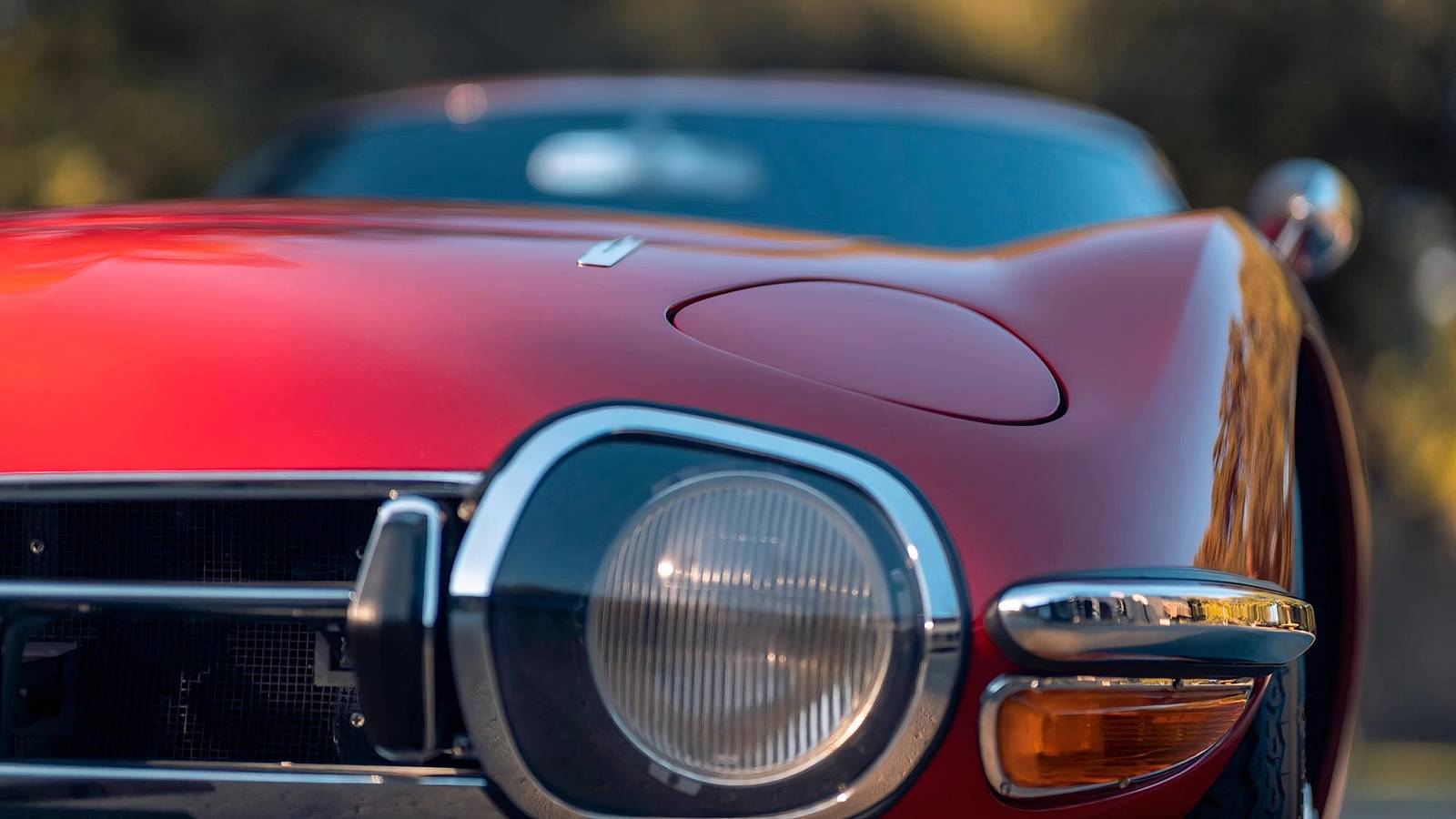
Toyota 2000GT
The Car That Laid The Foundation For The Toyota Supra

Known to be one of the greatest cars ever produced, the Toyota Supra has a cult following that many cars dream of. Known for its reliable and capable powertrain, the Supra didn’t achieve its legendary status overnight. There was yet another Toyota sports car that sacrificed its success to pave the way for the legendary Supra. It is the Toyota 2000GT.

Launched in 1967, the 2000 GT was the first sports car to wear the Toyota badge. It was co-developed with Yamaha, which featured a high-revving 2.0-liter, inline-six, naturally aspirated engine. This engine was capable of producing 148 horsepower and 129 pound-feet of torque. Paired with a five-speed manual gearbox, the 2000GT could reach 60 mph from a standstill in claimed 8.6 seconds. Also, it achieved a near-perfect weight distribution, thanks to the front-mid engine layout.

What completed the package was the overall build of the car. Toyota used more aluminum to keep the car lightweight. Also, the independent suspension setup ensured an excellent balance between performance and handling. The overall characteristics gave it an experience that could rival cars like the Jaguar E-Type.

While the 2000GT ticked all the boxes, the world was not really ready for the car. From its early days, Toyota was popular for rugged and reliable cars. No one was ready for a sports car from Toyota, as the brand was not yet associated with performance. Also, it was an expensive offering from Toyota, and instead of a dream car, it remained a niche product. However, today, the 2000GT is seen as an icon. A legendary car that showed the world what Japanese automakers are capable of. As a result, it laid the foundation for many legendary Japanese cars, including the Toyota Supra.
Sources: Bring a Trailer