
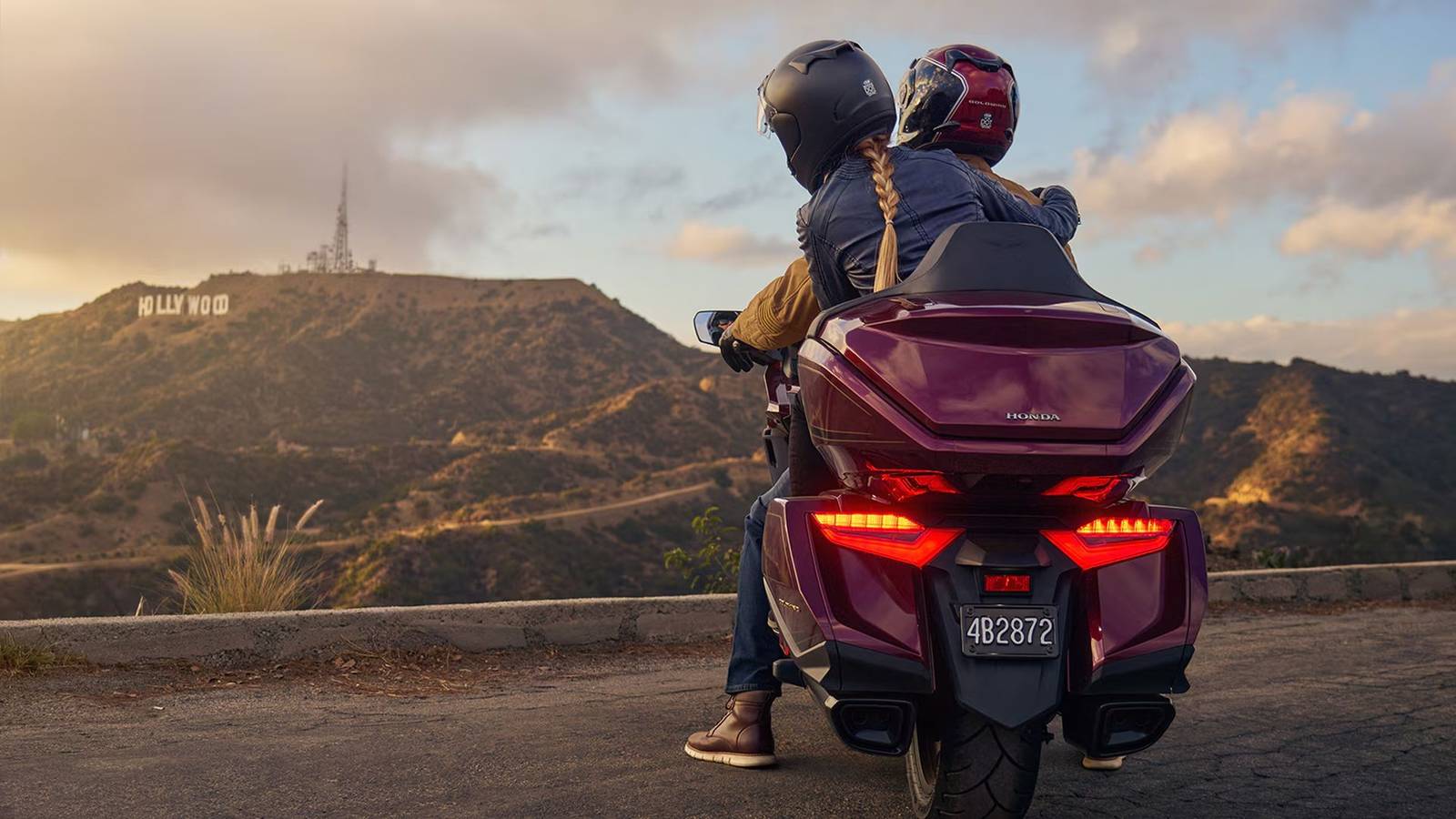
Touring motorcycles live in a tricky space. They are supposed to feel luxurious, but not precious. Comfortable, but not soft. Capable of swallowing miles, but still manageable when the road turns ugly, the parking lot tilts, or the rider is tired and just wants the day to end in one piece. That balance is harder to find than it sounds, and a lot of full-dress tourers lean too far in one direction. Some become rolling sofas. Others get buried under complexity. A few try to be everything and end up feeling like a compromise.
What Does “Balance” Mean In A Touring Motorcycle?

On a touring bike, balance is not just about weight distribution. It is the blend of luxury, comfort, and usability that lets the motorcycle disappear into the background and let the ride take over. Luxury means the premium bits that make a long day feel special. Comfort means the ergonomics, weather protection, and suspension compliance that stop fatigue from creeping in too early. Usability is the less glamorous part – easy, low-speed control, luggage that works, tech that does not get in the way, and a powertrain that feels relaxed instead of demanding.

In the American touring world, where riders cover vast distances, ride two-up, and deal with everything from urban traffic to mountain passes, all three matter at once. Where most touring bikes fall short is usually obvious after a few hundred miles. Excessive bulk can make low-speed maneuvering feel like a chore. Overcomplicated electronics can add stress instead of removing it. And powerful engines can still be tiring if they deliver their performance in a way that is abrupt or buzzy. The best touring motorcycle does the opposite. It makes a large machine feel predictable, calm, and almost easy to live with.
Where Most Touring Bikes Fall Short

A lot of touring bikes impress in a showroom and become less charming in a gas station parking lot. Weight is the obvious issue, but it is not only the number on the scale. It is how the bike carries that weight, how it responds at walking pace, and how much confidence it gives you when you have to back out of a tight spot. Then there is the tech question. Riders want convenience, but they do not want a dashboard that acts like a smartphone with handlebars.

The Touring Bike With Honda Reliability And First-Class Comfort
This BMW motorcycle combines Honda-like reliability with luxury touring comfort, featuring a durable six-cylinder engine and unique suspension.
The Honda Gold Wing Tour DCT Is The Benchmark For Luxury, Touring And Comfort
Base Price: $30,500

At $30,500 with a destination charge of $775, the 2026 Gold Wing Tour Automatic DCT is not an impulse buy. It is a flagship touring machine, and Honda prices it like one. However, that number makes more sense when you look at what it has to offer — a 1833cc flat-six engine, a seven-speed automatic DCT, electronic preload suspension, a 61-liter trunk, wireless Apple CarPlay and Android Auto, and a long list of touring-friendly comforts.
Evolution Into A Modern Touring Machine

In the premium touring space, where every brand is trying to sell some combination of image, performance, and distance capability, Honda’s argument is simpler — this is the one you are most likely to actually use, year after year. The Gold Wing did not become this polished overnight. Honda’s own history page shows the bike’s journey beginning with the GL1000 in 1975, which was the machine that moved the Gold Wing concept from prototype to reality.

The bigger turning point for the modern bike came in 2018, when Honda reworked the Gold Wing to reduce weight, sharpen handling, and introduce a new double-wishbone front suspension. That redesign shaved nearly 90 pounds from dry weight and marked a shift away from the old “couch on wheels” stereotype. The 2026 Gold Wing Tour DCT feels like the mature version of that idea: still rich, still imposing, but much more focused.

The Touring Bike That Makes 500-Mile Days Feel Easy
This Indian tourer offers flagship features with two-up comfort and plenty of performance for the long haul.
The Flat-Six Engine Promises Smoothness And Usability

The heart of the Gold Wing Tour DCT is its 1833cc liquid-cooled horizontally opposed six-cylinder engine. Honda pairs that layout with a Unicam SOHC valve train and shaft final drive, which tells you a lot about the priorities here. This is not a high-strung engine designed to be thrashed. It is a refinement-first design that favors smoothness, balance, and long-term composure.

The horizontally opposed layout also helps keep the mass low in the chassis, which is one reason the Gold Wing does such a convincing job of hiding its size once it is moving. On paper, it is a heavy touring motorcycle. On the road, it is much easier to place than the numbers suggest. That smoothness is more than a luxury feature. It is part of the bike’s usability and, arguably, part of its durability story too. Less vibration means less fatigue for the rider, but it also means less unnecessary stress on the machine over the long haul.

Honda Gold Wing: 50 Years Of The Touring Legend
The Gold Wing redefined the luxury touring segment and continues to be a benchmark
The DCT Advantage – Usability Redefined
Why DCT Is The Smart Choice For 2026 Buyers

For 2026 buyers, the DCT is the obvious choice if ease and consistency matter the most. Honda’s Dual Clutch Transmission automates clutch and shift operations while retaining the structure of a manual transmission, which means it keeps the clean, direct-feeling character Honda wants without requiring the rider to do the clutch work.

On a motorcycle this large, that is a huge advantage in traffic, in stop-and-go touring, and on days when the rider simply wants the bike to handle the shifting. Honda’s seven-speed setup also includes an overdrive seventh gear, which is exactly the kind of detail that makes highway cruising feel calmer and more relaxed.
Walking Mode And Low-Speed Control

Walking Mode and low-speed reverse are the sorts of features you do not think about until you really need them. On a motorcycle that weighs 847 pounds curb weight in Gold Wing Tour Automatic DCT form, maneuvering in a parking space or easing the bike backward on a slope can be the difference between confidence and awkwardness. Honda gives the DCT model an engine-powered low-speed reverse, which helps a lot when the bike is fully loaded. That is exactly the kind of thoughtful usability feature that makes the Gold Wing feel less like a giant object and more like a well-solved touring tool.

The Middleweight Touring Bike With Honda Reliability And BMW-Level Road Manners
The Tracer 9 is all that is good about Honda and BMW, and it is in an affordable package.
Chassis And Ride Dynamics – Big Bike, Small Effort

Honda’s double-wishbone front suspension is one of the Gold Wing’s smartest engineering moves. It separates steering and suspension functions, which helps reduce brake dive and improves stability, especially when the pace changes quickly or the bike is carrying a passenger and luggage. Honda says the design also lets the engine and rider move closer to the front wheel, which contributes to the Gold Wing’s surprisingly manageable feel. Add in the Pro Arm single-sided swingarm and Pro-Link rear shock, and you get a chassis that is designed to stay composed rather than theatrical.
Real-World Ride Feel

A big touring bike should not need to wrestle the rider; it should cooperate with them. That theme continues in the way the Gold Wing carries its mass. The 2026 Gold Wing Tour DCT has a 66.9-inch wheelbase, a 29.3-inch seat height, and a curb weight of 847 pounds. Those numbers are not small, but the bike’s layout makes them less intimidating than they look.

The Gold Wing’s low center of gravity and refined front-end geometry are a big part of that equation. On the highway, the result is a motorcycle that settles in and tracks beautifully. In city traffic or on tight access roads, it still feels like a big machine, but not an unmanageable one. That distinction matters a lot in the real world.

The Touring Bike That Mechanics See The Least
The touring bike that quietly earns a reputation for reliability, barely seen in service bays.
Comfort That Goes Beyond Just A Plush Seat
Rider And Passenger Ergonomics

The Gold Wing Tour DCT is built to make a long day in the saddle feel less punishing. The 29.3-inch seat height makes the bike approachable for many riders, and Honda’s comfort package goes well beyond padding. The windscreen is electrically adjustable over a 4.9-inch range and remembers its last setting, which is the sort of detail touring riders appreciate immediately.
Wind Protection And Climate Comfort

Heated grips and heated seats are standard as well, and the full-coverage fairing is designed to provide wind and weather protection while moving more air through the bodywork than earlier generations. That combination is what keeps the Gold Wing from feeling like a one-season motorcycle. Passenger comfort has clearly been taken seriously, too. Honda’s rider/passenger seating is designed for long hours on the road, and the integrated layout keeps the bike feeling cohesive rather than patched together.

10 Best Touring Motorcycles For Relaxed Weekend Rides
Tour in total comfort with these 10 top-rated sport and full-dress touring motorcycles, built for big miles, smooth rides, and stress-free weekends.
Touring Practicality – Where Usability Truly Shines
Luggage Capacity And Smart Storage

Storage is one of those things that separates a stylish touring bike from a genuinely useful one. The Gold Wing Tour’s 61-liter trunk can typically hold two full-face helmets, and the combination of the trunk plus saddlebags gives you 121 liters of storage in total. That is not just useful for cross-country travel; it is useful for ordinary touring weekends, too. The electronically operated saddlebags, remote locking, and smart key system all reinforce the same idea: this motorcycle is designed for travel that involves actual stuff, not just symbolic luggage. If the rider wants to leave home with confidence, Honda has made that easy.
Technology That Works With You, Not Against You

Honda has done a solid job of modernizing the Gold Wing without turning it into a rolling software experiment. The 2026 Gold Wing Tour DCT includes wireless Apple CarPlay and Android Auto, plus a seven-inch full-color TFT display that handles navigation and ride information. Honda even notes that the gyrocompass allows the navigation system to function inside a tunnel. That is not a flashy headline, but it is exactly the kind of detail that makes a touring bike easier to trust on unfamiliar roads. Technology should remove friction, not create it, and the Gold Wing’s setup does that well.
Ride Modes And Electronics Suite

The Gold Wing’s electronic package is just as thoughtful. The Tour models include ride modes—Tour, Sport, Rain, and Econ—along with throttle-by-wire and Honda Selectable Torque Control. Hill Start Assist is standard, too, and so is cruise control. Those features matter because they are there to reduce effort, not to impress on a spec sheet. The Gold Wing does not overload the rider with gimmicks. It gives them tools that make the bike easier to live with. That is what good usability looks like on a premium touring motorcycle.
Safety Systems That Stay Invisible

The rest of the electronics package follows the same logic. ABS, cruise control, TPMS, smart key access, LED lighting, and the ride-mode system all work in the background, where they belong. None of it feels excessive in the context of a motorcycle meant to cover serious distances. Honda’s approach is reassuringly conservative in the best way, enough tech to make the ride better but not so much that the rider has to babysit the bike. That is a big reason the Gold Wing Tour DCT still feels like the smartest premium touring buy in the lineup.

The Time Japan Made A Better Touring Motorcycle Than The Rest Of The World
Here’s the touring bike that has always set the pace for other tourers to follow.
The Touring Motorcycle That Gets Everything Right

The Honda Gold Wing Tour DCT remains such a compelling machine because it does not try to win by being the most extreme version of a touring motorcycle. It wins by being the most complete option one can ask for. It is luxurious without being fussy, comfortable without being lazy, and usable in the ways that matter most once the miles start to stack up.
Honda has given it the kind of engineering depth that rewards long ownership, plus the right mix of convenience features to make each trip feel easier than the last. That is why the Gold Wing Tour DCT still stands out. It feels like a motorcycle built by people who genuinely understand touring, not just the idea of it. In a category crowded with ambition, that kind of competence is rare.
Sources: Honda