
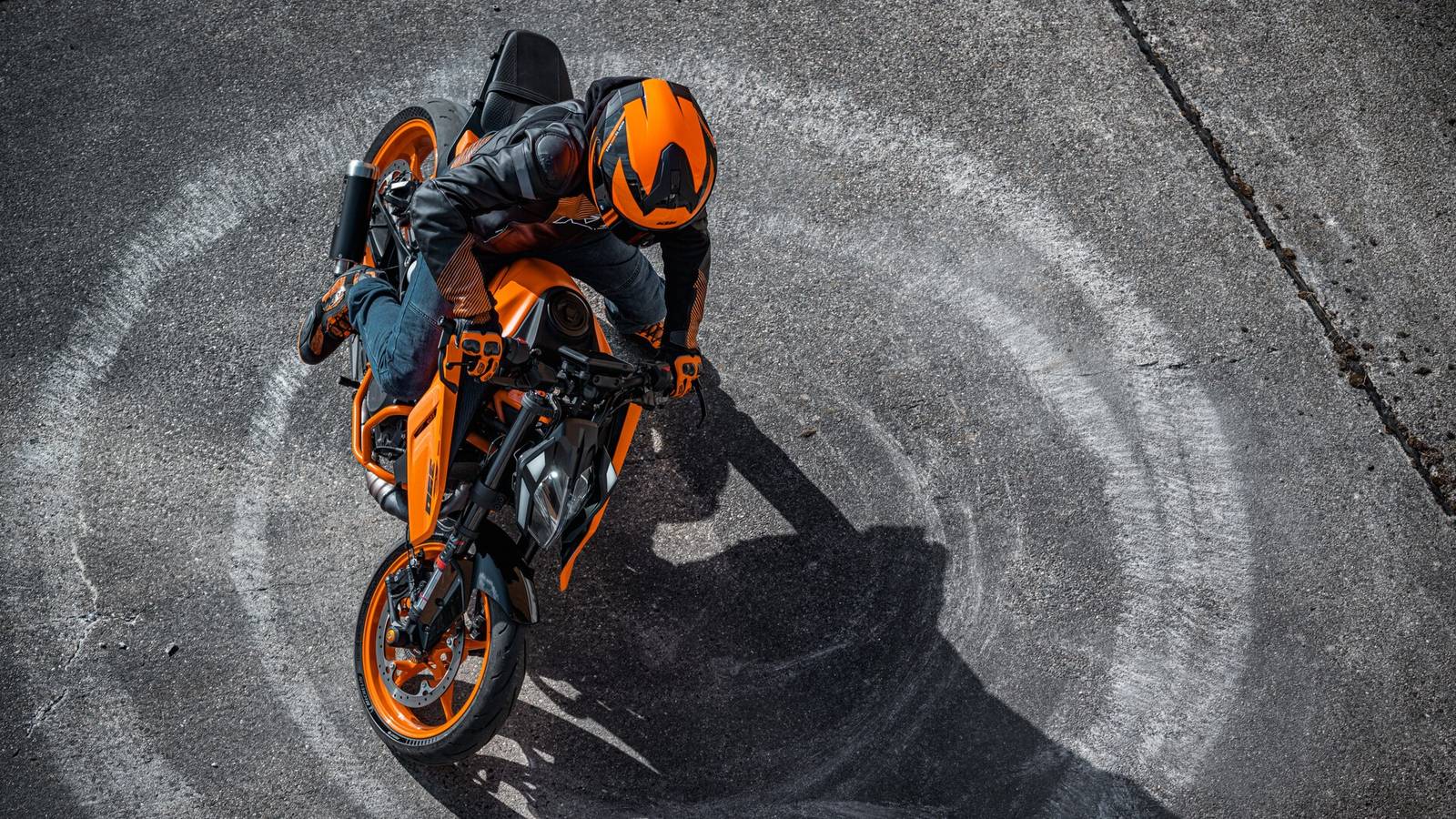
Long before horsepower wars took over spec sheets, small-displacement motorcycles were the proving ground for rider ability. Lightweight, simple, and approachable, these bikes forced riders to rely on technique rather than brute force. In markets shaped by tight roads and licensing restrictions, they weren’t just beginner bikes. They were the standard.
That DNA still carries through today. Even as the industry leans toward bigger engines and higher outputs, lightweight machines continue to offer something different. They amplify everything you do as a rider. Every input matters. Every mistake is visible. And every improvement is earned in a way that raw power can’t replicate. Modern small motorcycles may now pack better components and sharper styling, but the philosophy hasn’t changed. They reward skill over spec sheets.
Chasing Horsepower Often Gets In The Way Of Learning How To Ride Properly

It’s easy to think that more power equals more fun. And in many cases, it does. But there’s a trade-off. Bigger bikes can make you feel faster than you actually are, masking mistakes with acceleration. Miss your line or get sloppy on the throttle, and a strong engine can make you feel like you’ve made up the difference. However, if you’ve ever been on a track day and were gapped by a 15-year-old on a Ninja 300, well, that’s all you really need to know.
Bigger bikes can hide mistakes that smaller bikes immediately expose

On smaller bikes, there’s nowhere to hide. Every misstep costs you momentum, and without excess power to fall back on, you’re forced to ride with intent. You start planning your lines, choosing your gears more carefully, and thinking about how each input affects the bike.
That’s what makes smaller bikes such effective teachers. They don’t slow things down in a boring way. They sharpen your awareness and push you to engage with the fundamentals. And once those fundamentals are dialed in, everything else becomes easier.

10 Perfect Lightweight Motorcycles For New Riders In 2025
The lightest motorcycle on this list weighs just 282 pounds and is a capable dual-sport.
The KTM 390 Duke Teaches Precision Instead Of Power

Few bikes embody this philosophy as clearly as the KTM 390 Duke. It’s compact, light, and immediately responsive. There’s no excess here. No overwhelming power or overly complex electronics to lean on. Just a focused package that reacts quickly to whatever you ask of it.
Its lightweight chassis and punchy engine highlight every input

That responsiveness is what makes it so revealing. The chassis turns quickly, the front end feels direct, and the bike reacts instantly to changes in throttle or body position. Small mistakes don’t get filtered out. They get amplified. The engine plays a big role in this, too. The 399cc single-cylinder is punchy and eager, but it doesn’t hide behind smoothness. Throttle inputs need to be deliberate. Be abrupt, and the bike reacts. Be smooth, and it rewards you with a lively, engaging ride that feels faster than the numbers suggest.
The Specs Show Why This Bike Prioritizes Technique Over Speed

The KTM 390 Duke’s setup is all about clarity and control rather than outright performance. Everything from its responsive engine to its sharp chassis works together to highlight rider input instead of masking it. There’s enough capability to keep things exciting, but not so much that it covers up mistakes. It’s the kind of bike that gives you constant feedback, encouraging smoother, more deliberate riding, and ultimately making your technique the biggest factor in how fast and how well you ride.
A peppy single-cylinder engine with loads of oomph

On paper, the 390 Duke makes around 45 horsepower and 28.8 pound-feet from its 399cc engine (the previous generation had a 373cc engine). That might not sound like much next to bigger bikes, but in a lightweight package, it’s more than enough. The engine delivers strong low-to-mid range pull, making the bike feel quick and responsive in real-world riding.
But it doesn’t let you get lazy. The throttle is sharp, and the engine demands smooth inputs, especially mid-corner. You can’t rely on brute force to fix mistakes. You have to get your timing right, manage your inputs carefully, and stay engaged with what the bike is doing. That balance is key. It’s fun and accessible, but still demanding enough to build real skill.
|
Engine |
399cc, single-cylinder, liquid-cooled, DOHC |
|
Output |
45 horsepower, 28.8 pound-feet |
|
Transmission |
6-speed, assist, and slipper clutch |
|
Drive Layout |
Chain drive |
Class-leading suspension

The 390 Duke stands out in its class when it comes to suspension. With WP Apex components front and rear, it delivers a level of control and feedback that’s rare in this segment. The setup leans sporty, giving the bike a firm and planted feel when pushed. That firmness translates into communication. You can feel how the front tire loads under braking, how the bike settles mid-corner, and how it reacts when you start to push harder. It doesn’t isolate you from the road. For riders looking to improve, that connection is invaluable. The bike tells you exactly what’s happening, which makes it easier to understand and correct your inputs.
|
Chassis |
Steel trellis frame |
|
Suspension |
WP inverted fork (front), WP monoshock (rear), adjustable |
|
Brakes |
Front: 320 mm disc, 4-piston radial caliper; Rear: 240 mm disc |
|
Wheels |
17-inch cast wheels |
|
Tires |
110/70 R17 (front), 150/60 R17 (rear) |
Just the right amount of technology
KTM has kept things simple, but not basic. The 390 Duke comes with ride-by-wire throttle, cornering ABS with Supermoto mode, and a clean TFT display. These features enhance the experience without taking over. There’s a deliberate lack of overcomplication here. The electronics are there to support, not to intervene constantly. You’re still very much in control of what the bike does. That balance keeps the riding experience raw and engaging. You feel what the bike is doing, and you learn from it, instead of relying on systems to clean things up in the background.
-
Electronics and Safety
-
Ride-by-wire, traction control, cornering ABS, Supermoto ABS, riding modes, TFT display

10 Reasons The New KTM 390 SMC R Is Better Than The Suzuki DRZ-4SM
KTM 390 SMC R is more powerful than the new Suzuki DR-Z4SM, among other things
What This Bike Teaches You Matters More Than The Spec Sheet
Spend time on the 390 Duke, and your riding starts to change. You become smoother on the throttle, more precise with braking, and more aware of how your body position affects the bike. You start focusing less on speed and more on flow. The bike rewards momentum. Carry speed through corners, link them together cleanly, and everything feels effortless. Get aggressive or sloppy, and the bike pushes back. These are habits that carry over to any motorcycle. Whether you move up to something bigger or stick with a lightweight machine, the skills you build here stay with you. And that’s where the real value lies.
The 390 Duke Also Makes Sense Financially

Beyond how it rides, the 390 Duke also makes sense where it counts. It’s priced within reach for many riders, especially compared to larger performance bikes, yet it doesn’t feel like a stripped-down compromise. The KTM 390 Duke starts at around $5,899, putting it firmly within reach for a wide range of riders. It’s priced well below most middleweight nakeds, yet still delivers a sharp, engaging ride and premium-feeling components, making it a strong value for those who want performance without the cost or intimidation of bigger bikes.
Its pricing and simplicity make it an accessible performance, too!

For the amount of money you’re paying for a bike like this, you’re getting quality components, sharp design, and a genuinely engaging riding experience without the steep cost of entry. It delivers value not just in features, but in what it teaches you. Ownership is also relatively straightforward. With a smaller engine and simpler overall package, it’s a bike you can ride often and enjoy without overthinking running costs.

10 Used Motorcycles Under $5,000 That Are Built To Last
These bikes have all stood the test of time, and offer a lot of value to the right buyer
Precision Will Always Outlast Power

In today’s horsepower-obsessed motorcycle landscape, the KTM 390 Duke makes a compelling case for something else entirely. It proves that how you ride matters more than how much power you have. Bigger bikes will always be faster in a straight line. But precision is what makes speed usable. It’s what builds confidence, consistency, and control. And that’s exactly what this bike delivers. Not just performance, but progression.
Source: KTM