
Automotive safety in the U.S. is one of the world’s most transformative industries, evolving from rolling coffins to modern sedan and SUV fortresses that have shaped consumer values from style and speed to occupant protection. For much of the early 20th century, manufacturers prioritized aesthetics over survival, with safety features like seatbelts remaining optional and largely ignored until the 1960s. This changed dramatically with the 1966 National Traffic and Motor Vehicle Safety Act, sparked by growing public outcry and advocacy that demanded government oversight and mandatory standards.
Since the opening of its Vehicle Research Center in 1992, the Insurance Institute for Highway Safety has acted as the industry’s most rigorous guardian, filling critical gaps in federal testing by introducing high-speed offset crash tests and small overlap evaluations that better simulate real-world accidents. By translating complex engineering data into clear, accessible ratings like the Top Safety Pick, the IIHS has empowered American buyers to make more informed safety purchases. For 2026, one premium German brand has dominated the competition with its selection of crossovers and sedans.
The IIHS Defines Automotive Safety

The IIHS Top Safety Pick awards are highly valued by consumers because they represent a rigorous, independent standard that often exceeds basic government requirements, providing a transparent benchmark for real-world occupant protection. As a non-profit funded by the insurance industry, the IIHS’s primary motivation is the reduction of crash-related losses, which aligns its interests with the personal safety of buyers rather than the commercial interests of manufacturers.
Consumers rely on these ratings because the criteria are made progressively stricter each year, forcing the automotive industry to innovate in areas like pedestrian detection, headlight visibility, and rear-seat protection to maintain their status. This dynamic nature ensures that an award-winning vehicle is legally compliant and exceptional at preventing accidents and minimizing injuries, offering its Top Safety Pick seal of approval that cuts through complex technical specifications to provide peace of mind for families and safety-conscious drivers.
How The IIHS Measures Safety
In 2026, the IIHS continues to evolve its crash testing protocols by increasing the rigor of existing evaluations to better reflect the modern vehicle fleet and real-world accident data. A significant update involves the side impact test, which now uses a heavier 4,200-pound barrier traveling at 37 MPH to simulate collisions with the larger SUVs and pickups that dominate today’s roads.
The moderate overlap frontal test has also been enhanced to include a rear-seat crash test dummy, specifically targeting improvements in passenger safety for those in the back who have historically lacked the advanced airbag and seatbelt technology found in the front. Beyond physical structural integrity, the 2026 standards place heavy emphasis on active safety, utilizing higher-speed tests up to 43 MPH.
This includes testing for automatic emergency braking systems and nighttime pedestrian detection scenarios. Furthermore, the IIHS has begun moving toward requirements for intelligent speed assistance and monitoring systems to address risky driving behaviors as part of its comprehensive safety criteria.

Audi Q6 e-tron Quattro Review: A Luxurious Electric SUV That Stands Out
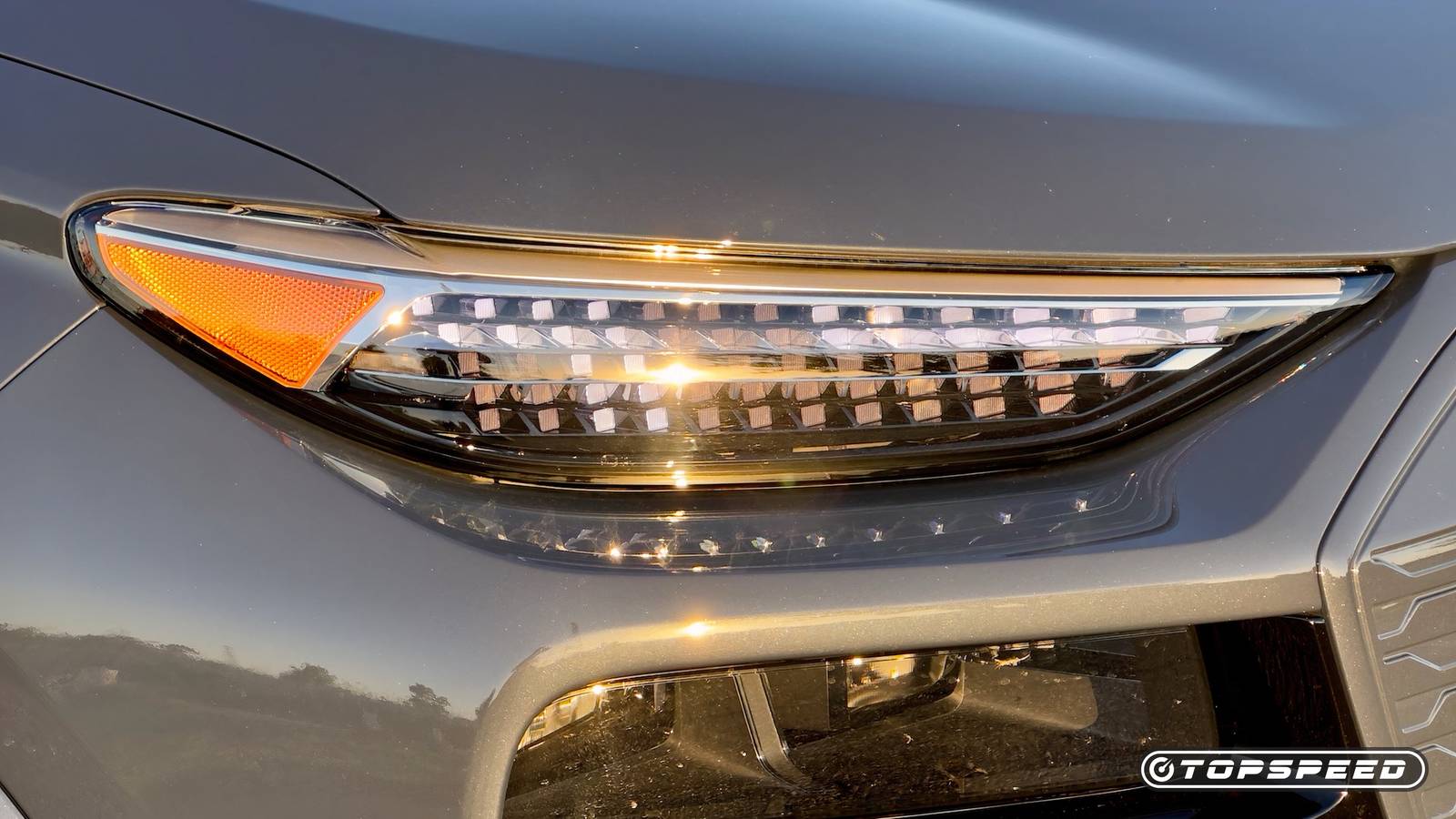
The Audi Q6 e-tron Quattro’s 456 horsepower and 631pound-feet of torque make it a formidable competitor in the electric SUV market.
Audi Dominates 2026’s Evaluations

Audi has solidified its position as a leader in automotive safety for 2026 by securing six IIHS Top Safety Pick+ awards, more than any other luxury brand in the current testing cycle. This accomplishment is particularly notable as the Insurance Institute for Highway Safety significantly tightened its criteria for 2026, now requiring a Good rating in the updated moderate overlap front test, emphasizing rear-seat passenger protection, and mandating that advanced crash prevention systems come standard across all trims.
Audi quietly dominated the field thanks to its high-volume models like the 2026 Audi Q5 and A5, and its next-generation electric fleet, including the 2027 A6 e-tron, Q6 e-tron, and Q6 Sportback e-tron. These models excelled in more rigorous evaluations by integrating sophisticated structural engineering with its standard Pre Sense technology. This suite now meets the higher 2026 benchmarks for pedestrian and vehicle-to-vehicle collision avoidance, making Audi superior to its traditional rivals and the ideal choice for safety-conscious luxury buyers.
How Audi Gets Safety Right

For 2026, Audi’s safety philosophy centers on the Audi Pre Sense ecosystem, which integrates active and passive protections across its entire lineup to create a 360-degree safety net. The active systems utilize a sophisticated array of radar, cameras, and ultrasonic sensors to power features like the updated Adaptive Cruise Assist plus, which now supports driver-initiated lane changes and uses cloud-based swarm data to refine lane guidance.
On the passive safety front, Audi utilizes high-strength steel and aluminum construction designed to divert crash energy away from the cabin, complemented by Pre Sense Basic, which automatically prepares the interior for an impact by tensioning seatbelts, closing windows, and optimizing seat positions in milliseconds.
Advanced driver assistance has seen a significant leap with the introduction of AI-enhanced voice assistants, powered by OpenAI’s ChatGPT. This allows drivers to manage safety settings through natural language, alongside Park Assist Pro, which offers autonomous trained parking routines and a 150-foot reverse steering assistant for navigating tight spaces. Additionally, the 2026 Premium Platform Electric models introduce enhanced regenerative braking that can bring the car to a complete stop without friction brakes, better reconciling performance and accident avoidance.

The Battleground Has Shifted For These German Rivals
Audi had a really tough 2025. Meanwhile, did BMW grow its sales pace faster for SUVs or cars? You might be surprised.
Audi’s Recent Market Challenges

Audi’s market performance in the U.S. has faced significant headwinds recently, characterized by a 16 percent sales decline in 2025 that saw total deliveries drop to 164,942 units. This reflects a stark contrast to its 2023 peak of over 228,000 vehicles. While the Q5 remains the brand’s undisputed volume leader, followed by the Q3 and Q7, these core internal combustion models have experienced double-digit sales contractions as the lineup undergoes a massive transition.
This shift is marked by the discontinuation of long-standing staples like the A4 sedan and the original Q8 e-tron to make room for a new platform strategy, notably the introduction of the Q6 e-tron and A6 e-tron built on the dedicated PPE architecture. Despite a record 36 percent global increase in electric vehicle deliveries, Audi appears to be struggling more than its primary German rivals in the U.S. market, largely due to its lack of domestic manufacturing and heavy exposure to shifting tariff policies.
While the brand is aggressively pursuing an all-electric new model strategy starting in 2026, current projections suggest another double-digit drop in volume for the coming year, indicating that its adaptation to current market trends remains challenging.
How Other German Brands Performed In The IIHS’s Testing

In the 2026 IIHS safety evaluations, BMW and Mercedes-Benz faced a more challenging landscape compared to Audi’s segment-leading performance. BMW secured two Top Safety Pick+ awards for its X3 and X5 SUVs, while Mercedes-Benz has yet to reach the highest tier in this year’s cycle. BMW’s success with its midsize luxury SUVs was driven by Good ratings across all crashworthiness categories, including the updated moderate overlap front test, though several of its sedan models remained unrated or missed the top mark due to headlight or crash prevention nuances.
Mercedes-Benz, conversely, saw several core models like the GLC and C-Class earn the standard Top Safety Pick designation. However, it fell short of the Plus requirement, primarily because its standard pedestrian crash prevention systems were rated as Acceptable rather than Good, or because certain high-tier safety features remained optional rather than standard.

The German Sport Sedan That Finally Gets The Balance Right
This German performance sedan offers a better balance of luxury and performance than ever.
Audi’s Young But Impactful American History

Audi’s history in the U.S. is a narrative of engineering-led recovery and consistent technical leadership, evolving from its early entry in the 1970s to its current standing as a benchmark for balancing safety with high-performance luxury. The brand’s trajectory was fundamentally altered in the 1980s by the introduction of the Ur-Quattro, which pioneered permanent all-wheel drive as a performance tool for the World Rally Championship that also served as a foundational safety feature, providing unprecedented stability and confidence for daily drivers in adverse conditions.
This Quattro all-wheel drive legacy created a unique market position where mechanical grip and active safety suites are inextricably linked to the driving experience, a philosophy that has culminated in Audi leading all luxury brands with six IIHS Top Safety Pick+ awards for the 2026 model year. By integrating the aforementioned advanced crumple zones and standard crash-prevention systems into its base-level and performance-oriented sedans and crossovers, Audi has successfully maintained a reputation where luxury is defined by the seamless synergy of rapid acceleration, sophisticated interior aesthetics, and industry-leading occupant protection.
Sources: The IIHS