
Adventure bikes were shown the way by the BMW R 80 G/S nearly a half-century ago. It was an oversize dual-sport bike with a massive fuel tank that could get you pretty much anywhere, whether the road was tarmac or nonexistent. This bike and the Dakar Rally combined to make riders dream of motorcycles that were capable enough to handle anything, thanks to great engineering and capability.
The overengineering of components usually means more weight – you’d rather have the extra weight than have a component fail on you in the middle of nowhere, right? But you also want enough performance to carry a pillion and luggage, so you have a large engine. Which gets thirsty, and you need good tank range. So a large fuel tank enters the equation. This started a vicious circle that has continued to this day.
The Adventure Bike Segment Today Is Complicated

If you’re looking for overland motorcycles, the full-size adventure bikes are where they’re at. These are 500+ pound behemoths that frequently have around 150 horsepower. A decade ago, that kind of power would have made us excited if it were a sport bike! And don’t get us started on the electronics… sure, we do need them for safety, but the convenience electronics have taken over. There is automatic electronic suspension, automatic or semi-automatic gearboxes, radar-based adaptive cruise control, rearward radar for blind spot monitoring… the list is endless.

We seem to have forgotten what the R 80 G/S stood for: a bike that was so capable that it wouldn’t break down. And in the unlikely event that it did, it would be easy enough to repair for the rider, or a mechanic in whatever far-flung corner of the globe it was in.

10 Adventure Bikes With The Longest Riding Range
The most affordable 300+ mile adventure touring bike on this list is priced under $7,000 and is powered by a single-cylinder engine.
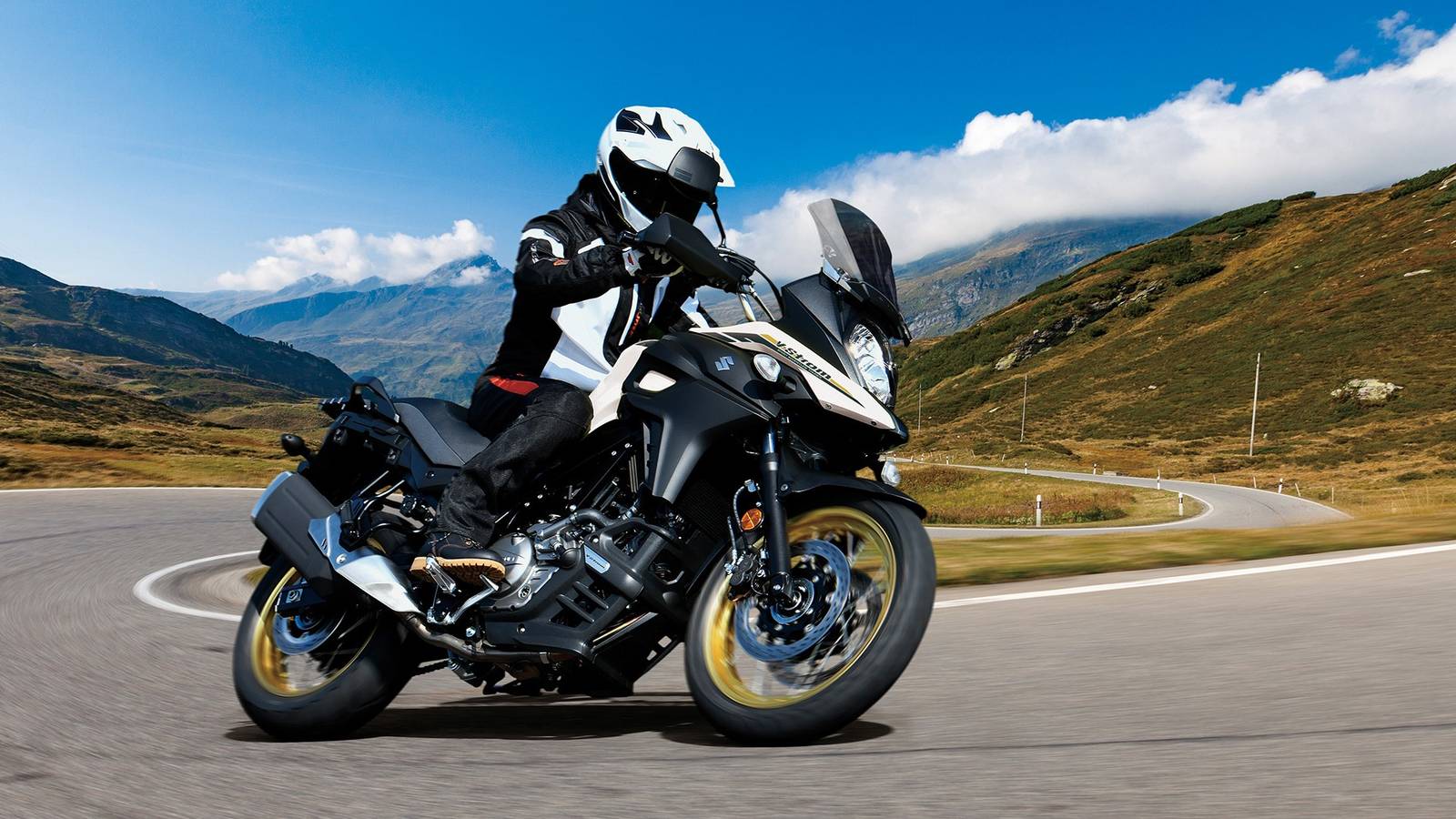
The Suzuki V-Strom 650XT Is The ADV Motorcycle That Made European Bikes Look Overcomplicated

The biggest culprits of this overcomplicated engineering are the Europeans. Yes, they forge ahead with tech and show us exciting new horizons, but when all you want is to go around the world, you want something simple and reliable, not so complex that you require the IQ of a NASA engineer (not to mention their computer) to fix. In the modern world, finding a simple bike that does the job at hand without fuss is rare – but the Suzuki V-Strom 650XT is one such bike. It has a simple engine that is fun, it has basic suspension that works, a chassis that has stood the test of time, and for the amount of fun and reliability you get at the price, it is the ADV motorcycle that has made European bikes look overcomplicated.
The V-Strom 650 Has An Uncomplicated Price

Suzuki has three variants of the V-Strom 650. The eponymous base model costs $9,299 and offers alloy wheels. The V-Strom 650XT exchanges those for tubeless spoke rims and adds engine protection and hand guards. It asks for $500 more for these additions; it is priced at $9,799. And if you’d like your hard saddlebags from the factory, there is the V-Strom 650XT Adventure with the panniers and mounting available for $10,999 – that’s an $800 premium. You’ll get gold wheels thrown in for free. There is no package or upgrade or better wheels or suspension here; what you see is what you get. Nothing complicated about it!

10 Adventure Bikes That Can Truly Handle The Wild
These adventure bikes are more at home away from home
An Affordable V-Twin Is Possible Even Today

Suzuki’s 650cc platform is powered by a 90-degree V-twin, just like Ducatis are. This is a 645cc engine with a short-stroke design, liquid cooling, and an 11.2:1 compression ratio. The figures generated are 69 horsepower at 8,000 RPM and 50.9 pound-feet at 6,400 RPM. It might not sound like much, but this is a really fun engine, with a lot of character and performance – 90-degree V-twins don’t need power-sapping counterbalancer shafts the same way 270-degree parallel twins do.

This engine has a cable throttle, so you’re doing all the work yourself. Suzuki has lent a helping hand with the ‘SDTV’ technology. It stands for ‘Suzuki Dual Throttle Valve’, and it has a secondary set of computer-controlled throttle butterflies in line with the primary rider-controlled ones. They help smooth out on/off transitions and act the way a choke would on a carbureted engine during cold starts. The six-speed gearbox is extremely simple as well: there is no quickshifter or assist and slipper clutch, although the sixth speed is tall for comfortable highway cruising.

The Time Japan Made A Better Adventure Motorcycle Than The Rest Of The World
This Honda adventure bike offers the best balance of performance, capability, and smart pricing.
Aluminum Twin-Spar Frame Also Keeps Things Simple

With everyone moving to trellis frames, it is refreshing to see someone sticking to a good ol’ fashioned twin spar frame. The V-Strom 650XT might be a low-cost middleweight adventure bike, but it has a frame made out of the good stuff – aluminum – to keep its weight in check. The engine is a stressed member of the frame, and the bolted-on subframe is made of steel for the strength it needs to carry a pillion and luggage. The swingarm is made of aluminum to cut weight.

The suspension is as simple as the engine: regular 43mm telescopic forks up front, and a linkage-type single shock at the rear. There is an adjustment for preload and rebound at both ends, and the available travel is 5.9 inches at the front and 6.3 inches at the rear. Twin 310mm brake discs do duty at the front with axial two-piston floating calipers, and at the rear, a 260mm disc with a single piston caliper is present.

This V-Strom knows what it is: a primarily road-focused ADV that can handle bad roads and dirt, which is why it doesn’t bother with a high-tech chassis or suspension. It is this clarity of thought and simplicity of purpose that make it so beautifully uncomplicated. Its knowledge that it is a mostly tarmac-bound bike is also why Suzuki is okay with its 470-pound wet weight, which makes it one of the heaviest in the class. At least the 5.3-gallon fuel tank will take you a massive distance, because of the frugal engine and the tall nature of the gearbox’s sixth speed.

10 Perfect Middleweight Adventure Bikes That Won’t Break The Bank
All of these adventure bikes can be hand for under $11,000
The Features Are Simplicity Itself

The V-Strom 650XT’s instrument cluster is so retro, it might just come back into fashion soon. Jokes apart, this part-LCD unit shares a lot of information without the need for a color screen or fancy graphics. There is a large analog tachometer on the left, with the warning lamps housed within it. On the right, an LCD screen displays the rest of the information: speed, the selected gear, fuel level, ambient temperature, distance to empty, clock, the traction control level, and odometer are all on display here.

The windscreen is manually adjustable to three different levels, and we’ve discussed how the three different V-Strom 650 variants are positioned, with the most expensive V-Strom 650 Adventure getting hard luggage and mirror extenders. The options list has a center stand, aux lights, low or high seats, heated grips, and different footpegs.

The electronics are surprisingly advanced for a 20-year-old bike. There is a three-level traction control system that can be switched off, and there is dual-channel ABS as well. The ABS is not switchable, another hint towards it being a tarmac-bound machine.

10 Affordable Adventure Bikes That Refuse To Break Down
Adventure bikes need to be more reliable than other type of motorcycles, and we’ve got ten that will go the distance, but on a budget
Almost No Uncomplicated Competition

The middleweight adventure bike segment has many products, and a lot of them are European. And pretty much all of the European ones are premium products with a lot of electronics and features. If you’re looking for simple, there is only one true option, and that is the Yamaha Tenere 700. It costs a little more, at $10,999, but it follows the same path as the V-Strom. It is uncomplicated, only getting a by-wire throttle and quickshifter last year. It is extremely light, and it still doesn’t have a six-axis IMU on the base version, although it does have switchable ABS and traction control. It is far more off-road biased than on-road biased, so the Suzuki still hangs on to its crown if you don’t ride into the dirt often.
Source: Suzuki Cycles