
The words ‘Italian’ and ‘luxury’ don’t tend to go hand in hand, especially before the mass refinement of cars moving into the 2000s and 2010s. As with any manufacturer, though, there has always been the temptation to break down the barriers of what is expected from certain cars to surprise the public and try to make new ground in different segments.
Just like now in 2026, luxury sedans four decades ago were generally dominated by German vehicles from BMW, Mercedes, and Audi. Japan was starting to prove itself as the reliable flavor of luxury with its unexpectedly smooth V8s used in flagship Lexus vehicles, and Germany was dominating the sports-exec style that it always has. There were numerous attempts to reinvigorate the segment with French quirkiness or British engineering, but it was always Germany that ruled the roost. However, right at the start of the 1990s, Alfa Romeo wanted to bring a charming new taste of luxury to rival the most dominant competitors.
The Temptation Of An Italian Classic

As pre-2000 Italian vehicles get older, it seems the modern automotive industry is at odds with many of the principles of those vehicles. With flair, feeling, and risk-taking at the forefront of many bold Italian designs, it’s no wonder that many gearheads just cannot get the allure of an Italian vehicle out of their hearts. Whether it be the plucky beauty of a Lancia or the charming face of an Alfa Romeo, there is something undeniable about the Italian approach to design philosophy.

While German vehicles are mature, sharp, and engineering-focused, Italian vehicles often represent the other side of the brain. A visceral connection between driver and machine, and despite the reputation for poor reliability, they are vehicles that are difficult to hate, no matter what mechanical grief they give you.

This V8-Powered Japanese Sedan Could Keep Up With A Ferrari In The ’90s
Don’t let the looks fool you. This 90s sedan is still a sleeping monster.
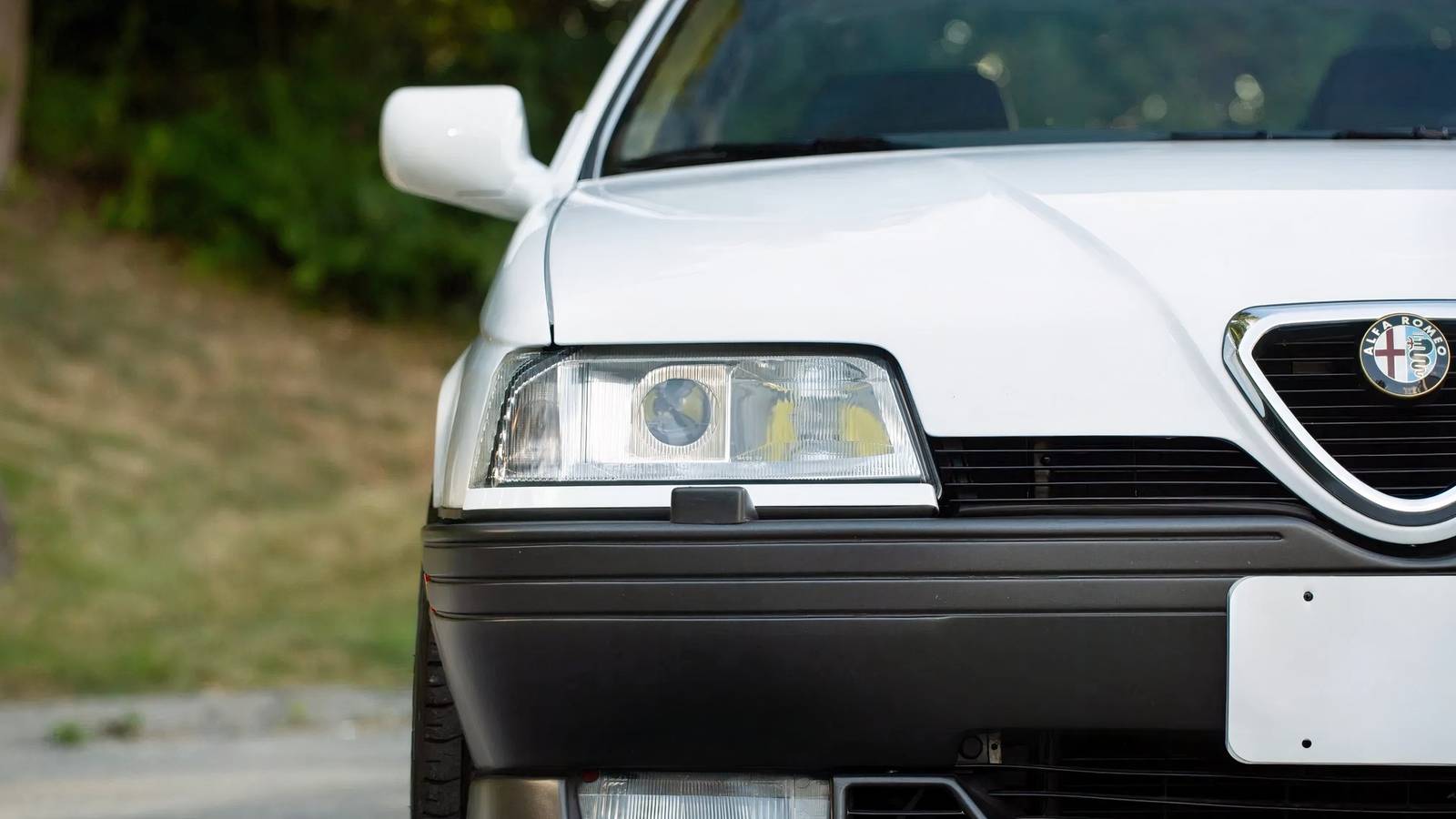
The Forgotten Alfa Romeo 164 Busso V6

Alfa Romeo teamed up with Fiat, Lancia, and Saab in the 1980s to create a vehicle that could challenge the BMW 5 Series and Mercedes E-Class in the executive sedan market. This was a huge challenge, and the ambitions went further as Alfa Romeo wanted to establish its return to the US market with the 164. Rather than fully embrace the Italian heritage through and through, the idea was to marry this passion to a car which was functional and fast – essentially bringing it closer to the core of what luxury sedan buyers craved.
First Impressions Of The Alfa 164 Upon Release
- The FWD layout angered purists, but Car and Driver found it to be surprisingly capable around corners
- The Busso V6 was praised as charismatic, capable, and delivered an extremely eager throttle response
- The dashboard was an unfortunate mishmash of lots of tiny, illegible squares for controls
- The Pininfarina wedge design made the Alfa look like a blend of a supercar and a sedan
The V6 Powertrain Was An Astonishing Thrill

While most manufacturers opted for a powertrain that, above anything, had to be as quiet and refined as possible, Alfa Romeo couldn’t help but flex its muscles in using something more alive. Built by Giuseppe Busso, this V6 encapsulated the joy of internal combustion. The noise of that engine was a centerpiece of the 164.
1994-1995 Alfa Romeo 164 Busso V6 (24-Valve Manual Specifications)
|
Transmission |
5-speed manual |
|
Horsepower |
210 |
|
Torque |
196 lb-ft |
|
0-60 mph |
6.7 seconds |
|
Top Speed |
150 mph |
|
Weight |
3,450 Ibs |
With deep, raspy tones at low RPMs and a brassy, Italian race-car-like sound when pushed, the soundtrack alone was enough to lure in some customers. Not only that, but the visuals of the engine were well-crafted, too. With six polished chrome intake runners on display, it was clear that it was an engine that Busso himself and Alfa alike were proud of.

The engine changed from a 12-valve layout to a 24-valve in 1994 for the final two years of the 164’s production, and this was the one that provided the most performance and signature sound when higher in the RPM range. Though the 12-valve was more simplistic and stronger, the 24-valve version breathed a slice of extra performance into the Alfa, putting it more on par with the 5 Series of the time. Though there was a four-speed ZF automatic option, the manual was more sought-after. With more weight, a more complex construction, and far slower 0-60 times at around 8.5 seconds, the ease of this auto was not worth the severe blunting of performance on the V6 unit.

Rare And Beautiful Alfa Romeo Barn Find Bargain
There are still tons of rare, special, forgotten, but salvageable cars scattered across the globe; tucked away in the dark corners of outbuildings.
The 164 Was Surprisingly Luxurious For A 90s Alfa

Though primitive by modern standards, the 164’s interior, through the lens of a 1990s Alfa Romeo, was decidedly high-end. The cabin design was also masterminded by Pininfarina, which gives the 164 a certain flavor of classic Ferrari in its cockpit. The 164 S and Q models took this further with Recaro sport seats, which featured electronic adjustability, supportive bolsters, and were genuinely comfortable. Higher models also featured premium-feeling Italian leather, making it feel as if Alfa had really stepped up its game.

As mentioned previously, one of the most controversial features of the car was the interior layout. If all-in-one infotainment screens in 2026 are too minimalistic, then the Alfa 164 suffers from the exact opposite issue. The 30-odd identical squares made the 164’s interior feel somewhat inaccessible, like entering the cockpit of a small plane. However, it also gave people the illusion that there was endless tech packed into the 164 – and that wasn’t far from the truth. With electronic damping offering different driving modes, rear-headphone jacks, and a premium 12-disc Fujitsu stereo in some trims, it was genuinely a well-equipped and uniquely designed place to sit.
The Alfa Romeo 164 Against Its Most Dominant Rivals

The Alfa Romeo 164 didn’t overcome the challenge of beating its rivals. It wasn’t faster than the BMW 540i, it wasn’t as well-built as the Mercedes-Benz E420; it wasn’t as smooth or as refined as the Lexus LS400, but it did have the most soul. For anyone who would have chosen the Alfa 164 at the time, it wouldn’t have been out of any direct logical decision. Instead, through falling in love with the V6 soundtrack, the gorgeously compelling looks, and the unique approach to sporty luxury. Alfa Romeo set out to make a sedan that would beat BMW, and technically, they had failed. But in the process, they ended up making a car that was fantastic in its own right.

With a 4.0-liter V8, the 540i rocketed towards 0-60 mph in 6.4 seconds and produced an extra ~70 horsepower compared to the Alfa’s 210 horsepower. The 164 was certainly slower, but not by a huge amount. The more analogue feeling of the Alfa Romeo, combined with it being 250 pounds lighter, meant, in real terms, the 164 felt similarly quick in practice. The Lexus LS400, however, was left far behind. Despite also having a 4.0-liter V8, Toyota tuned this engine toward maximum quietness rather than performance. Japan’s popular notion of gearing engines towards huge longevity by leaving power purposefully off the table gave the LS400’s revolutionary powertrain legendary status – even if it meant a slower 7.9 seconds to 60 time.

Alfa Romeo Group B Rally Car Revived As Stylish Restomod
The heavily modified boxer engine pumps out 160 horsepower, going to the front wheels.
It’s Time To Give The 164 The Love It Deserves

Alfa once again fell for a contagious sense of love and passion rather than technical prowess with the 164. Though it was a huge step-up for the company, the message couldn’t break through to your average sedan driver who craved something both sporty and serious. Though the 164 had a promising start, selling around 3,500 units around launch, by 1993, that number had fallen to around 700.

The Lexus LS400 was the exact opposite of the 164 in terms of approach, and both cars were released around the same time. In the end, it was the LS400’s silent operation, uncompromised luxury, and serious dependability that would go onto defining the next stage of luxury sedans.
Sources: Alfa Romeo, Bring A Trailer