
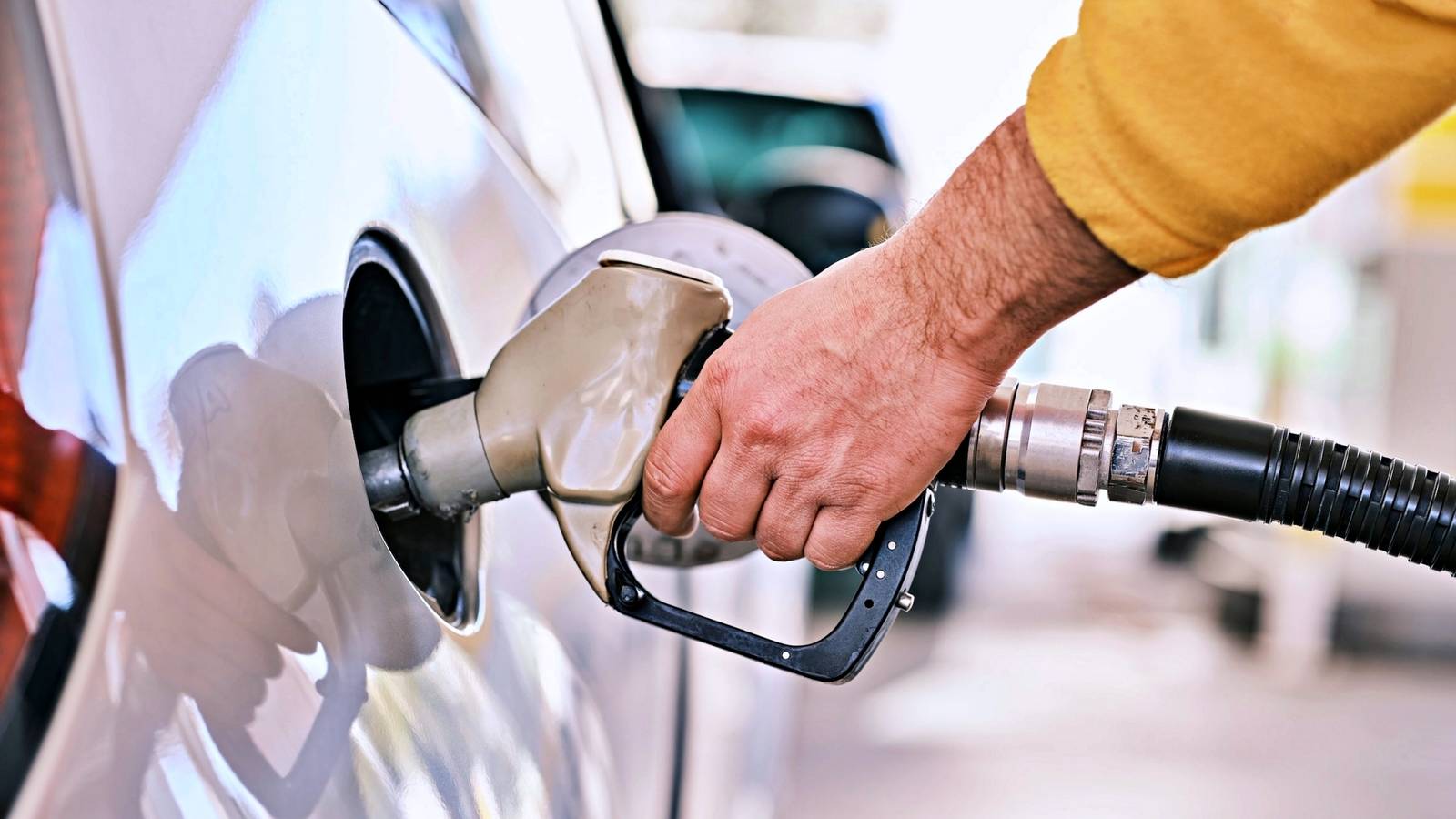
If you’ve filled up your tank lately and felt your wallet physically recoil, you’re not imagining things. Gas prices have gone completely haywire in the past few weeks, and there’s no sign of relief on the horizon. Diesel recently crossed $5 a gallon, regular unleaded has jumped just over $1 from where it was a month ago, and the chaos in the Middle East has turned every trip to the pump into a painful reminder that global politics don’t stay overseas. The culprit? The ongoing U.S.-Israeli military operation in Iran has effectively choked off one of the world’s most critical oil chokepoints, and the ripple effects are hitting American drivers squarely in the wallet.
The Strait Of Hormuz Problem

About 20% of the world’s oil supply flows through the Strait of Hormuz, the narrow waterway between Iran and the Arabian Peninsula. When tensions flared into full-scale conflict in late February, that flow came to a near standstill. Tanker traffic has been suspended, hundreds of ships are sitting idle, and Gulf oil producers have been forced to slash output because they’ve literally run out of storage space.

The International Energy Agency has called this the largest supply disruption in the history of global oil markets. That’s not hyperbole — it’s a genuine crisis that makes the 2022 Russia-Ukraine spike look manageable by comparison.
The Price Damage So Far

Brent Crude, the global benchmark, has gone on a wild ride. It started the month of February at around $73 per barrel. By early March, it had rocketed to nearly $120 before settling into a volatile range around $100. That 30-plus percent swing in just three weeks is the kind of volatility that makes oil traders sweat and drivers wince.

At the pump, the national average for regular gasoline has climbed to $3.97 per gallon as of March 24, 2026, according to AAA, up nearly $1 in less than a month. Diesel is even worse — touching $5.34 per gallon, up more than $1.60 from last month. If you drive a truck, tow anything, or depend on deliveries for your business, you’re already feeling the squeeze. And if you live in the wrong state, it’s even uglier. Here are the five most expensive markets in the country right now:
|
Price/Gallon |
|
|
California |
$5.62 |
|
Washington |
$5.15 |
|
Hawaii |
$5.07 |
|
Nevada |
$4.59 |
|
Oregon |
$4.49 |
* Price at the time of writing this article.
Meanwhile, drivers in Kansas are paying just $3.27 — a $2.55 difference from California. Where you live has never mattered more when it comes to fuel costs.
Why It Won’t End Soon

Unlike sanctions-driven disruptions that can be rerouted or substituted, a physical blockade of the Strait of Hormuz can’t be worked around. There’s no alternative pipeline, no spare shipping lane, no quick diplomatic fix that reopens the waterway overnight. The oil simply isn’t moving.

Iranian strikes on regional energy infrastructure have compounded the problem. Qatar declared force majeure on its massive LNG exports after drone attacks damaged facilities. Saudi Aramco’s Ras Tanura refinery — one of the largest in the world — has shuttered operations. Even if a ceasefire were announced tomorrow, analysts say damaged facilities and disrupted logistics could keep prices elevated for weeks or months.
What This Means For Car Buyers

Higher gas prices have a way of reshaping the automotive landscape. Suddenly, that V8 muscle car looks a little less appealing when it costs $80 to fill the tank. Hybrids and EVs, despite their own challenges, start to look more attractive purely on operating cost. Ford F-150s and Ram 1500s — the bread-and-butter profit machines for Detroit — become harder sells when diesel is crossing $5.

There’s also the inflationary ripple effect. Nearly everything you buy travels by truck, ship, or train at some point, and all of those run on fuel. Higher transportation costs mean higher prices for parts, vehicles, and pretty much everything else. If you were hoping for a deal on a new car this spring, the math just got worse.
The Bottom Line

Gas prices are at their highest sustained levels since the Russia-Ukraine crisis, and the underlying situation shows no signs of stabilizing. The Strait of Hormuz remains effectively closed, infrastructure is damaged, and market uncertainty is through the roof. For drivers, that means higher costs at the pump, higher costs at the dealership, and higher costs on basically everything that moves on wheels. If you’ve been putting off that fuel-efficient vehicle purchase, now might be the time to reconsider. Your wallet will thank you.
Sources: AAA, IRU, Center for American Progress, NPR, Reuters