
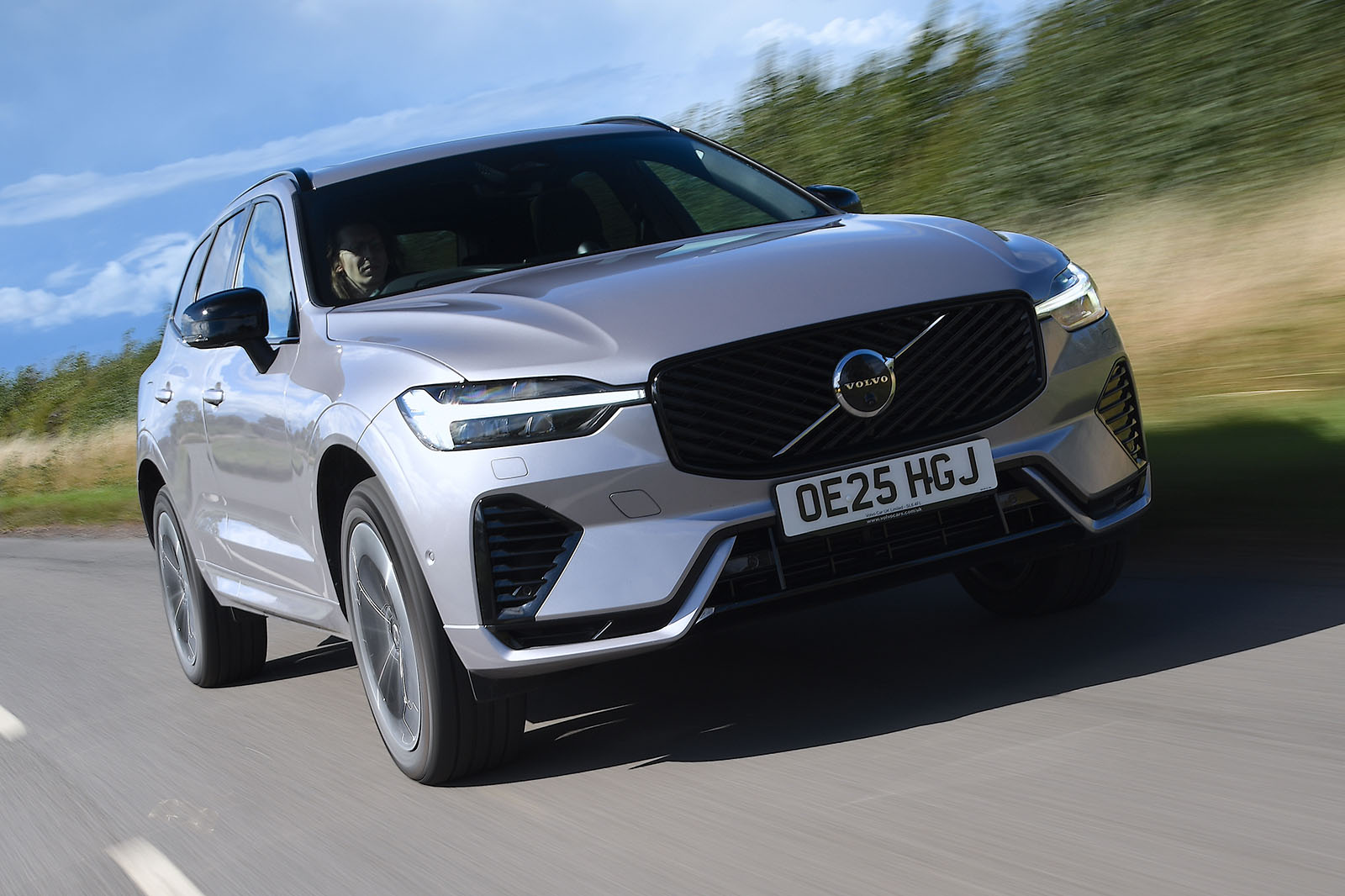
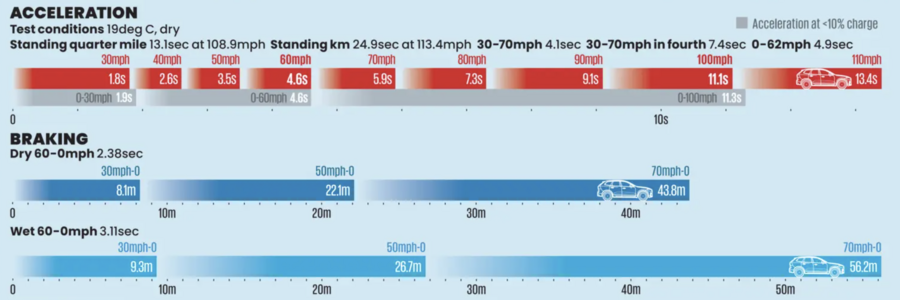
For all its obsession with safety, Volvo is remarkably liberal with its cars’ power outputs. The T6 needs only 5.7sec to reach 62mph, which is already quicker than German rivals, but we are testing the T8, which knocks that down to just 4.9sec.
Our car had no trouble matching this claim at the proving ground. In reality, the XC60 clearly maintains a decent buffer of energy even when the battery is at an indicated 0%, because performance was not notably degraded even with a ‘depleted’ tractionbattery. In EV mode, the XC60 took a leisurely 16.7sec to reach motorway speed (70mph), which shows where the next generation of PHEVs ought to improve.
More electric power in reserve would also make the XC60 more relaxing on the road. In everyday motoring, the engine is often busier and noisier than you would expect, even with plenty of charge in the battery. As a result, you don’t get the indulgent feeling that a system output of 449bhp would suggest. This is exacerbated when the battery is depleted.
The touchscreen offers three options for managing the charge in the battery: Auto, Hold and Charge. Hold works as expected, but Charge did not seem to replenish the battery much. Auto is quite clever, because if you plug your destination into the Google navigation, it will use all of the electric power over the course of your journey but reserve some for sections in town or heavy traffic, rather than use it all at once.
We like how Volvo handles regenerative braking: D mode on the gear selector gives you freewheeling, while B engages a much stronger mode. On the touchscreen, you can toggle whether the car creeps forward from a stop when you lift off the brake pedal. Switching it off turns B mode into a full one-pedal setting.
We’ve not yet driven the mild-hybrid B5, but on paper it is quite a bit slower and, as acquaintance with the pre-facelifted version suggested, will feel like it’s having to work harder much of the time, although we’ll have to wait to drive the updated version to confirm this is still true. Quieter or otherwise, however, the B5’s economy (at barely 30mpg) means frequent trips to the petrol station are necessary.
Source link