
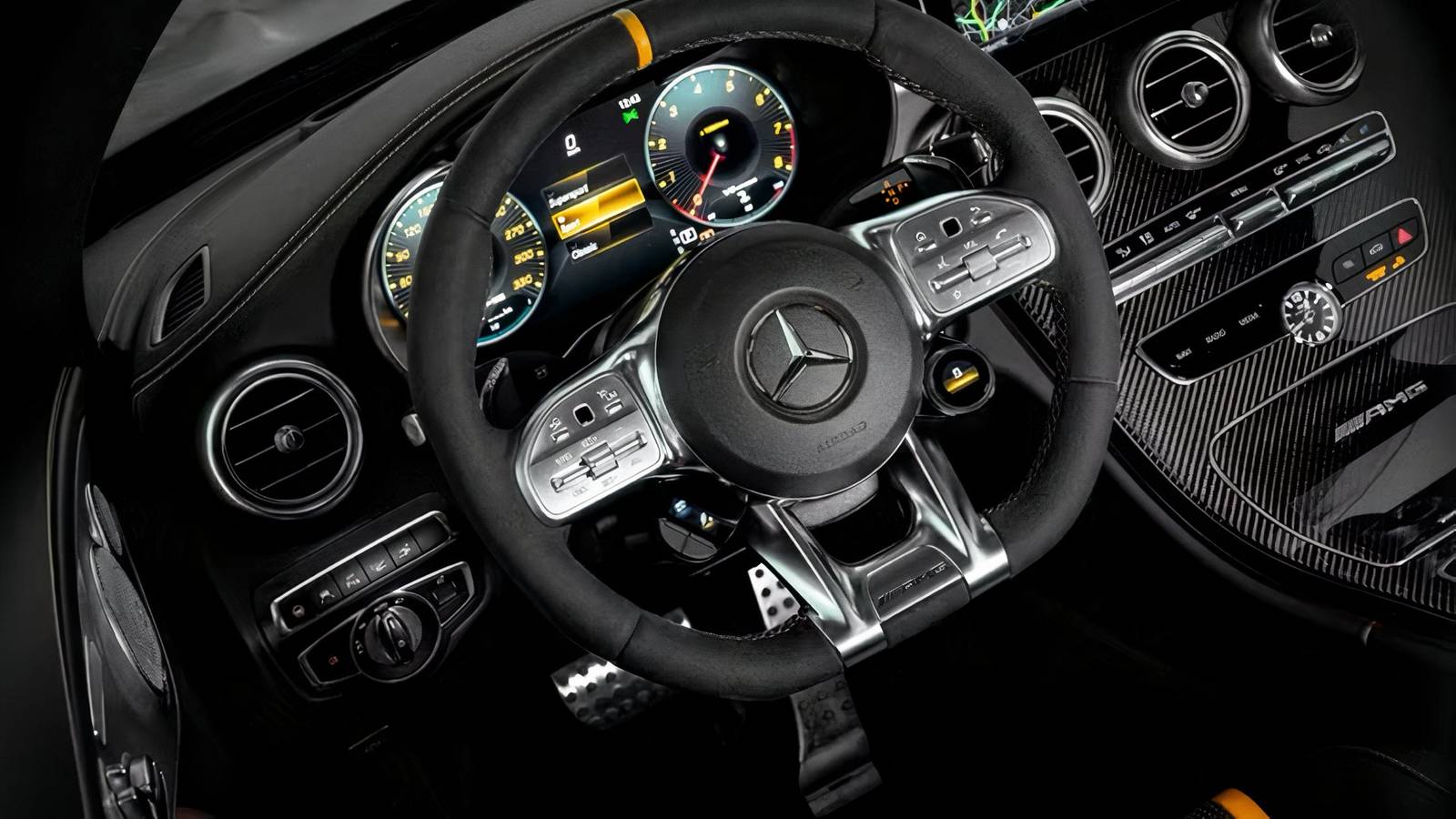
Today’s vehicles are packed with warnings to ensure safety, but one of the dangers of technology is sensory overload, and you only have to look at your vehicle’s instrument cluster to get a sense of it. When you first fire up the engine, the dashboard becomes a screen of lights that would make an Olympic opening ceremony drone show blush. All of them usually go out when the engine turns over, but some stay on to alert you that some things need attention.

For example, the seatbelt warning light will stay on until the driver’s side belt is fastened. If other lights remain on, or come on during operation, it’s an indication that something has gone amiss. It may be just an alert (like if the windshield washer fluid is low or gone), while others point to potential safety issues (like a door that may not be properly latched). One light in particular has catastrophic implications.
Understanding Engine Warning Lights and Colors
Knowing What The Symbols Mean And What Color They’re Displaying Helps

It helps to know how dashboard warning systems are designed, how they communicate urgency, and how it helps the vehicle to function properly and safely. Dashboard warning systems are mostly familiar in presentation, and they follow a clear priority structure. First of all, they’re placed according to their importance, with less important alerts placed at the edges of the cluster. Secondly, the lights are color-coded like a traffic light, with red designating danger and green meaning good to go.

With very few exceptions, manufacturers follow a uniform symbol/color code for universal familiarity. Red designates conditions that threaten safety or can cause rapid mechanical damage, and that system requires immediate attention. Yellow conveys failure of systems that are not critical but need attention as soon as you can. Green and/or blue indicate that everything is normal, and you can carry on (lights, for example, display as a green symbol when you turn the headlights on, while high-beams are usually indicated in blue when you engage them).
Dashboard Light Colors Indicate Something Is OK, Acting Up, Or Breaking

You can look at light colors as an escalation scale—when things are operating normally, the symbol will display in green or blue (usually green), but when the same symbol turns yellow, then the system has moved outside its normal operating parameters, and when its red it has moved into the critical phase of its operation (and failure is usually imminent). The warning lights are triggered by system sensors (which themselves may malfunction and trigger that warning light).

The lights are system indicators, and they react to input that comes from various sources—pressure sensors, temperature probes, flow meters, and even software that gathers and quickly analyzes data to detect variances. The passenger airbag deactivation, for example, comes from a weight sensor in the passenger seat cushion—anything below a certain weight will stop the airbag from deploying needlessly in a crash, causing a costly repair when it really wasn’t protecting anything.
Dashboard Lights Can Be Misinterpreted

Instrument cluster lights draw the driver’s attention that something just happened, it could be something inconsequential, like headlights coming on (in vehicles with automatic headlights), something the driver needs to look at when possible (like the windshield washer fluid running low), or something a technician needs to look at—lights can be interpreted as the car saying “Hey! Thought you should know,” to “You may want to look at this,” to “You have to get this fixed.”

The danger arises in that drivers may underestimate warning lights, sometimes through lack of understanding what the light means, and sometimes because familiarity dulls urgency—yellow lights come on, the vehicle continues driving normally, and nothing catastrophic happens—so when that same light appears in red, complacency takes over because “that light always comes on.” There is one light, though, that always burns red, and it cannot be ignored.

Why I Always Use Synthetic Oil… Usually
From lawn mowers to tractors to cars, I put this stuff in nearly everything.
The Red Oil-Pressure Warning Light Can’t Be Ignored
Engine Failure Is Imminent And Can Be Rapid

There is widespread belief that modern vehicles will automatically protect themselves, and though some crucial systems can reduce power, going into what is commonly called “limp-home” mode, maintaining operating oil pressure is not one of them. When the red oil pressure light comes on, it’s not a suggestion to think about booking a service appointment to have a look. It’s telling you to stop. Immediately.

When it comes to the oil pressure light, the margin of error for action is narrow or nonexistent. When it illuminates while the engine is running, the correct response is non-negotiable—pull over as quickly and safely as you can and shut the engine off. Do not “drive home slowly with four-way flashers on.” Do not “get where we’re going and worry about it there.” It means potential engine destruction has already begun, and your only way forward (no pun intended) is to minimize the damage.
When It Comes To Engine Life, The Pressure Is Literally On Oil

Every car owner knows, or should know, that your ICE’s lifeblood is oil, and oil pressure is the force that circulates the engine oil through all the nooks, crannies, and passages to lubricate the engine’s moving components. It is not enough to have the right amount of oil sitting at the bottom of your engine in the oil pan; the oil has to move around, and it does so under pressure.

The engine’s oil pump draws oil from the pan and forces it through passageways that feed the crankshaft, bearings, camshafts, valves, and basically everything inside the engine, and sometimes outside of it, such as turbochargers. A thin film of oil builds up between metal surfaces that would otherwise grind against each other. Without sufficient pressure, that protective film dissipates, resulting in metal-on-metal friction. At 1,000s of revolutions per minute, heat rises quickly and wear accelerates exponentially.
What Makes The Red Oil Pressure Light Come On

Operating pressures vary by engine and are carefully engineered to maintain a stable lubricating barrier. Drop below a minimum safe preset level, and the system collapses. When that happens, a pressure sensor detects this measurable failure situation, and switches on the oil-pressure warning light in the instrument cluster, and it is always red—danger!

That drop in pressure can happen for several reasons, with low oil level being the most common. If the pump draws air from the oil pan, instead of oil, pressure falls instantly. A faulty oil pump can also reduce oil circulation, as can a clogged tube or a compromised oil filter. However, an engine can have sufficient oil and still lack adequate pressure, due to mechanical faults such as severe internal wear that can allow pressure to bleed off faster than it can be maintained.
A Lit Oil Pressure Light Requires Immediate Driver Intervention

When the red oil-pressure light appears while driving, damage is already underway. Continued operation risks catastrophic failure within minutes, and perhaps even seconds. The proper response must be immediate—ease off the accelerator, safely maneuver to the side of the road, and shut the engine off. Put on your flashers and call emergency assistance. Do not restart the engine to “see if it goes away.”

The Real Cost Of Extended Oil Changes And What It Can Do To Your 3.5 EcoBoost Engine
While EcoBoost engines are designed to offer a long service life, not carrying out timely engine oil changes can have some serious consequences
What The Red Oil-Pressure Light Means For Engine Performance And Failure

Stable oil pressure is basic to optimal engine performance—it reduces internal friction, maintains consistent operating temperatures, and protects compression. The interior workings of an engine are under extreme mechanical stress. Pistons travel thousands of feet in a minute, for example, and the equivalent of a mile every couple of minutes. The only thing stopping the piston head from scraping the interior of the engine cylinder is a thin film of oil, and that is maintained through oil pressure.

When oil pressure drops, friction begins to increase immediately. Friction causes the surface temperatures of the metal to rise quickly. Power output begins to decrease. Unusual noises—starting as a tick, then quickly escalating to a knock and a rattle. By the time the oil-pressure sensor relays the problem to the driver, through the instrument cluster, significant damage has already occurred.
The Downward Spiral Toward Catastrophic Engine Failure

When oil pressure drops as a result of oil starvation, bearings are typically the first to go. Once damaged, they lose control of internal clearance tolerances, with the increased clearance further reducing oil pressure. That begins the compounding of problems, and the dominoes topple one after the other—crankshaft journals can become scored; connecting rods may overheat and, in severe cases, they can seize or break, and the engine may seize entirely.

An engine seizure is the end game, and why it’s important to shut it down as soon as that little red oil pressure light comes on. Unlike gradual engine wear, oil-pressure-related damage escalates quickly. What begins as the pressure drop noted by the sensor can end as a seized engine within a matter of minutes. From a financial standpoint, the stakes are high, and the difference between addressing a pressure warning early and ignoring it can mean the difference between costly service and an even costlier engine replacement.
Engine Health And The Financial Importance Of Maintenance

Oil-pressure crises are catastrophic, but they are preventable, and neglect is often the culprit. Regular oil changes (usually a $50–$125 procedure depending on amounts, grades, and service provider) maintain proper viscosity and cleanliness to protect that film between moving parts. Maintaining the oil level between services (at about $5–$15 per quart, depending on type and grade) reduces the risk of oil starvation that often leads to loss of pressure and a repair or replacement costing four or five figures.

Of note is that oil pressure is not the same as oil level, and many modern vehicles have oil-level warning lights, which will turn yellow to alert the driver to change the oil or to add a quart (or whatever is needed, according to the dipstick). Topping up with oil may restore oil pressure, unless a mechanical failure is the cause of reduced pressure. If the yellow oil level light is ignored, the warning will be replaced by the red oil-pressure symbol, which really may as well read “too late.”

The Performance Sedan Engineered For The Long Run
An old-fashioned supercharged V-8 that’s built to last.
The Red Oil Pressure Warning Light Is The Warning Light Drivers Can’t Ignore

If you’re apt to dismiss instrument cluster warning lights, make sure you know what the red oil-pressure light looks like, because it is the harbinger of the most catastrophic mechanical consequence. Oil pressure sustains lubrication, and loss of pressure accelerates friction between ICE metal components, which causes heat to build up rapidly, and wear to accelerate at an alarming speed.

Yes, engine lights have different colors designating their required level of attention. Note the green-lit engine simply means they’re working normally, or maybe it’s time for an oil change when the yellow oil level light comes on, but the oil pressure light is always red, and when it comes on, the correct response is immediate shutdown. Delay risks permanent damage. That having been said, other crucial warning lights demand urgent, and sometimes immediate, attention. The best preventive medicine for all, though, is regular maintenance.
The Engine Coolant Temperature Light Indicates Engine Overheating

A red engine coolant temperature warning light signals that the engine is overheated, and also requires immediate shutdown, because high engine temperatures can cause severe internal damage, including warped cylinder heads and degraded gaskets. Overheating often develops more gradually than oil-pressure loss, so there is more time to react, with the light starting yellow (indicating low coolant level). On Subaru models, the light can also be blue at start-up, meaning the engine is not yet up to optimal operating temperature.
The Red Brake System Warning Light

The red brake system light is another warning that demands urgent attention, but for a different, potentially catastrophic reason—loss of car control. This light covers a wide range of problems, from low brake fluid to hydraulic pressure balance to faulty components. The brake system is also prone to neglect, with easy fixes of adding fluid (about $10–$15 per bottle), brake fluid flush ($80–$225), or a full brake job that stretches to $1,500 or beyond. Of note is that a different light, for an ABS fault, is always yellow.
Sources: AAA, AutoZone, Kelley Blue Book, CarParts