
There are something like 450 new models on sale in Australia now, from about 75 different auto brands – many of which are very new to our market.
But as the waves of generic, unidentifiable models come and go, the Toyota LandCruiser 70 Series is among the very few that need no introduction.
It has been the backbone of rural Australia since the 1980s, and has even risen to become something of a status symbol among blue-collar workers.
The 70 built its reputation on reliability. Despite Toyota rolling through something like two dozen engines since it was released in 1984, there’s really never been a bad one. And there are very few vehicles you can say that about, particularly one that’s been on sale as long as this one.
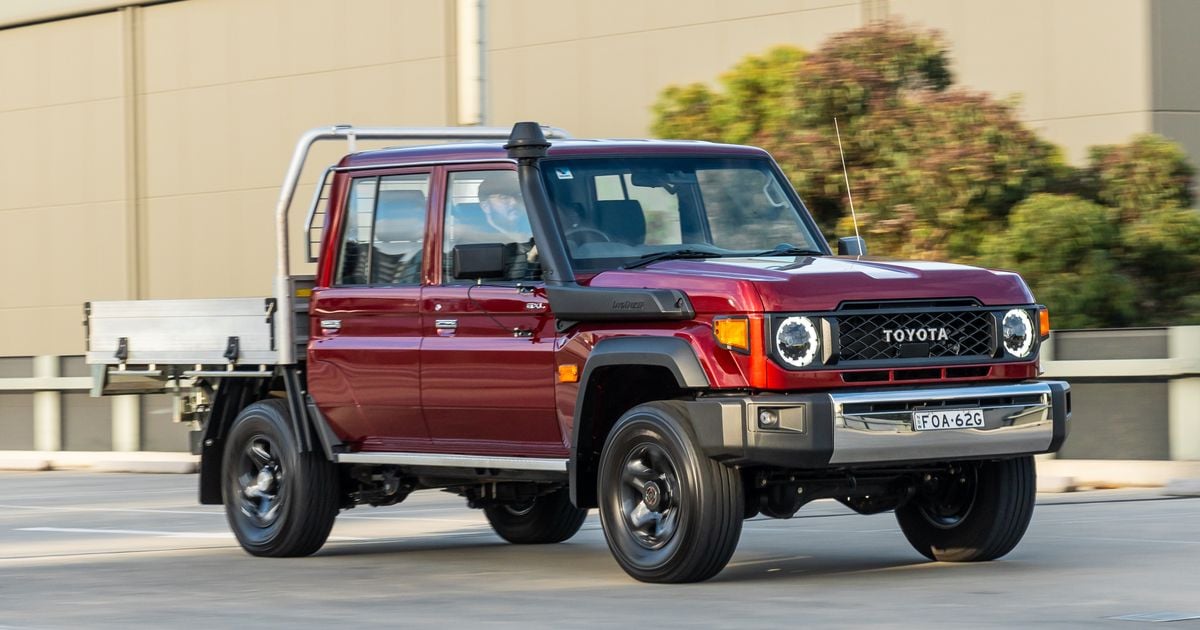
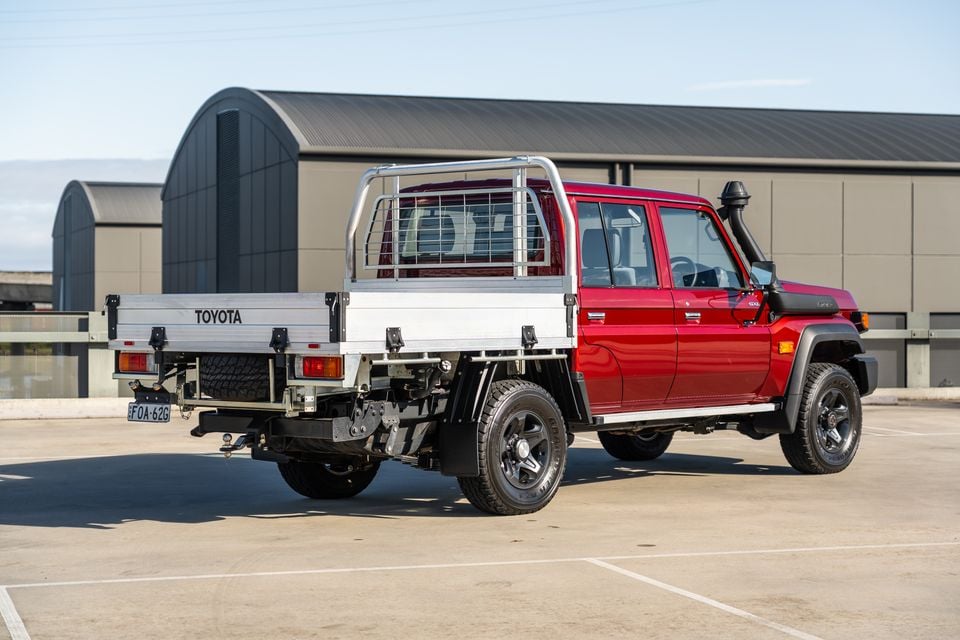
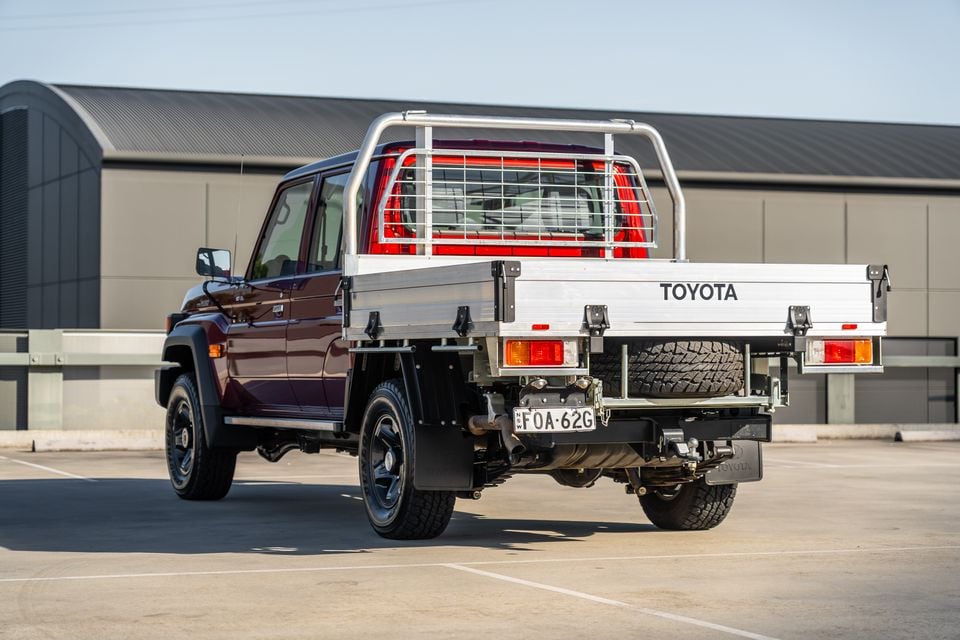
Being the latest version, this Toyota LandCruiser 79 GXL Double-Cab Cab-Chassis is powered by the same 2.8-litre turbo-diesel engine found in the cheaper HiLux. Unlike the HiLux, the 70 delivers the practicality of a dual-cab, but with a proper-sized tray and arguably another level of off-road capability.
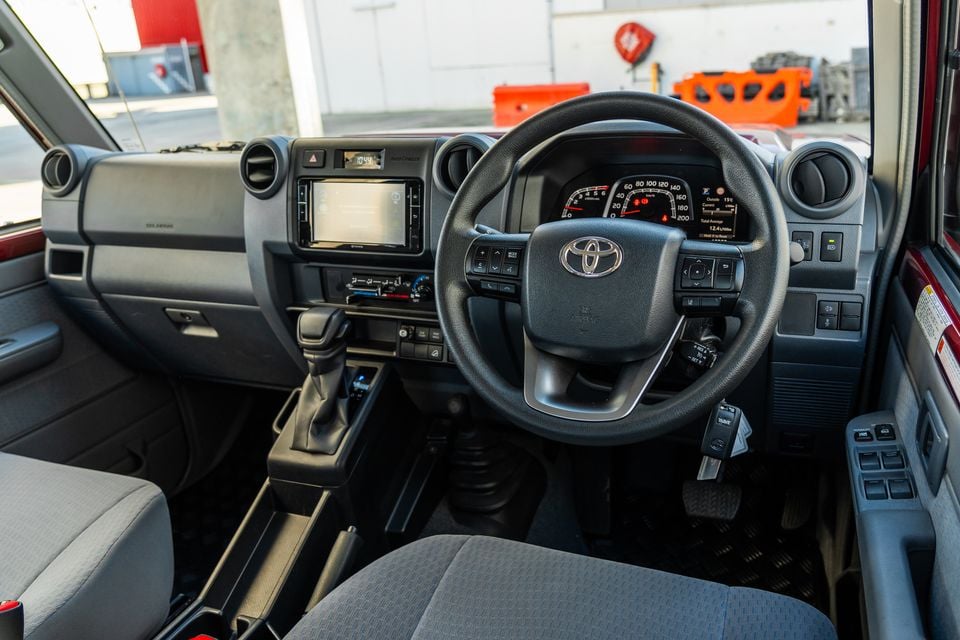
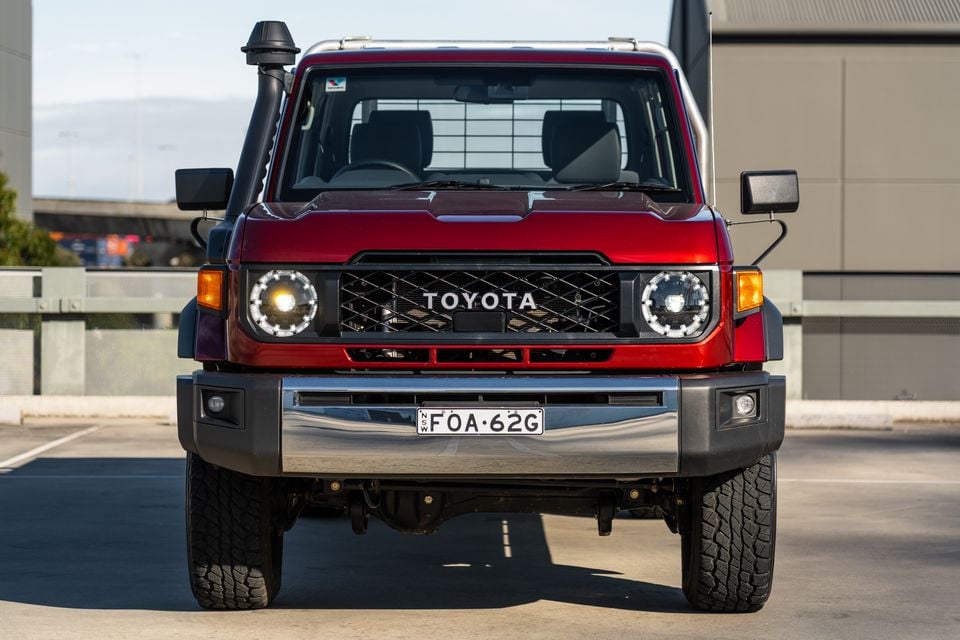
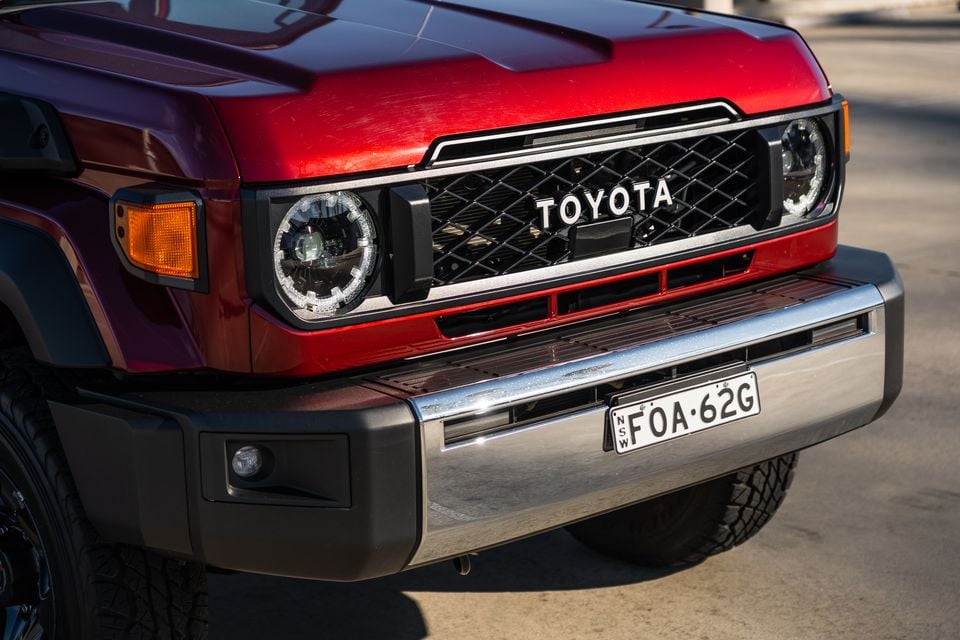
It’s also been given (another) facelift – featuring retro-inspired round headlights – along with a double-DIN head unit with wired Apple CarPlay and Android Auto, plus cupholders, power windows, and some minimal safety tech.
But arguably the biggest upset in this space hasn’t come from Toyota. Ford recently introduced the Ranger Super Duty, which turns the HiLux competitor into a LandCruiser 70 Series competitor.
While we like the Super Duty, we wanted to see how well the dual-cab LandCruiser holds up in this day and age, alongside more modern competition. Here’s what we found.
How much does the Toyota LandCruiser 79 Series cost?
Those in the market for a dual-cab LandCruiser have a choice between the basic WorkMate and the slightly better-appointed GXL, with the four-door models kicking off from $77,300 before on-road costs.
| Model | Price before on-road costs |
|---|---|
| 2026 Toyota LandCruiser 76 Series WorkMate Wagon automatic | $75,600 |
| 2026 Toyota LandCruiser 76 Series GXL Wagon manual | $77,800 |
| 2026 Toyota LandCruiser 76 Series GXL Wagon automatic | $79,800 |
| 2026 Toyota LandCruiser 78 Series Troop Carrier WorkMate manual | $77,200 |
| 2026 Toyota LandCruiser 78 Series Troop Carrier WorkMate automatic | $79,200 |
| 2026 Toyota LandCruiser 78 Series Troop Carrier GXL manual | $80,500 |
| 2026 Toyota LandCruiser 78 Series Troop Carrier GXL automatic | $82,500 |
| 2026 Toyota LandCruiser 79 Series Single-cab/chassis WorkMate automatic | $76,800 |
| 2026 Toyota LandCruiser 79 Series Single-cab/chassis GX automatic | $78,800 |
| 2026 Toyota LandCruiser 79 Series Single-cab/chassis GXL automatic | $80,900 |
| 2026 Toyota LandCruiser 79 Series Double-cab/chassis WorkMate manual | $77,300 |
| 2026 Toyota LandCruiser 79 Series Double-cab/chassis WorkMate automatic | $79,300 |
| 2026 Toyota LandCruiser 79 Series Double-cab/chassis GXL manual | $81,500 |
| 2026 Toyota LandCruiser 79 Series Double-cab/chassis GXL automatic | $83,500 |
We have the most expensive version available here, the dual-cab GXL automatic, priced from $83,500 before on-road costs.
Find your perfect new car with CarExpert
Meanwhile, the Ford Ranger Super Duty starts from $82,990 plus on-roads, though you’ll need to spend $89,990 plus on-roads for a dual-cab – and while it costs more than the Toyota, it offers a significantly more modern interior, greater safety, and lots of features.
To see how the Toyota LandCruiser 70 Series stacks up against its rivals, use our comparison tool
What is the Toyota LandCruiser 79 Series like on the inside?
Given the interior was originally designed by Moses, Toyota hasn’t done a terrible job of trying to keep the 70 relevant.
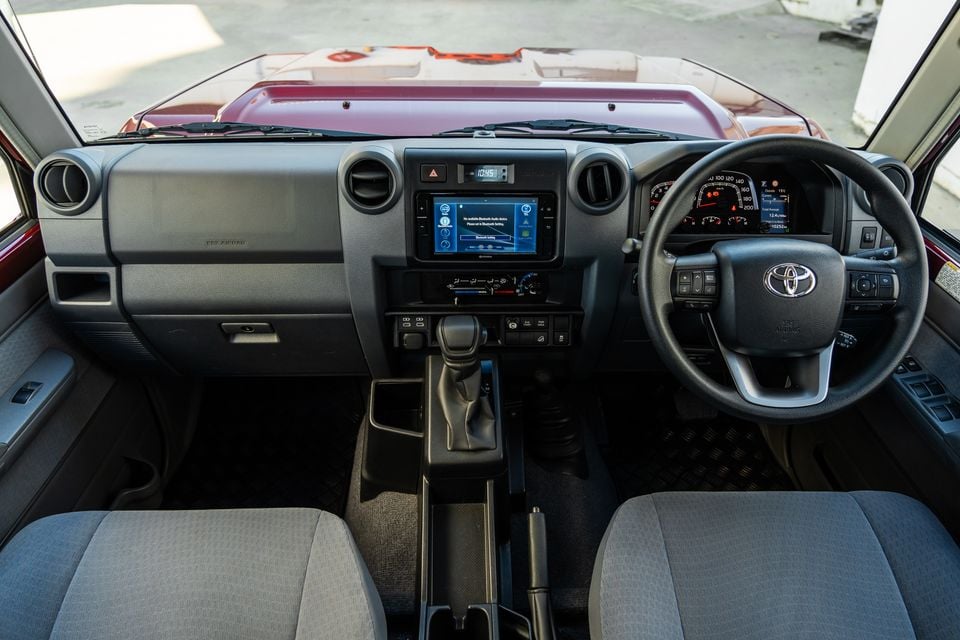
The biggest giveaway is the outward visibility. Thin A-pillars, a low shoulder line, and large windows are all from another era, and turn the driver into a lighthouse keeper. In a good way.
There are a few odd shapes, lots of hard plastics, vinyl, and painted metal. To be sure, this isn’t an interior that will appeal to all buyers. But where some will see it as outdated, others will consider that to be a distinct advantage.
If you can’t remember a time without mobile phones, you might struggle with the basic cabin. Others will no doubt embrace its simplicity.
Despite the big price tag, the model only gets wired Apple CarPlay and Android Auto. The head unit is small by today’s standards and isn’t great to use. But being a double-DIN size, it can be easily upgraded to a slick aftermarket item – an option that isn’t available for most new cars, given their integrated infotainment systems.
Like I said, outdated on the one hand, but an advantage on the other.
The head unit does have Bluetooth if you don’t have a phone cable with you, and the dual-cab gives you the luxury of four speakers, meaning the sound system sucks a little bit less than in the single-cab.
Toyota has included a handy spot for your mobile, but there’s no wireless phone charging. Considering you can buy a magnetic charger from Kmart for less than $10, it feels a little insulting that the Japanese auto giant can’t include something as simple as that – but it’s frankly on-brand for the 70.
There’s a physical key, levers and knobs for the single-zone heater and air-conditioning, and a shifter for the transfer case that vibrates against your left knee.
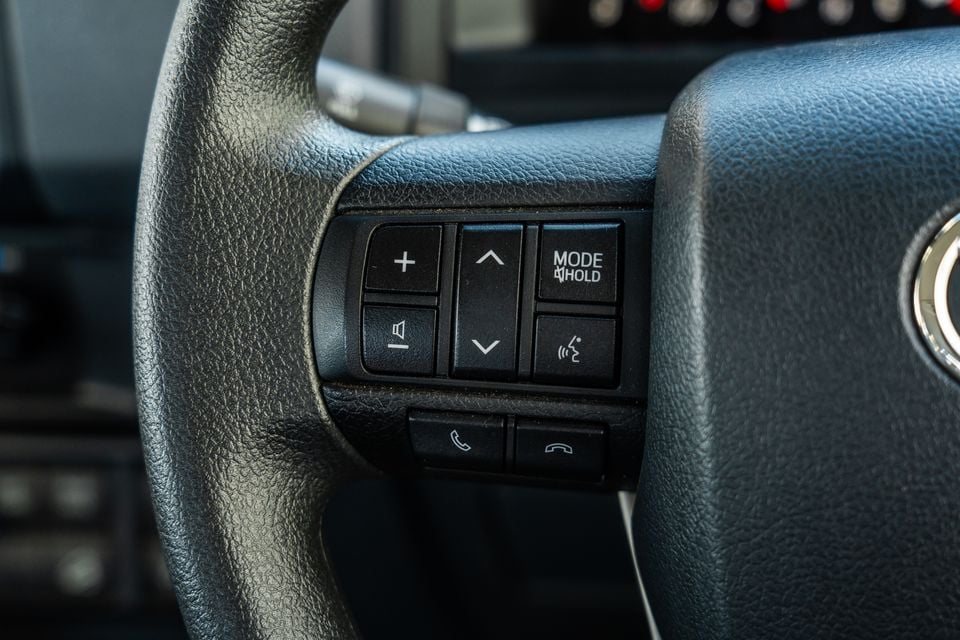
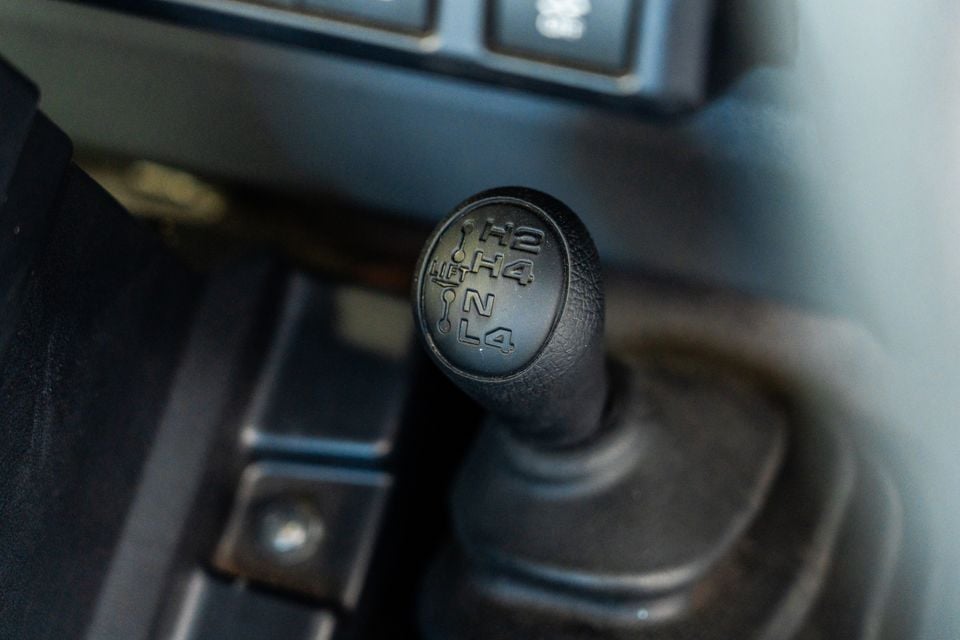
It all feels terribly antiquated inside, particularly if you’re used to driving anything built after 2010.
The 40 Series-inspired instrument cluster includes a small TFT screen for vehicle information, so it’s not entirely analogue. There are also basic luxuries like cruise control and power windows, bringing the ‘Cruiser into the 20th century.
And then you remember why this layout was the standard for so many decades: because it works. Key in, shifter into ‘D’, handbrake off.
As was my experience with the single-cab, I spent the first couple of days feeling like I was driving something from The Flintstones. Then I began appreciating it for what it is.
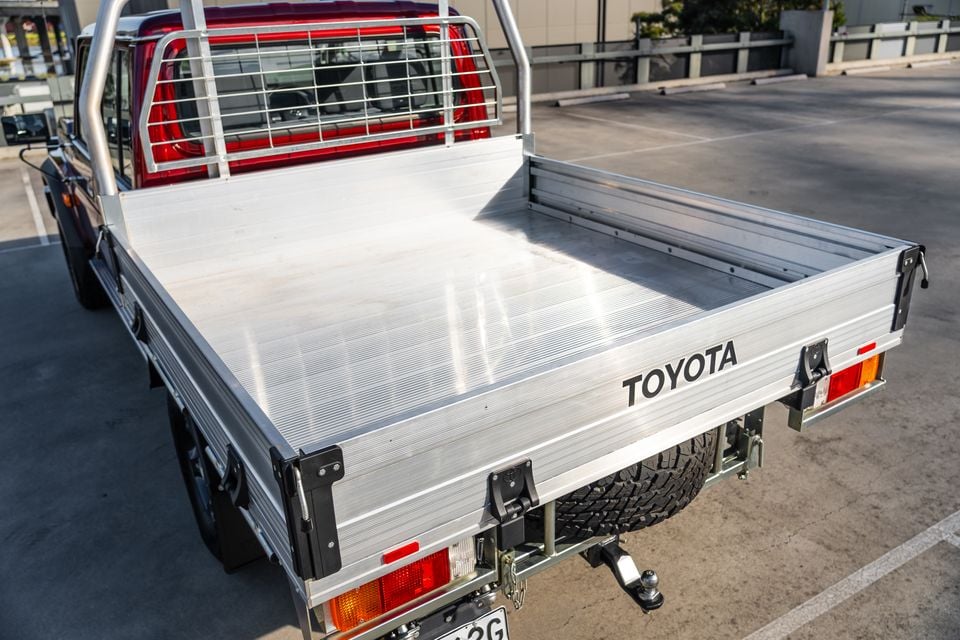
Comfortable enough for a workhorse, endlessly intuitive, and built to outlast the apocalypse.
The difference here is this has a longer wheelbase, two more doors, and three extra seats. The second-row bench seat is better appointed than I was expecting, and while I wouldn’t want to spend more than an hour or two back there, it’s certainly not a chore.
One of its biggest advantages is its tray size, but there’s still quite a bit of overhang behind the rear wheels, making the single-cab 70 better suited to heavier loads.
| Dimensions | Toyota LandCruiser 79 Series double-cab/chassis |
|---|---|
| Length | 5245mm |
| Width | 1870mm |
| Height | 1945mm |
| Wheelbase | 3180mm |
To see how the Toyota LandCruiser 70 Series stacks up against its rivals, use our comparison tool
What’s under the bonnet?
The 70 Series has traditionally been offered with engines between 4.0 and 4.5 litres in displacement – both petrol and diesel – but these days, buyers get a 2.8-litre turbo-diesel four-cylinder engine putting out 150kW of power.
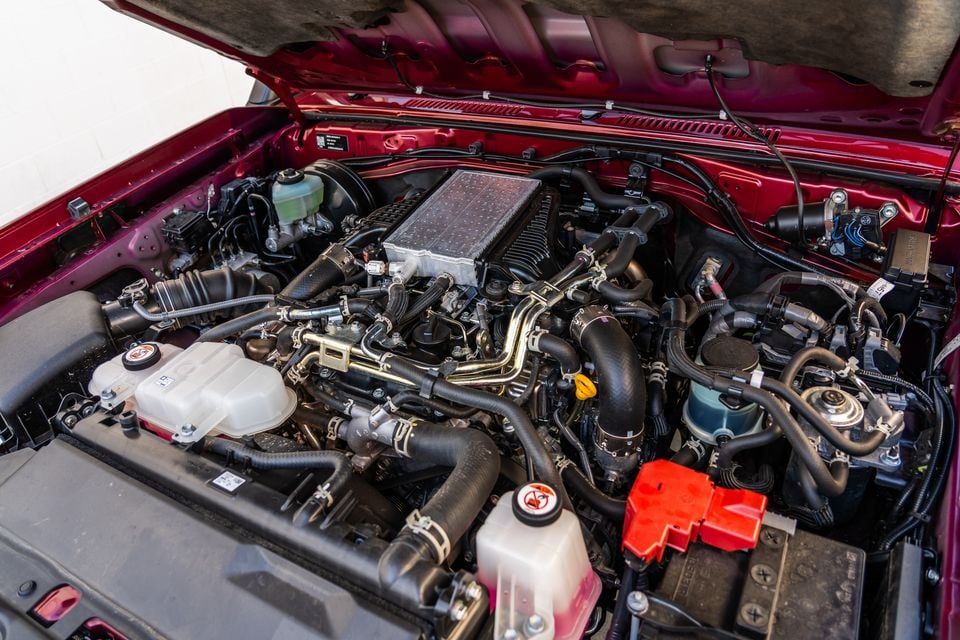
| Specifications | Toyota LandCruiser 79 Series double-cab/chassis auto |
|---|---|
| Engine | 2.8L 4cyl turbo-diesel |
| Power | 150kW |
| Torque | 500Nm |
| Transmission | 6-speed auto |
| Drive type | Part-time 4×4 (2H, 4H, 4L) |
| Fuel economy (claimed) | 9.6L/100km |
| Fuel tank | 130 litres |
| Weight (kerb) | 2185kg |
| Payload | 1325kg |
| Braked towing capacity | 3500kg |
| Gross vehicle mass (GVM) | 3510kg |
| Gross combination mass (GCM) | 7010kg |
Torque output depends on the transmission, with the five-speed manual tuned to 450Nm, while the six-speed automatic gets 500Nm – all driving the rear wheels in 2H, with part-time four-wheel drive and low-range.
Combined fuel consumption is listed at 9.6L/100km, however, we only managed around 12L/100km during our week with it.
To see how the Toyota LandCruiser 70 Series stacks up against its rivals, use our comparison tool
How does the Toyota LandCruiser 79 Series drive?
Modern vehicles have become very good at doing everything well. Family duties, city driving, long highway stints – even handling mountain roads with a small injection of fun.
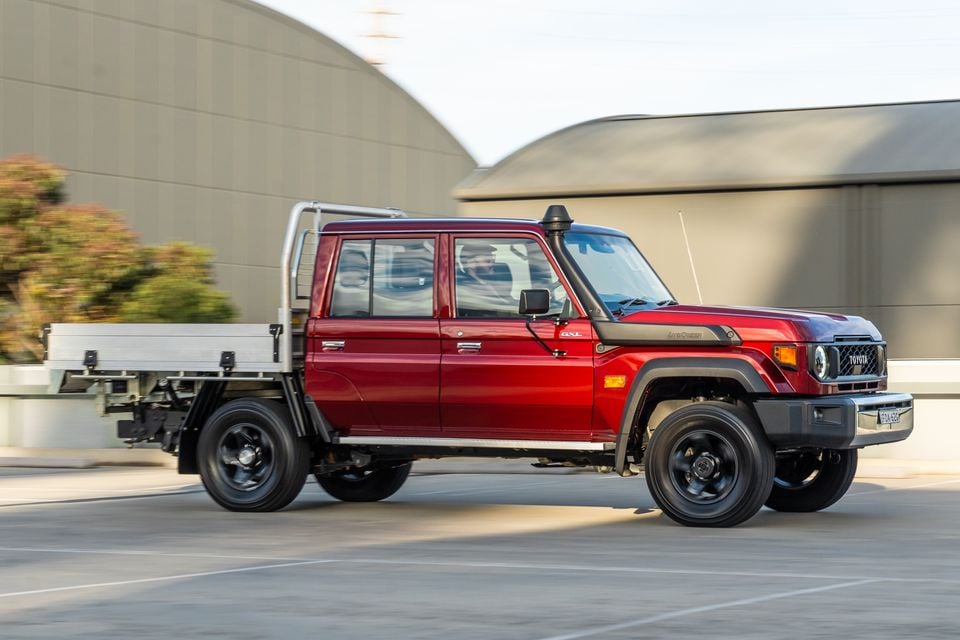
Conversely, the 70 Series isn’t a jack of all trades – not by a long shot. But when it comes to the things it is good at, it is absolutely the master.
Let’s start with some of its weak points.
It barely gets around the corners of an underground shopping centre car park – even when using the oncoming lane – and doesn’t really fit into the regular parking spaces, even if you nose up to within a few mill of the wall.
There’s limited steering lock, which is exacerbated by the fact that the wheelbase is 3180mm, and the body has some pretty decent rear overhang from the factory tray. This is where something like a car-licence Isuzu or Hino has a significant advantage, as those cab-over trucks tend to have impressive turning circles.
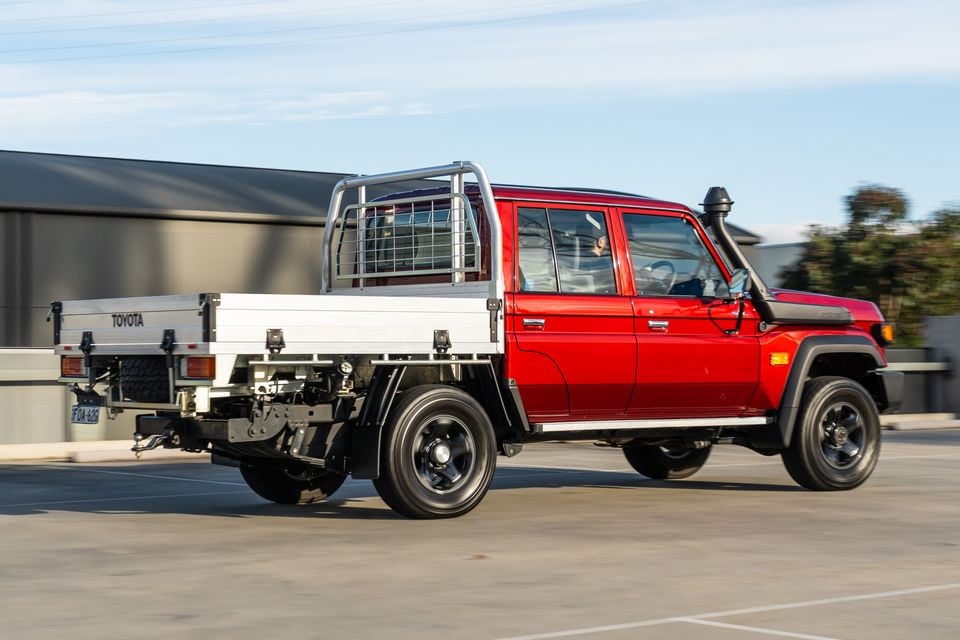
It’s also not helped by a slow steering rack, with up to four turns lock-to-lock, meaning you have to start spinning the wheel a few days before there’s a turn marked on your calendar.
And it probably goes without saying, but this isn’t the vehicle to bring to your local motorkhana. The LandCruiser is slow to react and naturally doesn’t have a lot of lateral traction. But it also doesn’t encourage that type of driving, so keep it relaxed, slow down before corners, and you’ll get to where you’re going.
The lack of parking aids also meant having to use my eyes. It was slightly more of a challenge than in the single-cab, given the extra length of the vehicle and the slightly reduced visibility from the extra row of seats. But thankfully, its square shapes mean there isn’t a lot of guesswork needed.
Most of those things you’ll adjust for after a few days with the big Toyota. There are also plenty of positives.
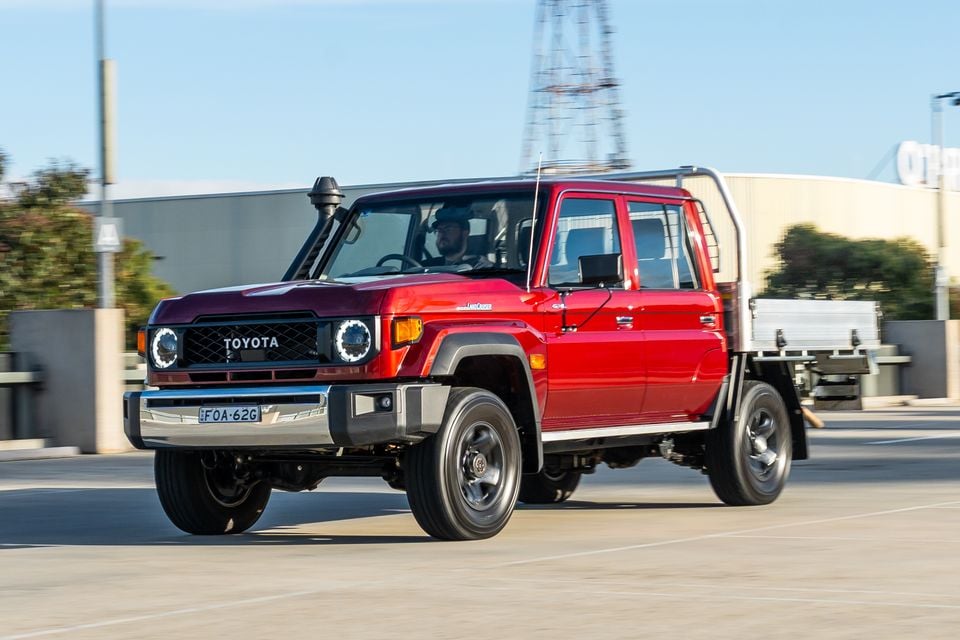
We’ve had the 70 Series out in the bush plenty of times before, and there’s no doubting its capability right out of the box. The GXL gets front and rear locking differentials, which when combined with the low-range ‘box and all-terrain tyres allow you to get just about anywhere you point it.
Arguably, the engine isn’t as satisfying to use as the old turbo-diesel V8, but the 2.8-litre still does a good job of pushing the ute around. It may even be better at suburban speeds, with the turbocharger spinning up easily and matched well with the six-speed automatic.
I was surprised at just how well the LandCruiser rode unladen. For something with more leaves than a eucalyptus, it really rolls over Australian tarmac well – no doubt helped by the fat tyre sidewalls.
Because the 70 Series is categorised as a light commercial vehicle, it’s not subject to the same safety requirements as passenger cars. So there are fewer alarms and distractions, but you also don’t have that extra set of digital eyes keeping a watch on traffic.
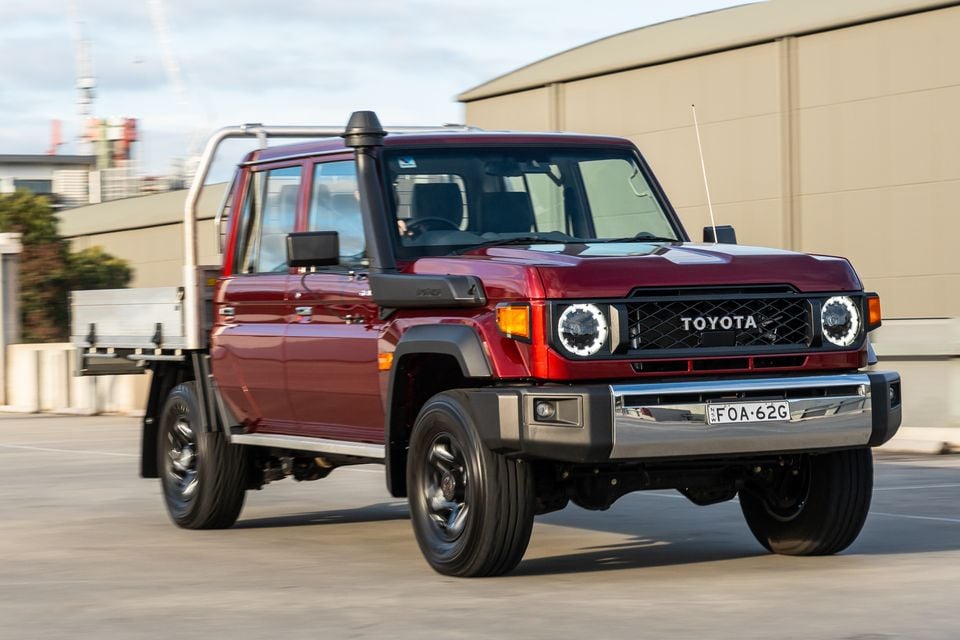
It does come with a version of Toyota’s Safety Sense, which includes lane-departure alert, road-sign recognition, and a pre-collision preparation system, but it’s all pretty non-invasive. Whether that is an advantage or a disadvantage will be up to each buyer to decide for themselves, but I personally enjoyed being left to just drive the ute like a grown-up.
|
Off-road dimensions |
Toyota LandCruiser 79 Series double-cab/chassis auto |
|---|---|
|
Track front and rear |
1555mm/1460mm |
|
Ground clearance |
302mm |
|
Approach angle |
33 degrees |
|
Departure angle |
27 degrees |
To see how the Toyota LandCruiser 70 Series stacks up against its rivals, use our comparison tool
What do you get?
With the latest LandCruiser 79 Series, Toyota has added the absolute minimum of acceptable features for a new vehicle sold in 2026 – but don’t expect lots of gadgets and luxuries.
From expert reviews to the right deal
CarExpert brings together reviews, research tools and trusted buying support, guiding you from research to delivery with confidence.
2026 Toyota LandCruiser 70 Series WorkMate equipment highlights:
- 16-inch silver steel wheels
- Black finish for 78 and 79 Series
- LED headlights
- Automatic high-beam
- Black mesh grille
- Heritage-inspired bonnet
- Heritage-inspired turn signals
- Steel side steps
- 4.2-inch instrument cluster screen
- 6.7-inch touchscreen infotainment system
- Wired Apple CarPlay and Android Auto
- Voice recognition
- Two-speaker sound system
- Centre storage box (automatic variants only)
- Vinyl upholstery
The LandCruiser GX adds:
- 16-inch alloy wheels
- Wheel-arch flares
The LandCruiser GXL variants add:
- Front and rear differential locks
- LED front fog lights
- Chrome and painted front bumper (79 Series ute only)
- Moulded black front and rear bumpers (Wagon and Troop Carrier only)
- Aluminium side steps
- Chrome roof drip rails
- Four-speaker sound system (excluding single-cab/chassis)
- 2x USB-C ports
- Driver and front passenger map pockets
- Cloth upholstery
- Power windows
- Variable intermittent wipers
Optional equipment
The Toyota LandCruiser 79 GX single-cab/chassis is available with front and rear differential locks for an additional $1500.
Colours
The 2026 Toyota LandCruiser 70 Series range is available with the following exterior paint colours:
- French Vanilla
- Silver Pearl
- Graphite
- Merlot Red
- Sandy Taupe
- Midnight Blue
- Eclipse Black (76 Series Wagon only)
Premium paint costs an additional $675.
To see how the Toyota LandCruiser 70 Series stacks up against its rivals, use our comparison tool
Is the Toyota LandCruiser 79 Series safe?
Unlike typical passenger cars, the Toyota LandCruiser 70 Series was awarded a ‘silver’ commercial vehicle rating by ANCAP in 2025 – with an overall score of 55 per cent.
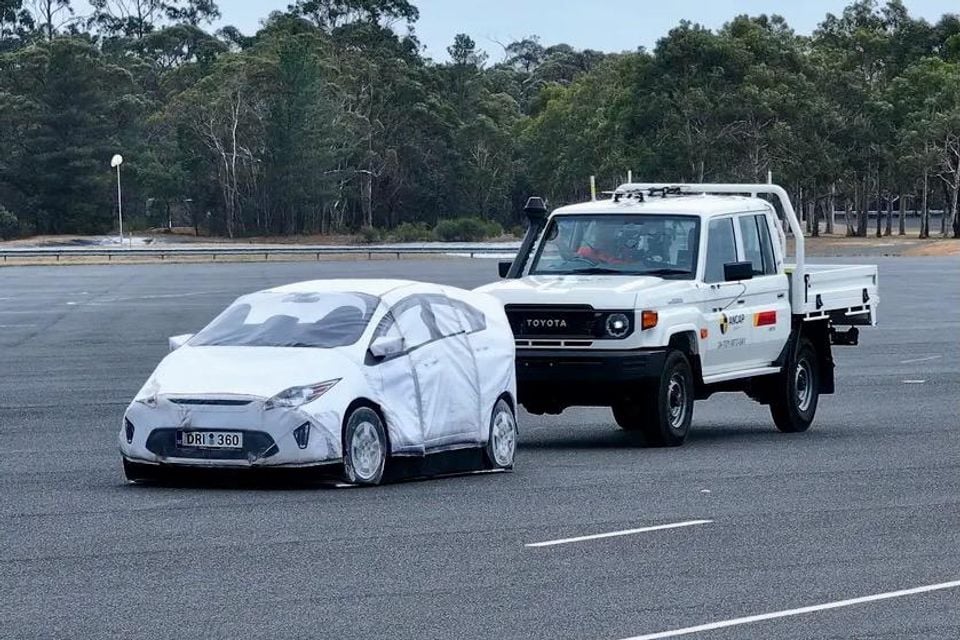
Back in 2016, the LC70 did receive a now-expired five-star ANCAP rating following structural improvements to its chassis and cabin, plus the addition of head-protecting side curtain airbags, a driver’s knee airbag, seatbelt pre-tensioners, and changes to the bonnet and seat designs.
However, the structural upgrades applied only to volume-selling, fleet-friendly single-cab versions of the 70 Series, leaving other derivatives like the arguably family-friendlier dual-cab, wagon and Troop Carrier ‘unrated’.
The Toyota LandCruiser 70 Series range comes with the following safety equipment:
- Autonomous emergency braking (AEB)
- Brake assist
- Vehicle stability control
- Hill-start assist
- Downhill assist control (auto-only)
- Active traction control
- Lane departure alert
- Traffic sign recognition
To see how the Toyota LandCruiser 70 Series stacks up against its rivals, use our comparison tool
How much does the Toyota LandCruiser 79 Series cost to run?
The LandCruiser comes with a five-year, unlimited-kilometre warranty, with an additional two years of powertrain coverage if the vehicle is serviced on time by Toyota’s dealer network.
| Servicing and Warranty | Toyota LandCruiser 70 Series |
|---|---|
| Warranty | 5 years, unlimited kilometres 7 years, unlimited kilometres (extended engine and driveline) |
| Roadside assistance | $99 annually |
| Service intervals | 6 months or 10,000km |
| Capped-price servicing | 5 years |
| Total capped-price service cost | $5450 |
| Average capped-price service cost | $545 |
Servicing is required every six months or 10,000km, with each visit capped at $545 – adding up to $1090 annually for the first five years, for a total cost of $5450.
Meanwhile, service intervals for the Ford Ranger Super Duty are 12 months or 15,000km, totaling $2345 over the same five-year period.
To see how the Toyota LandCruiser 70 Series stacks up against its rivals, use our comparison tool
CarExpert’s Take on the Toyota LandCruiser 79 Series
Sales figures show there is still a place for a no-BS ute in Australia, where thousands of buyers clearly prefer mechanical strength over technology and creature comforts.
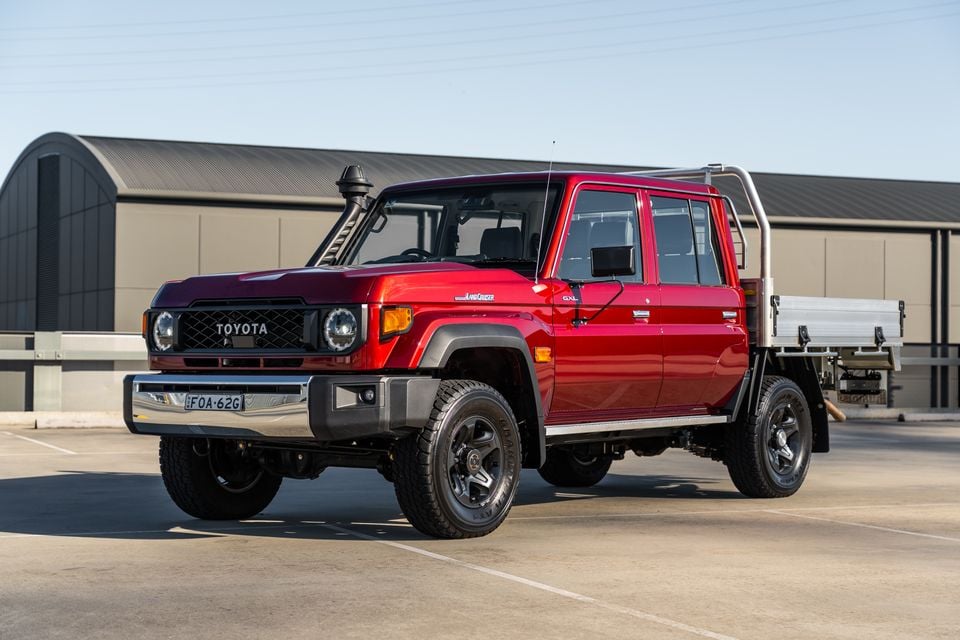
That isn’t to say there aren’t complaints, such as the lack of a wireless phone charger, the outdated sound system, the absence of any parking aids – all things that could be easily added to make the ‘Cruiser just that little bit nicer to live with.
While it’s an enjoyable driving experience most of the time, manoeuvrability when parking will also cause headaches for those who need to visit the city occasionally.
Then there’s the price.
And yet, despite these shortcomings, it’s not hard to see the appeal. The 70 has a beguiling quality – like a diesel locomotive in a world of high-speed electric trains.
There’s a long list of reasons why the Toyota LandCruiser 70 Series has endured for this long, and most of them come back to capability and, perhaps most importantly, reliability.
Reliability when heading off-road, reliability over a long distance, reliability over a long time.
It isn’t a jack-of-all-trades by any means, but in terms of the things it was designed to do, it is highly capable.
CarExpert can save you thousands on a new Toyota LandCruiser 70 Series. Click here to get a great deal.
Click the images for the full gallery