
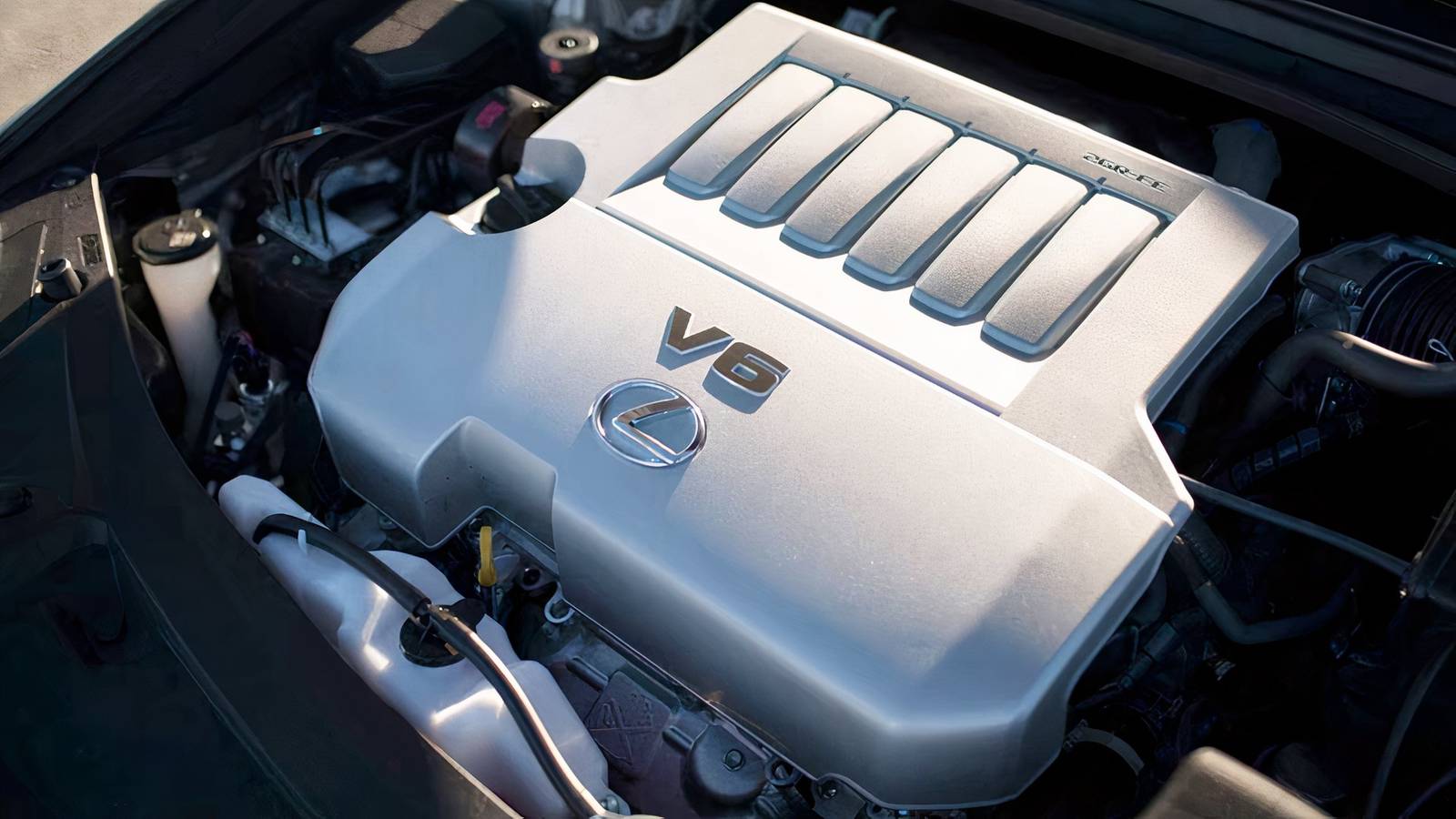
Electric vehicles are everywhere. Headlines scream about 0–60 mph times that defy gravity, battery ranges that stretch hundreds of miles, and futuristic cabins where the engine is nothing more than a memory. And yet, amid all this hype, the V6 engine quietly refuses to die. It’s not just a compromise between economy and brute force — it’s a powerplant with personality, versatility, and emotion that no electric motor can fully replicate.
From the growl of a Nissan 300ZX to the twin-turbocharged performance of the Nissan GT-R, V6 engines continue to hold our hearts. Here’s why they still matter — and why enthusiasts refuse to let them go.

10 Modern Sedans With V6 Engines That Skipped The Turbo Trend
These models prove that natural aspiration, though a fading aspect, still delivers solid results in today’s market.
The Balance Of Power And Versatility
Classic V6s That Defined Their Era

Long before turbocharging and hybrid systems, the V6 engine earned its reputation through balance. Take the 1990s Acura NSX with its 3.0-liter V6: naturally aspirated, mid-mounted, and rev-happy. It didn’t just move the car; its movement was joyful, offering both a smooth everyday ride and track-capable performance. Then there’s the Nissan 300ZX Z32, whose twin-turbo V6 combines raw power with sharp handling — a favorite among tuners and purists alike.

These engines proved that you don’t need eight cylinders to raise hell behind the wheel. Their compact size allowed them to fit in Japanese sports cars, sedans, and even family wagons without compromising balance, making the V6 a versatile performer across multiple vehicle types.
Modern Six-Cylinders Bridging Comfort And Performance

Fast-forward to modern day: consider the new Toyota GR Supra 3.0, whose B58 turbocharged inline-six engine produce 382 horsepower and gives drivers that visceral experience of thrust, growl, and noise. Luxury SUVs, too, lean on the inline-six — the BMW X5 xDrive40i proves that a six-cylinder can deliver both towing capacity and spirited highway performance while keeping fuel efficiency reasonable.
In both old and new applications, the V6’s (and inline-sixes) sweet spot remains clear: enough cylinders for excitement, yet compact and efficient enough for daily efficiency and practicality.

Here’s Why The V-6 Engine Refuses To Die In A World Of Downsizing
While big engines are on the chopping block, the V-6 continues to carve out its place in the modern era of efficient vehicles.
The Emotional Appeal — Sound And Engagement
Why We Love A V6 Note

Ask any driving enthusiast, and they’ll tell you: there’s a difference between speed and thrill. EVs accelerate instantly, but they lack narrative. A V6 has character — the low idle rumble, the mid-range hum as you roll onto the throttle, the crescendo as revs climb toward the limiter. The Ford Ranger Raptor’s twin-turbo V6 or the Jaguar F-Type 3.0’s supercharged V6 leaves little room for debate on the V6’s ability to perform.
The sound of a V6 can be addictive. For a weekend drive, a back road, or even a stoplight, the engine’s feedback is part of the fun. It makes every shift satisfying, every gear change meaningful, and every rev a dialogue between driver and machine. EVs can’t replicate this intimacy — an electric motor may be fast, but it’s clinically silent.
V6 Driving Dynamics

Engagement isn’t just sound; it’s a response. Modern V6s often employ variable valve timing, turbocharging, or even mild-hybrid assistance to create torque curves that reward driver input. They’ve done this with a number of pickup trucks and SUVs over the years. Even as some former V6 trucks and SUVs have given in to turbocharged fours, some modern V6s still make successful arguments for their continued use.
Classic V6 cars like the Nissan 300ZX also illustrate this point. The balance and feedback of a V6 allow for throttle modulation and dynamic cornering in a way that a raw EV torque surge can’t, but more importantly, that’s just not what people want from EVs. Enthusiasts cherish these engines because they require skill, timing, and awareness — qualities that make driving more than just moving from point A to B.
Engineering Flexibility — From Hybrids To Track Cars
Platform Versatility

One reason the V6 endures even into 2025 and 2026 is packaging flexibility. Automakers can mount them longitudinally or transversely, pair them with RWD or AWD, or integrate them into hybrid systems. This is why we still see V6s in cars, SUVs, and trucks. This flexibility covers a diverse range of models, like the Porsche Cayenne, the Nissan GT-R, the Lincoln Navigator, the Jeep Wrangler, the 4Runner, the Audi RS5, and more. A V6 can be tuned for torque-heavy SUVs or rev-happy sports cars, proving that it’s not just the heart of a car; it can be the heart of anything with wheels.
Hybrid Synergy

Hybrid systems often pair a V6 with an electric motor for performance or efficiency. The recently rebirthed Lexus LX uses a 3.4-liter turbocharged V6 to keep the familiarity of the V6 while extending range and reducing emissions with its hybrid system. This combination keeps the driving experience engaging and familiar while somewhat addressing environmental concerns and wrapping an old truck in a modern package — a bridge between tradition and the future. The V6 is particularly well-suited, thanks to its compact dimensions and power density, to make it an ideal partner for this transition, whereas larger V8s would be less efficient, larger, and heavier in hybrid configurations.

Lexus Supposedly Prepping One Hybrid V-6 Coupe To Replace RC And LC
The new two-door could arrive as early as 2026 and further grow Lexus’ electrified portfolio.
Performance And Longevity
Track-Proven Heritage

Six-cylinder engines of all flavors have proven themselves on the track, trail, and the street. The Nissan 350Z/370Z (V6), Toyota Supra Mk4 and Mk5 (inline-six), and Acura NSX (V6) showcase a variety of six-cylinders that deliver sustained high-RPM reliability without sacrificing power. Hell, Formula 1 cars use a hybrid V6 to rocket cars over 200 mph. These engines are tunable, durable, and often cheaper to maintain than a V8 while delivering sufficient horsepower to keep up in competitive settings.
Everyday Reliability

On the street, the V6 remains surprisingly durable. Modern engines like the Honda 3.5-liter V6 or Nissan VR30 have surpassed 200,000 miles with minimal issues when maintained properly. They are a known quantity — predictable, serviceable, and supported by a wealth of aftermarket and OEM knowledge. This reliability is something EVs are still catching up to, especially considering battery degradation over time. A V6 can go the distance without anxiety — perfect for enthusiasts who want to enjoy driving without constant range calculations.
Why Enthusiasts Will Keep Choosing V6s
Classic Cars And Collector Appeal

We’ve covered this a bit already, but no one loves inline-sixes and V6s more than car nerds. For the collector community, V6-powered cars are more than transportation; in many cases, they’re legends. Think about the Nissan GT-R or the Acura NSX. These engines are celebrated for their rev-happy nature, tunability, and the raw driving dynamics. They provide a driving experience that can’t be captured digitally, and their sound, vibration, and engagement remain benchmarks for enthusiasts worldwide.
Modern Choices For Thrill And Practicality

Even today, cars, trucks, and SUVs, even if not many, are proving daily that V6 engines can satisfy both heart and mind. These engines deliver usable power, engaging sound, and enough torque to make spirited driving feel accessible. Whether commuting, canyon carving, or hitting the track, the V6 continues to strike a balance between performance, reliability, and enjoyment that few EVs currently match.

The Fastest Naturally Aspirated V6 Sports Car
This Japanese sports car is the current naturally aspirated V-6-powered sports car you can get, and it is part of an iconic lineup of JDM models.
TopSpeed’s Take
V6 engines are not relics, compromises, or placeholders in the EV era. They are storytellers, engineers’ playgrounds, and enthusiasts’ lifelines. From classic legends to modern marvels, the V6 continues to blend performance, versatility, and emotion in ways that no battery pack can replicate, at least for now.
Electric cars may dominate headlines, but the V6 remains relevant — because driving isn’t just about the most efficient option possible. It’s also about connection, sound, response, and tradition. For enthusiasts, the V6 is a reminder that the joy of driving still matters, even in a world awash with wiring, chips, and plugs.