
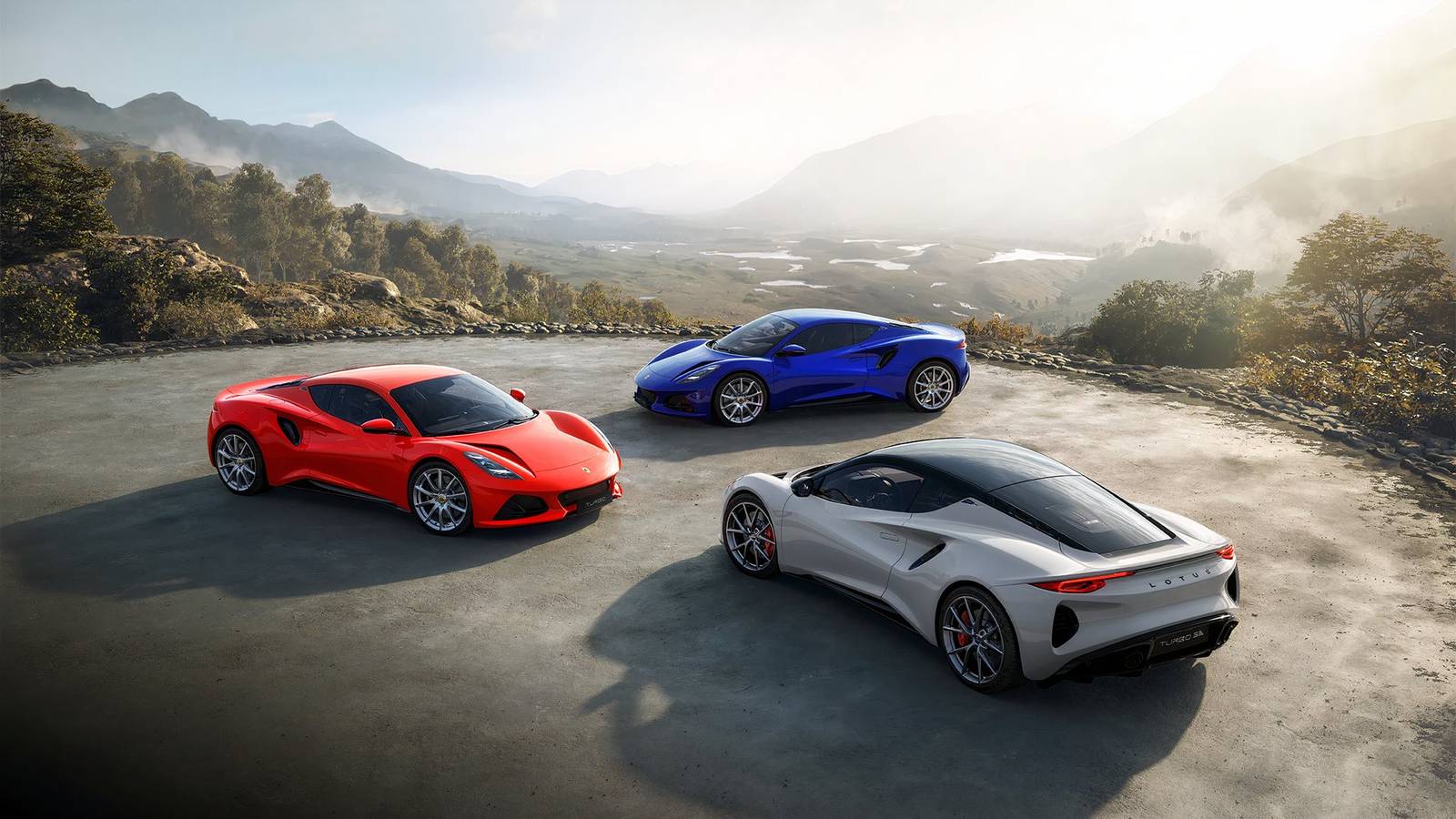
There was a time when the identity of a performance car was inseparable from its engine, the sound, the vibration, the mechanical dialogue between driver and machine. For decades, Lotus built its reputation on precisely that philosophy, crafting lightweight, driver-focused sports cars that prioritized feel over figures. But the automotive world has changed, and even the most purist brands have been forced to evolve.
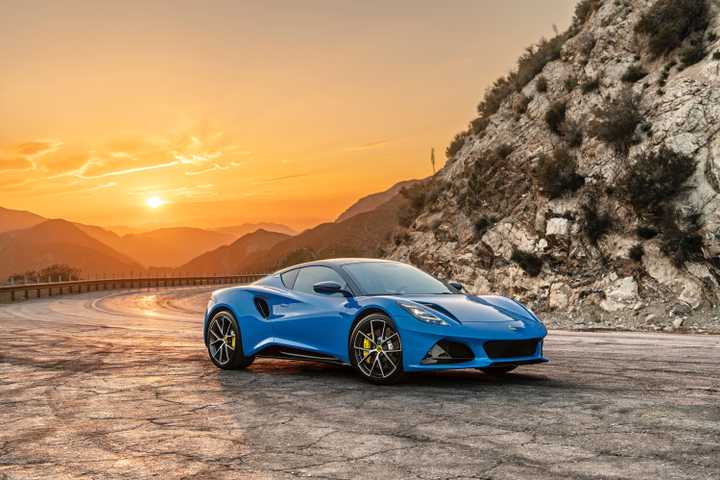

- Base Trim Engine
-
3.5L Supercharged V6 Gas
- Base Trim Transmission
-
6-Speed Manual
- Base Trim Drivetrain
-
Rear-Wheel Drive
- Base Trim Horsepower
-
400 hp
- Base Trim Torque
-
310 lb-ft
- Fuel Economy
-
TBC
- Make
-
Lotus
- Model
-
Emira
- Segment
-
Sports Car
Enter the Lotus Emira, a car that arrives at a fascinating crossroads in automotive history. On the surface, it’s a culmination of everything Lotus has ever done right: mid-engine balance, tactile steering, and a commitment to driving purity. Underneath, however, it represents something far more significant. It’s a farewell. Originally intended to be the brand’s last internal combustion sports car, the Emira symbolizes the closing chapter of a gasoline-powered era, even as Lotus recalibrates its strategy toward electrification.
The End Of An Era
Why The Lotus Emira Marks Its Final Gasoline-Powered Sports Car

The significance of the Lotus Emira goes far beyond its sleek design and impressive performance figures. It represents the end of a lineage that stretches back through icons like the Elise, Exige, and Evora, cars that defined Lotus as a brand obsessed with lightweight engineering and driving purity. When the Emira was unveiled in 2021, Lotus made it clear that this would be its final internal-combustion engine (ICE) sports car. That alone elevated it from being merely a successor to the Evora into something far more symbolic.
Under the hood, the Emira offers two distinct personalities: a supercharged 3.5-liter V6 sourced from Toyota and a turbocharged 2.0-liter four-cylinder from Mercedes-AMG. The V6 produces 400 horsepower and 310 pound-feet of torque, while the turbocharged four-cylinder produces 360 hp and 317 lb-ft of torque. Both engines reflect a pragmatic approach—Lotus no longer develops its own powertrains—but they also highlight the brand’s final embrace of combustion before moving on.

What makes this moment even more poignant is the broader industry context. Emissions regulations, electrification mandates, and shifting consumer expectations have made it increasingly difficult for low-volume sports car manufacturers to justify traditional engines. Lotus didn’t just choose to move on; it had to. That’s why the Emira feels like a farewell tour. It’s the last time Lotus will deliver a car where the engine sits at the heart of the experience, both physically and emotionally.

This British sports coupe outruns a Mustang GT and is the world’s fastest four-cylinder-equipped sports car. More people should be talking about it.
The Brand’s Radical Shift Toward An All-Electric Future

To understand why the Emira matters so much, you have to look at where Lotus is heading. The company that once built featherweight track toys is now undergoing one of the most dramatic transformations in the industry. Backed by Chinese automotive giant Geely, Lotus has repositioned itself as a global performance technology brand. The goal is to compete not just with traditional sports carmakers, but with cutting-edge EV manufacturers. Initially, Lotus planned to go fully electric by the end of the decade. That ambition signaled a complete break from its heritage, a bold step in an industry rapidly moving away from combustion engines.

However, the transition hasn’t been entirely straightforward. Slower-than-expected EV adoption in important markets has forced Lotus to reconsider its timeline, introducing hybrid technology as a bridge between past and future. Still, the direction is clear. The days of petrol-powered Lotus sports cars are numbered, and the Emira exists in that narrow window between what Lotus was and what it is becoming. This shift isn’t just about powertrains; it’s about identity. Lotus is no longer a niche British sports carmaker. It’s evolving into a global EV brand with ambitions far beyond its traditional roots.

We Borrow A Rare, Mid-Engine 2+2 Lotus From Industry Icon Bob Lutz And Take It On The Road
Driving a Lotus Evora to my high-school reunion was a thrill, despite A/C and window issues. Its sleek design turned heads, but few knew what it was.
What Makes The Emira The Last True Driver’s Lotus

What truly sets the 2026 Lotus Emira apart isn’t just its timing; it’s how deeply it embodies everything enthusiasts love about Lotus. At its core, the Emira is built around a mid-engine, rear-wheel-drive layout, a configuration that prioritizes balance and driver engagement. This isn’t a car designed to dominate drag races or headline spec sheets. It’s engineered to communicate the 2026 Lotus Emira to make every corner, every throttle input, and every steering correction feel alive.
Lotus has always been known for its excellent chassis tuning, and the Emira is arguably the most refined expression of that expertise. It offers a level of ride comfort and interior quality that previous Lotus models lacked, without sacrificing the raw, connected feel that defines the brand.

Crucially, it still offers a manual gearbox, a rarity in today’s performance car landscape. That alone cements its status as a “last of its kind” machine. Even the engine choices contribute to this identity. The supercharged V6 delivers a linear, characterful powerband, while the AMG-sourced turbo four adds modern efficiency without completely dulling the experience. In an era increasingly dominated by silent, software-driven performance, the Emira stands out as something refreshingly analogue. It’s not just about speed; it’s about the driving sensation.

The Daily Driver With Japanese Reliability And Porsche-Level Driving Feel
Discover how the Toyota GR86 delivers a Porsche-like drive at an affordable price—blending reliability with everyday thrills.
How Upcoming EVs Like The Lotus Eletre Signal A New Direction

If the Emira represents the past, the Lotus Eletre represents the future. At first glance, the Eletre couldn’t be more different. It’s a fully electric SUV, larger, heavier, and far more technologically complex than anything Lotus has built before. But it’s also the clearest indication of where the brand is heading. The Eletre marks Lotus’ entry into the EV space with a product designed to appeal to a much broader audience. It’s not just about driving enthusiasts anymore; it’s about luxury, technology, and global scalability.

Performance figures are still impressive, with the top variant producing 905 horsepower and delivering supercar-level acceleration. But the way that performance is delivered is fundamentally different. Instant torque replaces rev-hungry engines, and software plays a much larger role in shaping the driving experience. The Eletre also introduces a new design language and technological ecosystem for Lotus, including advanced infotainment systems and cutting-edge driver assistance features.

The Sports Car That Finally Gets The Balance Right
This Japanese sports car finally gets the much-awaited six-speed manual transmission.
Why The Emira Represents The Final Chapter Before Lotus Fully Embraces Electrification

The Lotus Emira exists in a unique moment, a brief overlap between two vastly different philosophies. On one side is the traditional Lotus ethos: lightweight construction, mechanical simplicity, and pure driver engagement. On the other hand is a future defined by electrification, digital interfaces, and global scalability. The Emira is the last car to fully belong to the former. Even as Lotus explores hybrid technology as a transitional step, the direction of travel is clear. Future models will prioritize efficiency, emissions compliance, and technological innovation over the analog driving experience that once defined the brand.

That’s what gives the Emira its emotional weight. It’s not just a great sports car; it’s the closing statement of an entire era. For enthusiasts, it represents something increasingly rare: a car built around the joy of driving rather than the demands of regulation or the expectations of a tech-driven market. And while Lotus’ future may be exciting in its own right, it will never look or feel quite like this again. The Emira is a reminder of what made Lotus special in the first place, and a benchmark against which its electrified future will be measured.
Sources: Lotus U.S.