
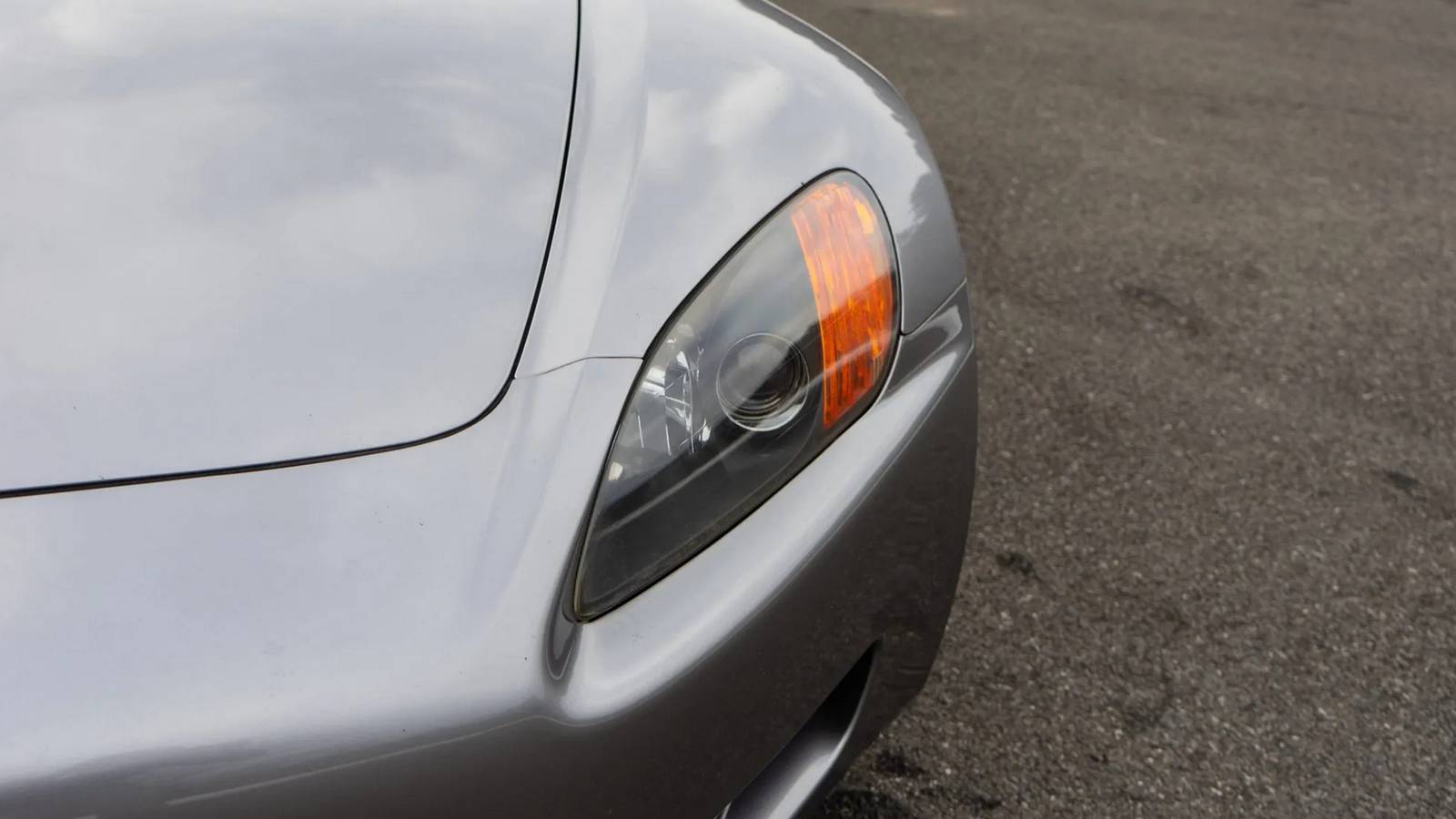
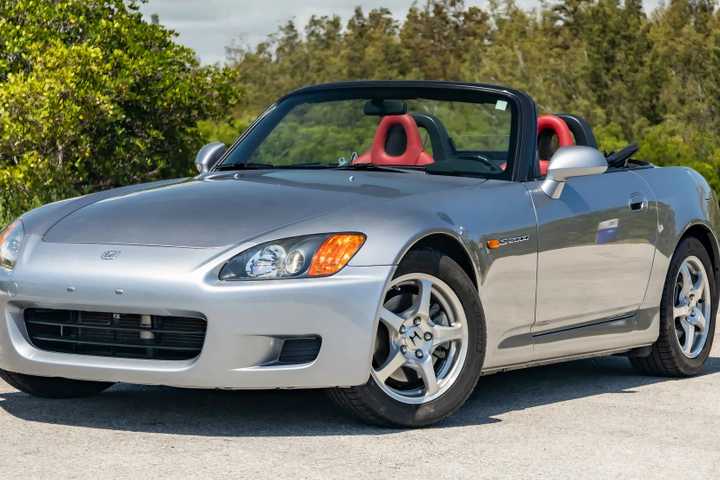
The Honda S2000 is a JDM or Japanese Domestic Market dream machine for a lot of car enthusiasts, and that includes me. The S2000 has all the right ingredients to be a highly desirable sports car, whether back then when it was still in production, or today in 2026, more than 20 years since it first arrived on the American market. Of course, it doesn’t hurt that the S2000 was popularized in video games like Gran Turismo, the Forza series, and, of course, Need for Speed.
Unfortunately, as with a lot of highly desirable cars where demand exceeds supply, the S2000 is rising in value. That’s great news for those who currently own an S2000, but unfortunate for those who wish to own an S2000. Today, we’re going to explore the Honda S2000’s desirability, as well as the psychology behind why iconic 1990s and 2000s JDM icons are highly desirable in 2026.

- Base Trim Engine
-
2L I4
- Base Trim Transmission
-
6-speed manual
- Base Trim Drivetrain
-
Rear-Wheel Drive
- Base Trim Horsepower
-
240 HP @8300 RPM
- Base Trim Torque
-
153 lb.-ft. @ 7500 RPM
- Base Trim Battery Type
-
Lead acid battery
- Make
-
Honda
- Model
-
S2000
- Segment
-
Sports Car

The Honda That Mechanics Secretly Want To Own
Mechanics prefer well-built, low-maintenance cars that last—like this sedan with the legendary K24 engine.
The Psychology Of Why JDM Cars Are Desirable

To understand how JDM cars like the Honda S2000 are now extremely popular today in 2026, we have to take a look at a few events that transpired in the 1990s to the 2000s that brought these cars to the limelight.
Popping Into Culture

In the 1990s, video game consoles became popular, but that popularity reached its peak when the PlayStation 1 was released in 1995. With more graphical power than past consoles, the PlayStation 1 enabled sophisticated 3D graphics and intricate detailing to vehicles that made them eye-catching to children at the time. It is also during this time that Gran Turismo came onto the scene. As a Japanese-developed racing simulator, the game unsurprisingly featured a Japanese-dominated lineup of cars, including sports cars such as, of course, the Honda S2000.
Gran Turismo was well received, and right when Gran Turismo 2 came out in 1999, the world witnessed the birth of The Fast and the Furious. All of these video games and movies formed the automotive pop culture of the 1990s and 2000s, as America was becoming fond of “import culture,” which favored affordable Japanese models that could easily be modified and personalized over American muscle cars at the time. It also helped that Japanese sports cars at the time were pushing the bleeding edge of both performance and technology, such as the Prelude’s rear-wheel steering, the RX-7‘s rotary engine, and the Supra’s legendary 2JZ inline-six.
We’re Just Satisfying Our Inner Child

Chances are, if you’re reading this article, you are an adult who grew up during those years as well. JDM cars are highly desirable, mostly because the people who can now afford them in 2026 are those who aspired to these cars back in the day. This YouTube video from Nous Psychology perfectly explains it. Developmental psychologists determined that the ages between 8 and 14 are a critical window for identity formation. Things that captured great emotion during those times form a person’s identity.
Video games at the time, like Gran Turismo and Need for Speed, were a virtual escape for kids who weren’t yet legal to drive a car. During these times, cars were shown in movies and video games as the main character and not just a form of transportation. It had an emotion through its handling and how it sounds. Now, these kids who grew up during those times are in their late 20s to early 30s, which means that you and I may have the finances to finally satisfy our inner child. As that same YouTube video I just mentioned concludes: “He is not chasing the vehicle. He is trying to finish growing up.”

The Cheapest Fast Cars For 2026
Looking for a thrill on a budget? These 10 cheap cars for 2026 will leave you breathless with their surprising speed and power.
90s Children Grew Up With A Goal

As our generation of children grows up in 2026, we will finally have those goals within our reach. Unfortunately, the S2000 isn’t getting any cheaper, and here are some of the driving forces that have led to its increased desirability.
A Reliable Used Sports Car Purchase

Iconic cars tend to hold their values extremely well because the children who couldn’t afford them when these vehicles appeared in pop culture now finally have them within their financial reach, only for the goalpost to be pushed further with rising prices. Key to this is the S2000’s reliability. An unreliable and hard-to-maintain vehicle isn’t going to be a desirable purchase because no one wants to live with a headache. With the S2000, this vehicle’s motorsports-derived engine is reliable, easy to maintain, and will probably still function even with a third or fourth owner.
You’ll easily find S2000s lasting well over 200,000 miles with proper maintenance. Even if it has problems, don’t fret too much about expensive repairs, as RepairPal reports that annual running costs for the S2000 are at $404 on average, which is low for a high-mileage sports car. Reliability is what seals the deal for the S2000’s desirability. No other car has matched the S2000’s character and performance, yet even if this vehicle makes its way into a third or fourth owner, they will still find joy in knowing that the S2000 isn’t just going to be a childhood dream fulfilled, but one that they can still enjoy in the years to come due to its ease of maintenance and reliability.
Increased Demand Yet Dwindling Examples Over Time

Our friends from CarBuzz were able to determine the S2000’s value through Hargerty versus its key rivals at the time of its birth, which are the BMW Z3 and Porsche Boxster. Compared to the Z3 and first-generation Boxster, it is clear that the S2000 is definitely the more desirable used purchase, especially since during those times, the S2000 was an overachieving sports car—more on that later. A good example easily sells for around $25,000, while mint condition units can easily reach beyond $50,000.
With production ceasing in 2009, and with a total of 110,000 units produced worldwide during its nine-year production life, clean and well-maintained examples are dwindling. Dwindling well-maintained supplies, plus increased nostalgia from fans over the years, have meant that the S2000’s desirability relative to market supply is driving up used prices. The S2000 is a vehicle that won’t be replicated by Honda anytime soon—not even matched by a Mazda MX-5, as those two cars have different goals and characters. Heck, a used S2000 can easily match the price of a brand-new 2026 model year MX-5 Miata.
|
2000 Honda S2000 |
2000 BMW Z3 |
2000 Porsche Boxster |
|
|---|---|---|---|
|
Fair |
$17,400 |
$5,600 |
$6,000 |
|
Good |
$25,800 |
$9,900 |
$12,500 |
|
Excellent |
$43,600 |
$18,400 |
$22,000 |
|
Concours |
$51,300 |
$28,200 |
$31,000 |

Best JDM Cars To Import In 2026 (And How Much They Cost)
If you are craving a forbidden fruit, these select options should be among your top picks.
The Honda S2000’s Ingredients For Greatness

Automotive pop culture helped shape our tastes in these vehicles, but not all Japanese sports car icons experience the same level of desirability. What specific ingredients does the S2000 have that the others don’t?
High-Revving Overachiever

The two-seater roadster, upon its first release, was a more affordable alternative to the likes of the BMW Z3 and Porsche Boxster. At $32,000 in 2000, it was a very high price for a Honda, yet even though it undercut the Z3 by around $6,000 and a full $15,000 for the Boxster, the S2000 was an overachiever. The F20C 2.0-liter VTEC engine revved up to 9,000 RPM, delivering thrilling and linear performance, along with a screaming soundtrack that not even the Z3 or Boxster could match. The engine itself is the VTEC holy grail—the pinnacle of the Honda engine range, and it would never be matched by any other four-cylinder engine ever again.
The engine at the time had the highest specific output of any non-turbo four-cylinder engine in existence. Specific output is measured by how much horsepower an engine produces per liter of displacement. With 247 horsepower out of just a 2.0-liter displacement, its specific output is an impressive 123.5 horsepower per liter, though these are figures from the Japanese market S2000. North America and Europe got a 240-horsepower tune, but that doesn’t diminish its title of having the highest specific output at the time. I did a deep mechanical dive on the S2000’s engine, which is worth a look by clicking here.
Fun To Drive In The Right Ways

Matching that overachieving engine is a handling package that was simply sublime at the time and even in 2026. This was Honda at its engineering peak, because the S2000 had four-wheel double-wishbone independent suspension that enabled this roadster to have unparalleled handling. It kept the S2000 flowing nicely through the corners, one that’s helped by its long hood. No, that wasn’t just for design—even if it looked good on the S2000. What this enabled engineers to do was place the engine behind the front axle, so that the S2000 had great turn-in instead of being nose-heavy, which would result in understeer. This also helped the S2000 achieve a perfect 50/50 weight distribution between the front and rear axles.
Throughout its life, however, the S2000 received tweaks to further improve its performance. The AP1 or the pre-facelift S2000 had a stiffer suspension setup that was prone to oversteer, but the AP2 facelift’s revised suspension improved the S2000 stability. This also came with a bigger 2.2-liter displacement (hence the engine now having the F22C1 engine code), which boosted power output, but the redline was reduced to 8,000 rpm due to the longer engine stroke. The AP2 also saw the birth of the lightweight S2000 Club Racer or CR, which was distinguished by its signature, albeit optional, blue paint, a sportier body kit, a large rear spoiler, and the deletion of the power-folding roof in favor of a removable roof panel. The space reserved for the power-folding roof mechanism was filled with additional chassis bracing and was then fitted with a body-colored cover.