
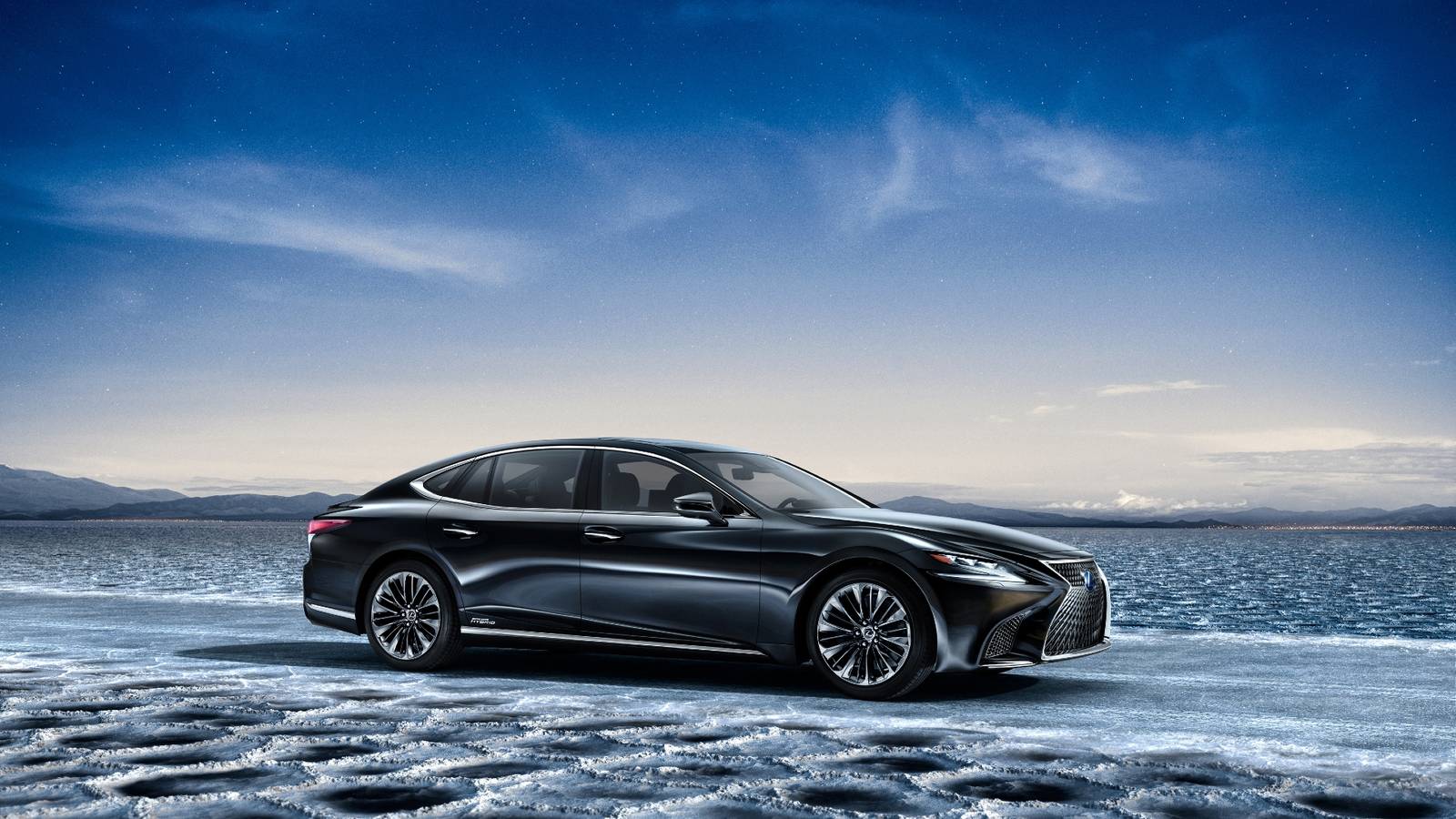
Hybrid technology has never been more relevant in the automotive industry than right now in 2025. For automakers that don’t offer a competitive hybrid powertrain by now, their days are numbered. Now that we know for a fact that the prophesied EV revolution isn’t happening anytime soon, alternative fuel-efficient solutions have been ushered to the forefront.
In the luxury market specifically, consumer expectations have also never been higher, as the price of new vehicles soars to absurd heights. The more it costs, the more we expect it to offer. As a result, competitive luxury brands have to provide their consumers with more value than ever before, and no technology available can achieve this goal more effectively than a capable hybrid system. Let’s explore the reasons why hybrid technology will be the saving grace of luxury vehicles moving forward.
Hybrid Tech Solves (Almost) Everything

Before the arrival of luxury hybrids, no luxury automaker ever had a real focus on pure fuel efficiency. The thought process was that if you are buying a luxury car, then spending extra at the pump for premium fuel shouldn’t be an issue either. Yet, the true benefit of hybrid systems is that they can make a luxury car experience more powerful, more fuel-efficient, and most importantly, more refined.
The Effect Of Engine Downsizing

With ever-increasing fuel economy standards, hybrid powertrains solve almost every issue within the luxury car market. Along with the implementation of hybrid vehicles, engine downsizing and turbocharging have also been utilized in combination to achieve the expected benchmarks of modern efficiency levels. Yet, out of these three solutions, hybrid technology suits the needs of luxury car owners the most.

Luxury car owners care more about the refinement and quality of the driving experience, and the practice of engine downsizing is a common point of dissatisfaction. Indeed, a buttery-smooth naturally aspirated V-8 engine provides a certain character and presence that no V-6 could ever replicate. However, if you add a hybrid system to a V-8 engine, it loses none of its character or capability for the sake of fuel economy. Instead, now you have an even more powerful and more fuel-efficient V-8 engine, a win-win situation.
Turbocharging And Meeting Emissions Standards

The other alternative solution to meeting economy standards is turbocharging, which hasn’t had nearly as much disapproval in the luxury market because of the clear advantages of turbocharging aside from fuel economy. Swapping a naturally aspirated V-8 for a naturally aspirated V-6 feels like a serious downgrade. Yet, add twin-turbos to that V-6, and you are likely to have an engine that is both more powerful and efficient than its larger naturally aspirated counterpart. As a method of adding power, turbocharging is more effective than hybrid technology. However, there is no reason that these two solutions need to be mutually exclusive.

If anything, modern luxury car powertrains often employ engine downsizing, turbocharging, and hybrid systems to meet current efficiency standards. Yet, just because you employ these solutions, that alone does not guarantee success within the luxury market. A perfect example is the Mercedes-AMG C 63 S E Performance, a 671-horsepower technological marvel employing downsizing, turbocharging, and hybrid technology. Despite this AMG sedan’s incredible capability, it has been a sales flop because it lacks the distinctive sound of the brand’s iconic V-8 engines found in past generations.

These Are The First 10 Production Cars In History With Factory Turbochargers
We may love a good turbo today, but they had to start somewhere – here are the first 10 production cars to boast a turbocharged engine under the hood.
We Are Still In A Transitional Period

While the idea of everyone driving a fully autonomous EV by 2030 sounded great on paper, in reality, it was never that simple. Throughout the past couple of decades, regulators have misunderstood and underestimated the sheer scale of infrastructure required to bring electric vehicles to full-fledged adoption. The biggest oversight was the fact that, to make an EV convenient to own, you essentially have to own a home as a prerequisite. The reality is that no matter how “cost-effective”, EVs alienate a large part of the consumer market because of this fact alone.
How Homeownership Affects The EV Market

In 2025, the American public faces a multi-decade low for housing affordability conditions, according to the U.S. Census Bureau‘s Q3 2025 data. No group has suffered more in this regard than adults under the age of 35, of whom only 37.4 percent own a home. The even more morbid news is that the current trend indicates that this decline will only worsen in the coming years. That is not a good sign for the current prophesied timeline of the EV revolution. Why? The facts are simple. If you can’t afford a house, the extreme luxury of an electric vehicle is impractical at best.

As the majority of working-age Americans cannot afford to buy a home, EV ownership is an alienating concept to the majority of the American public. Even if they wanted an EV, the logistics of ownership simply make that nearly impossible. If you are a renter and at least have the privilege of an enclosed garage, you may still be able to get away with owning an EV. However, calling it convenient would be a flat-out lie. Unless your rental happens to have a pre-installed 240V-powered Level 2 charger, you can expect only about five miles of range added per hour utilizing Level 1 charging. That may be fine if you don’t drive your car regularly. But if you actually commute daily, that type of output simply isn’t going to cut it.
Hybrids Appeal To All Consumer Age Groups

Hybrids, as opposed to EVs, appeal in large parts to all age groups because they provide greater accessibility and affordability overall. No home? No charger? No problem. And since consumers under the age of 35 realize that their dream of owning a home is less likely now than ever, they often look for the next best thing: a luxury car. However, if you want a luxury car that will provide you with the best value you can get, it is almost certainly going to be a luxury hybrid.

This is why luxury automakers have softened their stance on EVs and embraced hybrid models now more than ever before. The fact remains that EV infrastructure is nowhere near the level it needs to be for it to be convenient for the average person, and consumers value the luxury of predictability. Range anxiety is still very much alive and well as a result, and until that changes, hybrids will continue to be the dominant force in the luxury market. For example, the 2026 Lexus NX Hybrid offers up to 240 horsepower and 40 MPG combined as a compact SUV, an efficiency and output standard that is shockingly impressive for a vehicle of its size. The leading hybrid vehicles available have never been better, and consumers in the luxury segment are now reaping the benefits.

Why This 3-Year-Old Hybrid Beats Most Brand-New Cars in Reliability
This 3-year-old hybrid surpasses new cars with its unmatched reliability, setting a high standard in durability and performance.
Luxury Hybrids Have Only Gotten Better

Modern luxury hybrid vehicles provide some of the highest value for consumers of any vehicle on the road, and the sales figures across the luxury segment speak for themselves. The Lexus RX and the Lexus NX are the two best-selling luxury vehicles on the market this year, and their hybrid variants are the most popular option. Although the majority of modern luxury car shoppers do still care about performance, they are willing to sacrifice some of that capability and refinement for the sake of fuel efficiency. As a result, the appeal of luxury hybrids has never been greater, as their efficiency capabilities nowadays are truly impressive compared to what we first started with.

The first-ever luxury hybrid was the 2006 Lexus RX 400h. Back then, the 2006 Lexus RX 400h made 268 horsepower and achieved 25 mpg Combined; the 2026 Lexus RX 350h makes 246 horsepower and achieves 36 mpg Combined—11 mpg better despite smaller displacement and fewer cylinders. That may not seem like a lot, but in this industry, every single digit of MPG counts. This level of both performance and fuel efficiency is something that the majority of luxury automakers are still trying to figure out. Lexus, conversely, has been constantly working out the remaining kinks left in its class-leading technology for the past 20 years without stopping. So next time you wonder why there are so many Lexus hybrids in your area, you now know why!
Sources: Lexus, Mercedes-Benz, U.S. Census Bureau