
Like fashion, motorcycles often chase the latest trends, be it razor-sharp aerodynamics, touchscreen dashboards, or even rider aids stacked to the high heavens. Manufacturers keep pushing boundaries, and riders, willingly or not, keep getting swept up in this current. But among purists and even some enthusiasts, there is a belief that bikes and motorcycling don’t need to be defined by trends to remain relevant.
It wasn’t always about Bluetooth connectivity or cruise control. At its core, motorcycling has always been about the freedom it offers. But this freedom came with the rush that you could disconnect from the world and just focus on what’s ahead. And let’s be honest, a lack of focus on a motorcycle could mean a lowside drop or even a high-speed crash.
Now, these machines do still exist, and if you’re finding it hard to find one like that, it’s because they don’t always call out for attention, and they aren’t marketed as much as their techy siblings. But they’ve been around for eons, and one such naked bike is what we will talk about today, kept alive simply because it is a fan favorite without all the digital drama and cyber-safety.
The Rise Of Tech-Heavy Motorcycles

Modern motorcycles are starting to resemble rolling laboratories more and more. Ride-by-wire throttle, lean-sensitive traction control, and cornering ABS, multiple riding modes, all designed to smooth out a rider’s inputs. These riding aids can be described as invisible guardians. They step in before mistakes become fatal. Traction control trims power, ABS prevents lockups, and riding modes will tailor the bike’s response to specific conditions. The result is a bike that’s faster, safer, and definitely more capable than ever.

But there is a subtle trade-off. The raw involvement of the rider, the tiny imperfections that teach you finesse, all seem diluted in these conditions. When the bike is correcting your mistakes constantly, your skills develop differently. You learn not through instinct but through reliance, and this can be reassuring for new riders, but for older, more experienced guys, the experience can feel incomplete.
The Case For Simplicity

Simplicity in motorcycles is often misunderstood. It’s not about lacking features, but about prioritizing the essentials. And what’s essential to a biker? A well-tuned engine, predictable handling, and a chassis that communicates clearly. That long list of electronics that your manufacturer said is a must-have? Not needed. There are a few in the middle-weight segment that follow this pattern, like the Yamaha MT-07 and even the Kawasaki Ninja 650, but they, too, are starting to feel like they’re edited into the modern story.

The Bike Riders Choose When They Want One Motorcycle For Everything
This Japanese motorcycle is versatile enough to serve as a commuter, tourer, and light adventure bike for just over $10,000.
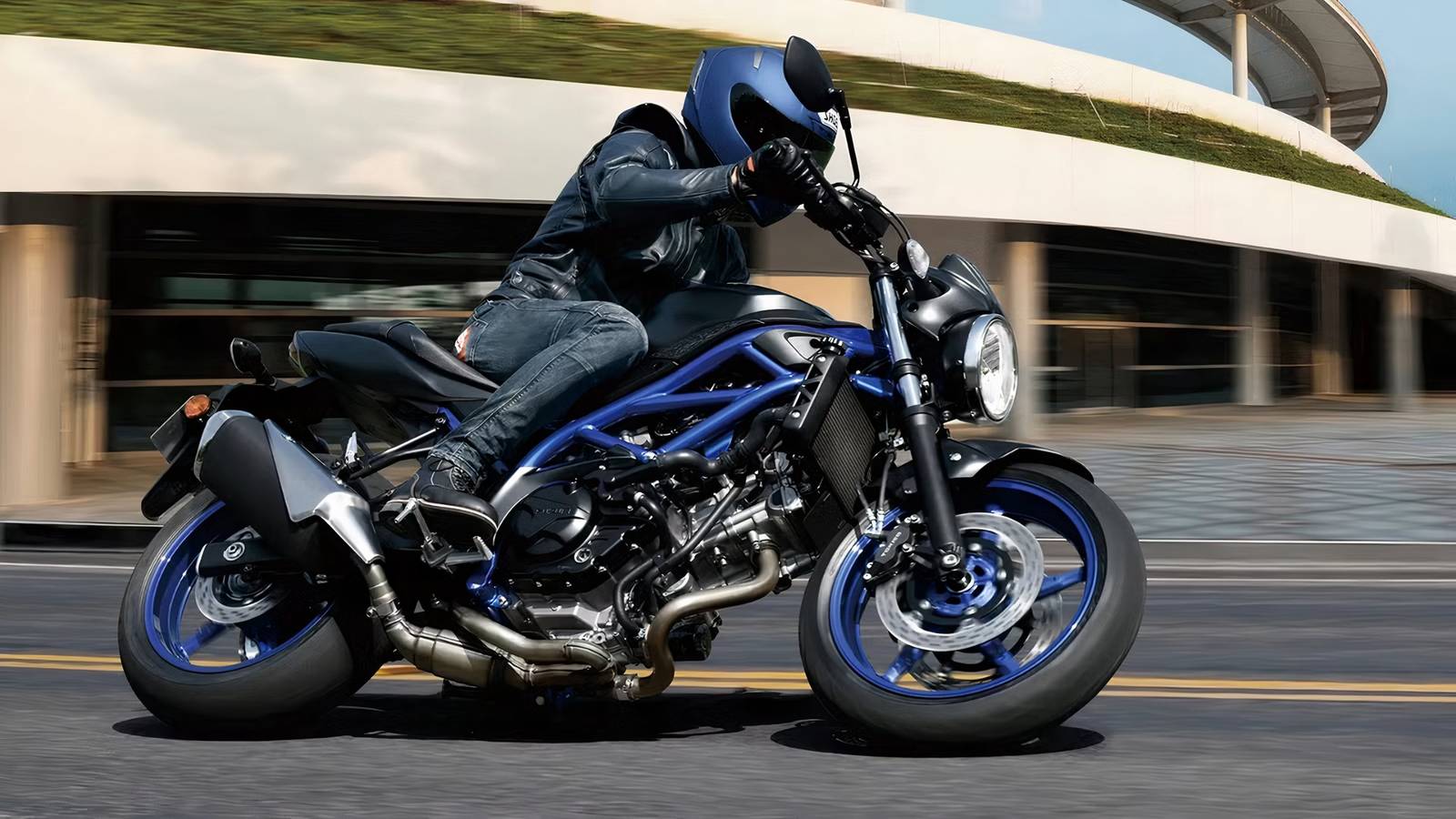
And Then We Have The Suzuki SV650
A Little Bit Of History To Fatten The Story

Since its debut, the Suzuki SV650 has built a legacy only a few other motorcycles can match. It became a favorite among beginners, commuters, and even track enthusiasts because of its versatility. Over the years, it didn’t evolve like the rest, but just engine refinement and updated styling, and just enough modern features to keep it relevant. The Suzuki SV650 quickly became a cult icon, pulling in upgraders, beginners, and even purists to feel what they think they’ve lost with modern motorcycles: pure, unadulterated motorcycling.
The Engine Promises Growth

The Suzuki SV650 is powered by a 645cc V-twin engine that produces 73 horsepower and 47.2 pound-feet of torque. Now, these aren’t headline numbers, but they provide performance that feels accessible. Torque is spread wide across the rev band, so a small twist is all you need to pass the slowpokes on the street. Again, there is no traction control, so that small twist has to be deliberate. Transmission, too, is simple enough with a close-ratio six-speed gearbox. There are no quickshifters and no slip-and-assist clutch to ease you into biking. Learn by doing.
Suzuki SV650 Engine Specifications
|
Engine |
645cc, Liquid-cooled, V-twin |
|
Power |
73 HP |
|
Torque |
47.2 LB-FT |
|
Bore x Stroke |
81 x 62.6 mm |
|
Compression Ratio |
11.2:1 |
|
Transmission |
6-speed manual, chain drive |
You do have Suzuki’s low-RPM assist, which adds a layer of practicality, though it barely does much. Low-RPM assist slightly raises the engine speed during cold starts and during take-off to avoid stalling in stop-and-go traffic.
Simple Chassis Showcase

As Ducati does with the Monster, the SV650’s chassis is part of its design. Wrapping around the sides of the bike, this lightweight steel trellis frame is designed to keep things simple and effective. Forks may be a little disappointing to some because all you get is a conventional telescopic front setup with no adjustability and a preload-only single rear monoshock.
Suzuki SV650 Chassis Specifications
|
Chassis |
Steel Trellis Frame |
|
Suspension |
Telescopic Front fork | preload-adjustable rear monoshock |
|
Brakes |
Dual 290mm front discs with four-piston calipers | 240 mm single rear disc with single-piston calipers |
|
Tires |
120/70 ZR17 | 160/60 ZR17 |
|
Dimensions (L x W x H) |
84.3 x 29.9 x 42.9 inches |
|
Wheelbase |
56.9 inches |
|
Seat Height |
30.9 inches |
|
Curb Weight |
437 LBs |
Braking duties are handled by twin 290mm discs at the front, bitten down on by four-piston calipers, and a 240mm rear disc gripped by a single piston caliper.

10 Affordable Motorcycles For New Riders
A fun little dual-sport from Honda is the most affordable motorcycle for a new rider.
The SV650 Is Practically An Everyday Motorcycle
Minimal Technology For Minimum Stress

The Suzuki SV650 is a low-cost bike, and you will see that in the pricing. It comes with the most barebones features list you could see on the market today. There’s no ride-by-wire, no throttle control, no Bluetooth connectivity. ABS is the only safety feature you get, so you don’t slide out unnecessarily. You still get LCD instrumentation, however, that displays quite a bit of information, including gear position, coolant temperature, trip meters, fuel level, and even distance to empty, aside from speed and revs.
A Low-Tech Bike Is Also Easier To Maintain

One of the biggest reasons for the SV650’s popularity is its reliability. The SV650 has been refined over the past two decades to become a robust platform. Lower the use of electronics in the bike, and maintenance becomes fairly straightforward. Fuel consumption, as well, typically remains in the 45–60 mile-per-gallon range, allowing for reasonable running costs.
The Suzuki SV650 Is A Riding Instructor

Beyond the specifications and features lies something intangible. The SV650 has character. The V-twin delivers a rhythm that feels alive. It’s not overwhelming, but it doesn’t change with the rider either. Without the electronics constantly forcing the rider to ignore their mistakes, the SV650 teaches them finesse and precision. ABS keeps them from sliding, but no slip-and-assist teaches them rev-matching. 73 horses give the rider power, but no traction control teaches them how to roll on. Cable throttle teaches them how to adjust their pace in different riding conditions.

10 Japanese Motorcycles That Last Forever
These ten Japanese have the simplest maintenance plan: don’t require one
The Suzuki SV650 Is Priced Wonderfully, Too

Priced at $7,399 MSRP for the non-ABS model, what makes the Suzuki SV650 great is not that it chased trends, not that it wanted to be the fastest or the most technologically advanced, but that it focused on a kind of riding you won’t find anymore. It’s the kind of motorcycling we grew up with, where mistakes could be punished, and focus was rewarded.
Sources: Suzuki