
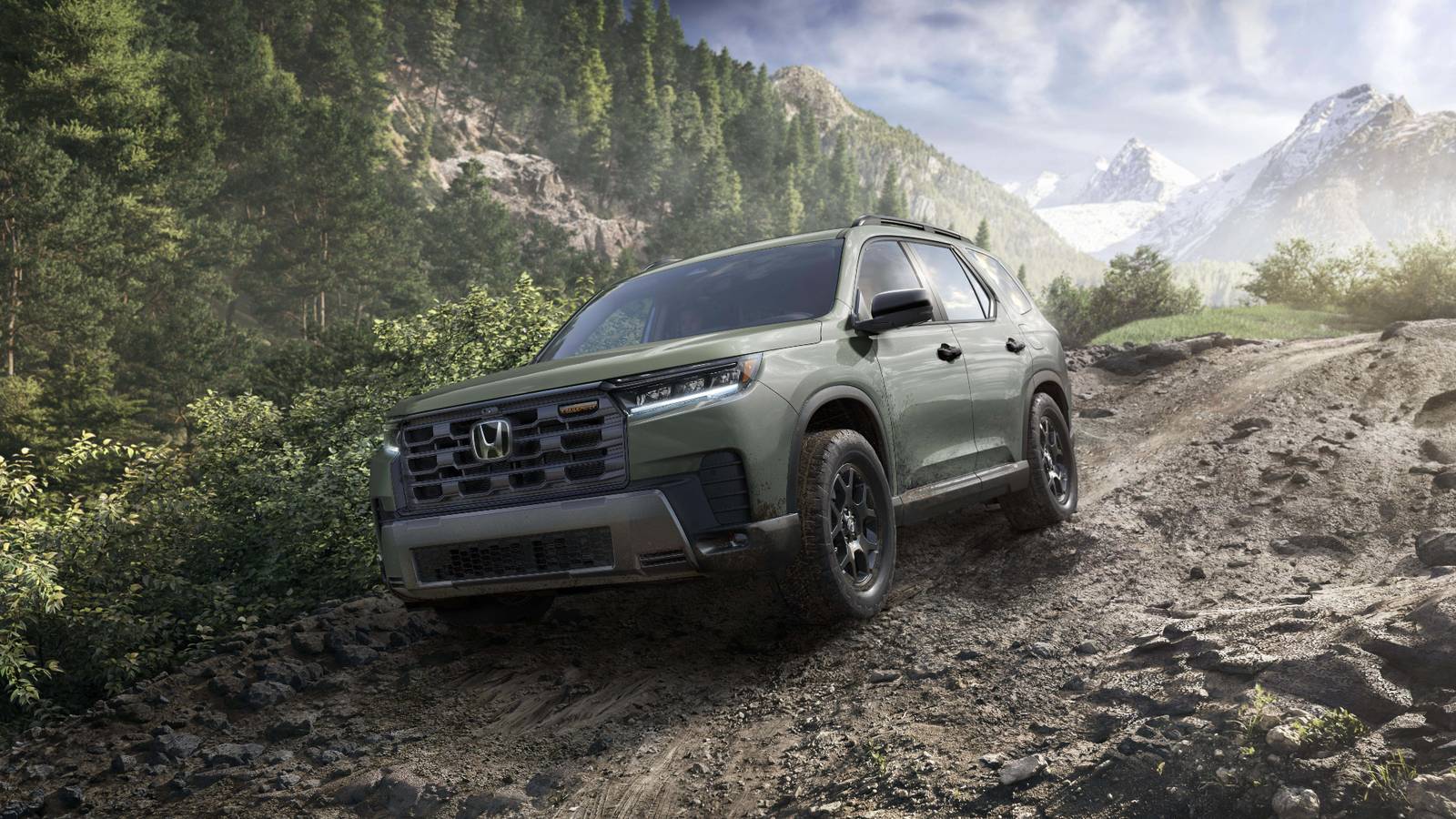
Since its introduction in 2003, the Honda Pilot has maintained its strong reputation as a cornerstone of the American suburban family car landscape. Thanks to the Japanese brand’s dependable reputation, its flagship model consistently ranks among the most trusted three-row SUVs on the market. This enduring popularity is the result of the brand’s clever marketing, bolstered by a solid foundation of reliability.
It also benefits from a spacious, family-friendly interior, which its designers have thoughtfully engineered to adapt to the chaos of daily life. Most prospective buyers spend their time obsessing over spec sheets and curated professional reviews, often missing the nuanced realities of daily operation. While the numbers look great on paper, there are several quirks and characteristics about the Honda Pilot that owners typically only discover after living with the vehicle for a few months.
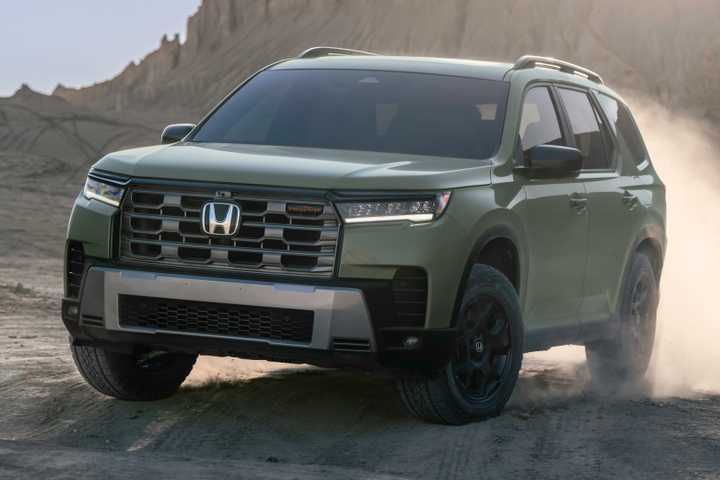

- Base Trim Engine
-
3.5-liter V6
- Base Trim Transmission
-
10-speed automatic
- Base Trim Drivetrain
-
Front-Wheel Drive
- Base Trim Horsepower
-
285 hp
- Base Trim Torque
-
262 b-ft
- Make
-
Honda
- Model
-
Pilot
- Segment
-
Midsize SUV
The Honda Pilot Is Bigger Than Many Buyers Expect

If you’re stepping out of a compact SUV like the Honda CR-V, the current-generation Honda Pilot for sale might give you a bit of size shock. Honda has leaned heavily into a more rugged and squared-off aesthetic to emphasize its larger appearance. If you live in a dense urban area or have a standard single-car garage, you might find the Honda Pilot to be more challenging to maneuver. Traversing tight parallel parking spots or narrow structures will require more careful movements and a sharper eye. You’ll also need to rely on the SUV’s standard camera systems.

The 2026 Honda Pilot measures 200.1 inches in total length, though the off-road-oriented TrailSport trim is slightly longer at 200.4 inches. Its width stands at 78.5 inches, while its height ranges from 70.9 to 71.0 inches for most models, peaking at 72.0 inches on the TrailSport due to its lifted suspension. Across all trim levels, the vehicle maintains a consistent wheelbase of 113.8 inches, which supports its three-row interior configuration. Its larger proportions also mean that you get the benefit of more legroom, better access to the third row, and more cargo space.
Fuel Economy Isn’t the Pilot’s Strongest Selling Point

The Honda Pilot excels as a versatile family hauler, but this does come at the cost of fuel economy. Honda prioritizes power, interior volume, and rugged capability, which means its efficiency figures often trail behind more eco-conscious rivals. According to the EPA, the base trim front-wheel drive model returns 20/27/22 MPG on the city/highway/combined cycle. The all-wheel drive model lowers this to 19/25/21 MPG. Expect real-world results to be a bit worse than this.

In a broader market context, the Pilot faces stiff competition from the Toyota Highlander Hybrid and smaller turbocharged rivals that offer superior fuel savings. Many families opt for the Pilot regardless, as they are drawn to the reliability of its naturally aspirated V-6 engine. They appreciate its smooth highway refinement and impressive towing capacities that smaller engines struggle to match.
The V-6 Engine Is One of the Pilot’s Best Features

The naturally aspirated 3.5-liter V-6 engine remains a standout advantage for the Honda Pilot, offering the SUV a level of refinement that outclasses its downsized rivals. Many modern competitors have pivoted toward smaller turbocharged four-cylinder engines. Honda has taken this approach with its smaller crossovers and SUVs, but retains a commitment to six-cylinder powertrains in its larger models for the sake of maintaining good acceleration and highway passing power.

The Pilot’s V-6 produces 285 horsepower and 262 pound-feet of torque. The unit sends power to the wheels via a 10-speed automatic transmission featuring shift-by-wire and paddle shifters. The Pilot achieves a 0 to 60 MPH acceleration time of 7.8 seconds with a limited 112 MPH top speed. Front-wheel drive models tow up to 3,500 pounds, while all-wheel drive models can haul up to 5,000 pounds.

2026 Honda Pilot First Drive: The Family Hauler Gets Even Better
The Pilot has long been a favorite for families and this year’s improvements make it even more appealing.
Interior Space Is Where the Pilot Truly Shines

The Honda Pilot truly shines when it comes to interior practicality, which remains one of the primary reasons for its enduring popularity among families. Honda’s cabin accommodates up to eight passengers, and the third row is usable by adults for shorter trips, which is a rarity in this segment. This versatility makes the Pilot an ideal choice for large families, daily carpools, and weekend road trips where passenger comfort is a top priority.

The 2026 Honda Pilot offers a passenger volume of 158.4 cubic feet. For headroom, occupants are afforded 40.5 inches in the front, 40.2 inches in the second row, and 39.3 inches in the third, while legroom measures a class-competitive 41.0 inches up front, 40.8 inches in the middle, and an adult-viable 32.5 inches in the rear.
The interior is tastefully adorned in high-quality materials that look and feel upscale. It’s not fancy, but it is welcoming and attractive, which is what you want in a car that’s designed for families. – TopSpeed
Cargo capacity measures 18.6 cubic feet behind the third row, which you can extend to 22.4 cubic feet via the hidden floor well. This increases to 48.5 cubic feet with the third row folded, and reaches 113.7 cubic feet when both the second and third rows are stowed flat.
Some Technology Features Take Time to Learn

The Honda Pilot features a 12.3-inch touchscreen and a 10.2-inch digital instrument cluster configuration, boasting a host of customization options that can be overwhelming at first. Owners have reported that navigating through the various infotainment menus, adjusting the sensitivity of the Honda Sensing driver-assist systems, and fine-tuning vehicle settings require some getting used to, but the learning curve is small.

To get the most out of the vehicle, you should spend time exploring the touchscreen controls and smartphone connectivity features, especially the Google Built-In that runs apps natively. Familiarizing yourself with the driver-assist options, such as the lane-keeping and adaptive cruise control settings, is also highly recommended to ensure the alerts align with your driving style.
Ownership Costs Are Often Lower Than Expected

With the 2026 Honda Pilot’s pricing starting at $42,195 for the base Sport trim, its premium over key rivals is a significant factor to consider when looking at long-term ownership costs. Thankfully, the brand’s dependability and build quality reduce overall costs the longer you keep it. Edmunds indicates that you’ll be spending $64,600 to own the base front-wheel drive Sport model over five years, with some costs including $6,374 on maintenance, $773 on repairs, and $16,692 on fuel. Pilot owners typically keep them for seven to 10 years.

CarEdge backs this with a $56,202 ownership cost estimate over the same period, including $2,548 on maintenance and $11,000 on fuel. One area where the Pilot doesn’t perform too well is in value retention. Edmunds highlights that you can expect to lose $20,902 of the Sport’s initial purchase price over five years, which CarEdge backs with a $24,006 average estimate across all trims. iSeeCars is a bit more generous with an $18,605 depreciation estimate, but this still comes in at a 44.1 percent value loss. This is admittedly a bit better than the segment’s 46.3 percent average.

2026 Honda Pilot Interior And Exterior Picture Gallery
The 2026 Honda Pilot arrives with a bolder styling, a more premium cabin, upgraded technology, enhanced capability, and improved driving dynamics.
The Pilot Prioritizes Comfort Over Sportiness

The Honda Pilot is designed primarily as a refined family SUV rather than a high-performance vehicle, prioritizing a composed and predictable driving experience. The midsize SUV sits on a front MacPherson-strut suspension paired with an independent multi-link rear setup. Honda tunes this combination to deliver a composed and isolated ride. It accentuates this via dampers and bushings that favor compliance, allowing the chassis to soak up road imperfections and maintain stability during long highway hauls.
The cabin complements the ride across all trims. The interior benefits from a 10-way power-adjustable driver’s seat and a four-way power passenger seat that comes standard across the lineup. The entry-level Sport model features black cloth upholstery, while the EX-L, Touring, and TrailSport move to leather-trimmed surfaces. The TrailSport adopts durable synthetic leather with orange contrast stitching and an optional new brown leather choice.
Premium Elite and Black Edition trims elevate the cabin further with perforated leather, diamond-quilted Ultrasuede accents, and ventilated front seats. The Sport and EX-L feature a second-row bench, but the TrailSport comes standard with captain’s chairs for a seven-passenger layout. The Touring, Elite, and Black Edition trims introduce a magic stowable center seat. You can remove the middle seat to create a path to the third row and store it in a dedicated under-floor compartment.
Many Owners End Up Keeping Their Pilot for Years

One detail that many buyers rarely hear before their purchase is just how long the average Honda Pilot stays with its original family. While many modern SUVs are traded every few years, it is a common real-world pattern to see Pilots remaining in service for well over a decade. The vehicle’s consistent performance can be credited to its spacious interior and Honda’s established reputation for long-term reliability.

Additionally, the Pilot’s strong resale value makes it a smart financial anchor, as it retains a higher percentage of its value than most competitors. iSeeCars suggests that the average lifespan for a Pilot is 11.3 years or 168,390 miles with a 30 percent probability of reaching 200,000 miles. The 2025 Honda Pilot holds an 83/100 consumer-verified overall score, including 81/100 for quality and reliability, 82/100 for the driving experience, 87/100 for resale, and 83/100 for the dealership experience.
Honda’s Well-Rounded Long-Term Family SUV

The Honda Pilot continues to be one of the most trusted three-row family SUVs on the market. While there are certain nuances that buyers may not fully appreciate until after the purchase, the Japanese brand’s premier midsize SUV has proven to consistently deliver in key areas. The 2026 model year is designed for the realities of modern family life, balancing sophisticated mechanical engineering with a cabin that prioritizes passenger well-being above all else.

According to the Edmunds consumer review section, the Pilot provides a smooth and powerful engine, which is an increasingly rare feature that offers a level of refinement many turbocharged competitors can’t match. When combined with its interior, composed ride quality, and legendary long-term reliability, the Pilot emerges as a remarkably well-rounded package. For families seeking a dependable SUV defined by everyday practicality, these real-world insights provide the clarity needed to make a confident buying decision.
Sources: J.D. Power, Edmunds, iSeeCars, and the EPA