
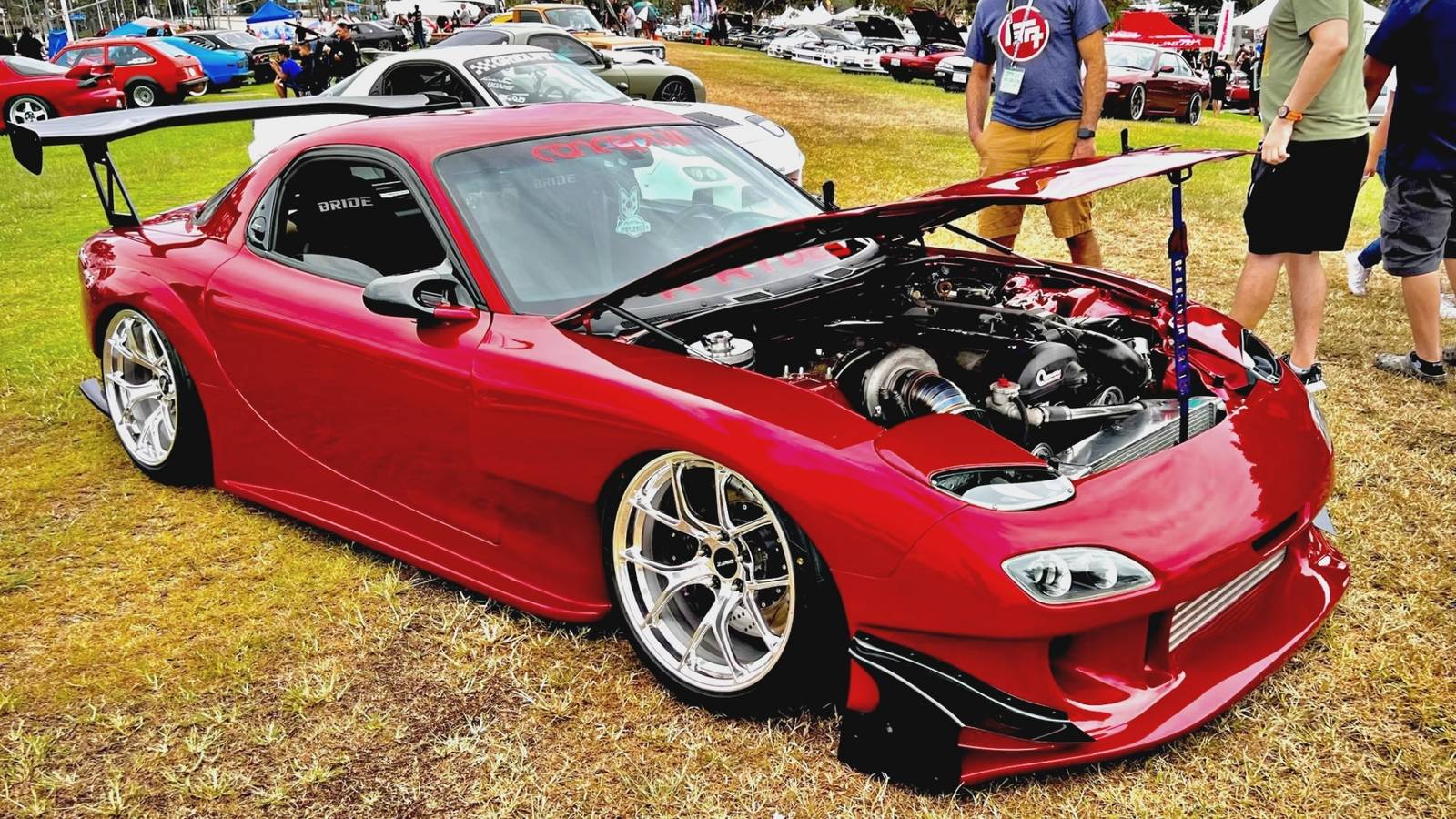
There is a saying that we all want what we can’t have. This statement perfectly describes the U.S.-based obsession with JDM (Japanese Domestic Market) vehicles. Through constant exposure to anime, movies, and pop culture, our long-standing enamorment with JDM culture has become more mainstream than ever.
Since the late 1960s, Japanese vehicles have been embraced by the U.S. market because of their competitive pricing, build quality, and general versatility. In 2026, U.S.-based Japanese vehicle sales continue to be dominant. Yet, the fact that there is a whole segment of Japanese vehicles we never truly got to experience leaves a deep curiosity in the minds of those who want more. Let’s explain why JDM vehicles are so special in the U.S. and why the appeal for these rare beauties is only growing.
JDM Cars Got All The Cool Engines We Didn’t

Two of the most legendary tuner engines of all time, Toyota’s 1JZ-GTE inline-six and Nissan’s RB26DETT inline-six, were never available in any U.S. market vehicles. Back in the day, we would gawk at the amazing performance and sound of these engines from afar, dreaming they would one day find their way stateside. Luckily, in 2026, this is possible now because JDM vehicles over 25 years old can be legally imported.
The Legend Known As The Nissan RB26DETT

Even rarer and more revered than Toyota’s 1JZ-GTE is the Nissan RB26DETT engine, found exclusively in the R32 to R34 generations of the Nissan Skyline GT-R. While we at least got a taste of the JZ family inline-six thanks to the USDM Toyota Supra, the legendary line of RB family inline-sixes never found their way to the United States in any fashion. At its debut, the RB26DETT was Nissan’s most powerful engine available. This 2.6-liter twin-turbocharged inline-six has become the stuff of legends over the last couple of decades, as it has proved itself one of the most capable tuning platforms ever produced.

Although the original 1989 horsepower figures were advertised at 276 horsepower, the true horsepower output of the RB26DETT was in excess of 320 horsepower. At the time, this inline-six engine was a showcase of performance engine design with architectural foundations in Group A racing. This 2.6-liter turbocharged inline-six was built to match the capability of naturally aspirated engines in the 4.5-liter class. The 24-valve DOHC design, six individual throttle bodies, and parallel twin-turbocharging were features seldom found even on the most expensive performance cars of this era. In race trim, the Group A version of the RB26DETT produced up to 650 horsepower. The combination of this glorious engine and Nissan’s ATTESA E-TS AWD system is what first earned the R32 generation of the Nissan Skyline GT-R the heroic title of Godzilla.
The Beauty That Is The Toyota JZ Engine

Toyota’s 1JZ-GTE was developed directly in response to the success of Nissan’s RB26DETT. The 1JZ-GTE is a twin-turbocharged 2.5-liter inline-six engine produced from approximately 1990 to 2007, primarily used by Toyota’s X chassis cars (some later variants offered a single-turbo configuration). X chassis cars include models like the Toyota Chaser and the Toyota Mark II, and the engine was also available in other models, such as the Toyota Soarer and Toyota Crown Athlete V.

Compared to its extremely rare, yet domestically available 2JZ-GTE successor found exclusively in the MKIV Toyota Supra, the 1JZ-GTE offers significantly more availability and affordability. The 2JZ-GTE, while less common outside Japan, is readily available within Japan. It can be found in the JZA80 Toyota Supra and the first and second generations of the Toyota Aristo luxury sedan, known as the Lexus GS in North America.

At the time of its debut, the 1JZ-GTE was Toyota’s flagship engine and was the brand’s most powerful engine available. Despite being older and offering a smaller displacement than the 2JZ-GTE, the 1JZ-GTE offered the same horsepower output of 276 horsepower, which was also artificially limited by Japan’s Gentlemen’s Agreement. It was later proven that the true horsepower output of the turbocharged JZ family engines was closer to 320 horsepower without any modifications. This made them desirable performance platforms back then, as about 300 horsepower meant you had one of the fastest cars available at the time. Nowadays, these engines are just as revered for their tunability and power potential and are highly sought after by JDM enthusiasts, racers, and tuners alike.

10 Classic Performance Cars That Are Still Surprisingly Cheap
These ten classic sports cars are decently priced.
JDM Cars Still Provide Great Value In Today’s Inflated Market

Nowadays, new cars, especially performance cars, feel less fun than their predecessors, but cost more money than ever before. Does that get you excited about diving headfirst into the car market with reckless abandon? Not to us. Sadly, even the idea of buying a new budget sports car feels less and less viable, as modern sports cars don’t tickle the itch the way older vehicles do. It is clear now that vehicles from the 1990s and early 2000s are what you’d call peak JDM, and it is unlikely we will ever have an automotive era quite as special ever again. Yet, if you can find the right JDM car from this era, you can rest assured knowing you are experiencing the cream of the crop in terms of overall quality and value.
Nothing Can Beat A Golden Era JDM Vehicle

If we had had the exact same selection of vehicles available in the JDM market here in the U.S. back in the 1990s, maybe the entire automotive landscape would look different. Back in the 1990s, Japanese automakers were at the absolute height of their powers, considering how many quality performance vehicles were available across so many automakers. Specifically, brands like Mitsubishi and Subaru offered some of the greatest performance cars of the 1990s, like the Mitsubishi Lancer Evolution V and the Subaru Impreza 22B STi. In comparison, these two brands’ current performance catalogs are devoid of any life and can’t even claim to be a shell of their former selves.

Let’s provide a specific example of why modern cars aren’t worth it and why opting for a JDM classic is the cultured path. A 2025 Subaru WRX tS will run you about $47,705 before taxes, and it feels like an appliance despite its clear capability. For $33,000, you can buy a 1999 Subaru WRX R STi Ver.5 Limited, a rare and limited edition rally legend that is one of the best driver’s cars ever made, period. These are two distinct choices for very different people, but if you love the raw experience of driving a responsive vehicle, then the choice is clear.
Why JDM Cars Are Flat Out Better

Indeed, all good things come to an end, but luckily, we have an ever-growing selection of JDM vehicles available at our disposal with every passing year. In 2026, cars aged 1999 and older are eligible for legal importation. If you want the best version of a Japanese car, it is likely only exclusively available for the Japanese market. That means Japan always gets the best stuff, which often includes more powerful and varied engine options we never received.
Another fact is that JDM vehicles are often in better condition than their USDM counterparts. This is because Japan’s biannual “Shaken” vehicle inspections are significantly stricter, more expensive, and demand a higher minimum standard than what is considered acceptable in the U.S. to pass. All vehicles driven in Japan are required to pass this inspection. In the U.S., once your vehicle is registered, only 28 states require regular smog checks. In Japan, a biannual smog check is only one part of the multi-layered Shaken inspection. Even with all these requirements, JDM vehicles often have lower average annual mileage than a USDM vehicle, which sees about 12,000 miles per year. That means there are lower-mileage and better-condition cars in Japan than almost anywhere else.

10 Classic Performance Cars That Turned Obscurity Into Icon Status
From little acorns mighty oaks grow – these once underrated performance cars are now some of the most legendary models to ever grace our roads.
The JDM Obsession Goes Way Back And Will Never Die

Since the 1950s, Southern California has been the mecca of car modification and import tuning culture. Yet, it wasn’t until the late 1970s that Japanese vehicles started to take hold of the domestic import market and have a large impact on the tuning scene.
The USDM And JDM Connection Has Deep Roots

The West Los Angeles cities of Gardena and Torrance had traditionally been composed of primarily Japanese immigrants, and the area became a local hub for Japanese culture, especially import tuning. Eventually, the Japanese tuner scene grew across the whole of Southern California by the 1980s, and by the 1990s, the SoCal JDM tuning scene was a national sensation. Once Fast & Furious and Need For Speed debuted, almost everyone on planet Earth had caught JDM fever. Nowadays, you see more JDM vehicles at Southern California car shows and automotive events more than ever before. It’s gotten so crazy now that sometimes there are more RHD cars in the lot than LHD vehicles. Southern California’s love affair with JDM vehicles continues to grow despite decades of maturation, and that bond is something we know will never die.
People Don’t Really (Need To) Drive In Japan

Ever seen a stance car with “oni camber” and the frame scraping the ground in Japan, and wondered how it’s even possible to drive a car that low? Well, don’t try this at home, folks, unless you are curious to know the quickest way to find out how much an oil pan replacement costs. Driving with a nasty low ride height with static suspension is only possible in Japan because Japanese people take pride in the quality of their near-perfect roads just as much as their vehicles.
Even then, Japan also offers some of the best and most available public transportation anywhere in the world, and driving in Japan is by no means a necessity in the densely populated metropolitan areas. This is a stark contrast from the way we view driving in America, where you feel downright crippled without access to a personal vehicle of some kind. In Southern California, you may as well be dead without a car. Unless you live in one of the few places where legitimate public transportation exists, like in New York City, you likely feel the same way. Hopefully, this article may have opened some eyes to the unique value of JDM vehicles. Life is too short to drive boring cars, and few cars are as special as JDM cars!

10 Vintage Performers That Continue To Lead The Pack
These older models pushed the envelope further than most and presented performance or innovation that put them in a class of their own.
Sources: Toyota, Nissan, Honda, Mitsubishi, Subaru, JDM-Expo