
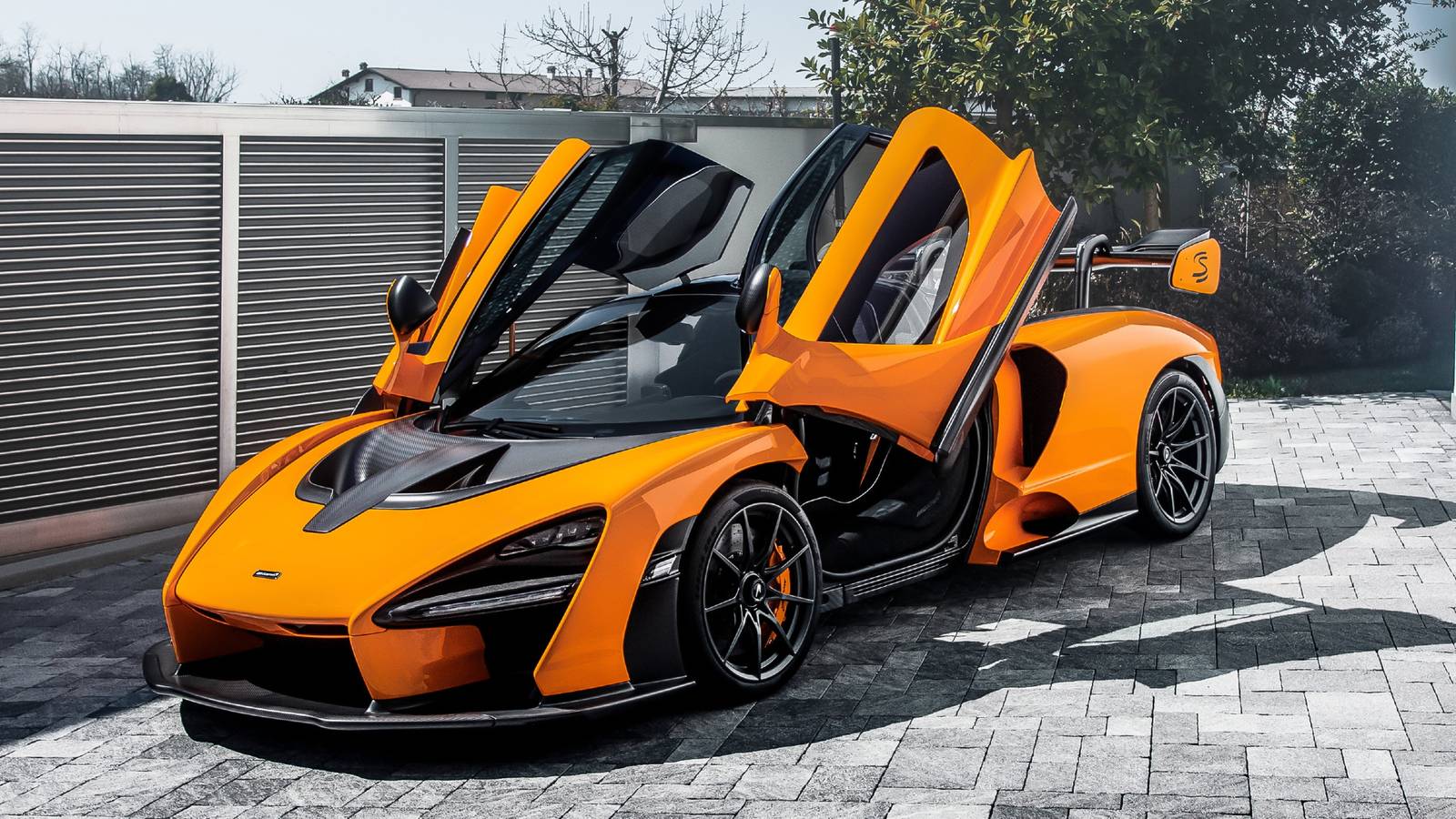
“Direct” and “Responsive” are terms McLaren engineers have used to describe the Senna. In fact, they claim the Senna is the most of both of these terms, which is saying quite a lot considering the history of the McLaren brand. The base version (if there is such a thing) of the McLaren Senna is street legal, but that takes all the fun out of a car made to dominate the track. A thrilling driving experience, track-focused build, and incredible engineering are just the starting points of the Senna, which continues to be a benchmark for supercars and leaves modern performance machines in the dust.

10 Family Sedans That Double As Weekend Track Toys
For enthusiasts who refuse to compromise between family duties and weekend track thrills, these ten sedans offer the perfect solution.
Relentless “Track-First” Philosophy
Forget Creature Comforts

Modern supercars provide a strong balance between creature comforts for street driving and performance. The Senna doesn’t prioritize driver comfort and is barely road-legal in its standard form. McLaren built this car to set some seriously incredible lap times, and they succeeded.
Minimalist Interior With Purpose

The track focus is extremely easy to see in the McLaren Senna and is even more present in the McLaren Senna GTR. You won’t find modern luxury qualities or comfort features in the cabin. The minimalist interior is a reminder that the Senna is made for the track, and its focus is on reducing weight to improve performance. You’ll find carbon fiber and Alcantara interior elements and room for helmets and racing gear, but not much else.
Street Legal; Not Always

There’s room in the Senna for a passenger, but you’ll be hard-pressed to find many people willing to go for a road trip in this car. Additionally, the higher-performance model, the McLaren Senna GTR, is designed solely for track performance and wasn’t offered from the factory as a street-legal supercar. The “Track-First” philosophy is front and center, and that’s part of what makes it great.

16 Cheapest Supercars You Can Buy
Discover the ultimate combination of style, performance, and speed with our list of 16 relatively affordable supercars
Extreme Downforce Levels
Approaching Race Car Territory

Although the 1,764 pounds of downforce at 155 MPH produced by the McLaren Senna doesn’t quite reach Formula 1 territory (between 6,500 and 7,000 pounds at 200 mph), it’s an impressive figure. The massive downforce produced improves grip on the track, leaning heavily into the car’s philosophy. Additionally, GTR models are tuned for greater downforce, reaching up to 2,200 pounds. Many modern supercars are fast, but few can generate as much downforce as the McLaren Senna or Senna GTR.
Bigger Means Better For The Senna GTR

The biggest difference between the regular Senna and the GTR model is the aerodynamics package. Two items from that package contribute to the increased downforce generated by the GTR model. These items are the massive front splitter and the larger rear wing, helping push the car onto the track with greater force, allowing for better grip and faster lap times.
Constant Adjustments Matter

The aerodynamic features of the Senna pair aren’t static; they constantly adjust to improve performance. These features create dynamic airflow around the car to balance cooling, downforce, and speed. The active rear wing doubles as an airbrake when it’s time to slow or stop the car, helping to keep things safe after a great track run.

10 Sports Cars You Can Actually Afford In 2025
Affordable sports cars are thriving in 2025, offering enthusiasts a wide variety of choices that balance fun, practicality, and value.
“Form Follows Function” Design Purity
An Honest Supercar

Brutal honesty isn’t always an admirable quality, unless you’re talking about the McLaren Senna. Everything about this car was made to improve performance. This means every vent, wing, and surface has a purpose designed to increase speed, improve lap times, and enhance overall performance. Styling came second to function, which contributes to the Senna’s polarizing appearance.
Honoring The Legend

The Senna is named after the legendary race driver, Ayrton Senna. Despite arguments that the legacy and memory weren’t McLaren’s to appropriate, the company donated the 500th and last Senna chassis for auction. Proceeds from the sale went to the Ayrton Senna Institute, making for an excellent tribute to the man.

Best Of The Best: Greatest Porsche 911 Models Of All Time
Within the 911 lineage, certain models stand out as definitive highlights with milestones that pushed the boundaries of design, technology, and speed.
Ultra-Lightweight Engineering Focus
The Lightest McLaren Since The F1

The dry weight of the Senna is only 2,641 pounds, which makes it an extremely light production car. This weight is achieved with a carbon fiber Monocage III chassis, an improved version of McLaren’s previous chassis. Engineers repositioned components within the woven, stitched, and sheet-molded sections to increase strength and rigidity while reducing weight. The GTR, despite its larger aero bits, is lighter, tipping the scales at only 2,619 pounds.
Power-to-Weight Efficiency Over Raw Power
The McLaren Senna is the epitome of making the most use of power in its lineup. It’s lighter than the 720S by 187 pounds and delivers incredible power, earning an excellent power-to-weight ratio. When you think about the power of some muscle cars, they can’t compare to the Senna in terms of speed because of the low weight of the McLaren supercar. The Senna’s 3.66 lb/hp ratio is better than the McLaren P1 GTR’s.
Expensive And Getting More Valuable

The McLaren Senna price when it first appeared was $959,000, but that figure has increased over time. Today, the average price for the standard Senna is $1,266,267. The GTR models began at $1.78 million and have also increased in value over the past few years. Considering there were only 500 standard Senna models and 75 GTR versions, the rarity and supercar status should allow these cars to appreciate significantly over the next several years.

10 Practical Cars That Are Secret Sports Car Killers
Sports cars advertise their performance, but some cars are more covert about their unfettered power
No Hybrid Complexity—Pure Driving Feel
V8 Power At The Core

McLaren fitted a 4.0-liter twin-turbocharged V8 engine in the Senna, enabling the car to deliver 833 horsepower and 590 lb-ft of torque. This engine mates to a seven-speed dual-clutch automatic transmission that sends power to the rear wheels, giving the pure driving feeling many racers admire. In the standard model, this setup is good enough to finish a sprint to 60 MPH in 2.8 seconds en route to a 211 MPH top speed.
More From The GTR

You might think the McLaren Senna GTR’s significantly higher price would translate into a significant increase in power, but the powertrain is only tuned for 25 more horsepower on the high-end model. That increase, coupled with the added aero package, translates to a 2.5-second sprint to 60 MPH, which is a huge difference on the track.
Braking Performance That Matches Race Cars

Great power in a sports car requires excellent braking to slow and stop the car. Braking is extremely important during lap runs around any track, and better braking translates into more control and improved runs. The Senna uses advanced carbon-ceramic brakes with enhanced thermal performance to improve heat conductivity while reducing the weight of the braking system. This package enables repeated high-speed stops without fading, giving the driver confidence and control at high speeds.
Uncompromising Driving Experience
Brutal But Rewarding

Why do some drivers love the Dodge Viper? Some will say it feels dangerous to drive because of the brutal, raw power that requires skill, focus, and intestinal fortitude to harness. The same can be said of the McLaren Senna. This brutal, unforgiving supercar is not designed for the casual driver or for comfort. Still, the uncompromising driving experience, incredible power, and an extremely engaged feel are appealing to many drivers who are tired of losing these elements in newer supercars.
The Senna Does It Right

Some new supercars might beat the Senna in horsepower, hybrid technology, comfort, and usability. You’re not likely to see a Senna on the road, although it could drive on them, but that’s part of what makes it great. Modern supercars struggle to match the Senna in terms of its singular purpose, extreme aerodynamic capabilities, lightweight purity, and unfiltered track experience. The Senna and Senna GTR are less cars and more of a philosophy on wheels, showing what McLaren can do when all bets are off.
Sources: duPont Registry, Motor1, AutoCar, Supercars.net, Classic.com, McLaren