
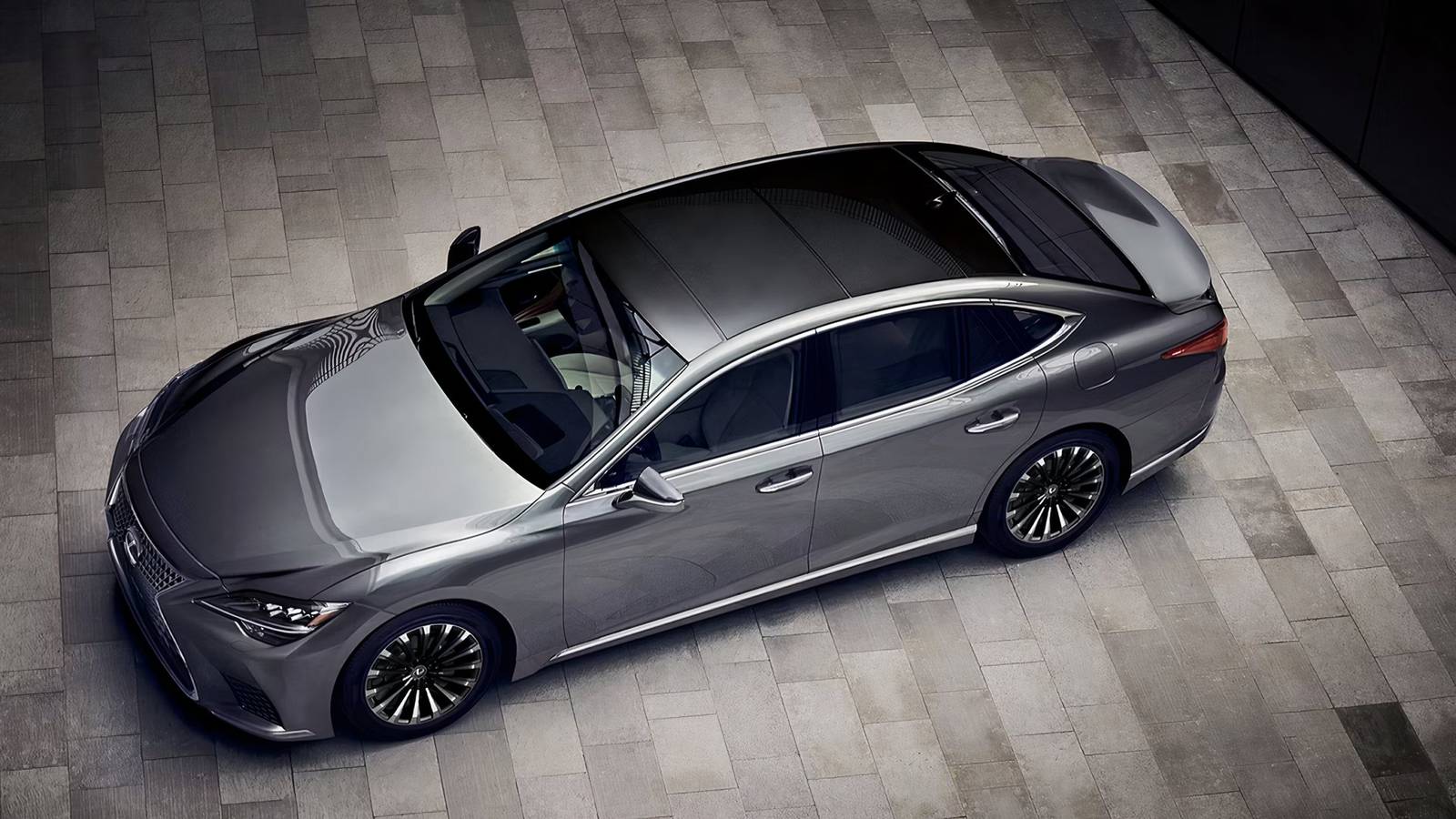
Luxury sedans have changed dramatically over the past decade. Screens have grown larger, designs have grown louder, and powertrains have become more complex. In the middle of all that change, the Lexus LS has quietly stayed true to itself. It hasn’t chased trends or tried to outdo its rivals with excess.
It’s stayed true to what it’s always done best: offering comfort, quality craftsmanship, and on-par refinement. This overview looks at the Lexus LS as a current-generation flagship, focusing on its broader design philosophy, technology, and powertrain lineup rather than a single model year.
Traditional Luxury Design That Defines The Lexus LS
Exterior Proportions, Restrained Styling, And The LS’s Conservative Luxury Identity

No need to reinvent the wheel; the Lexus LS is a simple flagship luxury sedan that doesn’t need to scream for attention; it’s pleasant, sits low and composed, and has an air of confidence. This is a car designed to age gracefully rather than demand attention the moment it arrives. The long hood, short front overhang, and flowing roofline give the LS a classic sedan silhouette, one that prioritizes balance over drama. Lexus’ signature spindle grille dominates the front end, but unlike on some smaller models, it feels more restrained here, integrated into the design rather than overwhelming it. The sharp LED lighting adds a modern touch without clashing with the car’s conservative character.

From the side, the LS looks elegant and understated. There are no unnecessary creases or exaggerated lines, just clean surfaces and subtle detailing. It’s a design that rewards a second glance rather than shouting for attention at first glance. In a world where luxury cars increasingly resemble concept cars toned down just enough for production, the LS feels refreshingly mature. This restraint is intentional. Lexus has never tried to position the LS as the most aggressive or futuristic option in the segment. Instead, it appeals to buyers who value dignity and calm presence over visual theatrics.

The Most Practical And Balanced Luxury Sedan You Can Buy Right Now
It’s not about speed or flash or technology for its own sake. It’s about refinement.
Interior Craftsmanship That Reflects Lexus Attention To Detail
Materials, Layout, And Japanese Design Influences Inside The Cabin

Step inside the 2026 Lexus LS and the philosophy behind the exterior design becomes even clearer. The cabin isn’t built to impress with sheer spectacle. It’s built to make its occupants feel comfortable, relaxed, and quietly indulged. It’s simplistic, but also offers quality materials; genuine thought went into it. Controls are where you expect them to be, and the driving position is easy to settle into.

The LS doesn’t require a learning curve. You don’t have to explore menus to adjust basic functions, which is becoming increasingly rare in modern luxury cars. Rear-seat comfort is another highlight, particularly in long-wheelbase versions. There’s ample legroom, supportive seating, and thoughtful amenities that reinforce the LS’s role as a true flagship sedan, whether you’re driving or being driven.

Lexus Keeps 2026 IS Sedan Relevant With These Changes
Lexus’ compact sedan gains some worthy changes, including the IS 350 F Sport.
Modern Technology Integrated Into A Classic Luxury Sedan
Infotainment Systems, Digital Displays, And Advanced Driver-Assistance Features

While the Lexus LS embraces tradition in its design and materials, it hasn’t ignored modern technology. Instead, Lexus has taken a more measured approach, integrating tech in a way that supports the driving experience rather than dominating it. The infotainment system has evolved significantly over recent model updates. A large central touchscreen now replaces earlier, more complicated interfaces, making navigation and media controls far more intuitive. Apple CarPlay and Android Auto are included, ensuring seamless smartphone integration without forcing drivers to rely on proprietary systems.

Driver-assistance technology is comprehensive, as expected in this segment. Adaptive cruise control, lane-keeping assistance, blind-spot monitoring, and automated emergency braking are all standard or widely available. Importantly, these systems work quietly in the background. They assist without constantly reminding you they’re there, which aligns perfectly with the LS’s relaxed personality. Rather than overwhelming the driver with technology, the LS uses it to reduce stress and enhance comfort. That balance is increasingly rare in modern luxury sedans.

The Hybrid Sedan That Balances Luxury And Practicality Perfectly
Luxury might sound expensive, but this hybrid sedan offers both class and practicality at an affordable price.
Powertrain Options Focused On Refinement And Efficiency
Engine Choices, Hybrid Technology, And Performance Figures On Paper

Under the hood, the Lexus LS continues to prioritize refinement over raw performance. The available powertrains are engineered to deliver smooth, effortless progress rather than chase headline-grabbing acceleration figures, which aligns closely with the LS’s long-standing role as a comfort-focused flagship. The LS 500 is powered by a 3.4-liter twin-turbocharged V6, producing 416 horsepower and 442 pound-feet of torque; this is the sole powertrain option for the final 2026 Heritage Edition.

On paper, those numbers place it firmly in the flagship sedan conversation, but Lexus’ focus is less on outright pace and more on how that power is used. The engine is tuned for linear response and quiet operation, delivering strength without urgency. It’s not meant to feel sporty or aggressive, and that’s by design. Instead, there’s always ample power in reserve, ready when needed, without ever demanding attention.
Opulent Efficiency At Its Finest

For buyers who prioritize efficiency, the LS 500h (not available for 2026 MY) offers a hybrid alternative built around Lexus’ long-running experience with electrification. Its 3.5-liter V6 hybrid system produces a combined 354 horsepower, favoring smoothness and fuel efficiency over outright speed with a respectable 25 EPA-estimated MPG combined over the standard LS 500’s slightly lower 22 combined MPG. Rather than emphasizing performance metrics, the hybrid setup is designed to operate seamlessly, allowing the powertrain to fade into the background and reinforce the car’s calm, composed character.

Neither option is intended to redefine the LS as a driver’s car in the traditional sense. Instead, both powertrains support the sedan’s broader identity: quiet, composed, and comfortable over long distances. In the context of a flagship luxury sedan, that restraint feels deliberate—and increasingly rare.

2026 Lexus ES Updates: Everything You Need To Know
The 2026 Lexus ES has just entered a new era, upgrading its technology, luxury, and comfort. Oh, and it’s available as an EV now.
How The Lexus LS Competes In The Flagship Luxury Sedan Segment
Positioning Against The Mercedes-Benz S-Class, BMW 7 Series, And Genesis G90

The Lexus LS exists in a fiercely competitive segment, sharing space with some of the most prestigious—and expensive—flagship sedans in the U.S. market. Pricing plays a significant role here, because while these cars often occupy similar territory on paper, the gap at the dealership can be substantial. Understanding those differences helps clarify where the LS fits.

The Mercedes-Benz S-Class remains the technological benchmark, but it also sets the high-water mark for pricing. In the US, the S-Class typically starts well into the six-figure range, and once options are added, it’s easy to push far beyond that. Buyers get cutting-edge screens, advanced automation, and a highly digital interior, but that tech-forward approach can feel overwhelming for some—and expensive to maintain long term. The Lexus LS counters with a calmer, more traditional luxury experience at a lower starting price, without sacrificing flagship presence.

The BMW 7 Series follows a similar trajectory. Entry pricing is also comfortably above $95,000, with higher trims and option packages driving costs upward quickly. It offers strong performance and a bold digital interior, but its design and interface can be polarizing. By comparison, the Lexus LS takes a more conservative path, focusing on comfort, clarity, and long-term usability rather than chasing visual drama or performance credentials at any cost.

The Genesis G90 has emerged as the value-focused alternative in this class. Starting closer to the low-to-mid $90,000 range, it undercuts both the S-Class and 7 Series while offering generous standard equipment and a well-appointed interior. It competes strongly with the LS on features and comfort per dollar, but Lexus continues to differentiate itself through a long-established reputation for reliability, build quality, and ownership consistency.

The Lexus LS appeals to a specific kind of buyer. It’s for those who want a flagship sedan that feels complete without being flashy, modern without being intrusive, and luxurious without being excessive. Priced below the most tech-heavy rivals yet firmly within the premium space, the LS makes a quiet case for substance over spectacle.


Find 2026 Lexus LS and more cars for sale on our Marketplace
A Flagship That Resists Trends

The Lexus LS has never been the loudest voice in the flagship sedan conversation, and it doesn’t seem particularly interested in changing that. While rivals constantly reinvent themselves with new tech and bolder designs, the LS has stayed focused on doing a few things very well and doing them consistently. That approach won’t suit everyone, but it gives the LS an increasingly rare clarity.

It blends traditional design, careful craftsmanship, and modern features without turning the car into a rolling experiment. The result is a luxury sedan that feels settled and considered—one meant to be driven and owned long after the showroom’s novelty has worn off. For buyers who value quiet confidence, timeless design, and thoughtful execution, the Lexus LS remains one of the most compelling luxury sedans on the road today.
Sources: Lexus, BMW, Mercedes-Benz, Genesis, The EPA