
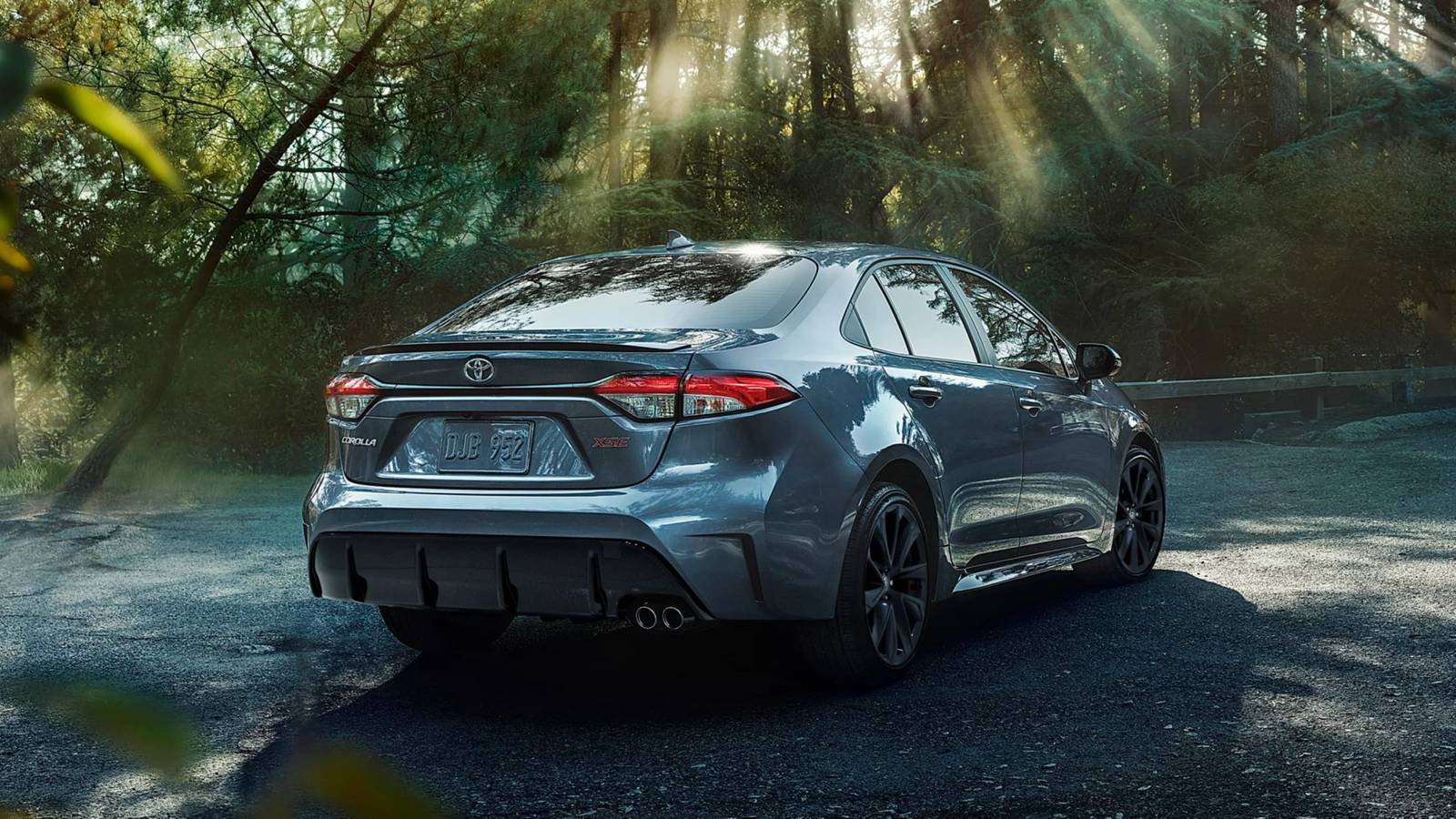
Few automotive brands match Toyota’s reputation for reliability, built on an engine philosophy that prioritizes longevity over trends. That approach has produced power plants that regularly exceed 100,000 miles with minimal wear and often outlast the vehicles they power.
Backed by long-term ownership data and fleet records, Toyota engines continue to stand out for dependable, long-term use. From powerful V8s in the most noteworthy SUVs to frugal hybrid mills powering clean-energy trailblazers, here are 10 of the most reliable engines from Toyota.
Toyota 2UZ-FE (4.7-Liter V8)
Built To Endure, And Known For Exceptionally High Mileage

Toyota’s 2UZ-FE is known as one of the most overbuilt production V8S; it was built to endure. With this idea in mind, it was primarily engineered for full-size SUVs and pickup trucks. With all that power and brute force, it was meant to withstand prolonged operations under heavy duress, high ambient temperatures, and inconsistent fuel quality. Toyota kept it honest and didn’t chase peak output figures; it chose durability by using a cast-iron block, a forged crankshaft, and conservative compression ratios.

The 2UZ-FE motor has displayed a long service life and is not merely limited to enthusiast anecdotes. In real-world use, 2UZ-FE-powered Land Cruisers, LX 470s, and Tundras are frequently kept for decades, mainly serving as tow vehicles or expedition platforms. Failures tend to be age-related peripheral components rather than internal engine damage, reinforcing its reputation as an actual long-distance powerplant.
Notable Features And Aspects
- Consumer Reports has repeatedly rated 2UZ-FE-equipped vehicles as “far above average” for long-term powertrain reliability.
- iSeeCars’ high-mileage vehicle studies frequently highlight Toyota trucks and SUVs powered by this engine as top performers for longevity.
- The engine’s low specific output and heavy-duty construction significantly reduce long-term internal stress.



Toyota 1HZ (4.2-Liter Naturally Aspirated Diesel)
Simple But Built With Intent For Rough Terrains

The 1HZ was built for one purpose: to handle the harshest environments imaginable. The 1HZ was geared for markets where repair facilities are far and few, fuel quality is inconsistent, often poor, and cars are expected to last the test of time for decades. A smart move on Toyota’s part, they avoided a turbocharger and leaned on fully mechanical fuel injection. The 1HZ avoids nearly all common failure points seen in modern diesel motors.

Its longevity record is supported by extensive real-world use in mining operations, humanitarian fleets, and government service vehicles. In many regions, 1HZ-powered Land Cruisers continue to serve beyond their shelf life, often with only simple maintenance and the occasional component replacement.
Notable Features And Aspects
- Fleet and NGO service records regularly show that Toyota 1HZ engines have surpassed 620,000 miles without major internal failures.
- Its naturally aspirated layout and fully mechanical fuel system eliminate turbocharger and electronic control failures, significantly reducing long-term reliability risk.
- Its mechanical simplicity allows continued operation even under irregular maintenance conditions.
Toyota 2JZ-GE / 2JZ-GTE (3.0-Liter Inline-Six)
Strong Iron Block With Conservative Factory Tuning

Although the 2JZ is best known for its performance potential, its factory reliability is what truly sets it apart. Toyota’s 2JZ was engineered with durability as a priority rather than outright performance. The iron block and heavy-duty internals gave the engine a substantial safety margin, meaning it rarely operated anywhere near its structural limits in factory trim. That built-in headroom played a significant role in the engine’s reliability in both naturally aspirated and turbocharged applications.

In daily use, the 2JZ earned a reputation for smooth, consistent power delivery and effective heat management over long distances. Lexus sedans fitted with this engine were often kept well past typical ownership cycles, mainly because the powertrain continued to perform reliably when left in standard form and adequately maintained.
Notable Features And Aspects
- According to Consumer Reports, data from the Lexus IS300 and GS300 models highlight consistently strong long-term powertrain dependability.
- Stock 2JZ engines are widely documented to have surpassed 300,000–400,000 miles without requiring internal rebuilds.
- Robust cooling and lubrication systems help maintain reliability under sustained operating conditions.

Ranking The Top 10 Toyota Camry Hybrid Models Years For Reliability
While many Camry years are known for their reliability, these model years stand out with the most reliable hybrid variants.
Toyota 22R / 22RE (2.4-Liter Inline-Four)
Basic Design With Very Few Failure Points

The 22R came from a time when Toyota focused on making engines that could survive real-world abuse. It uses a basic single-cam design and low compression, which means it isn’t fussy about fuel quality and doesn’t punish owners for missed service intervals.

That straightforward engineering is why so many of these engines kept going in work trucks and off-road vehicles long after they should have been retired. Its reputation was earned through decades of use in Hilux and Pickup models that served as work vehicles, off-road platforms, and fleet transport. Even when subjected to poor fuel quality or irregular oil changes, the 22R continued to run reliably.
Notable Features And Aspects
- Older Consumer Reports reliability surveys consistently placed 22R-powered Toyota pickups near the top of the compact truck segment for dependability.
- High-mileage ownership examples regularly show 22R engines passing 500,000 km (310,000+ miles) with little more than routine internal maintenance.
- Low compression and minimal electronics significantly reduce long-term wear and failure rates.
Toyota 1GR-FE (4.0-Liter V6)
Proven Truck Engine With Good Long-term Reliability

The 1GR-FE marked Toyota’s transition into modern V6 truck engines without abandoning its durability roots. Designed for body-on-frame vehicles, the engine delivers strong low-end torque while avoiding the complexity of forced induction.

A timing chain replaces traditional belts, further improving long-term serviceability. Over time, the 1GR-FE has proven itself in both recreational and commercial use, particularly in regions where Tacomas and 4Runners are used as daily work vehicles.
Notable Features And Aspects
- Consumer Reports‘ reliability data for the Toyota Tacoma and Toyota 4Runner consistently places 1GR-FE-powered models above segment averages for long-term dependability.
- Long-term ownership records show many Tacoma and 4Runner examples exceeding 300,000 miles without major internal engine repairs.
- Naturally aspirated operation in these platforms helps limit heat and long-term mechanical stress compared to turbocharged rivals.
Toyota A-Series (4A-FE / 4A-GE)
Small-displacement Engines With Long Service Life

The A-Series engines played a significant role in building Toyota’s reputation during the 1980s and 1990s, particularly in everyday passenger cars that were driven hard and serviced infrequently. They weren’t complicated engines, but they were well-built, efficient, and capable of handling daily use without developing major issues.

Toyota’s conservative tuning and consistent build quality meant these engines aged slowly. As a result, A-Series motors are still found running reliably in older Toyota Corollas, Celicas, and AE86 models in many parts of the world, long after newer and more complex engines have come and gone.
Notable Features And Aspects
- Historical Consumer Reports surveys ranked A-Series-powered Toyota Corollas and Celicas among the most dependable in their segments.
- Fleet and taxi service records show many A-Series Corollas exceeding 400,000 km (250,000+ miles) in daily use.
- Simple valvetrain and fuel system design help keep maintenance straightforward and long-term ownership costs low.

10 Japanese SUVs Known For Their Bulletproof Engines
Japanese automakers are known for producing some of the most reliable vehicles out there, and these SUVs are prime examples of that reputation.
Toyota Hybrid Synergy Drive (1.8-Liter / 2.0-Liter Hybrids)
Reduced Engine Load Through Electric Assistance

Toyota’s Hybrid Synergy Drive lasts because the gas engine is used less. In city driving, the electric motor does much of the work at low speeds and in traffic, so the engine isn’t constantly starting, revving, and carrying the whole load the way it does in a conventional car.

This setup has shown clear long-term benefits. In taxi and fleet service, models such as the Toyota Prius, Corolla Hybrid, and Camry Hybrid are often driven hard for long hours yet still achieve high mileage with relatively few powertrain issues. Engines, gearsets, and hybrid components tend to wear more slowly simply because they are not constantly operating at their limits, particularly in urban conditions.
Notable Features And Aspects
- Consumer Reports data shows that Toyota hybrids meet or exceed the reliability of their non-hybrid equivalents.
- Taxi fleet records frequently document hybrid systems exceeding 500,000–800,000 km.
- Reduced engine load and regenerative braking significantly lower overall drivetrain wear.
Toyota 2AR-FE (2.5-Liter Inline-Four)
Common Modern Toyota Engine With Solid Reliability

The 2AR-FE is one of Toyota’s most widely used modern engines, found in everything from family sedans to compact SUVs. It isn’t especially powerful or cutting-edge, but that’s part of what makes it hold up well. Toyota didn’t push it hard from the factory, and in normal driving, it tends to operate well within its limits rather than being constantly worked. As these engines have aged, a reasonably clear pattern has emerged.

Later production versions, in particular, are racking up high mileage in vehicles like the Toyota Camry, RAV4, and Highlander without serious internal engine problems, as long as basic servicing is kept up. When issues do show up, they’re usually linked to maintenance or ancillary components rather than core failures, which is why the 2AR-FE is widely seen as a dependable long-term workhorse rather than a standout performer.
Notable Features And Aspects
- Consumer Reports ownership surveys rate Toyota Camry, Toyota RAV4, and Toyota Highlander models fitted with the 2AR-FE as above average for long-term reliability.
- The use of a timing chain in these vehicles removes one of the major scheduled maintenance items over the engine’s lifespan.
- Moderate power output in Camry and RAV4 applications helps reduce internal wear compared to smaller, higher-revving four-cylinder engines.
Toyota 3UR-FE (5.7-Liter V8)
Strong Internals Paired With Added Complexity

The 3UR-FE delivers strong V8 performance but comes with more emissions-related hardware than older Toyota V8s, which adds complexity as the vehicle ages. That does introduce more potential trouble spots over time. Even so, owners who stay on top of servicing often report solid long-term reliability from the engine itself.

Even so, the engine itself has proven durable in long-term use. High-mileage Tundras and Sequoias are common, with most issues tied to emissions components rather than internal engine failures, especially once mileage starts to climb.
Notable Features And Aspects
- iSeeCars high-mileage studies list the Toyota Tundra as one of the vehicles most likely to exceed 300,000 miles, many of which are powered by the 3UR-FE V8.
- Most reported issues involve ancillary emissions systems rather than engine internals.
- Consistent maintenance is key to preserving long-term reliability.

The 2-Year-Old Toyota Hybrid Sedan That You Should Buy Used
This hybrid sedan offers some of the best efficiency and reliability. There’s no catch and it even sits in the $20,000 range.
Toyota ZR-Series (1.8-Liter / 2.0-Liter Inline-Four)
Efficient Engines With Tighter Tolerances

The ZR-Series sits firmly in Toyota’s newer generation of engines, built at a time when fuel economy and emissions targets started to matter as much as outright durability. Compared to older Toyota four-cylinders, these engines are put together with much tighter clearances and run more efficiently, which helps at the fuel pump but leaves less room for missed services or poor oil quality.

They’ll do the job without complaint, but they expect to be looked after because they’re relatively recent; the ZR engines don’t yet have the decades-long track record of Toyota’s older designs. Even so, early ownership data and fleet feedback haven’t thrown up any major red flags. Corollas using these engines are clocking up mileage without widespread internal issues, and most problems that do appear tend to be maintenance-related rather than outright mechanical failures. Toyota’s most reliable engines prioritize durability over performance, and even with added modern complexity, the brand remains one of the safest bets for long-term ownership.
Notable Features And Aspects
- Consumer Reports consistently rates ZR-Series-equipped Corollas above average for reliability.
- Oil quality and service intervals play a critical role in long-term durability.
- Long-term data is still developing compared to older Toyota engine families.
Sources: Consumer Reports, iSeeCars, Bring a Trailer