
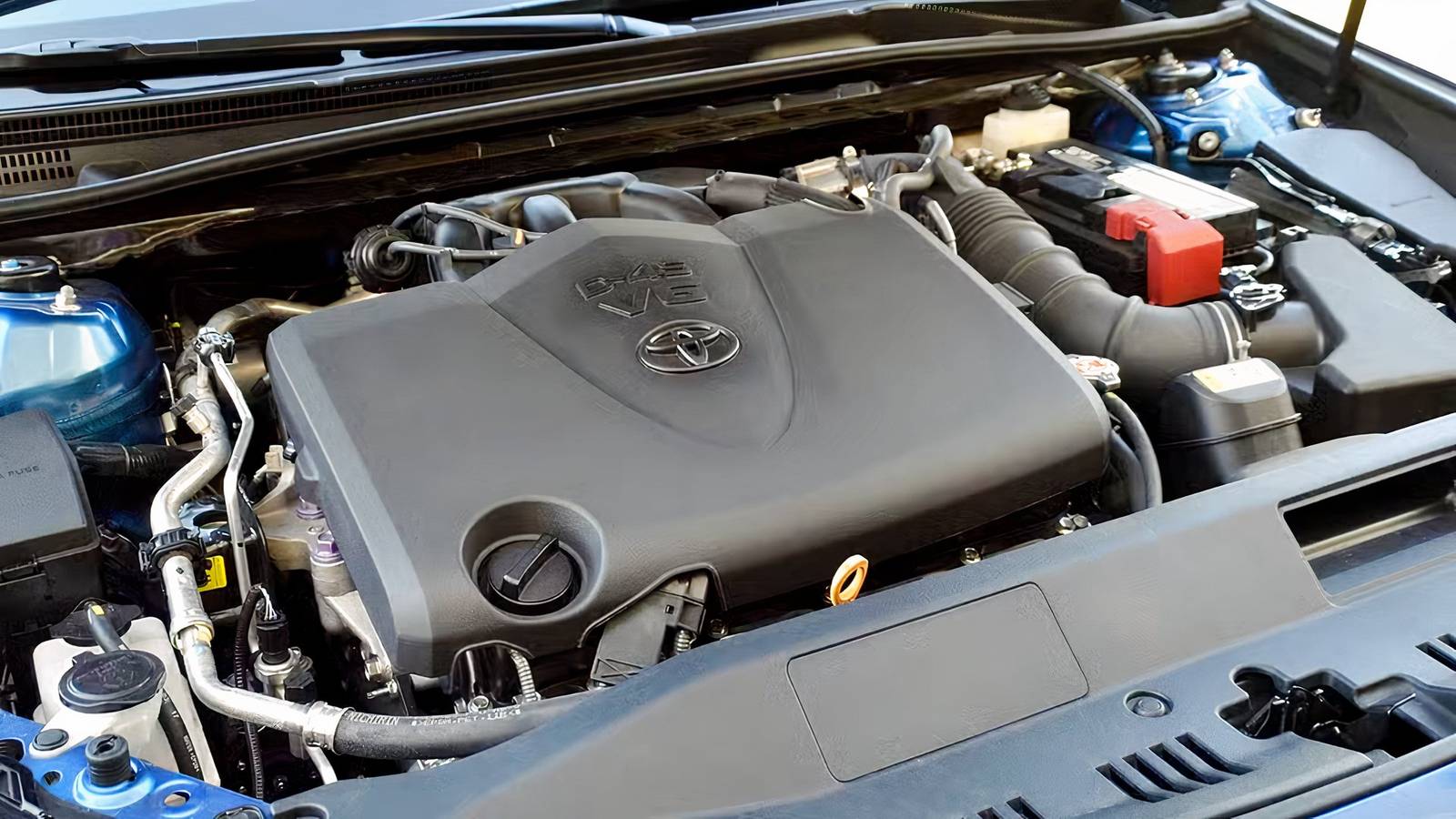
There are some engines just too good to replace. In an automotive landscape defined by change, there are a handful of powertrains that are too effective for the vehicles they find themselves in to warrant changing. One of these engines, though largely phased out now, proved to be one of the most versatile of the 21st Century. What if there were an engine that could power sports cars, trucks, and luxury cars?
Re-introduce yourself to a familiar friend, the 2GR 3.5-liter V6. A truly reliable and multi-use beast. Even if you have not met before, you have likely seen countless vehicles utilizing it — a wide variety of vehicles, at that. When we consider sports cars, sedans, and trucks, we logically assume that the engines are one of a kind. After all, these different divisions of cars serve different consumers and separate needs. This makes the 2GR-FE engine all the more impressive.
A V6 can be a beautiful proposition. They often allow for effortless power, respectable efficiency, and serve as an all-around practical yet capable option. Toyota and Lexus models were blessed by this 3.5-liter V6 for a 20-year stint, and it proved to be all things to all cars — from the rugged RAV4, to the sporty but accessible Lexus IS 350.
The Most Popular Car To Enjoy This 3.5-Liter V6

The Toyota Camry is a hugely popular car, and the definitive version of this vehicle was lucky enough to be paired with this V6 motor. It was a match made in heaven because the goals and achievements of the Camry are closely aligned with those of the engine itself. The Camry was always the people’s car because it offered a sense of luxury, performance, and dependable durability all rolled into one package. Not only did the 2GR engine help assist this, but its mission was to provide this within itself.
2018-2023 Toyota Camry V6 Specs
|
Horsepower |
301 |
|
Torque |
267 Ib-ft |
|
Transmission |
8-speed automatic |
|
0 – 60 mph |
5.8 seconds |
|
Fuel Economy |
26 mpg (combined) |
Lexus Couldn’t Get Enough Of The V6

Not only did Toyota use this engine at any opportunity presented to them, but Lexus couldn’t get enough of it either. The most popular example to benefit from the 2GR V6 was the Lexus RX 350. This powertrain proved its worth in a dependable sedan, but was equally potent in a more luxury-focused, larger SUV. The 2GR was a staple of the most prevalent generations of RX 350, with its smooth power delivery, effortless power, and its compelling reliability suiting the aims of Lexus’s brand identity perfectly.

Two of Lexus’s most prominent pillars are luxury and reliability, and an engine that delivers strong torque with minimal turbo lag is ideal for hauling around a heavy SUV in a smooth, composed manner. All of this, whilst continuing Lexus’s reputation for excellent reliability.




Here’s Why The V-6 Engine Refuses To Die In A World Of Downsizing
While big engines are on the chopping block, the V-6 continues to carve out its place in the modern era of efficient vehicles.
Analyzing The True Durability Of This V6

To be the beating heart of the Toyota RAV4, the Toyota Highlander, and the Tacoma, some of the most durable vehicles on the market over the past 20 years, the 2GR must have been doing something right. And those particular models have a lot to thank this V6 for when it comes to their rugged reputations.
Reasons For Engine Durability
- A proven track record & long production run
- Competent cooling & oiling with stable temperatures
- Low stress, low boost torque delivery
- Naturally aspirated design
- Overbuilt block and solid build quality
Reliability Scores And Stats

When we speak of the most reliable cars from the last decade, the results are clear: Lexus and Toyota stand above the rest. The 3.5-liter 2GR-FE engine often appears on any list, completely dominating in assisting these vehicles in their quest for extreme longevity. The aforementioned Toyota Camry and Lexus RX 350 are regulars on several ‘most reliable’ lists, boasting incredible reliability scores throughout their production.
Owner’s Notes, Mileage Expectancy, And Common Faults

No matter the praise an engine receives, none of them are ever perfect, and there are always common faults to watch out for. Thankfully, most of them are preventable or non-catastrophic, and include:
- Oil leaks from the timing cover gasket
- Timing chain rattles and tensioner wear
- Ignition coil failures
- Increased oil consumption
But like with any vehicle, maintenance plays the most significant role in the lifespan of your engine. Spending a little more money early on to keep on top of everything can save you money in the future and keep your engine running smoother for longer. Owners have a similar list of notes that they recommend you abide by with the goal of keeping your 3.5-liter V6 running sweet for as long as possible, including:
- Regular oil changes, 5,000 – 7,000 miles recommended
- Coolant flush every 100,000 miles to prevent cooling system failure
- Spark plug changes every 60,000 miles
- Throttle body cleaning prevents rough idling on high-mileage examples
With research, a sensible driving style, and keeping an eye on the owner’s manual, you can expect to easily reach 200,000 miles, and have been known to far surpass that. This has been proven by many examples of ultra-high-mile Camry’s.

A Hybrid Lotus Emira Could Be On The Table As EV Plans Stagnate
The Type 135 is delayed, but the Emira could live on longer than expected.
The Final Vehicle To Use This Legendary Engine

After an iconic, nearly 20-year run for this robust powertrain, its time with Toyota and Lexus has come to an end. Due to changing emission requirements and EV’s gaining popularity, the 2GR has been retired. Though it continues to serve many high-mileage Toyotas and Lexus and pleases their owners, their inevitable next vehicle will likely be something more eco-friendly. Given this V6’s track record, these older vehicles could stay on the road for a long time.

However, this engine still has some fumes left in it. There has been a certain left-field manufacturer that has been using this powertrain for a decade and a half, and continues to reap the benefits of its magic. And it’s not another Japanese manufacturer, it’s not even an American one.
Lotus And Its Love For The 2GR-FE

If this doesn’t prove the 2GR’s endlessly applicable nature, nothing will. It’s been used in pickups, in off-roaders, and in everyday sedans. But you surely weren’t expecting them to be used in a brand’s roster of lightweight, nimble sports cars. Lotus has been optimizing this engine in their models since the 2009 Evora, the slightly more forgiving and powerful car of their lineup at the time, and it paid off. It was introduced into the Exige in 2012 and, most recently, the Lotus Emira in 2022.

Though seemingly an odd choice at first, the more we examine the usage of this V6, the more it makes sense. Given that Lotus is a much more niche manufacturer compared to Toyota, they had to depend on the dependable — something with a proven track record. But that was only half the equation. With the durable internals, it meant supercharging was easily doable without risking reliability concerns, and that meant it garnered some phenomenal performance figures.
2025 Lotus Emira V6 Specs
|
Horsepower |
400 |
|
Torque |
430 Nm (~317 lb-ft) |
|
Transmission |
6-speed (manual or automatic) |
|
0 – 60 mph |
4.2 seconds |
|
Top Speed |
180 mph |
|
Weight |
3,240 pounds |
The Swan Song For The 3.5-Liter 2GR-FE

As 2026 rolled in, Lotus was still depending on this truly wonderful V6 engine. But it’s all about to change. Simply put, Euro 7 emissions standards are meant to be properly introduced in or around 2026, and Lotus is working on a replacement in the near future. This could be a hybrid version of the 3.5-liter V6 we’ve become accustomed to, but it could mean an entirely new engine altogether.

The 3.5-liter 2GR-FE has been around for 20 years now, and Lotus is giving it a worthy send-off. Continue to supercharge it, to tune it to produce maximum horsepower, and allow it to be part of some truly magnificent driver’s cars with immaculate handling. The 2GR is nearing an end, but we haven’t seen the end of them yet. With cars that just keep on going, owners not willing to give up their beautiful delivery, and a lineup of rugged cars that refuse to give up, we can be sure that we will be enjoying and cherishing this engine for decades to come.
Sources: Toyota, Lotus, Lexus, JD Power