
The year 2022 was a milestone for Toyota and its hybrid program. The new, sleek, sexy, more powerful fifth-generation Prius was announced. The ugly duckling became a swan. In the same year, the Tundra Hybrid was released. This came with two powertrain options: the i-FORCE, a 3.4-liter V6 twin turbo, and the i-FORCE MAX, with the same engine and a hybrid drive as well. This was clearly not something you would find in a Prius. So what is the difference?
So Toyota has two hybrid drives. The Hybrid Synergy Drive is wildly successful, with vehicles like the popular Camry and RAV4 dropping the gas options in favor of hybrid-only ranges. The i-FORCE MAX is also a hybrid, in that it combines an internal combustion engine with a motor and a battery, but that is all these systems have in common. There is also a third option, the plug-in hybrid (PHEV), that is a totally different kind of drive, somewhat of a cross between a hybrid and an EV. It does not apply here.
What “Toyota Hybrid” Usually Means: Efficiency-First Electrification

When we think of a Toyota hybrid, we usually think of the OG Hybrid Synergy Drive (HSD), the system found in the Prius, Camry, Corolla, and RAV4. We associate this hybrid system with fuel efficiency, and this is true. The 2024 RAV4 got 30 MPG, while the same car with the HSD would go 39 MPG. There are other advantages as well, but we’ll get to that. The headline view of HSD is fuel efficiency.
Toyota’s Conventional Hybrids

Toyota’s HSD has been around for 25 years, and during that time, the company has just about perfected it. The system consists of a gasoline engine, one or more electric motors/generators, a power-split device called a planetary gearset, a battery pack, and sophisticated electronics to control it all.

This drive can run on gas power only, electric only, or a combination of both, and these choices are continuously and seamlessly changed by the software, depending on the driving conditions. A big part of this hybrid’s success is the regenerative braking, where the motors turn into generators during braking or deceleration, which recovers some of the energy used to get the car moving in the first place. This recovered energy is stored by recharging the battery.
Regenerative Braking

The regenerative braking, found in hybrids, PHEVs, and EVs, is all about making the vehicle more fuel/energy efficient. This can be seen in the fuel consumption figures for city versus highway driving. A normal ICE vehicle will get much better mileage on the highway than in the city, because stop/start driving means a continuous loss of energy during braking. The opposite is true for a hybrid. The RAV4 example looked at earlier will show this: The gas-only RAV4 gets 27 MPG in the city and 35 on the highway, while the hybrid gets 41 in the city and 38 on the highway.

The Japanese Hybrid With The Longest Driving Range In 2025
Although we’ve come to expect fuel efficiency and long range from compact hybrids, this is actually the Japanese hybrid with the longest range.
What i-Force Max Is: Hybridization For Power And Torque

While the long-established HSD system is mainly about fuel efficiency, the i-FORCE MAX is all about power, torque, and creating the grunt needed for hauling, towing, and passing. There are some fuel efficiency benefits, but when you start with a twin-turbo V6, not that much. The gas Tacoma gets 18/23 MPG city/highway, while the i-FORCE MAX gets 20/24 MPG.

The i-FORCE MAX system is all about power and torque. While the most powerful i-FORCE 3.4-liter V6 twin turbo makes 389 horsepower and 479 pound-feet of torque, the i-FORCE MAX hybrid ups this to 437 horsepower and 583 pound-feet of torque. In both drives, the maximum torque is at only 2,400 rpm, which is where you want it for grunt work.
How The i-Force Max Works

The i-FORCE MAX has much the same basic components as the HSD: an engine, electric motor, and regenerative braking. It is set up differently, though. The motor/generator with a clutch sits directly between the gas engine and the transmission. This clutch connects the engine to the transmission and the motor, which means it can disconnect the engine to run on battery alone, or engage the engine for maximum hybrid power. The electric motor provides immediate torque and boosts the engine’s output, and also provides regenerative braking to charge the battery. The vehicle can drive in EV mode at low speeds, while the hybrid system also engages the crankshaft for smooth starts.
It definitely gives the Tacoma a healthy dose of low-end torque, something the old 3.5-liter V6 lacked. It also gave birth to the quickest Toyota Tacoma to date. Yet, its operation is also astonishingly smooth and quiet.
– William Clavey for TopSpeed
Using The i-Force Max

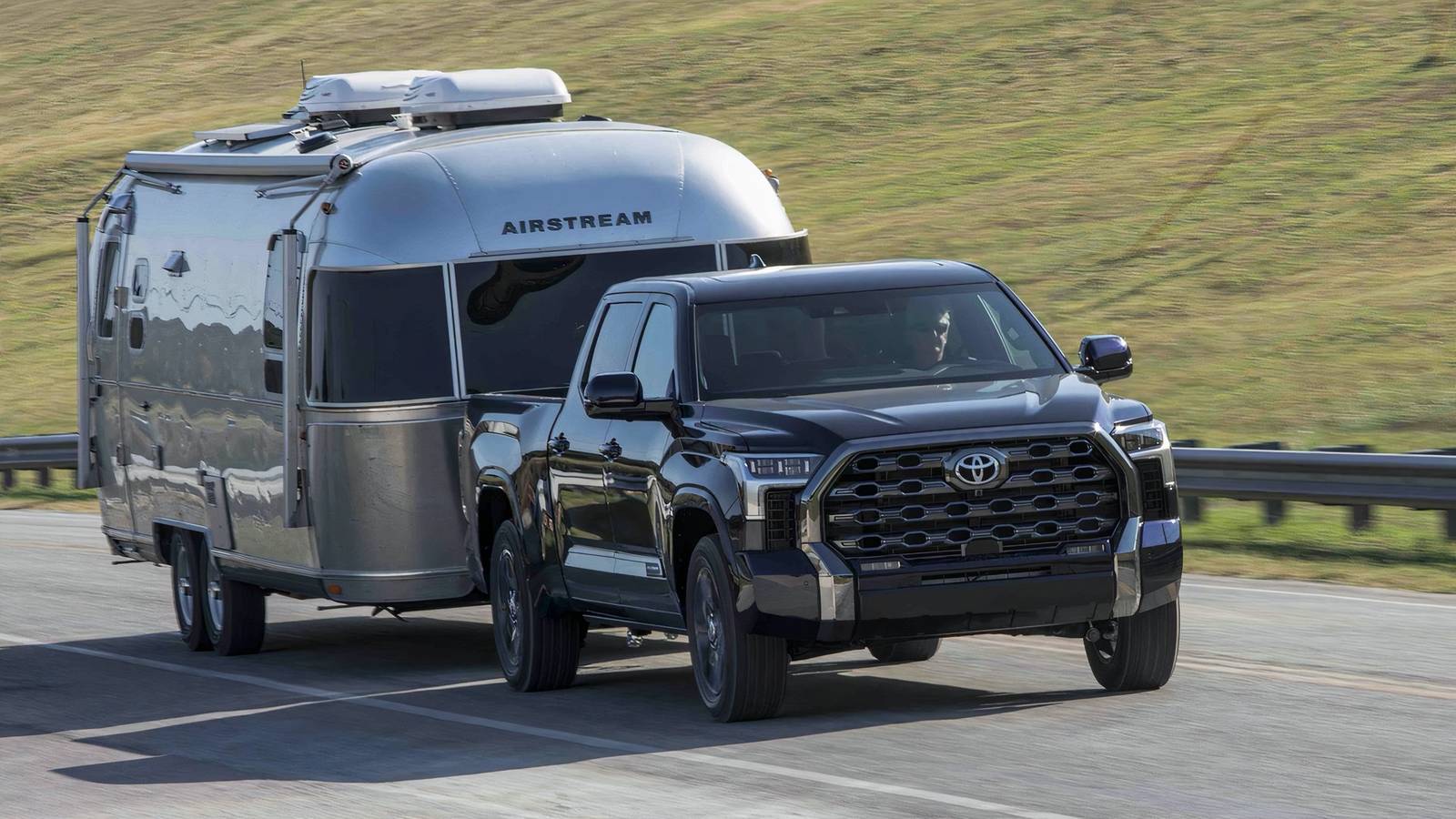
The i-FORCE MAX is focused on torque and towing. The electric motor adds immediate torque at low rpm, which is exactly what a truck needs for towing, slow off-road driving, and highway merging. This towing ability is demonstrated in the Tundra hybrid, which can pull up to 12,000 pounds. The throttle response, transmission mapping, and cooling are all optimized for maximum performance, with the added efficiency a slight bonus. The motor that is integrated into the transmission makes it robust for heavy loads. The i-FORCE MAX is all about performance, using the hybrid dynamics in a way to improve the function of a heavy vehicle.

How Much You’ll Save In Fuel Costs Driving The Toyota Grand Highlander Hybrid
Regardless of how your family uses the Toyota Grand Highlander, there are powertrain choices to help you save on fuel costs, including two hybrids.
How The Two Feel On The Road: City Commute Vs Towing & Mountain Passes

Toyota has long determined that adding a hybrid element to a gas car makes it better, with either a minimal cost attached or the cost/benefit ratio so favorable that it tilts toward the hybrid anyway. The company changed the Camry to hybrid only last year, while the RAV4 will be the same for the 2026 model year. Both these cars are in the top ten selling list in the US. Among the heavy metal, the rugged 4Runner, Tacoma, and Tundra have hybrids as an option, while the Land Cruiser and Sequoia are available as hybrids only.
Driving A Hybrid Synergy Drive

The fuel-efficiency-focused HSD vehicles, including the Prius, Camry, and hybrid versions of the Corolla and Highlander, are all more urban-focused, for commuting or daily family driving, or normal highway cruising. These cars are quiet, noticeably economical, and smooth. They would frequently operate in electric mode only at low speeds, give a soft start, and achieve excellent fuel economy in stop/start driving. There is a performance bonus to the hybrid system as well. For example, the gas-only RAV4 makes 203 horsepower, while the hybrid using the same 2.5-liter engine makes 219 horsepower.
Hauling The i-FORCE MAX

The i-FORCE MAX is found in the heavier vehicles designed for more heavy-duty driving, like towing a load, or where low-end torque is needed. This torque is strong and immediate because of the electric motor. The drive is optimized for high loads, with firm gearing, significantly better cooling, and calibration aimed at control under load. This is a working truck or serious off-roader hybrid. Its focus is on performance where it matters; the fuel-efficiency benefit is minimal, but welcome.

Explained: How Toyota’s Hybrid System Really Works
This is a tricky question because Toyota offers numerous hybrid systems, but they’re all fairly similar.
Ownership, Maintenance, And Why Toyota Offers Both Systems

Drivers with different needs will choose either the hybrid synergy drive or the i-FORCE MAX, because each offers such unique benefits to their owners. The normal HSD gives significantly better fuel economy, lowering the day-to-day cost of operating the vehicle for commuting or daily driving.
A Better Daily Drive

The FWD Prius, for example, gives 57 MPG in combined driving, and in other models with both gas and hybrid options, the hybrid is always significantly more efficient. Add to that the greater power, more immediate torque, and the ability to drive slowly on battery alone, and the HSD goes a long way to make the daily drive better.
More Power, Earlier Torque

Heavy-duty i-FORCE MAX drivers will get power and grunt normally associated with a much bigger, heavier engine, and the immediate low-end torque is ideal for working trucks. The fuel savings are secondary, but no one has even wished for a truck that used more fuel.

Some argue that the added complexity of the hybrid, with its battery, motor, and electronic parts, will need more extensive and expensive service and maintenance, but the reverse is true. Hybrid technology is mature, and the hybrid systems actually reduce maintenance. This is because the engine has to work less for the same output, while the regenerative braking means the friction brakes have to do much less work.
Sources: Toyota, Department of Energy