
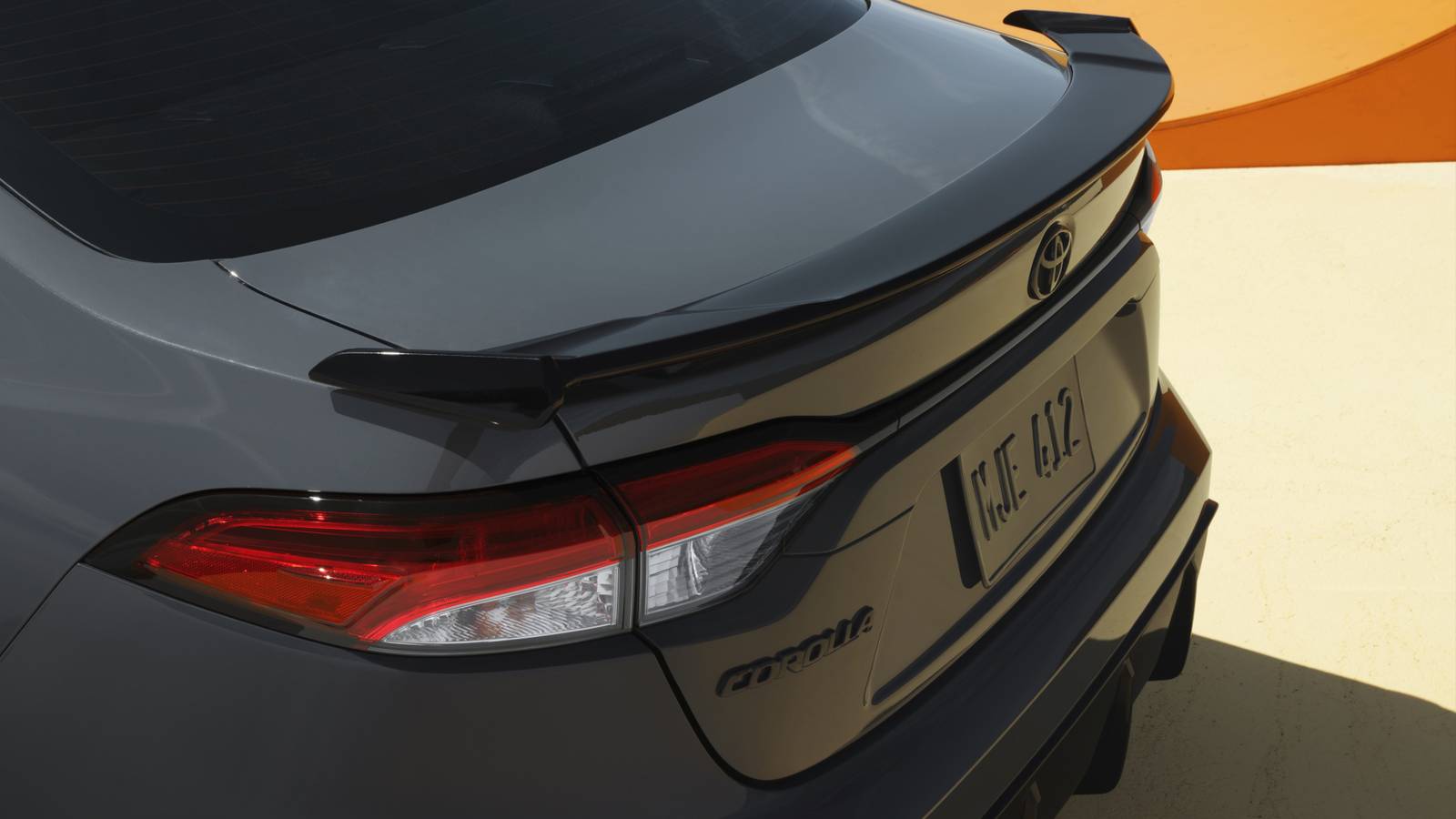
It’s no secret that new sedan prices are getting out of control at an increasing rate, to a point where it is starting to affect monikers that have always been known for their impressive affordability. This problem is being caused by several factors, some of which include inflation, rising production and distribution costs, and more comprehensive standard features being applied to even the most budgeted of models.
Avoiding a high up-front purchase price continues to be a challenge, but one area where you can still save in the long run is on the maintenance and running costs. The 2026 Toyota Corolla Sedan is a prime example of how to balance both longevity and efficiency without compromising up-front quality and, to an extent, driver engagement. The current-generation model represents a long lineage of Corollas that has met these requirements, while still building on the flaws of previous generations.
The Toyota Corolla Is Built To Last
17.5-Percent Probability Of Reaching 200,000 Miles

The 2026 Toyota Corolla sedan in both ICE and HEV formats benefits from highly impressive reliability standards, making them exceptional options if you want a compact sedan that goes the distance, while using as little fuel as possible. iSeeCars groups the drivetrains together and signifies that it will have an average lifespan of 11.4 years or 149,308 miles with a 17.5 percent probability of reaching 200,000 miles.
J.D. Power, grouping both drivetrain options as well, backs this with an 81/100 quality and reliability score, together with 79/100 for the driving experience, 88/100 for resale, and 76/100 for the dealership experience, bringing its consumer-verified overall score up to 76/100.
Class-Leading Ownership Costs

According to Edmunds, the entry-level LE is the cheapest model that you can own, with an expected ownership cost of $38,520 over the course of five years and 60,000 miles. Included in this is $4,293 on maintenance, $773 on repairs, $8,538 on depreciation, and $10,500 on fuel. Changing over to a hybrid model of the same trim level lowers this cost to $37,527, which includes a $4,363 maintenance cost, as well as $773 for repairs, $9,652 for depreciation, and $7,342 for fuel.
According to CarEdge, the Corolla, on average, will cost $34,616 to own, including $9,013 on depreciation, $6,600 on fuel, and $1,430 on maintenance. According to RepairPal, the 2026 Toyota Corolla has an average annual maintenance and repair cost of $362, significantly lower than the $526 average for compact cars. Both the non-hybrid and hybrid models benefit from Toyota’s high reliability rating of 4.5 out of 5.0. Kelley Blue Book highlights that despite the hybrid’s specialized components, its long-term maintenance remains competitive with the gasoline model, often averaging under $400 annually once the free coverage expires.

How Much Gas Money You’ll Save Over 5 Years With The 2025 Toyota Corolla Hybrid
This small car is incredibly efficient and priced to sell.
A Comprehensive Warranty Has Your Back

The 2026 Toyota Corolla comes with a standard three-year or 36,000-mile basic warranty and a five-year or 60,000-mile powertrain warranty. Hybrid models include an additional eight-year or 100,000-mile warranty on hybrid-related components and a 10-year or 150,000-mile battery warranty.
All Corolla purchases include ToyotaCare, which covers factory-scheduled maintenance for two years or 25,000 miles. Servicing follows a strict 5,000-mile interval, requiring a tire rotation and multi-point inspection, while synthetic oil changes and filter replacements typically occur every 10,000 miles. Major inspections of the fuel system, brakes, and suspension are required at 30,000-mile marks.
The Corolla has faced specific recalls over the last three years. Notable issues included a software error in the skid control unit affecting braking assist on 2023 to 2025 hybrids, a steering intermediate shaft defect that could cause loss of control in some 2023 and 2024 models, and potential spiral cable failures deactivating driver airbags. No major recalls have yet been issued specifically for the 2026 production run.
Up To 50 MPG Combined With The Hybrid Corolla

Using the LE trim as a benchmark for both drivetrains, the Corolla reflects a massively impressive fuel consumption performance. According to the EPA, the hybrid model consumes 53/46/50 MPG on the city/highway/combined cycle, while covering 565 miles on a single 11.3-gallon tank, with some help from a compact electric battery. This is likely to save you $3,500 in fuel costs over the course of five years compared to the average new car currently being sold in the U.S. Also, expect to spend $900 on fuel every year, $1.47 to drive 25 miles, and $33 to fill the tank.
Opting for the ICE means that you’ll have to use more fuel, but it’s still impressive compared to the rest of the segment. The EPA indicates that this derivative consumes 32/41/35 MPG on the city/highway/combined cycle, while covering 462 miles from its 13.2-gallon tank. You can still expect to save $1,750 in fuel over the course of five years, spend $1,250 on fuel every year, and $2.10 to drive 25 miles, while spending $39 on a full tank of gas.

Here’s How Much It Costs To Replace A Toyota Corolla Hybrid Battery
Hybrids have an additional cost associated with them in the long run – the hybrid battery – and here’s how much it may cost you to replace one.
Performance Is Not A Priority

The 2026 Toyota Corolla’s standard gasoline model features the Japanese brand’s 2.0-liter Dynamic Force four-cylinder engine producing 169 horsepower and 151 pound-feet of torque, exclusively driving the front wheels via a Dynamic Shift CVT. This affords the economy sedan a 0 to 60 MPH acceleration time of 8.2 seconds.
Opting for the hybrid does sacrifice a bit of performance. This model employs a 1.8-liter four-cylinder engine with a pair of electric motors directly driving your choice of the front or all four wheels via an eCVT system. The result is a combined 138 horsepower output, which will only get you from 0 to 60 MPH in 9.7 seconds.
Reliability-Focused Engine Technology

The ICE 2026 Toyota Corolla is available with the M20A-FKS Dynamic Force engine and the 2ZR-FXE Atkinson-cycle hybrid engine. Both engines feature aluminum alloy blocks and heads for weight reduction and thermal management. The ICE engine achieves a class-leading 40 percent thermal efficiency through its high 13.0:1 compression ratio and D-4S dual-injection system, which uses both port and direct injectors to keep intake valves clean and optimize fuel atomization. It also employs electric variable valve timing on the intake side for precise control even at low oil temperatures.
The hybrid engine focuses on the Atkinson cycle, which utilizes a shorter compression stroke and a longer expansion stroke to extract maximum energy from every drop of fuel. It is renowned for its 10.0:1 to 13.0:1 expansion ratio and features laser-clad valve seats and a low-friction timing chain for legendary durability. Bolstering reliability of both units is the offset crankshaft design, which reduces lateral piston pressure against the cylinder walls, significantly lowering long-term mechanical wear.

10 Ways The 2025 Toyota Corolla Keeps Getting Better
There’s a reason Toyota has sold more than 50 million of them.
Concentrated But Comprehensive Specification

The 2026 Toyota Corolla sedan range starts at an MSRP of $22,925 for the base gasoline LE, moving up to $25,365 for the sporty SE and $28,640 for the flagship XSE. Opting for the hybrid drivetrain increases the price by $1,850, with the Hybrid LE costing $24,775, the SE 27,215, and the top-tier Hybrid XLE $29,140. All models incur a mandatory $1,195 destination and handling fee.
Standard comfort and convenience features have seen a significant boost for 2026, with every trim now including a fully digital instrument cluster measuring 7.0 inches on the LE and SE and 12.3 inches on XSE and XLE. All models also include the Toyota Safety Sense 3.0 suite. Entertainment is anchored by a standard 8.0-inch Toyota Audio Multimedia touchscreen featuring wireless Apple CarPlay and Android Auto, with higher trims offering a larger 10.5-inch display and an available nine-speaker JBL Premium Audio system. Higher grades like the XSE also benefit from more premium touches, including SofTex-trimmed heated front seats, a power sunroof, and Qi-compatible wireless smartphone charging.
Sources: J.D. Power, RepairPal, KBB, Edmunds, CarEdge, iSeeCars, and the EPA