

Respect for high-mileage cars has always existed. A new car with dazzling equipment, enormous screens, or great performance stats can amaze anyone. Still, a car that stays reliable after years of commuting, stop-start traffic, rugged roads, and disregarded service intervals requires something more. That’s what distinguishes durable cars. Today’s market values longevity more than ever. Buyers are keeping their cars longer, service costs are rising, and long-term ownership confidence is a major selling feature for any vehicle. People no longer merely want a car that drives well and looks current. They want to know if it will still work at 200,000 miles without draining the wallet.
Hybrids are intriguing because of that. Many customers once worried that hybrid cars’ additional electrical components and battery systems would make them more vulnerable. In fact, the opposite has often occurred. The best hybrid systems are robust and sometimes gentler on the main mechanical components than gasoline-only installations. Nobody has built that reputation like Toyota. For over two decades, the Japanese carmaker has refined hybrid technology, which shows in the real world. Toyota hybrids feature great fuel economy and low-stress ownership like few other vehicles. They are used hard, driven every day, and last longer than other cars. That’s not marketing. Over time, reputation is built.
Why Toyota Hybrids Are Known For Longevity
Simple Engineering and Years of Hybrid Experience

Toyota’s hybrid success is all about refinement. Toyota spent years perfecting a system that was efficient, smooth, and durable rather than redesigning it every few years. Toyota had built, tested, and updated hybrid systems in real-world settings before many competitors did. That experience is crucial because hybrid durability goes beyond batteries. It’s about system integration. Toyota’s electric motor assists the gasoline engine during acceleration and low-speed driving, reducing its workload.

Reduced strain can improve engine life, especially in city driving, where stop-start situations penalize traditional powertrains. The braking system matters too. Toyota uses regenerative braking to reduce friction brake wear by recovering energy from the vehicle’s motion. That reduces brake component wear over time. It’s one of those tiny benefits that add up over the years and miles. This explains Toyota hybrids’ strong reputation. They go beyond efficiency. Their design saves stress on essential mechanical parts, which is why many keep working longer than expected.

Ranking The Top 10 Toyota Prius Model Years For Reliability
The Prius is one of Toyota’s most iconic hybrids. While it might not look aesthetically pleasing, its reliability makes up for it.
The Hybrid That Regularly Passes 300,000 Miles
The 2010–2015 Toyota Prius

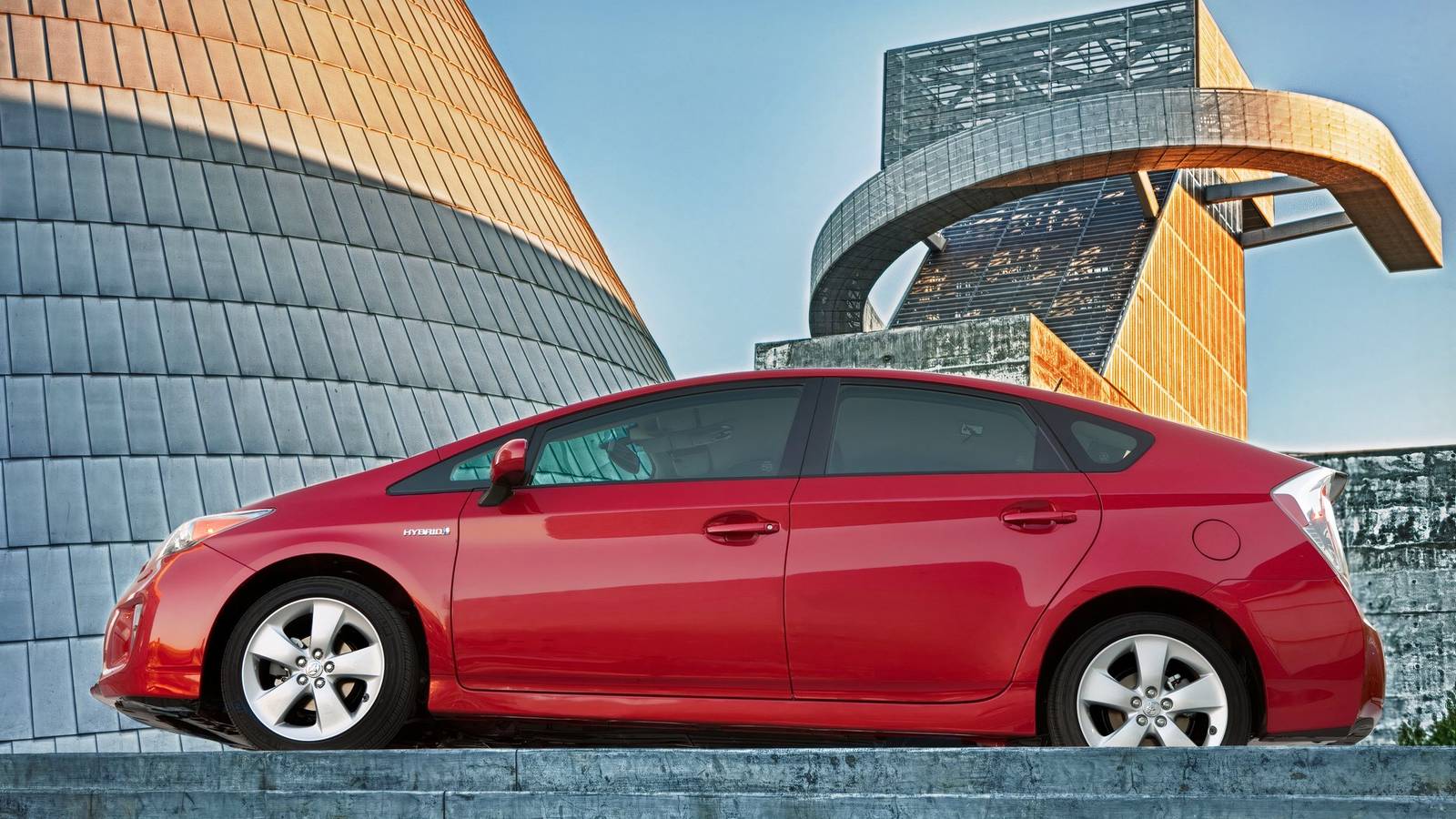
If one Toyota hybrid has become the poster car for long-term durability, it is the third-generation Toyota Prius. Sold from the 2010 through 2015 model years, this version of the Prius helped cement the model’s status as one of the most durable hybrid vehicles ever made. People from this Prius generation often appear on accounts of high mileage. Examples over 200,000 miles are common, and several have gone much farther. In fact, 300,000-mile Prius models are so prevalent now that they hardly stand out. This kind of mileage is common for many owners. All this is evidence of the car’s intended purpose.
The Way The Prius Is Used Contributes To Its Durable History

Taxi fleets, delivery jobs, and rideshares are notoriously rough environments, and these vehicles have endured years of it. The Prius has proven time and again that it is a credible option, surviving those conditions with minimal severe problems. Despite facing real-world challenges and lacking optimal protective settings, it has established a reputation for resilience and perseverance.
And with that phenomenon, the Prius gains an advantage over its competitors that goes beyond positive reviews and customer devotion. That proves it. Many vehicles can boast long-term reliability with minimal wear and tear and regular maintenance. Constant use—often in congested areas, with numerous cars, and with little to no flash—is what made the Prius famous.

What Rivals Can Learn From The 2025 Toyota Hybrid Lineup
The 2025 Toyota hybrid lineup is the most comprehensive yet and stretches across the whole range, and here’s what the rivals need to keep an eye on.
The Engine And Hybrid System Behind Its Durability
1.8-Liter Engine And Toyota Hybrid Synergy Drive

A big reason the 2010–2015 Prius holds up so well is that its mechanical package is relatively straightforward. The third-generation model uses a 1.8-liter Atkinson-cycle four-cylinder engine paired with Toyota’s Hybrid Synergy Drive system. It is not designed to be exciting, and Toyota never pretended otherwise. The point was efficiency, smoothness, and long-term durability.

Fuel economy, not raw power, is the primary focus of the Atkinson-cycle engine, which makes it an ideal fit for the Prius’s purpose. In fact, the third-generation Prius was rated at around 51 mpg in the city and 48 mpg on the highway, with a combined figure of about 50 mpg depending on the model year and trim. In low-speed driving and when starting from a stop, the electric motor helps the gasoline engine so that it doesn’t have to work as hard. In the long run, that shared workload helps reduce mechanical stress.

The electric side of the system further enhances the Prius’s calm and efficient character. Rather than relying on a complicated turbocharged setup or extracting high output from a small engine, Toyota focused on a powertrain designed for predictable performance without unnecessary strain. That approach may sound conservative, but it is often exactly what helps a car last.

The Used Hybrid With The Best Fuel Economy You Can Get For Under $15,000
Discover the best used hybrid under $15,000, offering outstanding fuel economy and great value for budget-conscious drivers.
Why These Cars Need So Few Repairs
Engineering That Reduces Mechanical Stress

The Prius’ reputation for needing very few repairs stems from its engineering, which reduces stress in day-to-day driving. Hybrid vehicles like this can actually avoid some of the wear that builds up in traditional gasoline cars, especially in urban use. For starters, the hybrid system helps reduce the engine workload. In normal commuting, the gasoline engine is not constantly under pressure to do all the work itself. The electric motor assists when needed, and that means the engine can spend more of its life operating under lighter loads. Over the long run, that can make a real difference.

The Prius also has fewer traditional wear points than some conventional vehicles with more complex drivetrains. There is no conventional-stepped automatic transmission shifting through gears as many gas-only cars do, and Toyota’s hybrid system has long been praised for its smooth, durable operation. The result is a powertrain that tends to feel less stressed even when the vehicle racks up serious mileage.
That Is Not To Say Every Prius Is Trouble-Free Forever

High-mileage cars always need maintenance, and older examples can still face age-related issues. But compared with many vehicles tasked with covering the same distance, the Prius has earned a reputation for avoiding catastrophic drama. It is one of those rare cars where the boring engineering choices turn out to be exactly what owners appreciate later.

This Older Hybrid Is The Best Choice For Long-Term Reliability
There’s no better poster for reliability than this trusty hybrid compact car.
Why It’s Still A Smart Used Car Today
Cheap To Run And Built To Last

The strongest case for the 2010–2015 Prius is how sensible it still feels today. Used-car buyers are often forced to choose between affordability and dependability. Cheap cars can come with hidden problems, while reliable ones sometimes hold their value so well that they stop feeling like bargains. The Prius manages to sit comfortably between those two extremes.

Fuel economy is one of its biggest advantages. Even by current standards, the third-generation Prius remains impressively efficient, which means owners can continue saving money at the pump. That matters even more now, as running costs have become just as important as the purchase price for many buyers.
Used Pricing Is Another Reason It Stands Out

There are still plenty of Prius models on the market, giving buyers a lot of choice. Despite its strong reputation, it can often be found at a lower price than many newer hybrids, while still offering the dependability and efficiency people expect from a Toyota. Then there is the lifespan itself. A used car that can realistically keep going for years after purchase offers real value. For students, commuters, delivery drivers, or anyone who needs a dependable daily driver, the Prius remains one of the smartest used cars you can buy.

The Used Japanese Hybrid With The Best Fuel Economy Under $20,000
This forerunner in the hybrid movement delivers astonishing fuel economy thanks to a few clever upgrades.
Why The Toyota Prius Hybrid Is Still Relevant

The 2010–2015 Toyota Prius was never meant to be glamorous. It was not built to win people over with style, speed, or luxury. Its real strength is much more useful: the ability to keep going year after year with very little drama. In a time when long-term durability feels increasingly rare, that matters more than ever. That is why this Toyota hybrid keeps appearing in stories about 300,000-mile cars. It is not luck. It is the result of years of hybrid development and a design philosophy that valued long-term dependability over short-term flash. Plenty of cars promise to save you money. Very few still feel like a smart decision after hundreds of thousands of miles. The Prius does.
Sources: Toyota USA, iSeeCars, Consumer Reports, The EPA