
At a time when new-car prices have reached record highs, increasingly pushing middle-class Americans towards the pre-owned market, the luxury car space in the country has been growing in strength. While several factors are at play, the dogged determination of most luxury car brands in the market to play big in the electric vehicle (EV) space, coupled with increasing disposable incomes among High Net-Worth Individuals (HNIs), is adding wind to the sails of luxury-car manufacturers. But is your dream of driving a luxury car all but over if you are not an HNI?
According to a report from Boston Consulting Group (BCG) and duPont REGISTRY Group, the American luxury and exotic car market is likely to grow from $110 billion currently to $180 million by 2035. Much of the surge is predicted to come from models priced between $100,000 and $170,000. But buyers in this segment aren’t delicately sensitive to price changes. It is the entry-level luxury car segment that is on a slightly sticky wicket. With economic uncertainties, rising sticker prices, soaring ownership costs, and quickening depreciation rates, the target group of this particular segment — primarily young professionals and empty nesters — could begin to opt for practicality over spending powered by emotions.
Skipping Over The Stepping Stone

Luxury and affordability do not often go hand-in-hand. This holds true in the automotive space as well. And this is why entry-level luxury car models from brands like Mercedes-Benz, Audi, and BMW have been crucial, bringing in newer, often younger customers into the brand’s fold. The margins, however, are seldom worth it.

The American automotive market today is witnessing a ‘K-shaped’ split, with high-income customers powering luxury car sales while average affordability is slipping. Margins on high-end vehicles are significant, prompting luxury brands to double down on such models. What this has done, according to J.D. Power market analysis, is to allow top-tier mainstream car models and offerings from premium brands to fill a void. Want a lot of features, a dollop of performance, and a generous dose of luxury? One brand in particular knows just the recipe.

10 Used Luxury SUVs Under $35,000 That Feel Like A Million Bucks
These are the standout SUVs that feel they are worth every penny.
Affordability, Not Austerity

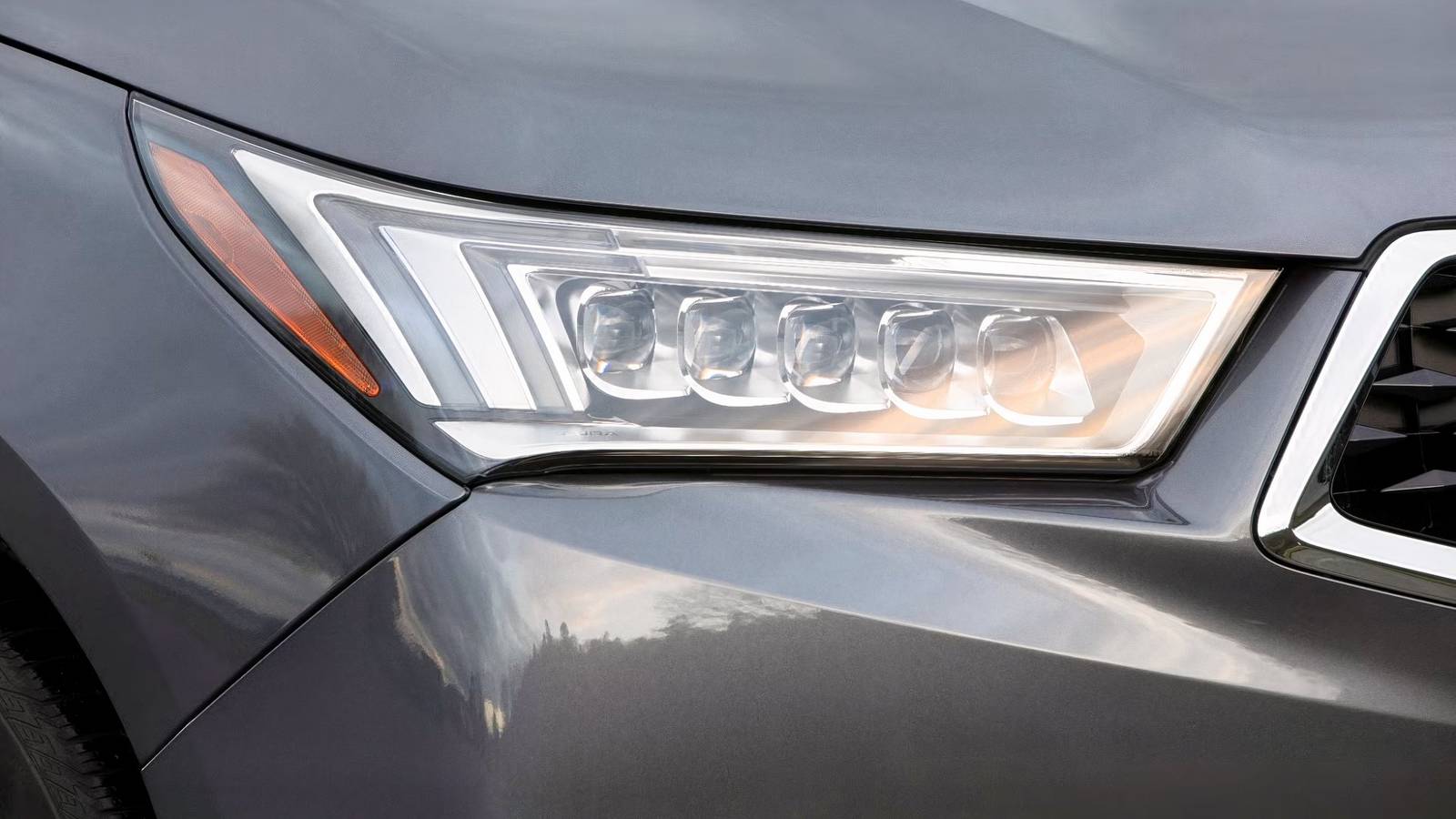
Much like how Lexus is the luxury arm of Toyota, Acura is the luxury offshoot of Honda. And while most Acura models may not win many prizes in the competition for bestsellers, owners swear by the performance, reliability, and yes, even the feeling of luxury that their cars have to offer. It would be automotive blasphemy to compare this last bit to what brands like Mercedes, BMW, and Audi often offer. But playing in a price bracket between $33,400 (Integra sedan) and $75,000 (MDX Type S SUV) allows Acura to define its own set of rules.

Headlining this set of rules is one core force — premium value. Take the Acura MDX, for instance. It carries a base MSRP of around $52,000 while going up against formidable rivals like the Audi Q7 (base MSRP of $62,000) and BMW X5 (base MSRP of $68,300). It also enjoys a pricing advantage over Japanese cousins like the Lexus TX and RX. How? Acura models aren’t particularly plush or offer a bespoke feel. There is no customization, Nappa leather seats, or air-fragrance system. And yet, the cabin and drive technology is far, far from being basic.
Honest Luxury Remains A Cornerstone

The folks over at Acura aren’t about cocooning you in automotive excellence, pampering all available senses. And yet, most of what you get in an Acura in the form of ‘usable’ luxury features is present. The MDX offers massage functions, 12.3-inch digital displays, panoramic moonroof, ambient lighting, Milano leather seats, and an advanced driver-assist system, or ADAS, named AcuraWatch by the company. Even the 2026 Integra is fairly well-kitted for its price point with a nine-inch touchscreen, wireless phone charging, and an optional 16-speaker ELS Studio 3D audio system in its resume. Once again, these don’t make Acura a leader in luxury by any means, but its value-packaging does its fair share of heavy lifting in pulling in potential buyers.

Why This Japanese Hybrid SUV Is A New Benchmark For Affordable Luxury
This well-rounded compact HEV SUV offers a world-class premium interior experience.
Honda-Approved Drive Dynamics And Peace Of Mind

Of course, you can’t miss the reliability and performance factors either. Acura Super Handling-All Wheel Drive (SH-AWD) is a system that distributes power between the front and rear axles and independently between the left and right rear wheels. On the move, this translates to impressive cornering performance and traction. Another set of highlights are the engines under the hood. Whether it is the predictable nature of the 1.5-liter turbo V4 inside the Integra base trim or the extremely capable 3.0-liter turbocharged V6 powering the Type S performance lineup of the brand, there’s plenty in the armory to cater to a wide set of buyers and their more nuanced preferences. For anyone still asking, the Integra Type S also gets a rev-matching, six-speed manual transmission!

All of these come in massively reliable packages, too. In the 2025 J.D. Power Awards for highest-quality vehicles, the Integra won top honors in the small premium car sub-category while the RDX won the crown in the compact premium SUV sub-category. While the former edged past direct rivals like the BMW 2 Series and Audi A3, the RDX upstaged the likes of Lexus NX, BMW X4, and even the Porsche Macan. Do note that the Integra and RDX won top prize in the highest-quality vehicles category based on responses from thousands of VIN-verified owners on their first 90-day ownership experience, collected by J.D. Power.

The Cleanest Example Of Honda’s VTEC V6 Is A Budget Luxury Sleeper
This sleek sedan boasts a 3.5-liter V6 engine and is a budget luxury sleeper that delivers on all fronts.
Still Not The Showstopper
Brand Acura Isn’t Shooting For The Stars. Not Yet Anyway

In all of 2025, Acura sold 133,433 units, which was 0.8 percent up from figures in 2024. Interestingly, though, sales of the MDX, its bestseller, fell by 17.3 percent to 41,460 compared to the previous year. Even sales of Integra dipped by 17.3 percent to 20,178 units.

Part of the blame is external. Absolutely intense competition in the three-row luxury SUV segment, additional tariffs imposed on imported units, and supply-chain constraints were very real problems. But there’s introspection needed as well. The larger perception of Acura just being a premium Honda — the Integra is often seen as a snazzier Honda Civic, does it no good at all.

The company has also been woefully late to the electric vehicle game, with its ZDX debuting just two years back. Overreliance on models like the MDX and RDX is also often cited as something holding Acura back. But while all of these factors, combined with intense pressure from German luxury brands, remain a problem, Acura is far from being a fringe player in the American market.

The Used Acura Hybrid SUV That’s Worth A Look Today
This is the hybrid SUV you need to get if you value performance and luxury.
Go Big Or Go Home
Acura Doubles Down On SUV Strategy

Broadly, Acura has five models in its current American lineup — ADX, ZDX, MDX, RDX, and Integra. Yes, just one sedan in the fray. And while this may impact sales figures, considering the glory days seen by Integra in the past, the American market as a whole has steadily gone in the direction of SUVs at the cost of sedans in recent times. Having a power-packed SUV lineup may therefore be a shot in the arm for Acura, even if most rivals have a similar plan at work.

It is still a tricky road to navigate. How to retain its premium value factor while convincing luxury car buyers about the Accura appeal? Here is where playing the pricing game well will continue to require a clever plan. Luxury for less has been the mantra that’s worked, and avoiding subscription-based feature services has earned it goodwill. Models with a well-appointed cabin that’s sportier when compared to Lexus, that have slightly better build quality when compared to Cadillac, and better value when compared to Audi, Mercedes, and BMW put Acura in good stead. What it lacks in terms of sheer brand image, it seeks to make up for by offering (almost) all else. And at less.
Source: Acura, Boston Consulting Group, J.D. Power