
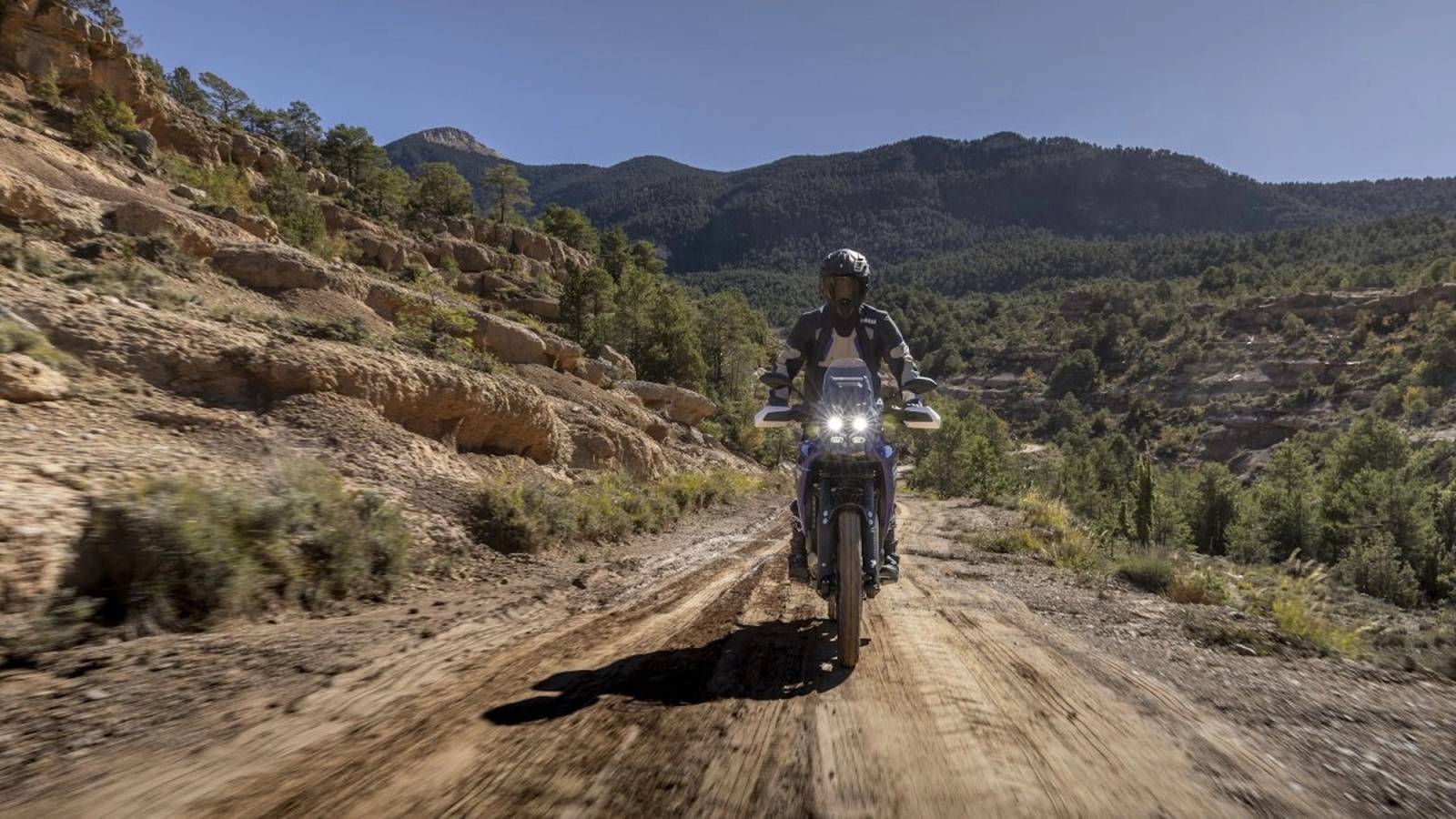
In recent times, the middleweight adventure bike market has exploded. We are getting one impressive bike after another, all promising the world to prospective buyers. The one reality that is slowly starting to sink in is that even middleweight bikes are still pretty heavy bikes and might not be the all-conquering off-road machines we were once promised.
At one end of the scale, we have the more comfort-oriented adventure tourers, and at the other, we have more off-road-oriented dual-sports and entry-level adventure bikes. Middleweight bikes are just as the name implies, in the middle, and are indeed a compromise. What these bikes can achieve both on and off-road is going to be limited, but the one thing that is critical for any bike that will be used for travel is reliability. So far, one middleweight remains ahead of the chasing pack in this key area.
To give you the most up-to-date and accurate information possible, the data used to compile this article was sourced from Yamaha. Whereas, the opinions are our own.

This Aprilia Is The 3-Year-Old Middleweight Adventure Bike You Should Buy In 2025
This popular ADV is depreciating faster than you might expect
The Yamaha Tenere 700 Outperforms Its Competition Where It Matters Most
MSRP: $10,999

Up until the Tenere 700 came out, manufacturers had failed to capture the imagination with their middleweight offerings. The Yamaha was marketed aggressively as a more off-road-oriented bike, and it worked incredibly well, almost too well. For a time, Yamaha struggled to keep up with demand, but since its debut, several equally good ADVs have come out.

Honda took some time to hit back, but the Transalp was certainly worth the wait. From the factory, it leans into the touring side a little more, and, as a result, was a little misunderstood when it first broke cover. In reality, Honda just acknowledged the limitations of a middleweight ADV like this. It is priced aggressively, and while this platform is still relatively new, it is a Honda and will almost certainly be reliable.

Suzuki invested heavily in this all-new 800 platform, and the ADV was the first to come out. While good, the V-Strom 800DE is a little on the porky side for a middleweight. Out of all the European brands, only one is within the same price range as the Tenere. The Aprilia Tuareg offers an impressive list of features, and is also one of the few ADVs that is actually lighter than the Yamaha.
The Tenere 700 Has The Ultra-Reliable CP2 Engine
Power: 73 Horsepower

The CP2 engine is the key point of difference between the Tenere and all the other bikes competing in this space. It is by no stretch of the imagination the most powerful, but like any crossplane parallel-twin, it does a great job of mimicking the attributes of a V-twin. This makes it a punchy powertrain, but more importantly, it is one of the most reliable engines ever put in a motorcycle.
A Genuine Point Of Difference

Most modern adventure bikes put a strong emphasis on the features they have to offer, which is understandable because that is what the market wants. But, when it comes to motorcycles used for travel, especially if that travel involves exploring hard-to-reach places, the single most desirable characteristic is mechanical reliability. This might seem like a simple concept, but the reality of the matter is that Yamaha is still ahead of the competition in this area.

Why Yamaha Put The CP2 Engine In Everything
The parallel-twin CP2 engine has made its way into several models in Yamaha’s lineup for all the right reasons
The Tenere 700 Is Still A Bargain

Since the Tenere was introduced, the price has gone up, but Yamaha has also updated the bike accordingly. In terms of features, the Tenere has always been more sparsely equipped than most of the competition, but it still has both traction control and ABS. Both are switchable, which means you are free to take matters into your own hands once the going gets rough. It is important to note that the Yamaha system is designed for the street.
While other manufacturers offer more sophisticated off-road ABS systems that add an extra safety net, Yamaha’s system is either on, on for the front only, or off. The traction control is also either on or off. It does get the obligatory TFT screen, which is now even bigger than the previous version. It offers an analog theme, which is a nice touch, but we can’t help but feel that big tablets like this serve more as a distraction than a help while riding off-road.

TopSpeed Tech: How Traction Control On Motorcycles Works
Traction control is a modern motorcycle rider aid that is just as important as anti-lock braking systems. But how exactly does it work?
A Minor Update, And A Major Fix

Updates have largely been kept to a minimum, but the big news was that the suspension got a major revision. The original Tenere was known for bottoming out on occasion, but Yamaha took the customer feedback on board and revised the suspension. This, coupled with its anti-squat feature, stands to improve the off-road performance. Unfortunately, on-road performance is still lacking. While the CP2 makes it pretty fun to ride on a twisty canyon road, long highway stints are not its strength.
With a hard dirt-bike seat – which was clearly designed for standing up as opposed to staying seated – and its more off-road oriented suspension, it is not the most comfortable motorcycle. While it is certainly significantly more comfortable than the average dual-sport, it is quite possibly the least comfortable of all the middleweight ADVs.

No motorcycle is perfect. The least of which is a middleweight adventure bike, which is quite literally designed to be compromised. It is not the best tourer, and while it is exceptional off-road, considering its size and weight, it will never be as good as a lighter dual-sport. But its key competitive advantage is simple mechanical reliability. If you buy a Tenere, it comes with a level of peace of mind that is hard to put a dollar value on once you are out in the wild or far from home.
Chassis, Suspension, And Weight Specifications
|
Chassis |
Double cradle steel tube |
|
Front Suspension |
43mm inverted fork, fully-adjustable (8.3-in travel) |
|
Rear Suspension |
Single shock, adjustable preload and rebound damping (7.9-in travel) |
|
Weight |
459 lbs |