
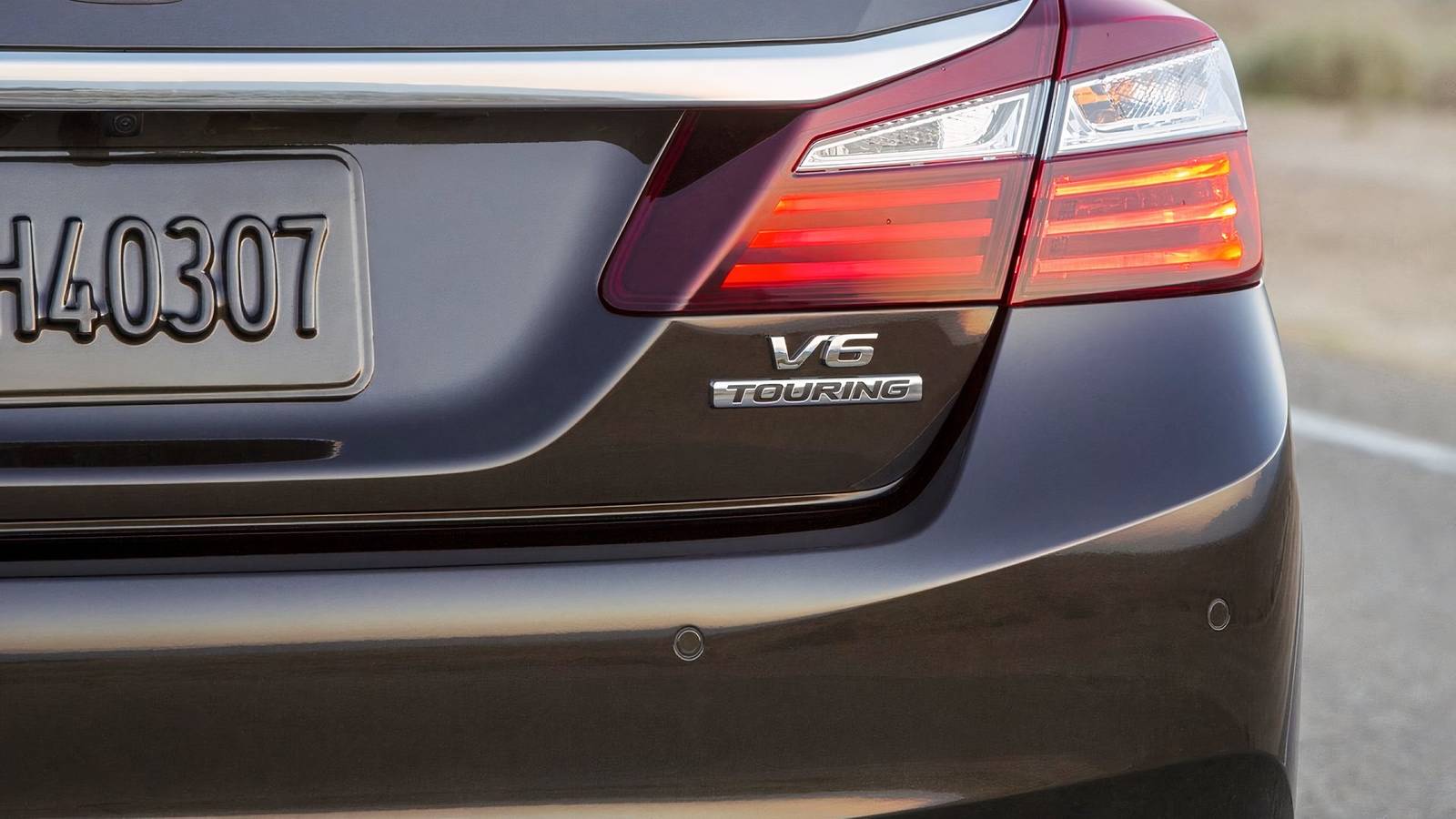
Honda’s VTEC-equipped V6 engines have given us the perfect blend of reliability, refinement, and genuine performance for about 35 years. We used these great engines in our family sedans, minivans, sports coupes, and up to the luxury flagship Acura models. The VTEC V6 is more than a great engine; it has become a byword for serious longevity, smooth power throughout the rev curve, and going about its business as advertised, no fuss, just plain honest power on demand.
In motoring terms, 35 years is a long time if you consider the first Model T was built only 117 years ago in 1908. There has been a strong shift in the last ten years to turbocharged four-cylinders, hybrids, and EVs. As a result, naturally aspirated V6s, particularly the high-revving VTEC Honda engine, are disappearing fast. It feels like the end of a golden era, but there are still a few holdouts on the market to remind us why we have loved this engine for such a long time. We’ll take a look at when, why, and how the VTEC V6 came about, and why it is disappearing. We will look at the last vehicles still available with this engine and why this engine has its own chapter in the history of automotive engineering.
When Practical Met Passion: The Rise Of The VTEC V6

Honda created the variable valve timing and lift control (VTEC) system for its DOHC engines in 1989, and the first VTEC in the US market was the 1991 Acura NSX, which had a 3.0-liter DOHC V6 (C30A). This technology was brilliant because it delivered torque low in the rev range and kept it going through higher revs by changing the cam profiles. This technology soon found its way into a growing number of 3.0-liter and 3.5-liter V6 engines. Honda soon worked around the structural issues that prevented VTEC on SOHC engines, allowing them to hit the market in the mid-’90s.
How VTEC Transformed The V6 Formula

V6 engines traditionally focused on torque and smoothness. By integrating VTEC, Honda was able to optimize valve timing and lift for both low-speed efficiency and high-rpm performance. At lower revs, it has conservative cam profiles to improve fuel economy and driveability. At higher revs, the cam profiles change and become more aggressive, and unlock more airflow.

This increases the horsepower and gives a sharper throttle response. In the V6, this was less dramatic than in the early four-pot VTECs, but it did add an unmistakable character that laid the foundation for its popularity. Models like the 2003 Honda Accord V6 and Acura TL Type-S were icons of this phenomenon, being both quick for family cars and genuinely engaging to drive. Power ranged from 240 to 289 horsepower, which was high for a naturally aspirated engine of the time.
The J-Series: Honda’s Masterpiece

The J-series engine family, introduced in the mid ’90s, was the heart of this success. The J30 and J35 became the backbone of Honda and Acura’s bigger vehicles. These engines were compact for a V6, thanks to a 60-degree bank angle. They had SOHC designs with VTEC, and were later improved by adding Variable Cylinder Management (VCM) for greater efficiency.

The 3.5-liter J35 was widely popular, used in the Honda Accord, Odyssey, Pilot, and Ridgeline, and the Acura TL and MDX. With power going beyond 300 horsepower in some cases, the J-series held its own as the turbo became more popular.

Honda VTEC: What It Is And How It Works
While most enthusiasts have heard about VTEC, not everyone knows exactly how it works. We dig deeper to understand Honda’s legendary engine tech
Why The VTEC V6 Is Disappearing

The VTEC V6 did not decline because it was a failure or even up to the task anymore. Factors like regulation, efficiency targets, and market evolution played a major role in its demise. Automakers worldwide are under pressure to reduce emissions and improve fuel economy. Turbocharged four-cylinders deliver the same peak horsepower with a smaller displacement and better EPA ratings. Hybrids also grew massively, adding a compelling power/efficiency equation that made it difficult to justify the naturally aspirated V6.
Emissions, Efficiency, And Downsizing

Turbocharging allows a smaller engine to produce more power on demand while operating very efficiently during low-load driving. For carmakers seeking to meet regulatory standards, this is a no-brainer. Add a hybrid system to this setup, and the smaller turbo setup is hard to beat. The VTEC V6 simply could not match the efficiency of the turbo options. As a result, the Honda Accord dropped the V6 in the 2017 model year, and Acura replaced its V6 with turbo four and V6 options. Even minivans and crossovers increasingly use turbo or hybrid setups.
Consumer Shift To Turbo And Hybrid

Consumer demand has shifted as well. Turbo engines give peak torque at low revs, making the car feel responsive and quick. The instant electric torque of a hybrid gives the same effects without turbo lag, also without needing a bigger displacement engine. Enthusiasts swear by the linear, high-revving nature of the VTEC V6, but most buyers want fuel savings and smooth acceleration, and the market always trumps diehard enthusiasts. The VTEC V6 is fading because the market has moved on.

The True Inner Working’s of Honda’s Awesome VTEC System: Video
VTEC stands for Variable Valve Timing & Lift Electronic Control
The Last Holdouts Keeping The VTEC V6 Alive

It takes time to completely kill off a great piece of engineering, and the VTEC V6 has not vanished completely — yet. Hondas with V6 VTEC engines are around for 2026, as is a large Acura SUV.



Honda Odyssey And Ridgeline

The Honda Odyssey and Ridgeline currently use a version of the 3.5-liter V6 J35. The Odyssey is a minivan, and the Ridgeline a pickup, and its target market seems to be older drivers more set in their ways, who don’t want to know about turbos or hybrids. They enjoy the linear power delivery, the smoothness, and the durability of the V6, as well as the real-world driveability. It is doubtful if these models will keep the V6 going into the 2027 model year.
Acura MDX Hangs Onto VTEC By A Thread

The Acura MDX is a large, three-row, seven-seat SUV. In the base models, it has a 3.5-liter V6 using i-VTEC and Variable Cylinder Management that makes 290 horsepower and 267 pound-feet of torque. It also has a more powerful 3.0-liter V6 Turbo, but it is not really part of this story.

10 Of The Best Engines Ever Built By American Carmakers
Yes, Germans are great at engineering cars, but that doesn’t mean Americans aren’t. Here are some examples.
Why The VTEC V6 Still Matters

We are quick to throw out old tech as outdated and useless, but the VTEC V6 has carried the torch for Honda and the drivers who love its cars for over three decades, and it will join the ranks of great engines alongside icons like the GM LS series or the Hemi V8.
Linear Power And Mechanical Predictability

The VTEC V6 was a great engine in a simpler time, before the advent of boost spike or hybrid blending. The power is delivered in a linear, predictable way. The throttle feels connected to the engine revs. It gives real driving feel, that blend of sound, vibration, and g-forces that is so often missing in our new cottonwool cars. The relative simplicity, compared to modern cars, contributes to its long-term reliability.
End Of Analog

The demise of the VTEC V6 is more than the end of an engine configuration. It also marks the high-water mark of the analog engine, before the tide swept out again. Future cars, including Honda and Acura, will move increasingly to hybrid and full electrification, the current sentiment in the US notwithstanding. Performance and efficiency will always trump nostalgia, even if it takes a while.
Sources: Honda, Acura