
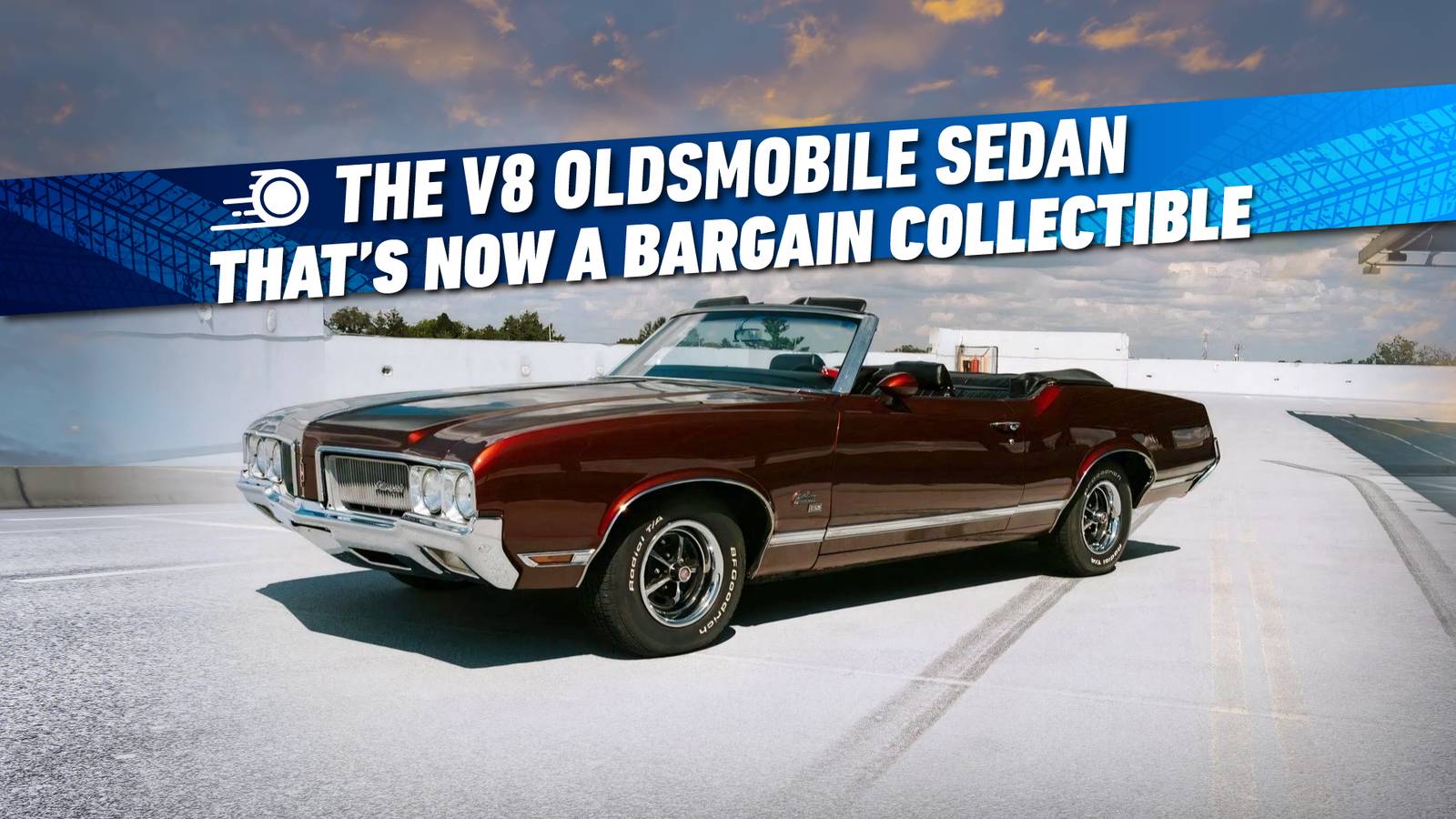
In the world of American muscle and rear-wheel drive nostalgia, there are few stories as intriguing as that of the Oldsmobile Cutlass Supreme, a V8-powered family sedan that, for a decade beginning in the 1960s and peaking through the 1970s, not only dominated showroom floors but also outsold its more celebrated and aggressively marketed sports car twin, the Oldsmobile 442. At a time when automotive enthusiasts drooled over quarter-mile times and snarling exhaust notes, mainstream buyers were drawn to the Supreme’s rare blend of everyday comfort and genuine muscle car performance, a combination that turned what might have been a footnote in automotive history into one of the era’s most commercially successful models. Today, as interest in classic and collectible cars broadens from pony cars and exotics to encompass the full spectrum of automotive culture, the Cutlass Supreme is enjoying a renaissance, with values beginning to climb and collectors scratching their heads at how a once-ubiquitous used-car-lot staple could now be viewed as a potentially smart investment.
What makes this transformation remarkable isn’t just the car’s performance pedigree, but the way it embodies an era when big-block V8 engines were the norm and practicality didn’t preclude performance. The Cutlass Supreme balanced those elements so well that it outsold even the vaunted 442. For enthusiasts and collectors alike, the Supreme’s rise from affordable back-road cruiser to bargain collectible speaks volumes about shifting tastes, the enduring appeal of honest performance, and the market’s rediscovery of cars that were once overlooked in favor of flashier alternatives.
The Family Sedan With Muscle-Car DNA

From the moment it rolled off the assembly line, the Oldsmobile Cutlass Supreme defied easy categorization, presenting itself as a family-friendly sedan with the guttural growl and straight-line pace normally reserved for pony cars and full-blown muscle machines, a juxtaposition that made it both practical and exciting for a broad swath of American drivers who wanted thrills without sacrificing daily usability.

Beneath its relatively conservative exterior lines lurked a range of potent V8 engines, from the small-block 330 and 350 cubic-inch units to the more brutish 400 and 455 cubic-inch mills, each delivering torque and horsepower figures that could embarrass many dedicated performance cars of the era, yet still offered smooth, predictable power delivery suited to everyday driving. That blend of accessible performance and unpretentious packaging forged a unique identity for the Supreme, giving it the sort of muscle-car DNA that wasn’t flaunted with flamboyant graphics or radical styling, but was deeply appreciated by anyone who experienced its linear power and effortless highway cruising capability.
Enough Comfort And Space To Pass As A Daily Commuter

In an era when American car buyers were beginning to demand more comfort features alongside performance, the Cutlass Supreme answered that call with plush interiors, generous space, and refinement that made long drives feel effortless, even when underpinned by an engine capable of brisk acceleration that few competitors in the family sedan segment could muster. Its ride quality, bolstered by well-tuned suspension components and comfortable seating, made it a favorite for weekend getaways and daily commuting alike, a versatility that few true sports cars could match given their stiffer suspensions and harsher ride characteristics. As a result, the Supreme became a symbol of a transitional period in automotive culture when buyers were no longer willing to choose strictly between performance and comfort, and instead wanted both in a single package.

10 Legends That Prove 1970 Was GM’s Muscle Car Magnum Opus
1970 saw a convergence of style and performance, creating an epic year for GM muscle cars.
Why Buyers Chose The Cutlass Supreme

When prospective car buyers walked into Oldsmobile showrooms in the late 1960s and 1970s, they were often confronted with a choice: a lightweight, aggressively styled 442 with its racing inspiration, or the more composed, spacious Cutlass Supreme that promised performance without the theatrics and lifestyle image of a sports car.

Many families and enthusiasts alike gravitated toward the Supreme not simply because it was more affordable, but because it offered a customizable range of options that could tailor the car to individual needs, whether that meant a potent V8 under the hood, an automatic transmission for ease of use, or luxury features like air conditioning and premium upholstery. This configurability made the Supreme appealing to a wider demographic, from young professionals seeking a bit of flair with practicality to older buyers who appreciated performance but prioritized smooth, comfortable travel over track-ready dynamics.
No-Nonsense Engineering Birthed A Dependable Reputation

Importantly, the Supreme’s reputation for reliability and solid engineering further cemented its appeal, as buyers learned that the robust V8 engines and straightforward mechanicals translated into fewer headaches and more confidence on long hauls or daily errands, a contrast to some sports cars of the era that were notorious for finicky behavior and high maintenance costs. Dealers also played a part in shaping the Supreme’s success story, often promoting it as the sensible alternative to the 442, offering muscle performance in a package that didn’t intimidate parents or break the bank, which resonated deeply during years marked by economic uncertainty and changing automotive tastes. Combined with savvy marketing and positive word-of-mouth among owners, the Cutlass Supreme carved out a place in buyers’ minds as the sensible performance choice, a sedan that didn’t apologize for its power but wore it with maturity.

The Rise And Fall Of American Sedans: What’s Next For This Iconic Segment?
The American sedan has since seen its glory years pass it by, find out what the future holds for this once stalwart of a segment on American roads.
The Cutlass Supreme’s Unmatched Mainstream Appeal

While pony cars and true muscle cars often generated headline-grabbing performance figures and quarter-mile bragging rights, the Cutlass Supreme built its legacy in the driveways and garages of everyday Americans, becoming one of the most common V8-powered sedans on the road by the mid-1970s, a testament to its mainstream appeal and broad acceptance. Its clean, classic styling resonated with buyers who appreciated its understated good looks, which avoided the sometimes garish excesses of muscle car ornamentation while still conveying presence on the road, a balance that extended its appeal across age groups and lifestyles. This accessibility was further amplified by its pricing strategy, which positioned the Supreme as a value proposition. Buyers could enjoy big-block performance at a price point that made sense for a family car, a combination that few competitors could realistically match without sacrificing key features or adding undesirable compromises.
The All-Rounder That Buyers Of All Walks Flocked To

The Supreme’s mainstream success was reflected not only in showroom numbers but also on the road, where its presence became ubiquitous in both urban and rural landscapes, a familiar sight that underscored its role as a dependable, powerful, and comfortable choice for everyday driving. Enthusiasts who might otherwise have gravitated toward flashier models found themselves drawn into the Supreme fold because it offered such broad utility without a loss of excitement, and even buyers uninterested in performance couldn’t deny the allure of a car that felt substantial, solid, and responsive. In essence, the Supreme’s appeal lay in its ability to be everything to everyone, a comfortable cruiser, a weekend warrior, and a practical family car.

The Rarest Muscle Car Of The 60’s With A Factory Turbocharger
Unravel the mystery of the first production car with a factory-installed turbocharger, a rarity on the road and in collections.
From Used-Car Lot Staple To Rising Classic: Why The Cutlass Supreme Is Finally Getting Respect

For decades after its heyday, the Cutlass Supreme was often dismissed as just another tired used-car lot staple, a car whose ubiquity made it invisible in a classic market crowded with more iconic names, yet this very commonness preserved a large population of survivors, many in sound mechanical condition and ripe for restoration. As classic car culture has evolved, enthusiasts and collectors have begun to reexamine cars like the Supreme through a fresh lens, one that values authenticity, affordability, and cultural significance over mere rarity or auction spectacle, which has elevated the Supreme’s standing among a new generation of buyers who appreciate its blend of history and performance. Online forums, social media groups, and regional car shows have all played a role in resurrecting interest, showcasing well-preserved examples.

Moreover, as prices for traditional muscle cars like the 442, Chevelle SS, and Mustang have escalated into the stratosphere, the Supreme has quietly grown in relative value, its affordability suddenly looking like a glaring omission in the classic market narrative rather than a reflection of intrinsic worth. Collectors are starting to recognize that the Supreme’s performance potential, especially when equipped with larger displacement V8s and period-correct options, offers a compelling collector story that is underpinned by real performance and a loyal following. This shift in perception, coupled with growing interest in “sleeper” classic cars that offer more value for less money, has positioned the Cutlass Supreme as a rising star in a segment once overlooked, making it a fascinating study in how markets can recalibrate what is considered desirable.
Why The Cutlass Supreme Is A Smart Buy For Collectors Today

For collectors with an eye on both enjoyment and investment potential, the Cutlass Supreme presents an enticing proposition: values that remain within reach compared to marquee muscle cars, paired with a compelling backstory and genuine performance credentials that make ownership rewarding on multiple levels. Because many Supremes were well cared for and stored away as their owners aged, a healthy supply of solid, restorable examples exists, meaning buyers can find cars with matching numbers, desirable options, and sound structure without paying a premium that would cripple the investment thesis before it even begins. This availability, combined with a growing community of enthusiasts who can offer parts, advice, and camaraderie, lowers the barrier to entry for new collectors and fosters a supportive ecosystem that encourages preservation and restoration.

As more enthusiasts recognize the Supreme’s unique place in history, a sedan that outsold its sports car twin while still delivering V8 thrills, demand is likely to continue rising, particularly for well-sorted examples with original engines, transmissions, and documented provenance. In a market where true bargains are increasingly rare, the Cutlass Supreme stands out as a smart buy today, a car whose blend of performance, practicality, and emerging collectible status makes it as satisfying to own and drive as it is to admire.
Sources: General Motors, Hagerty, Bring a Trailer