
The SUV market has become one of the most competitive spaces in the motoring industry, and at the center of it all sits a familiar name. Over the years, certain models have come to define what buyers expect from a practical, reliable, and efficient family vehicle. These are the cars people default to—the ones that feel like the safe choice. Few cars represent that better than the Toyota RAV4. It has built its reputation on consistency, offering practicality, strong fuel economy, and long-term dependability. For many buyers, it is the starting point when shopping for a compact SUV, and often the final decision as well.
But that popularity has had an interesting side effect. As the RAV4 has grown in size, capability, and price, it has also moved slightly away from what some buyers are actually looking for. Not everyone needs a larger SUV or wants to stretch their budget to get one. Some want the same core qualities—reliability, efficiency, and everyday usability—in a smaller and more affordable package. That is where things start to get interesting. Within Toyota’s own lineup, there is another SUV that quietly delivers many of those same strengths, but often gets overlooked.
Why The Toyota RAV4 Became The Default Family SUV
Practicality, Reliability, And Hybrid Efficiency

The Toyota RAV4 did not become one of the best-selling SUVs by accident. It earned that position by consistently delivering exactly what buyers want in a family vehicle. Space is one of its biggest advantages. The RAV4 offers a roomy cabin, generous cargo capacity, and the kind of versatility that makes it easy to live with. Whether it is school runs, road trips, or daily commuting, it handles all of those roles without much effort. Reliability is another key factor. Toyota has built its reputation on long-lasting vehicles, and the RAV4 benefits directly from that.

Owners expect it to run for years with minimal issues, which makes it an easy recommendation for anyone prioritizing low-stress ownership. Then there is efficiency. The hybrid version of the RAV4 has become especially popular, offering excellent fuel economy without sacrificing practicality; for 2026, the RAV4 is hybrid-only, showcasing the heavy investment from Toyota in efficient mobility. It gives buyers a way to reduce running costs while still enjoying the space and capability of an SUV. All of that makes the RAV4 the obvious choice. But it also raises a question: what if you want something similar, just smaller and more affordable?

Toyota’s Fastest-Growing Compact SUV Isn’t A RAV4
The Toyota Corolla Cross is outpacing the RAV4 with fast-growing sales, hybrid options, and everyday versatility in 2026.
The Growing Demand For More Affordable SUVs
Buyers Want Similar Practicality At A Lower Price

As SUV prices continue to rise, more buyers are rethinking what they need. Not everyone requires a full-size or even a compact SUV. For many drivers, especially those in urban environments, a slightly smaller vehicle makes more sense. At the same time, expectations have not changed. Buyers still want the same core qualities—reliability, efficiency, modern tech, and everyday practicality. They want it at a lower price point.

Official Giveaway
🔥 Limited Time
Enter The Weekly Giveaway
Win Car Guy Gear
Sign up to our newsletter to enter. Follow on socials for more entries.
New giveaways every 2 weeks
No purchase necessary. Open to US residents 18+. Full giveaway details on the page.

This has created strong demand for smaller crossovers that can deliver a similar experience without the added cost. These vehicles are often easier to drive, more efficient, and more financially accessible, which makes them appealing to a wide range of buyers. The challenge is finding one that does not feel like a compromise. Many smaller SUVs sacrifice space, performance, or overall refinement. But few manage to strike a better balance.

The Toyota SUV That Sold More Than The 4Runner, Tundra, And Tacoma Combined
This awesome Toyota SUV is the king of the market and has outsold not only its competitors but also its other Toyota counterparts.
The 2026 Toyota Corolla Cross Offers A Surprising Alternative
A Smaller SUV That Delivers Many Of The Same Benefits

The 2026 Toyota Corolla Cross is one of those vehicles. It sits below the RAV4 in Toyota’s lineup, but it carries many of the same qualities that made the larger SUV so successful. At first glance, it might not seem like an obvious alternative. It is smaller, less powerful, and positioned as a more budget-friendly option. But spend some time looking at what it offers, and the similarities start to stand out.

Like the RAV4, the Corolla Cross is built around practicality and ease of use. The design is simple and functional, with clean lines and a familiar SUV shape. It does not try to be overly aggressive or flashy, which helps it appeal to a broad audience.

How The Small Toyota Corolla Cross Is Quickly Becoming A Giant In America
The Toyota Corolla Cross quietly stands out as a balanced choice in a market chasing electrification and larger SUVs.
How The Corolla Cross Compares To The RAV4
Similar Versatility In A Smaller Package

The differences between the Corolla Cross and the RAV4 are clear, but so are the similarities. In terms of size, the Corolla Cross is smaller, which makes it easier to maneuver in tight spaces and more suitable for city driving. It sacrifices some cargo capacity compared to the RAV4, but still offers enough room for everyday needs, including groceries, luggage, and small trips.
Gas-Only And Hybrid Options Are Available

Under the hood, the Corolla Cross uses a 2.0-liter four-cylinder engine producing around 169 horsepower and 151 pound-feet of torque. It is paired with a continuously variable transmission (CVT) and offers either front-wheel drive or, on some models, all-wheel drive. Of course, I drove one for an extended period during the festive season, and it happened to be the hybrid variant. It’s by no means quick; instead, it’s a smooth-sailing SUV. The CVT gearbox is uninspiring, but efficiency made up for its driving flaws.

For buyers focused on saving a few dollars, the hybrid version is more compelling. The Corolla Cross Hybrid combines a 2.0-liter engine with electric motors to produce a more responsive driving experience while delivering strong fuel economy, exceeding 40 mpg combined.
The RAV4, by comparison, offers more power and more space, but also comes at a higher price. For many buyers, the Corolla Cross provides enough of what they need without the added cost or size.

The Hybrid SUV Toyota Just Redesigned To Beat Every Rival At Once
Toyota’s 2026 RAV4 redesign isn’t just continuing its surge; it’s increasing its lead against the competition even further.
Built For Everyday Use

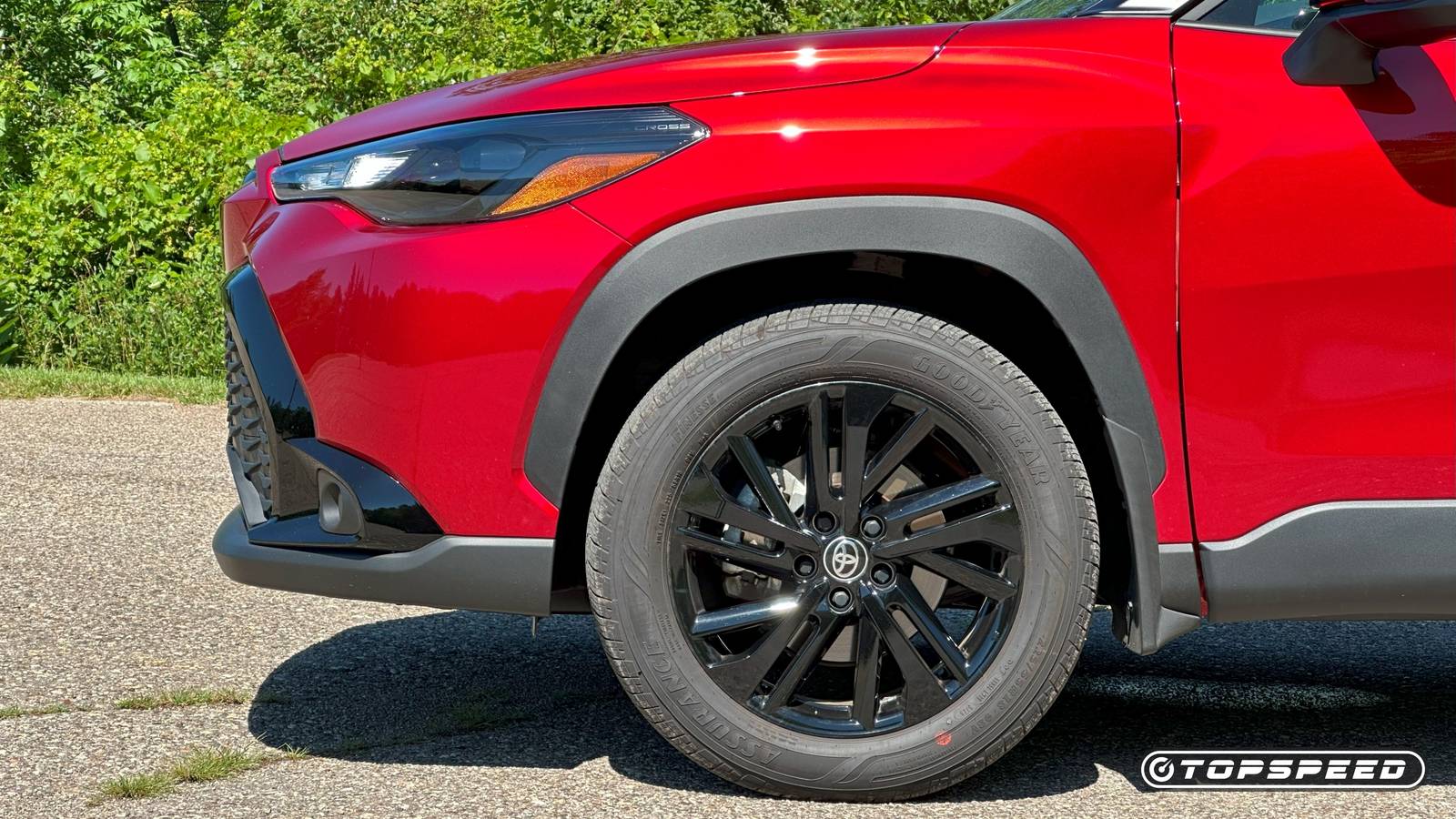
The Corolla Cross may not look as bold as some of its rivals, but its design works in its favor. It has a clean, straightforward appearance that emphasizes function over flash. The front end features a wide grille and simple lighting design, while the overall shape stays true to traditional SUV proportions. It does not try to stand out aggressively, but it looks modern and well put together.
Inside, The Focus Is On Practicality And Ease Of Use

The cabin is clean and straightforward, with physical controls and a touchscreen infotainment system supporting Apple CarPlay and Android Auto. Materials feel solid, prioritizing durability over flashy gimmicks, while higher trims add a larger display and extra comfort features. All of this comes at a more affordable price point than the RAV4.

Seating is comfortable, especially in the front, and visibility is good thanks to the upright driving position. Rear-seat space is adequate for passengers, and the cargo area offers enough flexibility for daily use. It may not feel luxurious, but it feels well-built and designed to last, which is exactly what many buyers are looking for.

The Most Practical And Balanced Hybrid SUV For 2026
It’s the best-selling SUV in the U.S. for a reason!
Rivals And Market Position
Where It Fits In The Segment

The Corolla Cross competes in the subcompact SUV segment, where it faces strong competition from models like the Honda HR-V, Hyundai Kona, Kia Seltos, Subaru Crosstrek, and Mazda CX-30. Each of these rivals offers something slightly different. The HR-V focuses on space and practicality, the Crosstrek leans into all-weather capability, and the CX-30 emphasizes design and driving feel. The Corolla Cross takes a different approach. It focuses on reliability, ease of ownership, and efficiency. It may not lead the segment in any single category, but it offers a well-rounded package that appeals to a wide audience.
Why The Corolla Cross Is Becoming A Smart Choice

One of the biggest advantages of the Corolla Cross is its affordability. Pricing starts at $25,035 for the base gas-only model, making it significantly cheaper than many RAV4 models, which start at $31,900 for the 2026 MY. That lower price does not come with major compromises. Buyers still get a practical SUV with modern technology, strong fuel economy, and Toyota’s reputation for reliability.

Running costs are also relatively low. The efficient engines, especially in hybrid form, help reduce fuel expenses, while Toyota’s track record for durability keeps maintenance costs manageable over time. For many buyers, that combination is exactly what they are looking for. It offers the core benefits of a larger SUV without the added financial pressure.

Every Small Toyota SUV You Need To Know About
Explore Toyota’s lineup of small SUVs, blending efficiency, practicality, and reliability. Discover which model fits your lifestyle best!
A Budget SUV That Makes More Sense Than You Expect
Why The Corolla Cross Stands Out

The Toyota Corolla Cross works because it understands what matters most to its target audience. It delivers on all fronts, especially regarding the added sentiment of reliability, which solidifies the deal. It may not replace RAV4 for everyone, but it does not need to. Instead, it offers an alternative for buyers who want something simpler, smaller, and more accessible. In a market where SUVs continue to grow in size and price, the Corolla Cross feels like a return to basics. And for many drivers, that is exactly what makes it the smartest choice.
Sources: Toyota, The EPA, CarEdge