
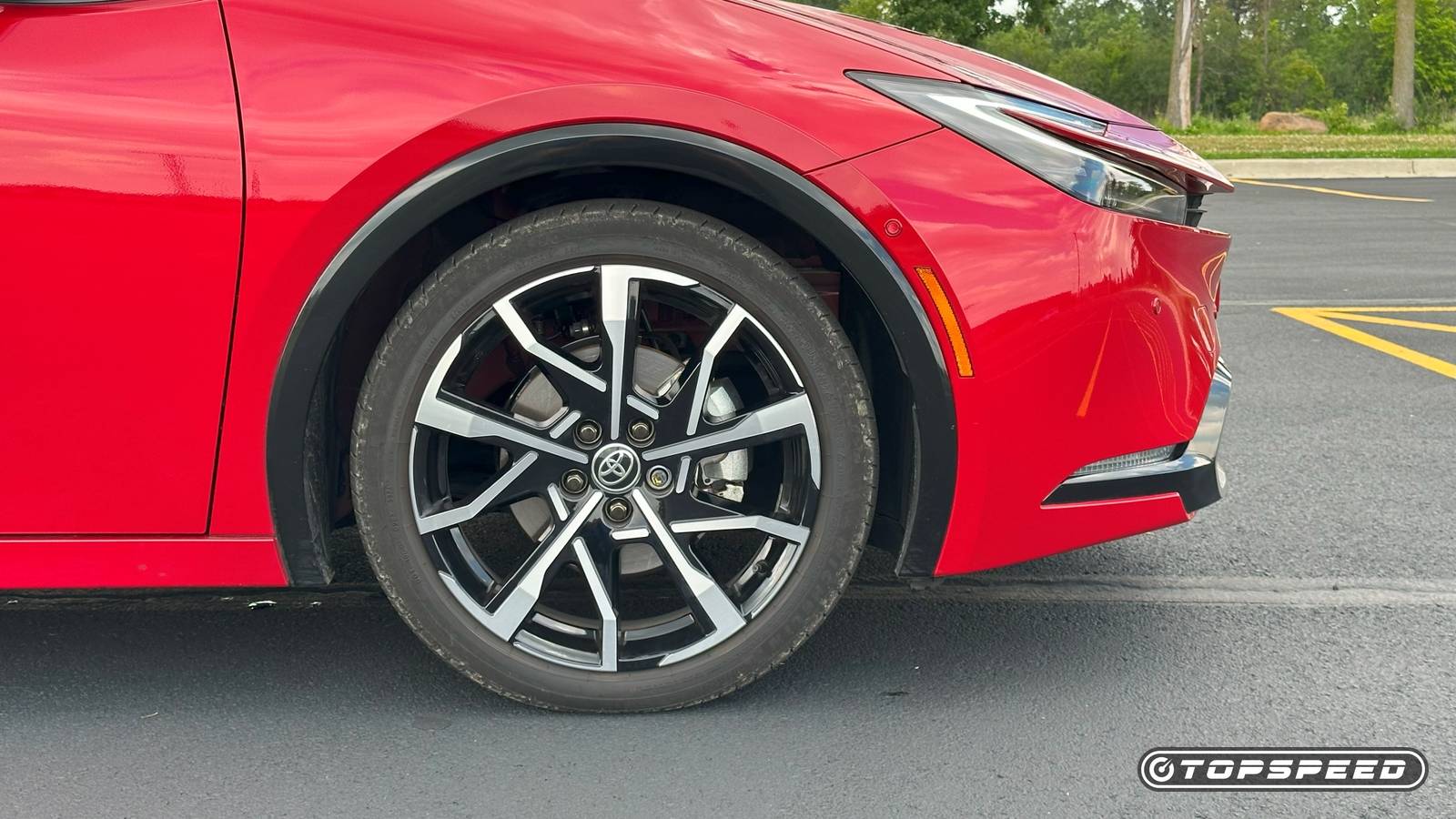
Toyota is widely considered the expert when it comes to gasoline-electric hybrid cars, especially in the U.S. The Japanese brand has a longstanding history of creating accessible and dependable HEVs, catering to various needs and lifestyles. While most of these products tend to perform well, there’s one compact hatchback that has lost a bit of steam over the first quarter of this year.
Many consider this to be Toyota’s poster child for hybridization, but it sits in the niche subcompact segment, which explains why it hasn’t been as popular as most of its siblings. Despite its poor performance, it remains one of the brand’s most financially accessible and efficient hybrids, resulting in it being a seriously overlooked product.
Hybrids Are Finding New Love In 2026

As of 2026, the demand for hybrid cars in the U.S. has reached a historic peak, with the market estimated to be valued at approximately $778 billion and capturing a dominant 42 percent share of the global hybrid sector. This surge is primarily driven by a pivot among American consumers who seek significant fuel efficiency and lower emissions without the range anxiety or infrastructure hurdles currently associated with full electric vehicles.
Major industry players include Toyota, Honda, Ford, Hyundai, and Kia, all of whom have capitalized on this trend by standardizing hybrid powertrains across their most popular lineups. Over the last decade, these vehicles have evolved from niche, economy-focused commuters into sophisticated, high-performance vehicles. Modern systems now benefit from advanced power electronics and lightweight material science to provide better acceleration and towing capabilities than their gasoline-only predecessors, effectively positioning hybrids as the new mainstream standard for the American road.
Toyota Remains The Hybrid King

When it comes to gasoline-hybrid technology, it’s very difficult not to think about the Toyota brand first. While Honda technically was the first company to introduce the technology with the first-generation Insight, Toyota led the way for development. The Japanese brand has always maintained a high level of commitment to hybrids, led by the Prius, but popularized by models like the Corolla, Camry, and RAV4.
Toyota’s philosophy has always been to incorporate multiple fueling methods, including hydrogen, diesel, and electricity. Hybrid models have increasingly become the driving force of its modern catalog, with the 2026 Camry and RAV4 being available exclusively with its new-generation HEV drivetrains. Toyota backs its technology with a comprehensive warranty that covers all hybrid components for eight years and the battery for 10 years. Consumers recognize the brand’s dedication to the more efficient drivetrain technology and have responded favorably. Over the last few quarters, the brand has reported considerable interest in its hybrid models, and more car owners seek to lower their monthly fuel bill.

10 Alternatives To The Toyota Prius
Think the Prius is the only hybrid worth driving? These 10 quirky contenders prove gas-sipping fun comes in all shapes and sizes.
The Prius’ Sales Momentum Takes A Hit

According to the Japanese brand’s March 2026 sales report, it was only able to sell 2,941 examples of the 2026 Toyota Prius, resulting in a 57.9 percent decline in sales year-on-year. This year so far, the brand has sold 9,737 copies, which is 41.5 percent less than last year’s result.
While the 2026 Toyota Prius is an accomplished hybrid, its decline in demand over the last three months is somewhat understandable. The Prius market has always been incredibly niche due to its compact proportions and limited functionality. Toyota hasn’t applied significant updates to the model since its launch, meaning those who already have one don’t have a reason to trade in for a new one.

Official Giveaway
🔥 Limited Time
Enter The Weekly Giveaway
Win Car Guy Gear
Sign up to our newsletter to enter. Follow on socials for more entries.
New giveaways every 2 weeks
No purchase necessary. Open to US residents 18+. Full giveaway details on the page.
Pricing Remains Appealing

Toyota makes the 2026 Prius available at an attractive starting price, with the LE kicking things off at $28,550, followed by the XLE at $31,995, the Nightshade at $32,800, and the Limited at $35,565. If you want the all-wheel drive system, it will increase the price by $1,400. These prices also exclude the $1,195 destination fee applied to all sales.

Ranking The Top 10 Toyota Prius Model Years For Reliability
The Prius is one of Toyota’s most iconic hybrids. While it might not look aesthetically pleasing, its reliability makes up for it.
2026’s Most Fuel-Efficient Hybrid

The current-generation Toyota Prius is the best option for you to consider if you want a hybrid that benefits from low fuel costs and high estimated range capabilities. The most efficient of the lot is the front-wheel-drive base trim model, which consumes 57/56/57 MPG on the EPA’s city/highway/combined cycle and covers 644 miles on a single tank. You can expect to save as much as $3,750 on fuel over five years compared to the average new vehicle sold in the U.S., and $750 a year on fuel. This model will also cost you $1.23 to drive 25 miles and $32 to fill up the 11.3-gallon tank.
If you upgrade to the optional all-wheel-drive configuration, you can expect the drivetrain to return 53/54/54 MPG and cover 567 miles on a single tank, because this model adopts a smaller 10.5-gallon tank to make space for the additional rear motor.

The XLE and Limited’s larger wheels alter consumption to 52/52/52 MPG and reduce range to 588 miles. Your five-year fuel cost savings will decline to $3,500, while your annual fuel cost increases to $800. A 25-mile drive will have you spending $1.35 on fuel.
Upgrading these trims to the all-wheel drive system means that you can expect a 49/50/49 MPG consumption estimate and 514-mile range claim on a single tank, which is still impressively efficient. Expect to save $3,250 in fuel costs over five years and spend $850 on gasoline every year, or $1.43 to drive 25 miles.
Packs A Fair Punch Off The Line As Well

The Toyota Prius range is only available with the brand’s Dynamic Force M20A-FXS naturally aspirated 2.0-liter four-cylinder Atkinson cycle gasoline engine. In isolation, the engine produces 150 horsepower and 139 pound-feet of torque, but combined power increases to 194 hp when the powertrain works with the permanent magnet motor located in the eCVT. Opting for the electronic on-demand all-wheel drive system yields a marginally increased 196 horsepower output thanks to an additional motor.
As per Toyota’s claims, the front-wheel drive model will accelerate from 0 to 60 MPH in 7.2 seconds, while the all-wheel drive option shaves this time down to 7.0 seconds. Both drivetrains are electronically limited to a top speed of 112 MPH. The front permanent magnet motor generates 111 hp, while the optional rear motor produces a more modest 40 horsepower. These motors are operational in full EV mode, but only under very specific conditions and low speeds.

The Best Car To Sleep In Ain’t Sexy, But It’s Comfortable
There’s a certain magic in finding comfort where others didn’t think to look.
The Prius Gets A Lot Of Love

According to J.D. Power‘s consumer-verified rating system, owners of the 2026 Toyota Prius give it a 75/100 quality and reliability score, as well as 76/100 for the driving experience, 87/100 for resale, and 77/100 for the dealership experience, bringing its overall score up to 78/100.
iSeeCars assigns the same model an 8.8/10 overall score, which includes 8.0/10 for reliability, 8.5/10 for retained value, and 10/10 for safety. On the dependability front, the publication suggests that it will cover an average lifespan of 12.9 years of 176,133 miles, together with a 34 percent probability of reaching 200,000 miles.
According to Edmunds, owning a base LE Prius will cost you $40,491 over five years and 60,000 miles, which includes having you spend $5,361 on maintenance, $773 on repairs, $11,860 on depreciation, and $6,804 on fuel. CarEdge backs this with a $35,934 ownership cost estimate for the entire range over the same period, including $12,670 on depreciation, $4,055 on fuel, and $1,437 on maintenance.
A Class-Leading Warranty Adds Appeal

When looking at mechanical integrity, the Prius features a relatively new powertrain, so long-term dependability is difficult to ascertain, even with the brand’s bulletproof reliability reputation. Having said that, the model has not yet been subjected to any recalls relating to core mechanical components. In the long run, it’s likely to cost much less than a conventional EV, mainly because you don’t have to deal with an expensive battery pack replacement after about 15 years of regular use.
The Prius range comes standard with the company’s comprehensive warranty package. Toyota also covers all hybrid components for 96 months or 100,000 miles, while the battery features a class-leading coverage of 120 months or 150,000 miles. You have the option of extending the basic warranty package up to 10 years or 125,000 miles via Toyota, but pricing depends on the dealership with which you take the extension out.
Sources: J.D. Power, Edmunds, CarEdge, iSeeCars, and the EPA