
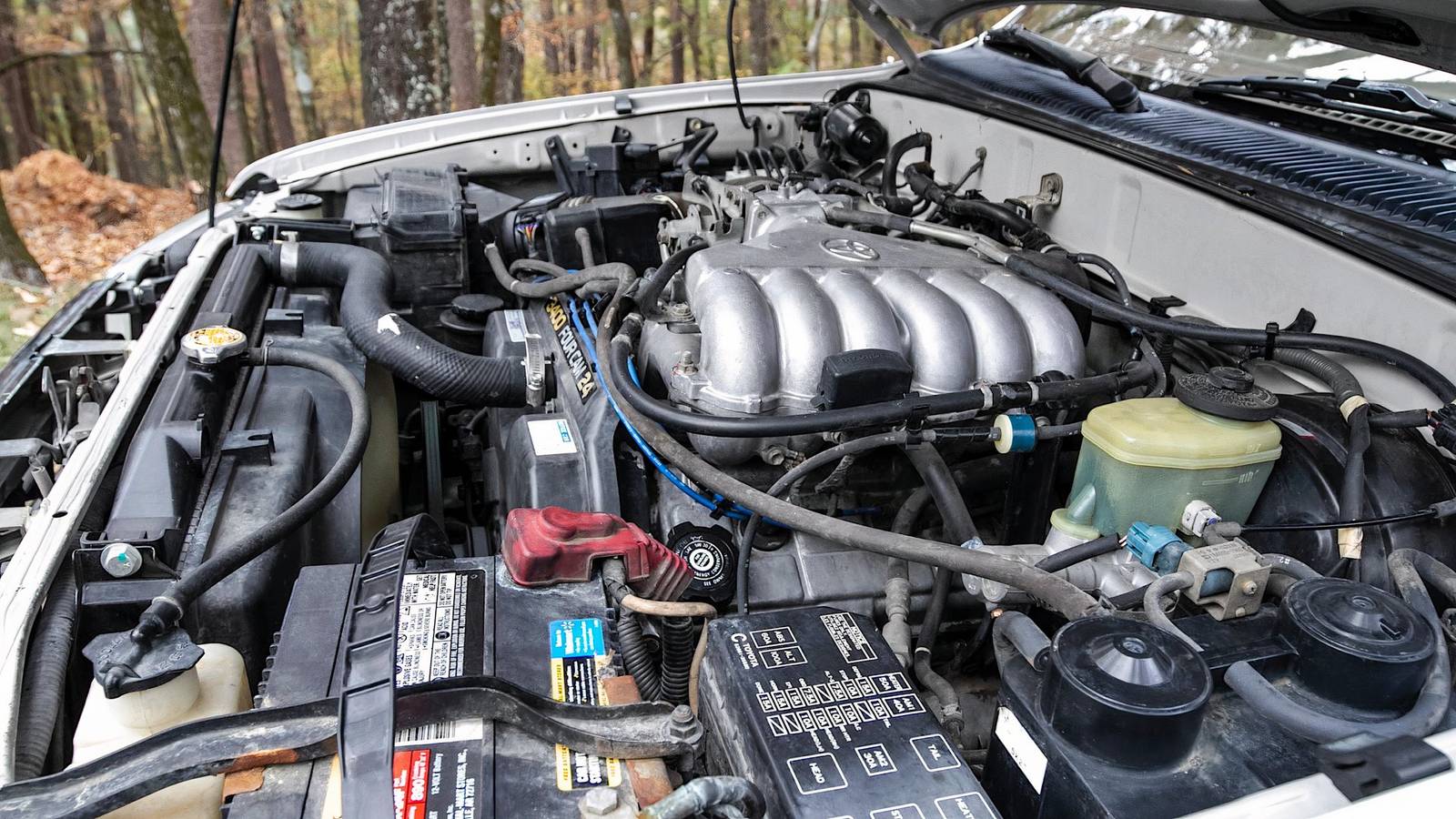
Toyota is certainly no stranger to reliability. If anything, many can comfortably argue that the Japanese brand is the global standard when it comes to developing engines that will stand the test of time. Since the company’s inception, it has always prioritized mechanical integrity in powertrain design, resulting in it achieving this dependable reputation across the global market.
Available Models
Toyota
- Founded
-
August 28, 1937
- Founder
-
Kiichiro Toyoda
- Headquarters
-
Aichi, Japan
- Owned By
-
Publicly Traded
- Current CEO
-
Koji Sato
The 22R-E straight-four engine is one of the best examples that we can reference, as Toyota has applied it to some of its longstanding adventure and sports models that still roam the streets today. It has since been replaced by more modern units that don’t quite live up to its reputation, despite still being impressive in their own right. This is not a product that is available in the U.S., due to safety and emissions regulations, but it still flies the brand’s flag high in specific international regions.
Toyota’s Legendary 22R-E

The Toyota 22R-E is a naturally aspirated 2.4-liter four-cylinder engine that has earned a reputation for being nearly indestructible on the durability front. The first example of this engine arrived in 1982 and lasted all the way up until 1995, acting as a staple powerplant for the Toyota Hilux, 4Runner, and Celica models. The E in its name signifies Electronic Fuel Injection, providing a significant leap in efficiency and cold-start reliability over its carbureted predecessor found in similar models.
The 22R-E is prized for its low-end torque, making it a favorite for off-roading and hauling, even on modern custom builds. Its mechanical simplicity allows it to reach 300,000 miles or more with basic maintenance. The most notable weak point is the plastic timing chain guides, which can wear and break over time. To fix this, many owners replace these with metal-backed versions to further bulletproof the engine. Today, the 22R-E remains a cult classic, wholeheartedly representing an era when Toyota earned its reputation for building vehicles that simply refuse to quit.
Understanding The Unit’s Design

The Toyota 22R-E was engineered with a truck-first philosophy, prioritizing thermal stability and structural rigidity over high-revving performance. At its core is a thick-walled cast-iron block with a deep-skirt design, providing a massive foundation that resists warping under heavy loads. Its 2.4-liter displacement is achieved through a 92 mm bore and an 89 mm stroke. This configuration proved to be great for emphasizing low-end grunt. The cylinder head is cast from aluminum alloy to aid heat dissipation, featuring a cross-flow design and a single overhead camshaft, thus simplifying the valvetrain.
Bolstering long-term reliability is a forged steel crankshaft held by five main bearings, ensuring the bottom end can withstand decades of stress. The transition to electronic fuel injection in the early 80s replaced the finicky carburetors of the past, allowing for precise air-fuel ratios that reduce carbon buildup and improve longevity. Opting for a timing chain results in a robust mechanical link, and Toyota’s choice of a dual-row chain in early models, later progressing to a single-row, remains a hallmark of its design. The decision to over-engineer the cooling passages and keep tolerances relatively loose allowed Toyota to create an engine that can survive extreme neglect and harsh environments.

Every Toyota Car Ranked By Reliability Score (2026 Edition)
This list is less about surprise winners and more about how consistently Toyota can step to the plate and crank homers.
What Makes The 22R-E Great To Work On

The Toyota 22R-E is widely considered one of its easiest engines to work on, thanks to its straightforward and accommodating design, making it a masterclass in mechanical accessibility. Bear in mind that, like most engines, its longevity depends on strict adherence to a few critical areas. The most vital maintenance task is the valve adjustment, typically required every 30,000 miles, as the mechanical lifters can drift out of specification, causing the infamous Toyota tick. The aforementioned single-row timing chain found in models produced after 1983 relies on plastic guides, which experts consider to be its most noteworthy weak-point. With time and use, these parts become brittle and shatter around 100,000 miles, potentially allowing the chain to eat through the aluminum timing cover and mix coolant with oil.
Common owner grievances often involve head gasket failure, frequently caused by overheating due to a clogged radiator or a failed fan clutch. Regarding official actions, Toyota issued a notable recall around 1988 for certain models that had an issue involving the V-belt pulleys. This could fail and lead to a loss of power steering or cooling. Additionally, there were service campaigns addressing the fuel pulsation damper, which posed a fire risk if the diaphragm leaked.

Made In America, Driven In Japan: Toyota’s Bold Move Explained
These three models assembled in U.S. plants will make the long trek to the home market in Japan. Is there a chance to do it profitably?
The Inevitable Replacement Engine

The final models to feature the Toyota 22R-E in the North American market were the 1995 Toyota Pickup, right before it adopted the Tacoma moniker, as well as the 1995 4Runner. In international markets, Toyota kept the love for this engine going in the Hilux up until 1997. The primary reason for evolving this engine was to align with strengthening emissions regulations and consumer demand for more power. Toyota replaced the aging SOHC design with the RZ engine family, specifically the 2.7-liter 3RZ-FE. This new engine was a significant technological leap, featuring a dual overhead cam 16-valve head and twin balance shafts to reduce the inherent vibration of a large four-cylinder.
While the 22R-E remains beloved for its tractor-like simplicity, the 3RZ-FE addressed its predecessor’s weaknesses by offering roughly 150 horsepower, representing a nearly 40 percent increase, and a more robust timing chain system that eliminated the notorious plastic guide failures. The 3RZ-FE manages to retain the 22R-E’s legendary bulletproof reputation, with many enthusiasts considering it the only worthy successor to the R-series throne. It bridges the gap between the analog 1980s and the modern era, eventually paving the way for the VVT-i-equipped 2TR-FE engines found in today’s Toyota models.

The Evolution Of The Toyota Tundra: 25 Years Of Full-Size Pickup History
The Toyota Tundra is one of our favorite full-size pickup trucks. It didn’t just appear overnight, and over the last 25 years has only got better.
The 22R-E Will Live On As A Legend

The Toyota 22R-E powered a generation of iconic workhorses, most notably the Toyota Hilux truck in global markets and the first two generations of the 4Runner. It was also found in the rear-wheel-drive Celica and the Land Cruiser II J70 series in international markets as well. Beyond passenger vehicles, its torque-heavy nature made it the go-to choice for commercial applications like the Toyota Dyna and various 1980s-era micro-motorhomes. These vehicles have become the poster children for extreme longevity, with many original engines surpassing the 300,000 to 400,000-mile mark.
Famous high-mileage examples often surface in the community, such as George Nodarse’s 1985 One-Ton Pickup, which Hagerty reports to have logged over 370,000 miles in a custom cabinet business. There are even anecdotal accounts of these engines reaching 500,000 miles without a full rebuild, earning it the nickname The Million-Mile Engine among enthusiasts. While a million miles often requires at least one head gasket or timing chain refresh, the bottom end remains remarkably stout. These high-mileage survivors prove that as long as the cooling system and oil are maintained, the 22R-E’s basic architecture is designed to outlast the chassis it sits in.
Sources: The NHTSA, Hagerty, RepairPal, MotorReviewer, and EngineExplained